
 Worksheets
Electron Microscope cell theory Review
Total questions: 20
Worksheet time: 16mins
Name
Class
Date
1.
The ___ is the basic unit of structure and function of organisms
a)
Atom
b)
Cell
c)
Matter
d)
All of these
2.
Which statement is a part of the cell theory?
a)
All cells come from preexisting cells
b)
Bacteria are prokaryotic cells
c)
Eukaryotic cells are complex
d)
Humans are multicellular
3.
The Cell Theory states...
a)
Atoms create all matter
b)
Living things evolve
c)
The cell is the backbone of all matter
d)
Cells are the basic unit of structure and organization of organisms
4.

According to cell theory, where did this cell come from?
a)
Another living cell
b)
Energy from sun
c)
A multicellular organism
d)
The nonliving environment
5.
Which microscope delivers the highest overall magnification possible?
a)
Scanning Electron (SEM)
b)
Transmission Electron Microscope (TEM)
c)
Light Microscope
d)
Dissecting Microscope
6.

Electron microscopes use a beam of _________________ to produce an image magnified up to 100,000 or more
a)
Sunlight
b)
Lasers
c)
Electrons
7.
Which of the following is a disadvantage of both the TEM and SEM?
a)
Low magnification
b)
Cannot observe living specimens
c)
High resolution
8.
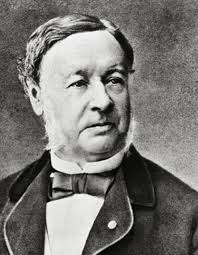
Which of the following scientists concluded that all animals are made of cells?
a)
Rudolf
Virchow
b)
Matthais
Schleiden
c)
Robert
Hooke
d)
Theodor
Schwann
9.
This botanist looked at plant cells.
a)
Schwann
b)
Schleiden
c)
Brown
d)
Baur
10.
This scientist named the nucleus.
a)
Brown
b)
Baur
c)
Galileo
d)
Virchow
11.
Which type of microscope is the MOST suitable for observing the surface of a virus?
a)
Transmission Electron Microscope
b)
Confocal Microscope
c)
Bright Field Microscope
d)
Scanning Electron Microscope
12.

What type of microscope was used to capture the image
a)
Dark Field Microscope
b)
Phase Contrast Microscope
c)
Bright Field Microscope
d)
Confocal Microscope
13.
Which electron microscope provides details of a cell's internal structures?
a)
Scanning Electron Microscope (SEM)
b)
Transmission Electron Microscope (TEM)
c)
Light Microscope
d)
Dissecting Microscope
14.
What is the total magnification of a microscope with a 10X ocular while using a 10X objective?
a)
10X
b)
20X
c)
100X
d)
1000X
15.

Who looked at cork and named the cell?
a)
Robert Hooke
b)
Van Leeuwenhoek
c)
Robert Brown
d)
Francesco Redi
16.
When holding a microscope, where do you hold it?
a)
The arm and the base
b)
Just the base
c)
The stage and the arm
d)
The tube and the base
17.

If you move the slide left while viewing, in which direction will it appear to move?
a)
right
b)
left
c)
up
d)
down
18.
Find the total magnification:
Eyepiece = 10X
Objective lens = 55X
Eyepiece = 10X
Objective lens = 55X
a)
10x
b)
55x
c)
65x
d)
550x
19.
Which scientist disproved spontaneous generation of large organisms by showing maggots came from flies not from rotting meat?
a)
Redi
b)
Needham
c)
Spallanzani
d)
Pasteur
20.
Which scientist designed a special flask that allowed air in but kept microbes out and once and for all disproved spontaneous generation?
a)
Redi
b)
Needham
c)
Spallanzani
d)
Pasteur
100 %

