
 Worksheets
AP Bio Ecology Quiz #1 Practice
Total questions: 23
Worksheet time: 15mins
Which of the following pairs the correct biome with some of its characteristics?
grassland, modern winter temps and dry summers
taiga, very cold winters, short growing season
savannah, long cold winters, abundant precipitation
desert, cold winters, wet and dry seasons
Of these biomes, a vertical stratification (layer of plants) is most pronounced in a __
desert
tundra
grassland
tropical rain forest
Temperature, precipitation, sunlight and wind are major components of
biotic factors
abiotic factors
The sum of all Earth's ecosystems are
lithosphere
stratosphere
atmosphere
biosphere
What term would describe all the living factors in an ecosystem?
abiotic
biology
biotic
community
A herd of elephants living in the same area make up a(n)
community
population
ecosystem
biosphere
All the different populations in a particular area make up a
ecosystem
community
population
species
the study of interactions of organisms with other organisms and their interaction with the physical environment
zoology
symbiosis
relationships
ecology
A combination of both biotic and abiotic factors in a particular area is called a(n) __
colony
population
community
ecosystem
Low precipitation, soil is rich in minerals but poor in organic matter are characteristics of a
tundra
deciduous forest
boreal
desert
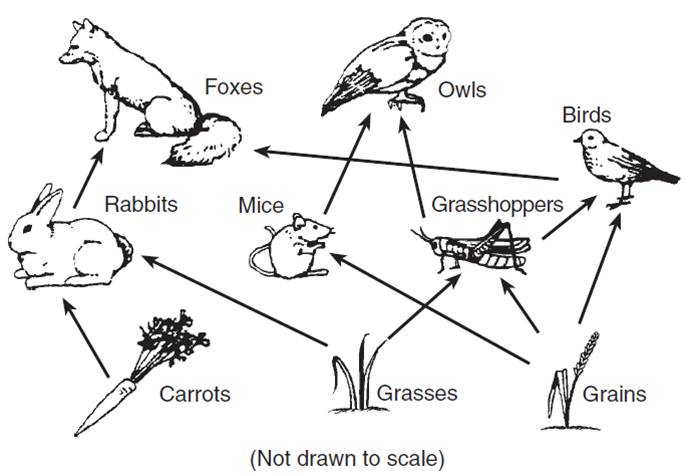


Use the above food web. Which option pairs the organisms with their correct trophic levels?
Grasses: 1st level consumer, Birds: 2nd level consumer
Grasses: Primary Producer, Birds: 3rd level consumer
Mice: 2nd Level Consumer, Birds: 3rd level consumer
Rabbits: 1st level consumer, Owl: 2nd level consumer
Bird Species A is small while bird species B is large. Scientists believe that they have been living together in the same type of pine tree for hundreds of years. Which of the following statements is most likely to be true?
Species B will eventually out-compete Species A.
They both eat the same type of food, but species A can survive because it needs less.
There is considerable niche overlap
Species A and Species B occupy different niches

On average, how much of the energy in one trophic level is transferred to the level above it?
50%
25%
10%
1%

The removal of sea otters led to the crash of the entire community. How would you classify the sea otter?
Keystone species
Autotroph
Detrivore
Abiotic

In 1997, the sea otter population plummeted. What effect did this have on the kelp?
Kelp density increased due to decreased sea urchin biomass.
Kelp density increased due to increased sea urchin grazing intensity.
Kelp density decreased due to increased sea urchin grazing intensity.
Kelp density decreased due to decreased sea urchin biomass.

