
 Worksheets
Plants and animals
Total questions: 67
Worksheet time: 2hrs 6mins
Name
Class
Date
1.
Which part of the plant makes the food?
a)
roots
b)
stem
c)
leaf
d)
flower
2.
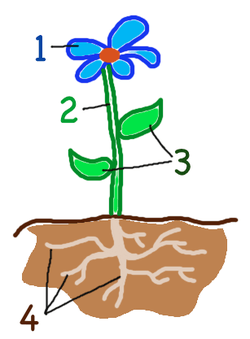
What part of the plant is #1?
a)
flower
b)
stem
c)
root
d)
leaf
3.
What anchor plants to the ground and absorb water and nutrients?
a)
Roots
b)
Stem
c)
Xylem
d)
Leaves
4.
Plants have ways of getting their seeds to travel away from them because ______.
a)
they want to help animals.
b)
seeds that travel away from the parent are more likely to get light.
c)
seeds need water to grow.
5.
What part of a plant produces seeds?
a)
leaf
b)
flower
c)
root
d)
stem
6.
Plants that eat insects (bugs) live in places where ________.
a)
the soil doesn’t have many minerals.
b)
there are too many insects.
c)
the plants don’t get a lot water.
d)
the plants get too much sunlight.
7.
What part of a plant transports water and nutrients?
a)
flower
b)
leaf
c)
seed
d)
stem
8.
What part of a plant produces a new plant?
a)
root
b)
stem
c)
leaf
d)
seed
9.
What part of a plant collects sunlight?
a)
seed
b)
root
c)
leaf
d)
stem
10.
What is the protective covering of a tree?
a)
leaves
b)
bark
c)
roots
d)
seeds
11.
What part of the plant soaks up nutrients from the ground?
a)
leaves
b)
stem
c)
roots
d)
flower
12.
Which part of the plant makes the food?
a)
roots
b)
stem
c)
leaf
d)
flower
13.
Where are the seeds located on an adult plant?
a)
roots
b)
stem
c)
leaf
d)
flower
14.

What part of the plant is #2?
a)
leaf
b)
flower
c)
stem
d)
root
15.

What part of the plant is #3?
a)
leaf
b)
root
c)
flower
d)
stem
16.

What part of the plant is #4?
a)
leaf
b)
flower
c)
stem
d)
root
17.

What plant part is shown here?
a)
roots
b)
flower
c)
stem
d)
leaf
18.

What plant part is shown here?
a)
roots
b)
flower
c)
stem
d)
leaf
19.

What plant part is shown here?
a)
roots
b)
flower
c)
stem
d)
leaf
20.

What plant part is shown here?
a)
roots
b)
flower
c)
stem
d)
leaf
21.

__________ is an organism that only eats plants for energy.
a)
Carnivore
b)
Herbivore
c)
Omnivore
d)
Terivore
22.

__________ is an organism that only eats meat for energy.
a)
Omnivore
b)
Borivore
c)
Herbivore
d)
Carnivore
23.

__________ is an organism that eats BOTH plants and animals for energy.
a)
Omnivore
b)
Darnivore
c)
Carnivore
d)
Herbiovre
24.
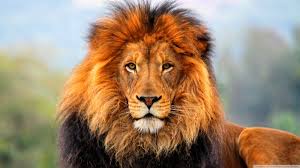
Lions only eat buffalo, antelopes, zebras and crocodiles. They are called __________.
a)
Omnivore
b)
Herbivore
c)
Carnivore
d)
Delivore
25.

Bears eat fish, insects, plants, seeds, nuts and young elk. They are called __________.
a)
Franivore
b)
Carnivore
c)
Herbivore
d)
Omnivore
26.

Elephants only eat leaves, fruit, nuts and grass. They are called __________.
a)
Omnivore
b)
Fortivore
c)
Herbivore
d)
Carnivore
27.

This type of eater has sharp canine teeth used to penetrate its teeth into its food and tear.
a)
Morivore
b)
Omnivore
c)
Carnivore
d)
Herbivore
28.

This type of eater has both flat and sharp teeth
a)
Carnivore
b)
Herbivore
c)
Omnivore
29.

This type of eater has large, flat teeth used to grind down their food.
a)
Herbivore
b)
Omnivore
c)
Sarivore
d)
Carnivore
30.
herbivores like to eat?
a)
meat
b)
grass
c)
meat and grass
d)
pizza
31.
carnivores eat?
a)
meat
b)
grass
c)
both meat and grass
d)
chocolate
32.
omnivores eat?
a)
meat
b)
grass
c)
both meat and grass
d)
pop tarts
33.

Grizzly Bear
a)
omnivore
b)
herbivore
c)
carnivore
34.

goat
a)
omnivore
b)
herbivore
c)
carnivor
35.
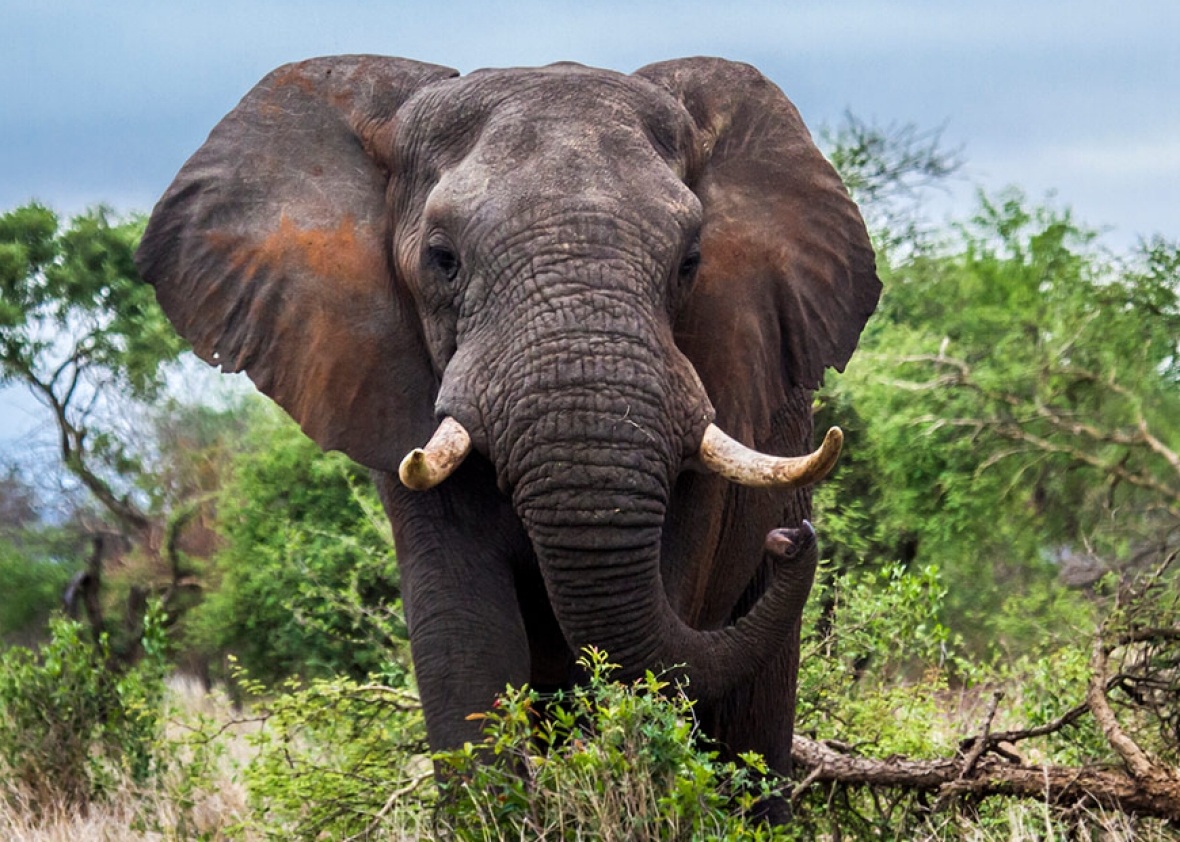
elephant
a)
omnivore
b)
herbivore
c)
carnivore
36.

lion
a)
omnivore
b)
herbivore
c)
carnivore
37.

giraffe
a)
omnivore
b)
herbivore
c)
carnivore
38.

raccoon
a)
omnivore
b)
herbivore
c)
carnivore
39.

wolf
a)
omnivore
b)
herbivore
c)
carnivore
40.

tiger
a)
omnivore
b)
herbivore
c)
carnivore
41.

Gorilla
a)
omnivore
b)
herbivore
c)
carnivore
42.

alligator
a)
omnivore
b)
herbivore
c)
carnivore
43.
An organism that hunts and feeds on another organism is a ______________________.
a)
prey
b)
producer
c)
predator
d)
decomposer
44.
An animal that is hunted as food
a)
prey
b)
predator
c)
decomposer
d)
producer
45.
An inherited trait that helps those organisms that have it to survive
a)
niche
b)
structure
c)
characteristic
d)
adaptation
46.

Coloring or another physical characteristic that help an organism blend in with its environment
a)
mimicry
b)
camouflage
c)
hibernation
d)
migration
47.

When an organism copies a characteristic of something else in order to better its chances for survival and reproduction
a)
hibernation
b)
camouflage
c)
mimicry
d)
migration
48.

The seasonal movement of an organism from one place to another
a)
camouflage
b)
migration
c)
hibernation
d)
function
49.

When an organism slows its life functions for a period of time to better its chances for survival during harsh conditions
a)
camouflage
b)
migration
c)
mimicry
d)
hibernation
50.

Which feature of a rose helps it grow without being eaten by large animals?
a)
flowers with bright colors
b)
sharp thorns
c)
small seeds
d)
deep roots
51.

Which feature helps an animal hide from other animals?
a)
looking like a dangerous animal
b)
being the same color as the place it lives (camoflauge)
c)
having sharp claws or a strong shel
d)
having only a few young and caring for them
52.
1. What is an adaptation?
a)
A feature or behavior that helps an animal survie.
b)
The food that an animal eats.
c)
How energy moves in a food web.
53.
An animal's color or pattern that helps it blend into its surroundings
a)
Environment
b)
Mimicry
c)
Camouflage
54.
Which of these BEST describes how some birds survive when the weather gets cold?
a)
a. They store twigs and sticks in their nest
b)
b. They migrate to a warmer climate
c)
c. They grow more feathers to stay warm in the winter
d)
d. They hide in bushes and wait for warm weather
55.
Some animals move great distances as the seasons change. What is this called?
a)
hibernation
b)
migration
c)
habitat
d)
coloration
56.
Lions often hide in the tall grass while stalking their prey. This is an example of...
a)
camouflage
b)
warning coloration
c)
mimicry
d)
hibernation
57.
Some animals have bright colors to warn other animals to stay away (because of toxins or harmful effects). This is called...?
a)
camouflage
b)
instinct
c)
mimicry
d)
warning coloration
58.
What do you call an animal that is hunted by another animal?
a)
prey
b)
predator
c)
producer
d)
herbivore
59.
What do you call an animal that only eats other animals?
a)
herbivore
b)
prey
c)
predator
d)
carnivore
60.
This adaptation helps animals hide for either predators or prey. What is it?
a)
warning coloration
b)
camouflage
c)
instinct
d)
migration
61.
What do you call an animal that eats both plants and other animals?
a)
vegetarian
b)
herbivore
c)
omnivore
d)
carnivore
62.
Which animal would hibernate to survive throughout the winter months?
a)
bear
b)
deer
c)
bird
d)
wolf
63.
Any physical structure (body part or covering) or behavior that helps an animal survive:
a)
habitat
b)
instinct
c)
fur
d)
adaptation
64.
Some animals move great distances as the seasons change. What is this called?
a)
hibernation
b)
migration
c)
habitat
d)
coloration
65.
An animal that only eats plants is called a ...?
a)
predator
b)
carnivore
c)
omnivore
d)
herbivore
66.
A wasp beetle has the same body markings as a wasp. this helps the wasp beetle because predators think it's a wasp. This adaptation is called...?
a)
behavior
b)
countershading
c)
camouflage
d)
mimicry
67.
Lions often hide in the tall grass while stalking their prey. This is an example of how __________ helps them to survive.
a)
camouflage
b)
warning coloring
c)
mimicry
d)
hibernation
100 %

