
 Worksheets
Earth History/Evolution 2
Total questions: 36
Worksheet time: 6hrs 0mins
Name
Class
Date
1.
Scientists use radioactive decay to measure...
a)
relative time
b)
absolute time
c)
half-lives
d)
time of day
2.
The length of time required for half of the radioactive atoms in a sample to decay is its...
a)
era
b)
age
c)
half-life
d)
eon
3.
Radiometric dating is possible because the rates of decay of radioactive isotopes _____.
a)
change over time
b)
change from place to place
c)
are constant
d)
vary widely
4.

what's the half life of this substance?
a)
1 day
b)
5 days
c)
3 days
d)
9 days
5.

How much of the parent isotope is left after 3 half lives?
a)
100%
b)
50%
c)
25%
d)
12.5%
6.

You find a rock sample with radioactive atoms present. If 12.5% of the original radioactive atoms were present, how many half-lives has the rock been around for? (Hint, at Half-Life = 0, you start with 100%)
a)
zero
b)
1
c)
2
d)
3
7.
Used to determine whether an object is older or younger than other objects
a)
Superposition
b)
Relative Dating
c)
Fossil
d)
Unconformity
8.
States that younger rocks lie above older rocks if the layers have not been disturbed
a)
Law of crosscutting
b)
Law of superposition
c)
Relative Dating
d)
Unconformity
9.

Analyze the seashell found in the white layer. Which statement is true of the rock layer that contains this fossil?
a)
It could also contain a fossil from the bottom layer.
b)
It is older than the layers below it.
c)
It is younger than the layers above it.
d)
It is older than the layers above it.
10.
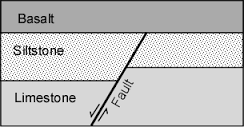
What are the relative ages of the features in order from oldest to youngest?
a)
Limestone, Basalt, Fault, Siltstone
b)
Siltstone, Fault, Basalt, Limestone
c)
Limestone, Fault, Basalt, Siltstone
d)
Limestone, Siltstone, Fault, Basalt
11.

According to the law of superposition, which layer is the youngest?
a)
A
b)
B
c)
C
d)
Cannot be determined
12.

Which of the following correctly lists the layers in order from oldest to youngest?
a)
A, B, C, D, E
b)
E, B, C, D, A
c)
E, D, C, B, A
d)
C, B, A, D, E
13.
What type of rock do fossils form in?
a)
Igneous
b)
Sedimentary
c)
Metamorphic
d)
Classic
14.
Why is the fossil record incomplete?
a)
fossils get eroded away over time
b)
most organisms never became fossils
c)
scavengers and decomposers eat them too quickly
d)
all of the above
15.
Which is the most recent era of time- the one that we are currently in?
a)
Mesozoic
b)
Paleozoic
c)
Cenozoic
d)
Precambrian
16.
Identify the Era:
the longest of all eras
a)
Precambrian
b)
Paleozoic
c)
Mesozoic
d)
Cenozoic
17.
Identify the Era:
where dinosaurs thrived
where dinosaurs thrived
a)
Precambrian
b)
Paleozoic
c)
Mesozoic
d)
Cenozoic
18.
Identify the Era:
First forms of life appeared in this era.
First forms of life appeared in this era.
a)
Precambrian
b)
Paleozoic
c)
Mesozoic
d)
Cenozoic
19.

What principle proves Layer 1 is younger than 2.
a)
superposition
b)
crosscutting
c)
inclusions
d)
horizonality
20.
Modern whales developed their traits through natural selection. What occurs during the process of natural selection?
a)
Organisms choose mates from other species to create new species
b)
Breeders selectively cross organisms with desired traits
c)
Only the fittest organisms can survive and reproduce
d)
Organisms remain exactly the same over time.
21.
Why are advantageous traits more likely to be passed onto offspring?
a)
Because they are more likely to survive and reproduce.
b)
Because they come from dominant alleles.
c)
Because they come from recessive alleles.
d)
Because the trait is an acquired phenotype.
22.
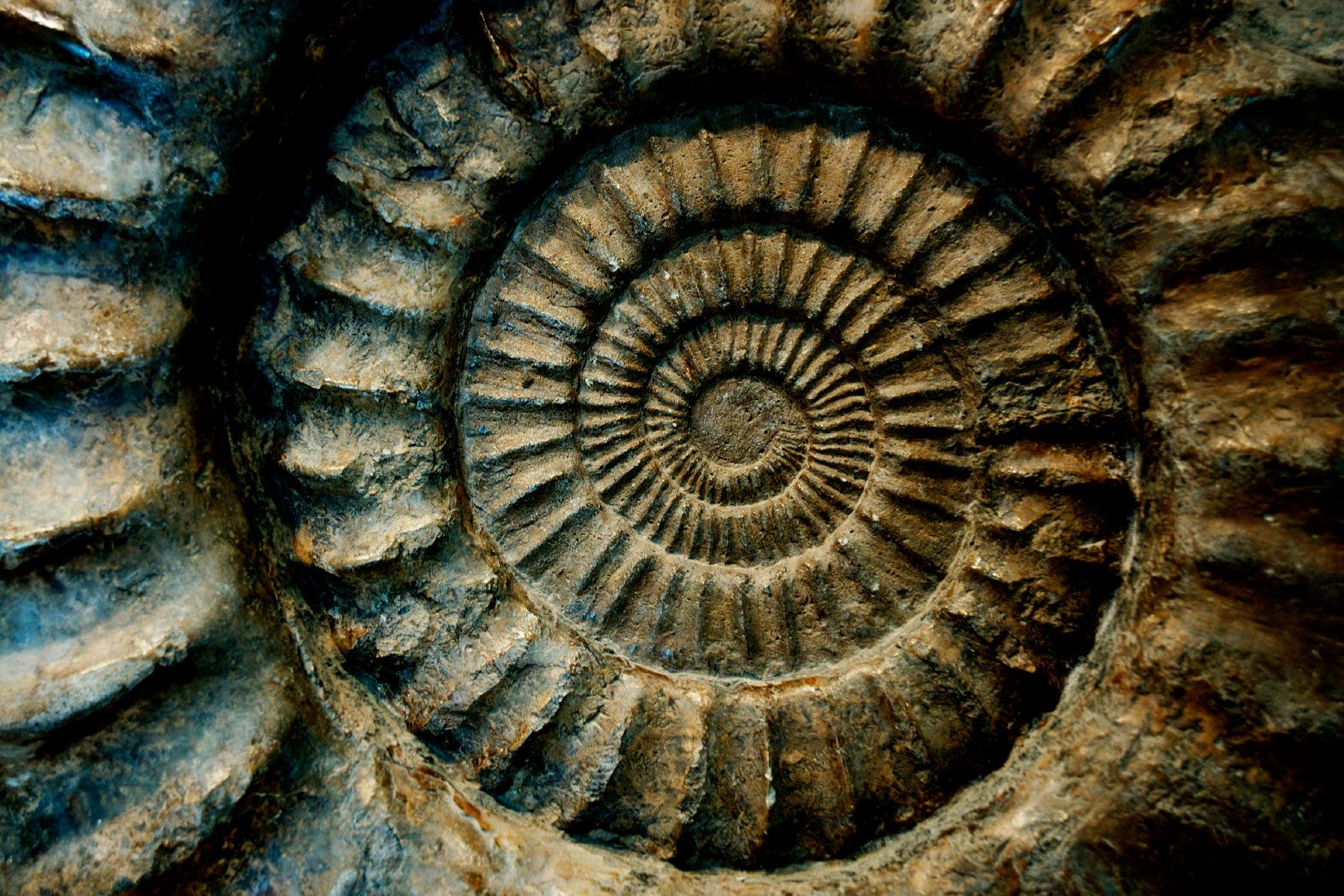
The difference in the physical traits of an individual from those of other individuals in a group is called a(n)
a)
change
b)
adaption
c)
species
d)
variation
23.
Any variation that can help a species survive in a given environment is called...
a)
an adapatation
b)
a characteristic
c)
a homologous structure
d)
a vestigial structure
24.
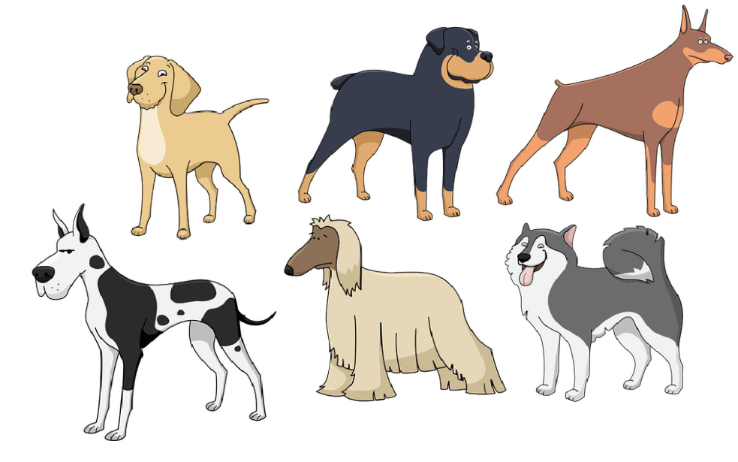
Genetic diversity in a species makes long term survival of some members
a)
impossible
b)
improvable
c)
more likely
d)
less likely
25.
Who is the father of evolution?
a)
Darwin
b)
Mendel
c)
Newton
d)
Einstein
26.
What is the study of organisms at the early stages of development?
a)
DNA studies
b)
embryology
c)
extinction
d)
fossil record
27.
What is an organism that has similar characteristics and can reproduce?
a)
species
b)
organism
c)
embryology
d)
vestigial
28.
Analogous structures show common ancestry.
a)
True
b)
False
29.
Which of the following pieces of evolution evidence deals with comparing similar structures in various species?
a)
fossil record
b)
comparing embryology
c)
comparing biochemistry
d)
comparing anatomy
30.
Which of the following pieces of evolution evidence deals with aged and identified fossils?
a)
fossil record
b)
comparative embryology
c)
comparative biochemistry
d)
comparative anatomy
31.
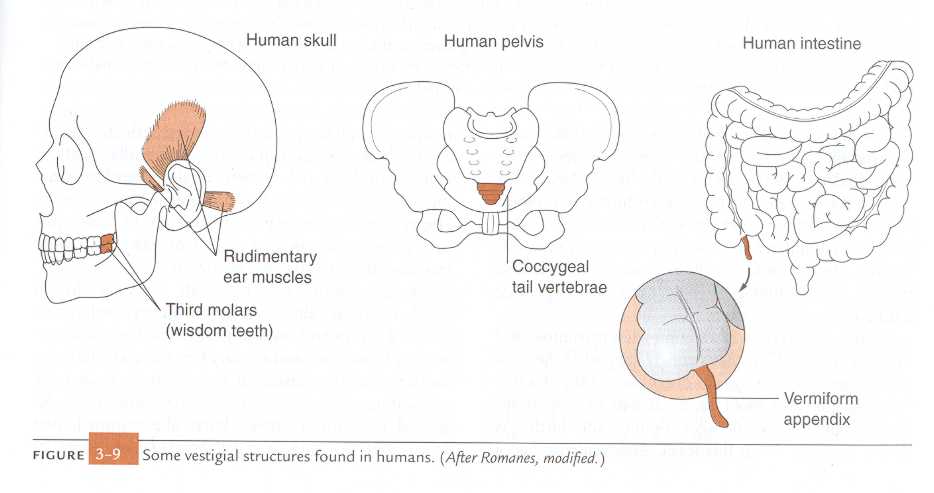
If an organism has a vestigial structure, that structure likely once had a function in a(n)
a)
close relative
b)
early ancestor
c)
unrelated organism
d)
embryological stage
32.
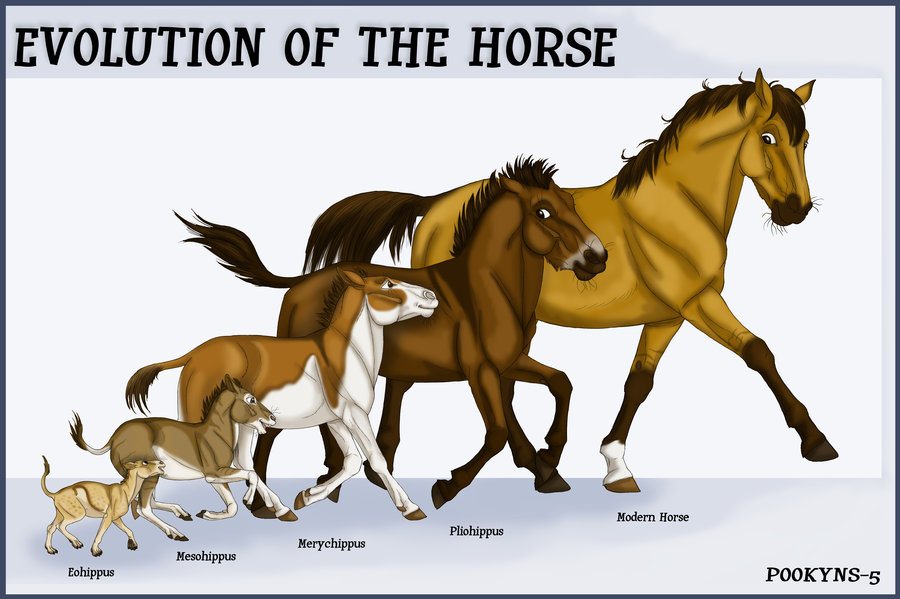
Some organisms that share a common ancestor have features that have different functions, but similar structures. These are known as
a)
vestigial structures
b)
analogous structures
c)
homologous structures
d)
fossil structures
33.
Mutations are important because they bring about
a)
death of the organism in which they develop
b)
genetic variation needed for a population to evolve
c)
benefits for the individual, not for the population
d)
Hardey-Weinberg equilibrium within a population
34.
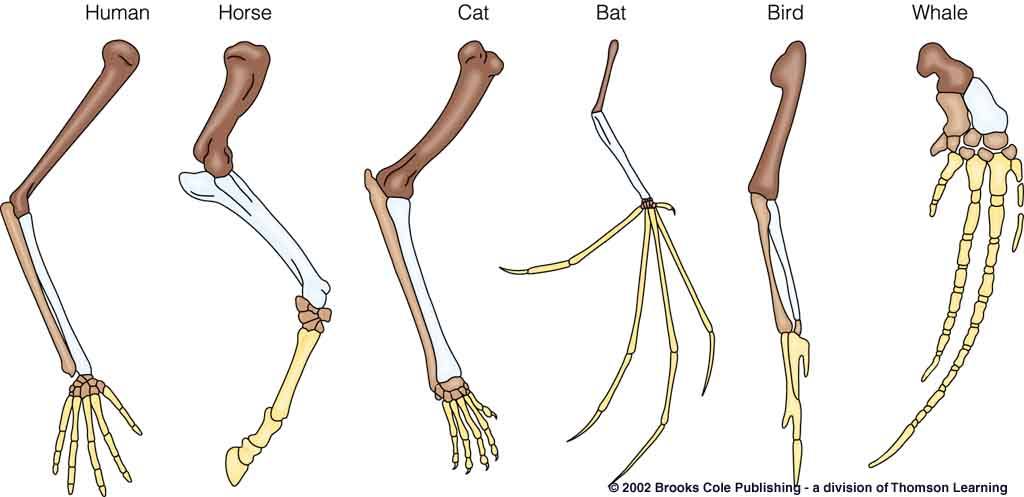
The structures shown are_________
a)
homologous
b)
heterologous
c)
analogous
d)
vestigial
35.
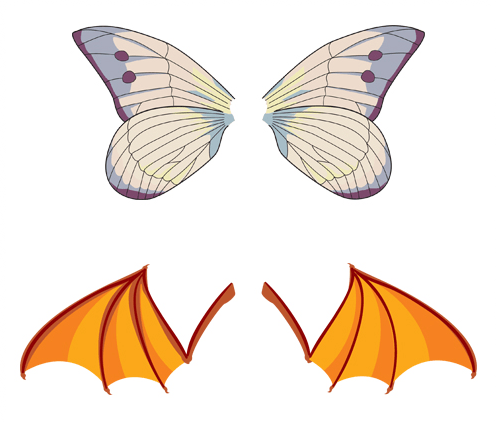
How would you describe these structures?
a)
Homologous structure
b)
Analogous structure
c)
Vestigial Structure
d)
Functional adaption
36.
Biologists discover two rabbit species living on opposite sides of a large river. What could they do to test and see if these species came from a common ancestor?
a)
Compare DNA sequences
b)
Compare body structures
c)
Compare protein sequences
d)
All of these
100 %

