wayground logo

Free Printable Worksheets

Font size

S
M
L
XL
Worksheets

Chap 6 Study American Revolution

Total questions: 60

Worksheet time: 37mins

Name
Class
Date
1.
Where were the first armed conflicts of the American Revolution?
a)
Yorktown
b)
Saratoga
c)
Lexington and Concord
d)
Bunker Hill
2.
What was the name of the British king during the American Revolution?
a)
Charles III
b)
George III
c)
William III
d)
James III
3.
This American victory was the turning point in the war.
a)
Saratoga
b)
Yorktown
c)
Bunker Hill
d)
Lexington and Concord
4.
Who was the major author of the Declaration of Independence?
a)
Benjamin Franklin
b)
John Adams
c)
Thomas Jefferson
d)
Patrick Henry
5.
Surrounded by French and Continental armies, a large British army surrendered here.
a)
Saratoga
b)
Yorktown
c)
Bunker Hill
d)

Valley Forge

6.
This member of the Continental Congress helped gain French support for American independence.
a)
Thomas Jefferson
b)
Benjamin Franklin
c)
Patrick Henry
d)
John Adams
7.
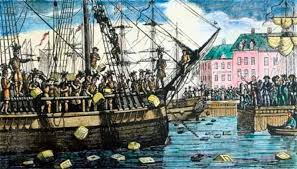
What event is depicted in this image?
a)
Boston Massacre
b)
Boston Tea Party
c)
Battle of Bunker Hill
d)
Lexington and Concord
8.
This patriot made a daring ride to warn colonists that British soldiers were approaching.
a)
Patrick Henry
b)
Paul Revere
c)
Phillis Wheatley
d)
Samuel Adams
9.
Samuel Adams and Paul Revere led members of the Sons of Liberty in this protest against taxes.
a)
First Continental Congress
b)
Boston Massacre
c)
Boston Tea Party
d)
Stamp Act Congress
10.
This enslaved person wrote poems and plays supporting American independence.
a)
Harriet Tubman
b)
Benjamin Banneker
c)
Paul Revere
d)
Phillis Wheatley
11.
Of the following events, which happened first? 
a)
Saratoga
b)
Yorktown
c)
Declaration of Independence
d)
Treaty of Paris of 1783
12.
Of the following events, which happened last?
a)
First Continental Congress
b)
Boston Massacre
c)
Boston Tea Party
d)
Stamp Act
13.
Which one of these is not an advantage that helped the American patriots defeat Great Britain.
a)
defense of their own land, principles and beliefs
b)
support from France
c)
superior numbers of soldiers and greater experience
d)
strong leadership from men like George Washington
14.
The U.S. was founded on July 4, 1776, by the approval of this document.
a)
the Treaty of Paris
b)
the Constitution
c)
the Declaration of Independence
d)
the Virginia Charter
15.
The Sons of Liberty were:
a)
the children of our Founding Fathers.
b)
a professional dance team.
c)
Patriots who protested taxes.
d)
the writers of the Declaration of the Independence.
16.
The Daughters of Liberty were known for:
a)
their delicious apple pies.
b)
their dramatic protests.
c)
the beautiful clothes they made for the wealthy colonists.
d)
making goods that normally would be made in England and imported into the colonies.
17.
What is another name for British soldiers?
a)
Redcoats
b)
Patriots
c)
Minutemen
d)
Continental Soldiers
18.
What did we call colonists who did NOT want independence from England?
a)
Minutemen
b)
Traitors
c)
Militia
d)
Loyalists
19.
"No ________ without representation"
a)
voting
b)
taxation
c)
rights
d)
liberty poles
20.
What was the purpose of the Boston Tea Party?
a)
to punish merchants for selling imported tea.
b)
to see who could throw a barrel further.
c)
to frame the Native Americans.
d)
to protest taxes
21.
Who were the Minutemen?
a)
Patriots who were ready to fight at a minutes notice
b)
British soldiers who were ready to fight at a minutes notice
c)
Sons of Liberty who were ready to fight at a minutes notice
d)
Hessians who were ready to fight at a minutes notice
22.
Which side had more resources and training at the beginning of the war?
a)
British
b)
Colonists
23.
Who won the American Revolution?
a)
The British
b)
The American Colonists
24.
Who fired "the shot heard round the world?"
a)
the British
b)
the minutemen
c)
it is a mystery!
25.
What country joined the colonists to help them win the war?
a)
Germany
b)
France
c)
Netherlands
d)
Africa
26.
This was a colonist who resisted British rule.
a)
redcoat
b)
loyalist
c)
Pippin
d)
patriot
27.
The British ordered the closing of the port of Boston, cut Massachusetts government, and required people to have soldiers stay in their homes.
a)
Intolerable Acts
b)
Boston Massacre
c)
Pippin
d)
Stamp Act
28.
Valley Forge
a)
Was the final major battle of the Revolution
b)
Kept the British from splitting New England from the other colonies
c)
Winter encampment where soldiers suffered from cold, hunger, and disease
d)
Patriots held off the British until they ran out of ammunition
29.
Saratoga
a)
Kept the British from splitting New England from the other colonies
b)
Was the final major battle of the Revolution
c)
Winter encampment where soldiers suffered from cold, hunger, and disease
d)
The Green Mountain boys attacked and got cannons needed by the Continental Army
30.
Treaty of Paris
a)
said kings were nonsense
b)
Was the final major battle of the Revolution
c)
Decided the outcome of the fight between Khan and Pippin
d)
The agreement ending the Revolution
31.
Yorktown
a)
Winter encampment where soldiers suffered from cold, hunger, and disease
b)
Was the final major battle of the Revolution
c)
George Washington led his troops across the Delaware river to attack
d)
Patriots held off the British until they ran out of ammunition
32.
Who was the officer that turned against Americans and joined the British Army? 
a)
Benjamin Franklin
b)
Benedict Arnold
c)
Thomas Paine
d)
John Adams
33.
Who wrote "Common Sense" that challenged the colonists to fight for independence? 
a)
Patrick Henry
b)
Thomas Paine 
c)
John Adams
d)
Thomas Jefferson 
34.
Who was the Commander in Chief of the Continental Army? He led 2400 men across the Delaware River. 
a)
George Washington 
b)
Patrick Henry
c)
Lord Cornwallis
d)
George Jones 
35.
This person became known for his famous speech just before the Revolutionary War. He said, "Give me liberty or give me death!"
a)
George Washington
b)
Patrick Henry
c)
Paul Revere
d)
Benedict Arnold 
36.

The goal of the First Continental Congress was to

a)

draft a declaration of independence from the British crown

b)

establish a colonial government to rival the king

c)

develop a plan for undermining the decisions of the king

d)

state the concerns of colonists to the king

37.

The right of citizens to overthrow an oppressive government is stated in which document?

a)

U.S. Constitution

b)

Bill of Rights

c)

Declaration of Independence

d)

Articles of Confedertion

38.

How did the Enlightenment influence American colonists to begin to see the British government as a threat to their rights and freedoms?

a)

It abolished slavery in the colonies and ended the slave trade.

b)

It gave women the right to vote and own property.

c)

It introduced the idea of government as a social contract between people and their rulers.

d)

It inspired colonists to help others and start homes for orphans.

39.

Strengths of the colonial military forces were...

a)

well-trained, well equipped soldiers

b)

received help from France

c)

fought for a cause they believed in

d)

large, powerful navy

40.
Who were the Hessian mercenaries?
a)
enslaved Africans who were forced to fight in the war
b)
women who were hired to work in the American army camps
c)
People who had sacrificed their life for a noble cause.
d)
professional soldiers from a German state hired to fight for Britain
41.
What did the Marquis de Lafayette volunteer do?
a)
spy against the Continental Army
b)
serve in the Continental Army
c)
cook in the Continental Army
d)
train the Continental Army
42.
What American naval officer won the sea battle against the British warship Serapis?
a)
Benedict Arnold
b)

Nathan Hale

c)
John Paul Jones
d)
Patrick Henry
43.
After hearing of the American victory at Saratoga, what did King Louis XVI of France do?
a)
He recognized US independence.
b)
He began giving secret aid to the Americans
c)
He sent John Paul Jones to help the Americans
d)
He convinced the Baron von Steuben to help the inexperienced troops.
44.
As a result of the war, what idea developed about how people should be governed?
a)
that people are weak and the military should rule
b)
that instead of a king, the people should rule
c)
that the aristocracy, the wealthiest citizens, should rule
d)
that America needed its own monarchy
45.
Which group prevented a British victory in the South?
a)
Loyalists
b)
mercenaries
c)
French soldiers
d)
guerrilla troops
46.
Which of these describes the progress of the war?
a)
The British won every battle until the final one.
b)
The British soldiers lost most of the the battles against the discriplined American soldiers.
c)
At the beginning, the Americans were outmatched, but their skills and tactics improved.
d)
The Americans outnumbered the British, finally defeating them at the Battle of Yorktown.
47.
The Battle of Saratoga was significant in the Revolutionary War because it...
a)
ended the British threat to the South
b)
guaranteed Canadian help for the colonists
c)
convinced the French to support the Americans
d)
forced the British to withdraw from North America
48.

What was the Proclamation of 1763?

a)

A fence King George III put up through the Appalachian Mountains that the colonist could not cross

b)

A law King George III created to keep the colonist from settling west of the Appalachian Mountains and to keep them safe from Native American attacks

c)

A new law that put a tax on moving to the Ohio Country

d)

A new law that banned babies from being born during 1763

49.

During the American Revolution, Ohio was:

a)

a state

b)

one of the 13 colonies

c)

home to Spanish immigrants

d)

the western frontier of the U.S.

50.

The colonist began to boycott British goods as a form of protest. What does the word boycott mean?

a)

refuse to buy

b)

speak out against

51.

The colonist began to boycott British goods as a form of protest. What does the word protest mean?

a)

refuse to buy

b)

speak out against

52.
According to the Declaration of Independence who gives us our rights? 
a)
given by God at birth 
b)
given by our government 
c)
given by our president 
d)
given by our parents 
53.
Which of the following was a purpose of the Declaration of Independence?
a)
to unite the colonies against Britain
b)
to list the reasons that justified leaving Britain
c)
both of these
d)
neither of these
54.
The Declaration of Independence states the purpose of government is 
a)
to tax and control finances
b)
to provide rules for the people
c)
to regulate trade 
d)
to serve the people
55.
Which statement best describes the role of government according to the Declaration of Independence?
a)
“The main purpose of government is to expand and glorify the state”
b)
“The main purpose of government is to protect the unalienable rights of individuals”
c)
“The main purpose of government is to protect the rights and privileges of His Majesty, the King”
d)
“The main purpose of government is to promote the general welfare of the community by taking steps toward social equality”
56.
When Thomas Jefferson copied John Locke's ideas about the social contract, what did he say the people had the right to do to a government who was not protecting the people's rights?
a)
Write a letter
b)
Suggest how it could be better
c)
Wait until they started to respect the people's rights
d)
Abolish it
57.

What are the three unalienable rights that all people have?

a)

Food, Shelter, and Clothing

b)

Life, Liberty and Death

c)

Life, Liberty and the Pursuit of Happiness

58.
The Declaration of Independence states, “That whenever any form of government becomes destructive of these ends, it is the Right of the People to alter or abolish it.” Which Enlightened idea do these words describe?
a)
need to ensure a representative government.
b)
social contract between government and the people.
c)
revolutionary intent to overthrow the current government.
d)
return to a society that has no central authority.
59.
According to the Declaration of Independence, what truth was "self-evident"?
a)
All men are created equal
b)
Rights are given by good kings
c)
Government exists to protect us from ourselves
d)
Only a democracy can protect our rights
60.

What date began the Revolutionary War with the shot fired at Lexington and Concord?

a)

April 16, 1775

b)

April 16, 1776

c)

April 19, 1775

d)

April 19, 1776