wayground logo

Free Printable Worksheets

Font size

S
M
L
XL
Worksheets

WCSDMS 2018 Review for 1st 9 weeks (2)

Total questions: 195

Worksheet time: 3hrs 36mins

Name
Class
Date
1.
What is Manifest Destiny?
a)
The belief that it was America's destiny to control and civilize all of North America
b)
The belief that their destiny was to manifest
c)
A religious term used to explain how to be saved
2.
As Americans took over more and more land, what happened to Native Americans?
a)
They agreed to give up their land.
b)
They were given their choice of where to live.
c)
They were forced to live in reservations.
d)
They voluntarily moved to Canada and Mexico.
3.
The purchase of Louisiana
a)
was a costly mistake
b)
was opposed by western farmers
c)
doubled the size of the United States
d)
led to war with Great Britain 
4.
The discovery of gold led to
a)
California statehood
b)
Polk becoming president
c)
a war with Mexico
d)
Texas statehood
5.
Which of the following contributed to the westward expansion of the United States?
a)
European warships attacked the eastern seaboard, forcing citizens to move westward for safety.
b)
Most of the land east of the Mississippi River was not suitable for farming.
c)
Many Americans felt it was their right and duty to move westward.
d)
The standard of living on the Pacific Coast was very high, so many people wanted to move there.
6.
The philosophy of "Manifest Destiny" stated that American should expand from the Atlantic Ocean to the __________
a)
Mississippi River
b)
Pacific Ocean
c)
Rocky Mountains
d)
Great Lakes
7.
Which of these would be the best title for the illustration above?
a)
Divine Nature
b)
Survival of the Fittest
c)
Universal Expansion
d)
Manifest Destiny
8.
What did the Louisiana Purchase of 1803, the annexation of Texas in 1845, and the Mexican War of 1846 have in common?
a)
They brought about a war with Spain.
b)
They increased the territory of the United States.
c)
Each resulted in territory annexed by the United States.
d)
Each involved land forcibly taken from Mexico.
9.

What plan for government called for representation to be based upon population?

a)

Rhode Island

b)

Virginia

c)

New Jersey

d)

Pennsylvania

10.

What compromise allowed slaves to be counted for purposes of representation in Congress?

a)

The Great Compromise

b)

The 3/5s Compromise

c)

The Bill of Rights Compromise

d)

The Slave Trade Compromise

11.
federalism means...
a)
two house-legislatures that divide the work of government
b)
a government in which citizens rule through elected representatives
c)
sharing power between the federal and state governments
d)
a disease that workers in the FBI can get
12.
The constitution set up this kind of system to maintain a balance of power among the three branches of government
a)
confederation
b)
separation of powers
c)
federalism
d)
checks and balances
13.
This was one of the major concessions needed in order for some states to sign the Constitution...amendments that protected the individual freedoms of citizens
a)
unanimous voting clause
b)
Bill of Rights
c)
popular sovereignty
d)
preamble
14.
The Supreme Court has how many members?
a)
6
b)
10
c)
9
d)
8
15.
The Legislative Branch is made up of what two houses?
a)
Senate and Supreme Court
b)
House of Representatives and Senate
c)
President and Supreme Court
d)
House of Representatives and President
16.
The President has the power to...
a)
enforce the laws
b)
make the laws
c)
judge the laws
17.
The Legislative Branch does all of the following except
a)
coin and print money
b)
make laws
c)
veto laws
d)
declare war
18.
  “We hold these truths to be self-evident, that all men are created equal, that they are endowed by their Creator with certain unalienable Rights, that among these are Life, Liberty and the pursuit of Happiness.”

What is the source of this quotation?
a)
United States Constitution
b)
Declaration of Independence
c)
Articles of Confederation
d)
Thomas Paine’s “Common Sense”
19.
This was our nation's first Constitution but failed because it gave all the power to the states. 
a)
Articles of Confederation
b)
Treaty of Paris 
c)
Declaration of Independence
d)
U.S. Constitution 
20.
This document outlines the rules and laws of our United States government and is still used today. 
a)
U.S. Constitution 
b)
Articles of Confederation
c)
Treaty of Paris
d)
Declaration of Independence
21.
Checks and Balances are put into place so that 
a)
The people can make all the decisions
b)
So that a King could be established 
c)
No one branch could become too powerful
d)
So that the branches could be bossy
22.
What is the name of this building? 
a)
Georgia Capital Building
b)
White House
c)
State Prison 
23.
What is the name of this building?
a)
White House
b)
Capital Building
c)
Pentagon 
24.

Brown v. Board of Education (1954)

In this case, the court ruled that having separate public schools for black students and white students was unconstitutional. This made segregation in public schools illegal and paved the way to end racial segregation in general. Future Supreme Court justice Thurgood Marshall was the lead lawyer for the NAACP who argued the case before the court.


What amendment does this historical court case apply to?

a)

A. First Amendment

b)

B. Fifth Amendment

c)

C. Fourteenth Amendment

d)

D. Sixteenth Amendment

25.
The division of power between a central government and state governments is called
a)
The United States
b)
the Supremacy Clause
c)
the Necessary and Proper Clause
d)
federalism
26.
The Supremacy Clause states that 
a)
state laws are superior to federal laws
b)
federal laws are superior to state laws
c)
expressed powers are superior to implied powers
d)
Alabama is superior to Auburn
27.

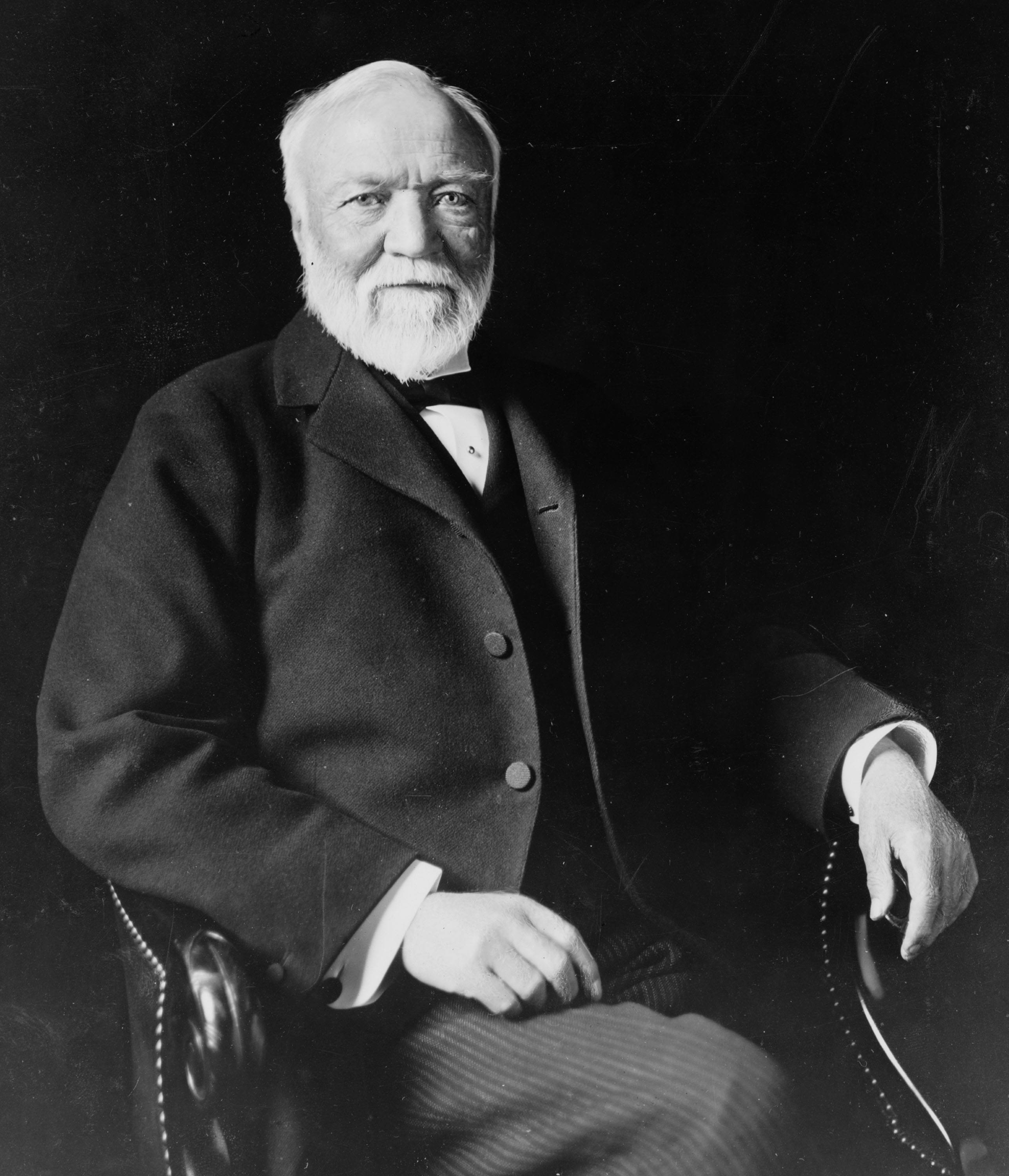
In The Gospel of Wealth, he argues that very wealthy men like him had a responsibility to use their wealth for the greater good of society

a)

Andrew Carnegie

b)

John D. Rockefeller

c)

Cornelius Vanderbilt

d)

JP Morgan

28.

_____________________ gave awareness to the increase in difference between poor and rich in the country

a)

Populist Party

b)

Big Business

c)

Labor Unions

d)

Political Bosses

29.

Cities populations grew in the West, expand in communication and commerce, and growth in settlers are due to-

a)

The Transcontinental Railroad

b)

The Klondike Gold Rush

c)

The Chinese Exclusion Act

d)

The Telegraph

30.

Big Business, Westward Expansion, bad working conditions, political machines, and immigration were issues of what time period in the U.S

a)

Gilded Age

b)

Progressive Era

c)

Building an Empire

d)

Civil Rights and the 60's

31.

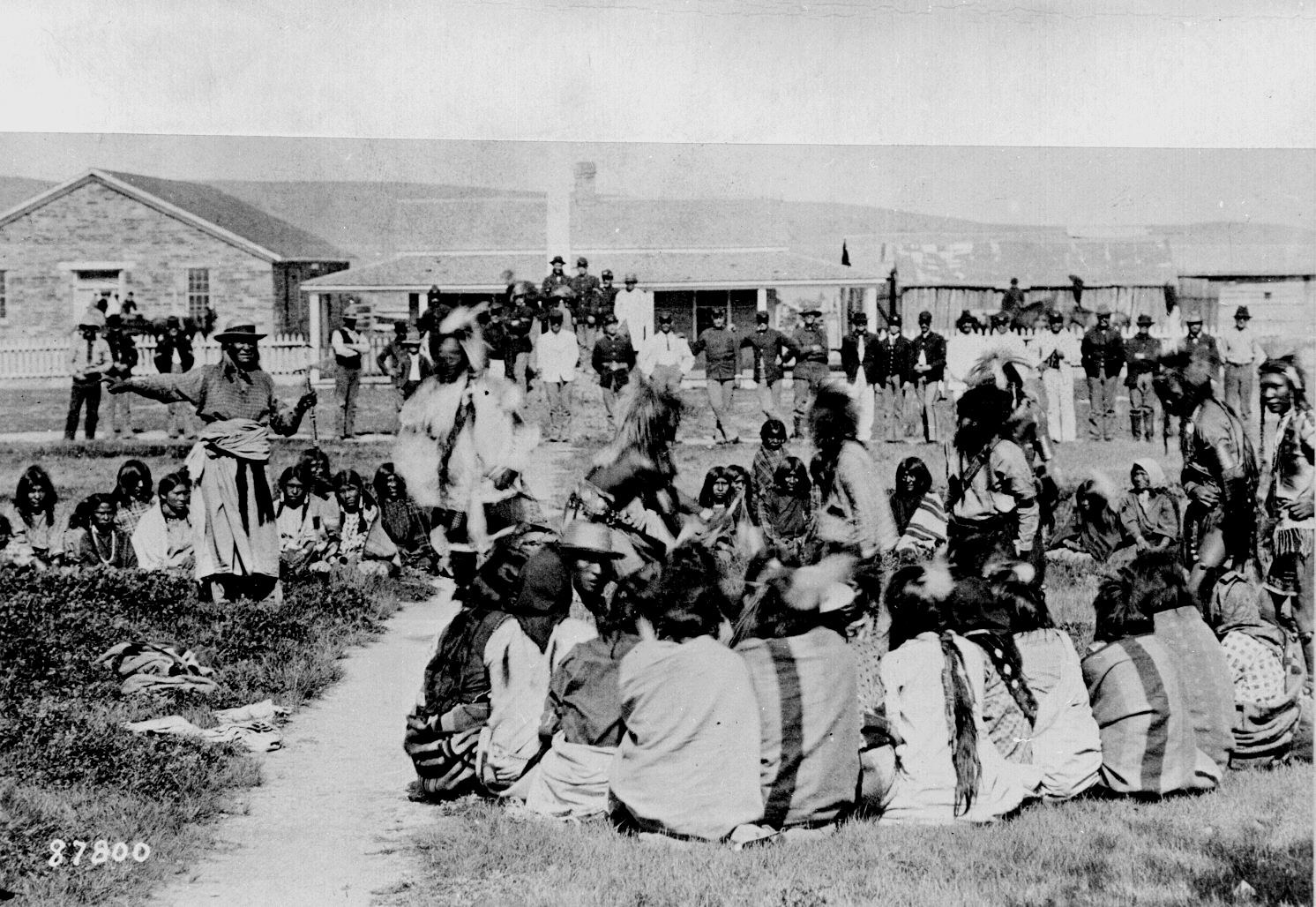
Native Americans were removed from their land and sent to reservations to-

a)

make land available for settlers

b)

make land available for immigrants

c)

protect the buffaloes

d)

clear way for the railroads

32.

was established that positions within the federal government should be awarded on the basis of merit instead of political affiliation

a)

Civil Service Reform

b)

Homestead Act

c)

Dawes Act

d)

Chinese Exclusion Act

33.

the practice of a successful political party giving public office to its supporters without any political experience

a)

The Spoils System

b)

Civil Service Reform

c)

Interstate Commerce Act

d)

Dawes Act

34.

Known as an entrepreneur who began his business with his own investment of capital and accumulated great wealth

a)

John D. Rockefeller

b)

William Jennings Bryan

c)

Theodore Roosvelt

d)

Boss Tweed

35.

A movement of good works (like helping the poor) started by Protestant (Christian) leaders was called

a)

The Social Gospel Movement

b)

Civil Service Reform

c)

The Hull House

d)

The Homestead Act

36.

Congested, overcrowded, and pollution were some problems due to-

a)

Urbanization

b)

Westward Expansion

c)

The Klondike Gold Rush

d)

The Transcontinental Railroad

37.

The Chinese Exclusion Act was passed due to-

a)

low wages & unemployment in the West Coast

b)

low wages & unemployment in the South

c)

plenty of jobs and high wages in the country

d)

plenty of jobs and high wages in the West coast

38.
During the Gilded age, workers came together to work for better pay, working conditions, and less hours. Leaders such as Samuel Gompers help led many of this workers in....
a)
Philanthropy
b)
Labor Unions
c)
Political Bosses
d)
Credit Unions
39.
The innovation of this transportation help open up the national market? 
a)
boats
b)
railroads
c)
autombils 
d)
horse drawn carriages 
40.
Men such as Andrew Carnegie believed in giving money to libraries, musuems and schools to help benefit people who wanted to move up in the social ladder. 
a)
geopolitical
b)
political bosses
c)
anthropolgy
d)
philanthropy
41.
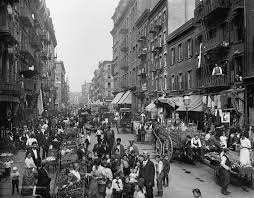
Because of the rapid growth of Industrilization in the North people moved out of rural towns to?
a)
Rural farms
b)
Urbanzied cities
c)
Subrebs cities
d)
El rancho
43.
Who was the "captain of industry" who created the Standard Oil Trust?
a)
Andrew Carnegie
b)
John D. Rockefeller
c)
Henry Ford
d)
Cornelius Vanderbilt
43.
Who was the "captain of industry" who created the Standard Oil Trust?
a)
Andrew Carnegie
b)
John D. Rockefeller
c)
Henry Ford
d)
Cornelius Vanderbilt
45.
in 1882, the Government passed this legislation that restricted immigration for 10 years from a certain group into the United States.
a)
Nativist Act
b)
Mexican Reparition Act
c)
Dawes Act
d)
Chinese Exclusion Act
45.
in 1882, the Government passed this legislation that restricted immigration for 10 years from a certain group into the United States.
a)
Nativist Act
b)
Mexican Reparition Act
c)
Dawes Act
d)
Chinese Exclusion Act
47.
During the Gilded age, workers came together to work for better pay, working conditions, and less hours. Leaders such as Samuel Gompers help led many of this workers in....
a)
Philanthropy
b)
Labor Unions
c)
Political Bosses
d)
Credit Unions
47.
During the Gilded age, workers came together to work for better pay, working conditions, and less hours. Leaders such as Samuel Gompers help led many of this workers in....
a)
Philanthropy
b)
Labor Unions
c)
Political Bosses
d)
Credit Unions
49.
Many Immigrants faced issues once they arrived such as language barriers, but these group of people mostly restricted new immigrants from emtering the country.
a)
Democrats
b)
Republicans
c)
Donald Trump
d)
Nativists
49.
Many Immigrants faced issues once they arrived such as language barriers, but these group of people mostly restricted new immigrants from emtering the country.
a)
Democrats
b)
Republicans
c)
Donald Trump
d)
Nativists
50.
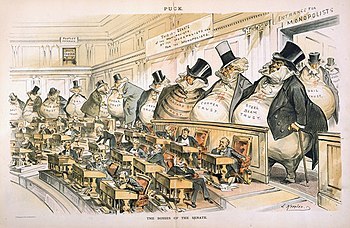
Name for entrepreneurs who use ruthless tactics to destroy competition or to keep wages low
a)
Captain of Industry
b)
Robber Baron
c)
Philanthropist
d)
Consolidator
51.
In the late 19th century, the ideas of Social Darwinism were used primarily to 
a)
explain the differences in income between the rich and the poor
b)
urge Congress to end immigration
c)
encourage the passage of compulsory education laws
d)
support the growth of new political parties
52.
Which law expanded competition and eliminated trusts and monopolies?
a)
Interstate Commerce Act 
b)
Homestead Act
c)
Sherman AntiTrust Act
d)
Dawes Act
53.

During the Gilded age, workers came together to work for better pay, working conditions, and less hours. Leaders such as Samuel Gompers help led many of this workers in....

a)

Philanthropy

b)

Labor Unions

c)

Political Bosses

d)

Credit Unions

54.
Members of which group most likely to belong to Populist Party?
a)
Anarchists
b)
Farmers
c)
Industrialists
d)
Immigrants
55.
What did the Homestead Act do?
a)
It limited immigration
b)
It regulated businesses
c)
It increased the tariff
d)
It gave free land to those who settled in the West
56.
Both the Sherman Antitrust Act and the Clayton Antitrust Act were passed in response to the problem of
a)
companies refusing to hire minority workers
b)
 businesses choosing to hire illegal immigrants
c)
unsafe working conditions in factories 
d)
business combinations limiting competition
57.
Monetary system desired by the Populists that was backed by both gold and silver
a)
bimetallism
b)
gold standard
c)
fiat money
d)
silver standard
58.

Which is the best example of horizontal combination?

a)

a) Carnegie buying the necessary parts to making steel

b)

b) Rockefeller buying oil companies around US

c)

c) cities expanding to outward to allow more immigrants

d)

d) laws passed to protect hardworking Americans

59.

The government doing little to regulate the economy is an aspect of what economic system?

a)

Communism

b)

capitalism

c)

laissez faire

d)

socialism

60.

Invented the telephone and the company AT&T

a)

Philip Armour and Gustavas Swift

b)

Alexander Graham Bell

c)

Thomas Edison

d)

Jim Fisk & Jay Gould

61.

Nicknamed “The Wizard of Menlo Park” due to the number of items he invented. These inventions included the light-bulb, phonograph, motion picture camera, and portable x-ray machine.

a)

Thomas Edison

b)

Alexander Graham Bell

c)

john D. Rockefeller

d)

Andrew Carnegie

62.

Controlling an industry from the “ground up”—owning everything a business needs to carry out its daily operations. Carnegie used this method to dominate the steel industry.

a)

Horizontal Integration

b)

Vertical Integration

63.

During the Gilded Age, business and many citizens believed that only the “fittest” or “strongest” businesses deserved to survive. This belief is called:

a)

The Gospel of Wealth

b)

Socialism

c)

The Gospel of Darwin

d)

Social Darwinism

64.

___ was the social and religious movement that argued it was the duty of the very wealthy to donate to “worthy” causes. Carnegie built libraries.

a)

Social Darwinism

b)

Laissez-Faire

c)

Gospel of Wealth

d)

Satire

65.

A “hands’ off” government approach toward business regulation is called ______. Basically, government does not interfere with business in any way.

a)

Laissez-Faire

b)

Protective Tariffs

c)

Capital

d)

Typewriter

66.

At the ______, Henry Clay Frick attempted to break the Steel Worker’s Union by having striking workers beat up by Pinkertons. Once again, the army was called in to break the strike.

a)

General Electric

b)

Gilded Age Strike

c)

Homestead Strike

d)

Robber Barons

67.
Many Immigrants faced issues once they arrived such as language barriers, but these group of people mostly restricted new immigrants from emtering the country.
a)
Democrats
b)
Republicans
c)
Donald Trump
d)
Nativists
68.
In 1889, during the Gilded Age, a Settlement House called Hull House was opened in Chicago.  It was designed to help working class women, many recent immigrants, move out of poverty and dependence on others.  It sought to address some of the excesses of industry and business.  Who founded Hull House?
a)
Margaret Sanger
b)
Jane Addams
c)
Elizabeth Cady Stanton
d)
Susan B. Anthony
69.
believed in giving his money back under his 'Gospel of Welath" policy
a)
Andrew Carnegie
b)
John Rockefeller
c)
Eugene Debs
d)
Cornelius Vanderbilt
70.
This term refers to the process of teaching immigrants about U.S. culture and our beliefs and customs, all the while assimilating into American society.
a)
Americanization
b)
Nativism
c)
American
d)
MexiCAN
71.
Which group believed in survival of the fittest and people were naturally selected to succeed?
a)
social darwinist
b)
political bosses
c)
nativist
d)
political machines
72.

Political Machines took advantage of what major groups?

a)

The Immigrants and the Poor

b)

The Immigrants and Big Businesses

c)

The Poor and the Chinese

d)

The Chinese and the Big Businesses

73.

What was the purpose of the Civil Service Commission?

a)

fill government jobs based on merit

b)

end the Gilded Age

c)

break up monopolies

d)

award government jobs based on loyalty

74.
Laissez-faire means..
a)
gov't stays out of business
b)
gov't gets involved in business
c)
gov't regulates everything
d)
capitalism
75.
Angel Island is in...
a)
PA
b)
NC
c)
NY
d)
CA
76.
Ellis Island is in...
a)
PA
b)
CA
c)
NC
d)
NY
77.
Under this policy in 1887, the Government gave Native Americans land in order to farm land, just like European farmers. 
a)
Dawes Act
b)
Ghost Dance
c)
Trail of Tears
d)
Laws Act
78.
The innovation of this transportation help open up the national market? 
a)
boats
b)
railroads
c)
autombils 
d)
horse drawn carriages 
79.
Due to the corruption of the railroads companies, the U.S. government created this act to regulate railroad companies to be reasonable in prices.
a)
Interstate Commerece Act
b)
Dawes Act
c)
Transcontiental Act
d)
Laizzez Faire Act 
80.
Because of the rapid growth of Industrilization in the North people moved out of rural towns to?
a)
Rural farms
b)
Urbanzied cities
c)
Subrebs cities
d)
El rancho
81.
A group of companies in the same industry giving day-to-day operation of their companies over to a single board of directors.
a)
monopoly
b)
corporation
c)
trust
d)
horizontal Integration
82.
What was a city government marked by corruption, bribery, and Kickbacks (common during the Gilded Age) called?
a)
credit mobilier
b)
political machine
c)
corrected democracy
d)
electoral politics
83.
Haymarket, Homestead, and Pullman were
a)
wealthy industrialists of the late 1800s
b)
leaders of labor unions
c)
notorious industrial strikes
d)
horizontally consolidated companies
84.
This man was known for his success in consolidating the railroads
a)
John D. Rockefeller
b)
Andrew Carnegie
c)
Cornelius Vanderbilt
d)
Gustavus Swift
85.
Who was the "captain of industry" who created the Standard Oil Trust?
a)
Andrew Carnegie
b)
John D. Rockefeller
c)
Henry Ford
d)
Cornelius Vanderbilt
86.
Which is NOT a conclusion that can be made about the transcontinental railroad?
a)
Goods were transported across country
b)
Travel across the country was possible
c)
Populations in the west increased
d)
Railroad reduced the size of the US
87.
Which one of these men was not a robber baron with a monopoly and ruthless business tactics?
a)
Andrew Carnegie
b)
JP Morgan
c)
John D. Rockefeller
d)
Thomas Edison
88.

Which is the best example of horizontal combination?

a)

a) Carnegie buying the necessary parts to making steel

b)

b) Rockefeller buying oil companies around US

c)

c) cities expanding to outward to allow more immigrants

d)

d) laws passed to protect hardworking Americans

89.
Which group had a racial hatred of immigrants, since they took jobs from Americans for lower wages. 
a)
Nativists
b)
Political bosses
c)
Miners
d)
Labor leaders
90.
In the late 1800's, which was NOT a reason Congress passed restrictions on Chinese immigrants?
a)
Chinese immigrants took jobs
b)
Nativist & racial hate
c)
Chinese immigrants were moving east
d)
Chinese workers took lower pay
91.
Who was the leader of Tammany Hall (New York Poltical Machine)?
a)
Andrew Carnegie
b)
Henry Ford
c)
John D. Rockefeller
d)
William Tweed
92.
Which law expanded competition and eliminated trusts and monopolies?
a)
Interstate Commerce Act 
b)
Homestead Act
c)
Sherman AntiTrust Act
d)
Dawes Act
93.
Which is not a characteristic of a business monopoly?
a)
Control all of a product's production
b)
business competition
c)
rise prices
d)
put all competition out of business
94.

Which list of Progressive Era presidents is in the correct chronological order by when each served

a)

Woodrow Wilson

Teddy Roosevelt

Howard Taft

b)

Howard Taft

Woodrow Wilson

Teddy Roosevelt

c)

Teddy Roosevelt

Howard Taft

Woodrow Wilson

d)

Woodrow Wilson

Howard Taft

Teddy Roosevelt

96.

Which of the following was one effect of the Progressive Era political reforms of initiative, referendum, and recall

a)

Judicial authority expanding to included administering local elections

b)

Government officials responding to the needs of voters more readily

c)

Women and minorities increasing participation in political process

d)

Political machines gaining greater influence in local elections and politics

96.

Which of the following was one effect of the Progressive Era political reforms of initiative, referendum, and recall

a)

Judicial authority expanding to included administering local elections

b)

Government officials responding to the needs of voters more readily

c)

Women and minorities increasing participation in political process

d)

Political machines gaining greater influence in local elections and politics

97.

How did the Seventeenth Amendment to the U.S. Constitution give more political power to the individual voter?

a)

It allowed citizens to vote regardless of race, creed, or ethnicity.

b)

It freed citizens to vote without paying a poll tax or passing a literacy test.

c)

It established the direct election of U.S. Senators by popular vote.

d)

It allowed for the number of senators per state to be determined by population.

98.

Political change in the Progressive Era was characterized by the expansion of ~

a)

social welfare programs

b)

power for the executive branch

c)

individual rights for more Americas

d)

civil rights for American Indian tribes

99.

Jane Addams is best remembered for ~

a)

writing muckracking articles inspiring social reform

b)

creating social reform programs for the urban poor

c)

leading the temperance movement during the early 1900s

d)

serving as the first woman representative during the 1800s

100.

The Federal Reserve Act of 1913 created a central banking system in the United States with the responsibility of ~

a)

collecting of federal income taxes

b)

managing of interstate commerce

c)

enforcing of the Sherman Anti-trust legislation

d)

regulating of monetary policy in the United States

101.

The writings of W.E.B. DuBois promoted the idea that ~

a)

African Americans deserved racial equality immediately.

b)

African Americans needed to organize as a political party.

c)

African Americans must leave the country to obtain rights.

d)

African Americans should seek to gradually gain civil rights.

102.

The first large-scale effort by the United States government to regulate business involved ~

a)

passage of the Sherman Anti-trust Act

b)

adoption of the Eighteenth Amendment

c)

creation of the Food and Drug Administration

d)

establishment of the Interstate Commerce Commission

103.

Journalist and social reformer Ida B. Wells was responsible for exposing the brutality associated with ~

a)

lynching

b)

gambling

c)

child labor

d)

alcohol abuse

105.
Voters could directly introduce bills in the state legislature and could vote on whether they wanted a bill passed
a)
initiative
b)
referendum
c)
recall
d)
secret ballot
105.
Voters could directly introduce bills in the state legislature and could vote on whether they wanted a bill passed
a)
initiative
b)
referendum
c)
recall
d)
secret ballot
106.
Voters could directly introduce bills in the state legislature and could vote on whether they wanted a bill passed
a)
initiative
b)
referendum
c)
recall
d)
secret ballot
108.
Voters were less subject to pressure and intimidation when they could vote this way
a)
secret ballot
b)
recall
c)
initiative
d)
referendum
108.
Voters were less subject to pressure and intimidation when they could vote this way
a)
secret ballot
b)
recall
c)
initiative
d)
referendum
109.
Voters were less subject to pressure and intimidation when they could vote this way
a)
secret ballot
b)
recall
c)
initiative
d)
referendum
110.

This amendment to the Constitution created an Income Tax to help close the gap between the rich and the poor?

a)

17th

b)

16th

c)

19th

d)

18th

111.
What amendment provided suffrage for women (1920)?
a)
16th
b)
17th
c)
18th
d)
19th
112.
Who wrote the expose piece of literature that revealed the extensive corrupt monopolistic business practices of Standard Oil?
a)
Ida Tarbell
b)
Lewis Hines 
c)
Jacob Riis
d)
Upton Sinclair
113.
Whose book led to the direct passage of the Meat Inspection Act and indirect of the Pure Food and Drug Acts?
a)
Jacob Riis
b)
Lewis Hines
c)
Ida Tarbell
d)
Upton Sinclair
114.
Who was the person who founded the settlement house (Hull House) for the Assimilation and Americanization of the immigrant poor?
a)
Elixabeth Cady Stanton
b)
Jane Addams
c)
Susan B. Anthony
d)
Belle Starr
115.
Which of the following is an initiative?
a)
People have the right to remove a politician from office
b)
People have the right to choose who will run for President
c)
People have the right to propose a new law
d)
People have the right to veto or accept a law passed by the government
116.
Which of the following is a Referendum?
a)
People have the right to remove an elected official from office
b)
People have the right to choose who will run for President
c)
People have the right to propose their own law
d)
Any law passed by the government can be voted on for approval or veto by the people
117.
Which of the following is a Recall?
a)
People have the right to choose who will run for President
b)
People have the right to remove an elected official from office
c)
People have the right to propose a new law
d)
People have the right to vote on any law passed by their government for approval/veto
118.
 The actions of muckrakers in the late 19th century and early 20th century resulted in
a)
Supreme Court decisions that expanded the right to vote
b)
government regulation of unfair business practices
c)
increases in the power of monopolies
d)
reduction of the president’s power to manage the economy
119.
Writers that dig up the bad things going on in society
a)
Suffragists
b)
Muckrakers
c)
Students
d)
Chaffinators
120.
To preserve water, trees, plants, and other natural resources
a)
Precipitation
b)
Confurion
c)
Conservation
d)
Infusion
121.
What were the main arguments against alcohol consumption in the 1800s?
a)
Alcohol abuse led to family strife, moral decline, and a weaker nation.
b)
Drunk driving was killing an average of twelve motorists per month.
c)
Alcohol was leading to opioid (mainly heroin) addiction.
d)
Some alcohol consumption was considered healthy, but most people preferred water.
122.
The movement to ban the making, sale and transport of alcoholic beverages was called--
a)
The Progressive Era
b)
Woman's Suffrage Movement
c)
The Temperance Movement
d)
Abolition Movement
123.
In what constitutional amendment did the work of the temperance movement result?
a)
13th: abolishing slavery
b)
19th: women's suffrage
c)
18th: alcohol prohibition
d)
21st: prohibition repeal
124.
The 19th Amendment was about--
a)
Workplace reforms
b)
Woman Sufferage
c)
Prohibition of alcohol
d)
Racial Segregation
125.
The 18th Amendment was about--
a)
Workplace Reforms
b)
Woman's Sufferage
c)
Prohibition of Alcohol 
d)
Racial Segregation
126.
The peoples chance to vote on their parties candidate, instead of it being appointed.
a)
Primary
b)
Referedum
c)
19th Amendment
d)
21st Amendment
127.
This organization helps fight to end discrimination against different races
a)
NSA
b)
WCTU
c)
NAACP
d)
RESPECT
128.
This organization helps fight to end discrimination against different races
a)
NSA
b)
WCTU
c)
NAACP
d)
RESPECT
129.
This was created to allow women to vote nationally
a)
17th Amendment
b)
18th Amendment
c)
19th Amendment
d)
21st Amendment
130.
Banned people from making, drinking or selling alcohol
a)
17th Amendment
b)
18th Amendment
c)
19th Amendment
d)
21st Amendment
131.
Made it illegal to create trusts and monopolies
a)
Sherman Antitrust Act
b)
Sherman Antimonopoly Act
c)
Sherman Shortly Act
d)
Sherman No Business Act
132.
A way for people to vote directly on a proposed new law
a)
Recall
b)
Referendum
c)
Initiative
d)
Primary
133.
A way for people to vote directly on a proposed new law
a)
Recall
b)
Referendum
c)
Initiative
d)
Primary
134.
A way for people to vote directly on a proposed new law
a)
Recall
b)
Referendum
c)
Initiative
d)
Primary
135.
The founder of the Tuskegee Institute and head of the African Americans community
a)
Booker T. Washington
b)
George Washington Carver
c)
W.E.B Dubois
d)
Upton Sinclair
136.
Allowed alcohol by retracting the 18th Amendment
a)
17th Amendment
b)
18th Amendment
c)
19th Amendment
d)
21st Amendment
137.
Voters were less subject to pressure and intimidation when they could vote this way
a)
secret ballot
b)
recall
c)
initiative
d)
referendum
138.
Voters could directly introduce bills in the state legislature and could vote on whether they wanted a bill passed
a)
initiative
b)
referendum
c)
recall
d)
secret ballot
139.

This amendment to the Constitution created an Income Tax to help close the gap between the rich and the poor?

a)

17th

b)

16th

c)

19th

d)

18th

140.
Whose book led to the direct passage of the Meat Inspection Act and indirect of the Pure Food and Drug Acts?
a)
Jacob Riis
b)
Lewis Hines
c)
Ida Tarbell
d)
Upton Sinclair
141.
Who wrote the expose piece of literature that revealed the extensive corrupt monopolistic business practices of Standard Oil?
a)
Ida Tarbell
b)
Lewis Hines 
c)
Jacob Riis
d)
Upton Sinclair
142.
What anti monopoly law made all"combinations, contracts, and conspiracies" that restrained free trade illegal (1890)?
a)
Interstate Commerce Act
b)
Sherman Antitrust Act
c)
Clayton Antitrust Act
d)
Keller-Cefauver Act
143.
 The actions of muckrakers in the late 19th century and early 20th century resulted in
a)
Supreme Court decisions that expanded the right to vote
b)
government regulation of unfair business practices
c)
increases in the power of monopolies
d)
reduction of the president’s power to manage the economy
144.

What were the four goals of the Progressive Movement?

a)

protecting social welfare, promoting moral improvement, creating economic reform, fostering efficiency

b)

increasing sale and consumption of alcohol, creating larger monopolies, decreasing funds to the poor, giving trusts more freedom

c)

recovering from economic depression, decreasing monitoring of food production processes, clearing more land for industry, reducing women's suffrage

d)

giving children more work hours, decreasing participation of popular voters in elections/government, promoting success of party bosses, decreasing concern for wildlife conservation

145.
Group of works who collective bargain to get higher pay, more rights and better working conditions
a)
Soviet Union
b)
Labor Union
c)
Commune 
d)
Trade Federation
146.
What does AFL stand for?
a)
American Fun Labor
b)
American Finance of Labor
c)
American Freedom of Labor
d)
American Federation of Labor
147.
What industry was paralyzed by the Pullman Strike of 1894?
a)
Clothing
b)
Steel
c)
Railroads
d)
It was spread across several industries
148.
Who did the AFL represent?
a)
trade and craft (skilled) workers
b)
business owners
c)
government workers
d)
teachers
149.
Knights of Labor, American Federation of Labor, and the Congress of Industrial Organization were examples of....
a)
Organized Crime
b)
Terrorist organizations
c)
Labor unions
150.
What was the main cause of the Pullman Strike?
a)
Cut wages 
b)
Pullman wouldn't tell the workers the Wifi password
c)
Raised rent prices
d)
Pullman wouldn't pay for electricity in worker's homes
151.
The Homestead Strike was a protest 
a)
in Colorado demanding safer working conditions. 
b)
Chicago demanding an eight-hour workday.
c)
against the Pullman Palace Car Company’s unsafe working conditions
d)
against the Carnegie Steel Company’s plan to cut jobs.
152.
Collective bargaining is the 
a)
practice used by employers to hire groups of laborers.
b)
practice used by employers to get the cheapest labor possible.
c)
idea that laborers working in groups are more productive in the workplace.
d)
idea that laborers acting together have greater success in negotiating with management.
153.
How did the public often perceive unions as the result of events like the Haymarket riot and the Homestead strike?
a)
The unions were viewed as champions of the common man
b)
The unions were viewed as persecuted victims 
c)
The unions were viewed as promoting violence and anarchy 
d)
The unions were viewed as being treated unfairly by the government 
154.
Which of the following is a strategy used by unions to force employers to meet labor demands?
a)
Injunctions 
b)
Lock outs 
c)
Scabs 
d)
Strikes 
155.
Who won the Election of 1912?
a)
Woodrow Wilson
b)
Teddy Roosevelt
c)
William Taft
d)
Eugene Debs
156.
Who won the Election of 1912?
a)
Woodrow Wilson
b)
Teddy Roosevelt
c)
William Taft
d)
Eugene Debs
157.
What law did Woodrow Wilson create to stop monopolies?
a)
Sherman Antitrust Act
b)
Clayton Antitrust Act
c)
Wilson Antitrust Act
d)
Johnson Antitrust Act
158.
What law did Woodrow Wilson enact to reform the U.S. banking system?
a)
Federal Reserve Act
b)
Clayton Antitrust Act 
c)
Meat Inspection Act
d)
Adamson Act
159.
Woodrow Wilson is credited with helping to pass what amendment?
a)
16th
b)
19th
c)
13th
d)
15th
166.
Former President Teddy Roosevelt was so upset at his protege', Taft, he did what during Taft's bid for reelection in 1912?
a)
actively campaigned for another Republican candidate
b)
actively campaigned for the Democratic candidate Woodrow Wilson
c)
Formed the Bull Moose Party and ran against Taft
d)
Left the country in protest
166.
Former President Teddy Roosevelt was so upset at his protege', Taft, he did what during Taft's bid for reelection in 1912?
a)
actively campaigned for another Republican candidate
b)
actively campaigned for the Democratic candidate Woodrow Wilson
c)
Formed the Bull Moose Party and ran against Taft
d)
Left the country in protest
166.
Former President Teddy Roosevelt was so upset at his protege', Taft, he did what during Taft's bid for reelection in 1912?
a)
actively campaigned for another Republican candidate
b)
actively campaigned for the Democratic candidate Woodrow Wilson
c)
Formed the Bull Moose Party and ran against Taft
d)
Left the country in protest
166.
Former President Teddy Roosevelt was so upset at his protege', Taft, he did what during Taft's bid for reelection in 1912?
a)
actively campaigned for another Republican candidate
b)
actively campaigned for the Democratic candidate Woodrow Wilson
c)
Formed the Bull Moose Party and ran against Taft
d)
Left the country in protest
166.
Former President Teddy Roosevelt was so upset at his protege', Taft, he did what during Taft's bid for reelection in 1912?
a)
actively campaigned for another Republican candidate
b)
actively campaigned for the Democratic candidate Woodrow Wilson
c)
Formed the Bull Moose Party and ran against Taft
d)
Left the country in protest
166.
Former President Teddy Roosevelt was so upset at his protege', Taft, he did what during Taft's bid for reelection in 1912?
a)
actively campaigned for another Republican candidate
b)
actively campaigned for the Democratic candidate Woodrow Wilson
c)
Formed the Bull Moose Party and ran against Taft
d)
Left the country in protest
166.
Former President Teddy Roosevelt was so upset at his protege', Taft, he did what during Taft's bid for reelection in 1912?
a)
actively campaigned for another Republican candidate
b)
actively campaigned for the Democratic candidate Woodrow Wilson
c)
Formed the Bull Moose Party and ran against Taft
d)
Left the country in protest
167.
Former President Teddy Roosevelt was so upset at his protege', Taft, he did what during Taft's bid for reelection in 1912?
a)
actively campaigned for another Republican candidate
b)
actively campaigned for the Democratic candidate Woodrow Wilson
c)
Formed the Bull Moose Party and ran against Taft
d)
Left the country in protest
170.
What impact did the Republican split have on the election of 1912?
a)
Democrat Woodrow Wilson won in a landslide
b)
Democrat Woodrow Wilson won by a narrow margin
c)
Teddy Roosevelt won as a third party candidate
d)
Taft won reelction
170.
What impact did the Republican split have on the election of 1912?
a)
Democrat Woodrow Wilson won in a landslide
b)
Democrat Woodrow Wilson won by a narrow margin
c)
Teddy Roosevelt won as a third party candidate
d)
Taft won reelction
170.
What impact did the Republican split have on the election of 1912?
a)
Democrat Woodrow Wilson won in a landslide
b)
Democrat Woodrow Wilson won by a narrow margin
c)
Teddy Roosevelt won as a third party candidate
d)
Taft won reelction
171.
Tariffs at one time were the largest source of revenue for the U.S.  With lower tariffs, what NEW source of revenue was created to replace it?
a)
federal income tax
b)
corporate tax
c)
national sales tax
d)
federal property tax
172.
Tariffs at one time were the largest source of revenue for the U.S.  With lower tariffs, what NEW source of revenue was created to replace it?
a)
federal income tax
b)
corporate tax
c)
national sales tax
d)
federal property tax
173.
What impact did the Republican split have on the election of 1912?
a)
Democrat Woodrow Wilson won in a landslide
b)
Democrat Woodrow Wilson won by a narrow margin
c)
Teddy Roosevelt won as a third party candidate
d)
Taft won reelction
174.
Which constitutional amendment allowed for a federal income tax?
a)
16th
b)
17th
c)
18th
d)
19th
176.
What does the Federal Reserve do?
a)
Regulates monopolies
b)
Regulates the money supply
c)
Regulates trusts
d)
Regulates Prohibition
176.
What does the Federal Reserve do?
a)
Regulates monopolies
b)
Regulates the money supply
c)
Regulates trusts
d)
Regulates Prohibition
177.
Income taxes are considered a(an)...
a)
direct tax on people
b)
indirect tax on employers
c)
direct tax on windmills
d)
indirect tax on kindling
178.
This entity controls the money supply of the nation.
a)
Federal Reserve
b)
National Bank
c)
Federal Quotient
d)
National National
179.
This was the biggest change because of Progressivism...
a)
Americans expect government action
b)
Americans thought about going to the moon
c)
Americans considered showering more often
d)
Americans wanted government to go away
180.

Taft's dream job was a

a)

President

b)

Judge

c)

Laywer

d)

Teacher

181.

Taft accomplished:

a)

Enforced Sherman Anti-Trust legislation

b)

Advocated for the 16th Amendment

c)

Lowered Tariff Rates with the Payne-Aldrich Tariff Act

d)

All of the above

187.
This was created to regulate monopolies
a)
Interstate Commerce Commission
b)
Sherman Anti-Trust Act
c)
Roosevelt Anti-Trust Act
d)
Slayton Anti-Trust Act
187.
This was created to regulate monopolies
a)
Interstate Commerce Commission
b)
Sherman Anti-Trust Act
c)
Roosevelt Anti-Trust Act
d)
Slayton Anti-Trust Act
187.
This was created to regulate monopolies
a)
Interstate Commerce Commission
b)
Sherman Anti-Trust Act
c)
Roosevelt Anti-Trust Act
d)
Slayton Anti-Trust Act
187.
This was created to regulate monopolies
a)
Interstate Commerce Commission
b)
Sherman Anti-Trust Act
c)
Roosevelt Anti-Trust Act
d)
Slayton Anti-Trust Act
187.
This was created to regulate monopolies
a)
Interstate Commerce Commission
b)
Sherman Anti-Trust Act
c)
Roosevelt Anti-Trust Act
d)
Slayton Anti-Trust Act
187.
This was created to regulate monopolies
a)
Interstate Commerce Commission
b)
Sherman Anti-Trust Act
c)
Roosevelt Anti-Trust Act
d)
Slayton Anti-Trust Act
188.
This was created to regulate monopolies
a)
Interstate Commerce Commission
b)
Sherman Anti-Trust Act
c)
Roosevelt Anti-Trust Act
d)
Slayton Anti-Trust Act
189.
What nickname did Roosevelt get after breaking up monopolies with the Sherman Anti-Trust Act?
a)
Trustbuster
b)
Monopolybuster
c)
Theodore Roosevelt Destroyer of Trusts
d)
Slayer of trusts and eradicator of monopolies
190.
Who was the bigger "trustbuster?"
a)
Taft
b)
Roosevelt
191.
What did Taft start to bring more help and attention to problems like child labor?
a)
Children's Bureau
b)
Labor Bureau
c)
Mining Bureau
d)
Bathtub Bureau
192.
TR believed our natural resources needed to be...
a)
off limits
b)
conserved
c)
used up quickly
d)
shot into space
193.
The Jungle--by muckraker Upton Sinclair--exposed the unsanitary conditions in the meatpacking industry and led to this law
a)
Sherman Anti-Trust Act
b)
Meat Inspection Act
194.
What is a trust?
a)
large business arrangement
b)
stock sale
c)
arbitrary union
d)
presidential cabinet
195.
TR believed we were competing against all other nations.  The strong would survive in his philosophy of...
a)
Social Constructionism
b)
Social Darwinism
c)
Social Studies
d)
Social Confucianism