wayground logo

Free Printable Worksheets

NEW

Font size

S
M
L
XL
Worksheets

Atoms, Elements & The Periodic Table Test Review

Total questions: 69

Worksheet time: 1hrs 4mins

Name
Class
Date
1.
Where are protons located in the atom?
a)
orbitals
b)
nucleus
c)
rings
d)
positive
2.
What part of the atom did Rutherford discover?
a)
orbitals
b)
protons
c)
electrons
d)
nucleus
3.
Who was the first scientist to name atoms?
a)
Aristotle
b)
Democritus
c)
JJ Thomson
d)
Rutherford
4.
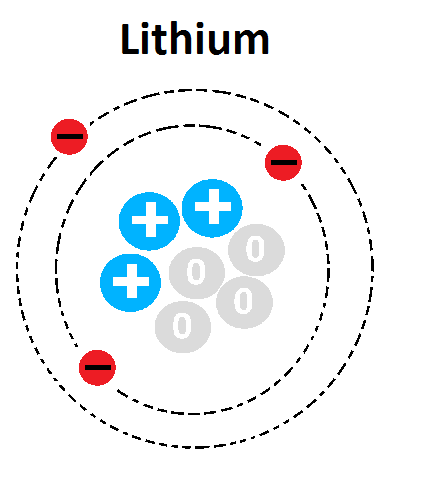
What is the overall charge of this atom?
a)
+4
b)
-3
c)
+1
d)
-1
5.
What is the mass number of this atom?
a)
1
b)
3
c)
4
d)
7
6.
What is the atomic number of this atom?
a)
2
b)
4
c)
6
d)
none of the above
7.
How many neutrons does the isotope of lithium have?
a)
8
b)
3
c)
4
d)
5
8.
What quantities vary between isotopes of an element?
a)
protons, electrons, and atomic mass
b)
protons, electrons, and atomic number
c)
neutrons and electrons
d)
neutrons and atomic mass
9.
What particle decides the identity of an atom/element?
a)
proton
b)
neutron
c)
electron
d)
All of the above.
10.
Valence electrons are
a)
outer shell electrons
b)
electrons involved in reactions
c)
s and p orbital electrons
d)
all of these
11.
Cations are
a)
negative ions
b)
gained electrons
c)
positive ions
d)
inner shell electrons
12.
Which of the following atoms is an anion?
a)
Na
b)
Mg
c)
Al
d)
Si
13.
Nonmetals are
a)
usually cations
b)
likely to lose electrons
c)
usually negative ions
d)
all of these
14.
A +2 ion will
a)
likely be a nonmetal
b)
add 2 electrons
c)
gain electrons
d)
subtract 2 electrons
15.
The sulfur ion will resemble
a)
Neon
b)
Chlorine
c)
Argon
d)
Phosphorous
16.
If an atom has the configuration of 1s2 2s2 2p6 3s1 the atom will probably
a)
gain 1 electron
b)
lose 1 electron
c)
fill the 3p orbital
d)
lose the 2p orbital
17.
What was JJ Thomson responsible for finding?
a)
protons
b)
neutrons
c)
nucleus
d)
electrons
18.
Ernest Rutherford discovered that the atom was mostly _________________ and has a _______________ charged nucleus.
a)
empty space, positively
b)
empty space, negatively
c)
full of protons, positively
d)
full of neutrons, negatively
19.
Which experiment taught us that atoms are mostly empty space and have a positively charged nucleus?
a)
Plum Pudding Model
b)
Cathode Ray Tube
c)
Gold Foil Experiment
d)
Planetary Model
20.
If an atom is charged positively, it has...?
a)
gained protons
b)
lost protons
c)
gained electrons
d)
lost electrons
21.
A positively charged atom is called a?
a)
ion
b)
anion
c)
cation
d)
onion
22.
How many valence electrons does Carbon have?
a)
4
b)
12
c)
6
d)
14
23.
How many valence electrons does Oxygen have?
a)
8
b)
2
c)
16
d)
6
24.
a)
2
b)
8
c)
3
d)
13
25.
Most elements will gain or lose electrons so that they end up with _______ valence electrons.
a)
2
b)
6
c)
8
d)
10
26.
The electron configuration of an atom is 1s22s22p6.  The number of electrons in the atom is 
a)
3
b)
6
c)
8
d)
10
27.
What atom matches this electron configuration?
1s22s22p63s23p64s23d10
a)
Zinc
b)
Copper
c)
Nickel
d)
Germanium
28.
What is the noble gas shorthand electron for Sulfur atom?
a)
[Ar] 3p4
b)
[He] 3s23p4
c)
[Ne] 3s23p4
d)
[Na] 3s23p4
29.
What atom matches this electron configuration?
[Xe] 6s25d9
a)
Mercury
b)
Gold
c)
Platinum
d)
Thallium
30.
What electron configuration matches an oxygen ion?
a)
1s22s22p63s2, 3p64s23d104p5
b)
1s22s22p4
c)
1s22s22p6
d)
1s22s22p63s23p64s23d1
31.
The electron configuration of an atom is 1s22s22p6.  The number of valence electrons in the atom is 
a)
3
b)
6
c)
8
d)
10
32.
Which element is depicted from this orbital diagram
a)
Fluorine
b)
Neon
c)
Chlorine
d)
Argon
33.
Which is associated with more energy? 
a)
2p
b)
2s
c)
3p
d)
1s
34.
The maximum number of electrons that can be placed in an p orbital.  
a)
2
b)
6
c)
10
d)
14
35.
Spherical orbital, also the lowest energy orbital. 
a)
s
b)
p
c)
d
d)
f
36.
This orbital diagram represents:  
a)
C
b)
B
c)
N
d)
O
37.

In the quantum model, electrons are:

a)

waves

b)

particles

c)

both particles and waves

d)

an electric fluid

38.

The Pauli Exclusion Principle states that:

a)

electrons can only share an orbital when they have opposite spin

b)

electrons can only share an orbital when they have the same spin

c)

electrons in the same atom can never have the same spin

d)

electrons both spin and twirl at the same time

39.

Which orbital is displayed correctly?

a)

A

b)

B

c)

C

d)

D

40.
When a barium atom loses two electrons to forma Ba2+ ion, the electrons are lost from the -
a)
5s orbital.
b)
5p orbital.
c)
4f orbital.
d)
6s orbital
41.
Which of the following atoms would you expect  to have the largest atomic radius?
a)
Li
b)
K
c)
Ca
d)
Br
42.

Orbitals in a subshell should be filled

a)

with a single electron each before pairing electrons

b)

with pairs, and then with single electrons if any are left

c)

with as many electrons as they can fit

d)

with 8-10 electrons before moving on

43.

Use your stability and filling rules to predict Cu0's valence shell. (4s and 3d subshells)

a)
b)
c)
d)
44.
For an electron to change from ground state to an excited stated it must...
a)
Absorb energy
b)
Release energy
45.
This picture is an example of a(n)...
a)
absorption spectrum
b)
emission spectrum
c)
continuous spectrum
d)
black body spectrum
46.
High frequency waves have _________ wavelengths.
a)
varying
b)
long
c)
the same
d)
short
47.
Emission of light from an atom occurs when an electron
a)
drops from a higher to a lower energy level.
b)
   jumps from a lower to a higher energy level.   
c)
   moves within its atomic orbital.
d)
falls into the nucleus.
48.
Which group of the periodic table is composed of inert (not reactive)  gases?
a)
alkali metals
b)
alkaline earth metals
c)
halogens
d)
noble gases
49.
Which is a halogen?
a)
Helium
b)
Chlorine
c)
Oxygen
d)
Neptune
50.
Which is an alkali metal?
a)
Magnesium
b)
Iron
c)
Sodium
d)
Europium
51.
True or False: Elements in a group have the same number of electrons in their outer shell.
a)
true
b)
false
52.
Elements in the same ________ are more chemically similar.
a)
group
b)
period
c)
club
d)
table
53.
The majority of elements on the periodic table are
a)
man made.
b)
nonmetals.
c)
metals.
d)
gases.
54.
Which elements have the most similar chemical properties?
a)
K and Na
b)
K and Ca
c)
K and Cl
d)
K and S
55.
What period and group is Silver (Ag)? 
a)
Period 2, Group 1
b)
Period 3, Group 16
c)
Period 5, Group 11
d)
Period 2, 14
56.

Which rule is being broken this orbital diagram?

a)

Aufbau Principle

b)

Pauli Exclusion Principle

c)

Hund's Rule

d)

The diagram is correct.

57.
Which element is pictured?
a)
neon
b)
fluorine
c)
magnesium
d)
argon
58.
Which orbital shows a violation of the Pauli Exclusion Principle?
a)
A
b)
B
c)
C
d)
D
59.

Which rule is being broken with this orbital diagram?

a)

Aufbau Principle

b)

Pauli Exclusion Principle

c)

Hund's Rule

d)

The diagram is correct.

60.
As you move down the periodic table atoms get bigger.  This is because ____________.
a)
The atoms have more mass.
b)
The atoms have more protons.
c)
The atoms have more energy levels
d)
The atoms have more neutrons
61.
As you move across the periodic table atoms tend to get smaller because, ______________.
a)
the atoms have more mass.
b)
the atoms have less mass
c)
the atoms have more protons.
d)
the atoms have less electrons.
62.
Electronegativity is...
a)
the ability of an atom to attract/ accept electrons
b)
the ability of an atom to lose electrons
c)
the energy required to remove an electron from a specific atom
d)
how easy it is to make friends. 
63.
Ionization energy is...
a)
the energy required to add an electron to a specific atom
b)
how much energy it takes to remove an electron from an atom
c)
the energy required to shield the outer electrons from the nucleus
d)
a measure of the ability of an atom to attract electrons
64.
The atom with the largest atomic radius in Group 18 is - 
a)
Ar
b)
He
c)
Kr
d)
Rn
65.
Electronegativity __________ from left to right within a period and __________ from top to bottom within a group.
a)
decreases, increases 
b)
increases, increases
c)
increases, decreases 
d)
stays the same, increases
66.
Which of the following will have a higher electronegativity than arsenic (As)?
a)
Carbon (C)
b)
Neon (Ne)
c)
Antimony (Sb)
d)
Germanium (Ge)
67.
Do the following atoms belong to the same element? Explain
       Aluminum-27
       An atom with 14 protons and 13 neutrons
a)
Yes because they have the same number of protons
b)
Yes because they have the same mass
c)
No because they have different number of protons
d)
No because they have different number of neutrons
68.
Atom 1 has Mass=12  Protons=6
Atom 2 has Mass= 14 Electrons=6
Are these atoms isotopes of each other or different elements?

a)
Different Elements - Mg & Si
b)
Different Elements - Ar & Ca
c)
Isotopes of Carbon
d)
Isotopes of Magnesium
69.
An element has two naturally occurring isotopes. One is 10.013 amu and is 19.9% abundant. The other is 11.01 amu and is 80.1% abundant. What is the average atomic mass? What element is it?
a)
9.012, Beryllium
b)
12.011, Carbon
c)
6.941, Lithium
d)
10.812, Boron