wayground logo

Free Printable Worksheets

NEW

Font size

S
M
L
XL
Worksheets

Atomic Theory & Structure

Total questions: 52

Worksheet time: 38mins

Name
Class
Date
1.
This particle is found in the nucleus and has a positive charge
a)
Electron
b)
Proton
c)
Neutron
2.
The first person to ever talk about an atom was
a)
Democritus
b)
Rutherford
c)
Dalton
3.
All matter is made of what?
a)
energy 
b)
atoms 
c)
electrons 
d)
compounds 
4.
How did Rutherford discover the proton?
a)
Cathode tube ray experiment
b)
Gold Foil Experiment
c)
Planetary Model
d)
Plum Pudding Model
5.

What scientist is best known for his "Plum Pudding" or "chocolate chip cookie" model of the atom?

a)

J.J. Tomson

b)

Ernest Rutherford

c)

John Dalton

d)

Democritus

6.
Place the following scientists in order, from earliest to latest: 
A) Ernest Rutherford
B) J.J. Thomson
C) John Dalton
a)
B,C,A
b)
C,A,B
c)
A,C,B
d)
C,B,A
7.
J.J. Thomson provided evidence that an atom...
a)
is the smallest particle of matter
b)
contains negatively charged particles
c)
has an overall negative charge
d)
has an overall positive charge
8.
What does the nucleus of an atom contain?
a)
Electrons and neutrons
b)
Protons and neutrons
c)
Neutrinos and positrons
d)
DNA and RN
9.

The word atom comes from a Greek word "atomos" that means

a)

Invisible

b)

Indivisible or Uncuttable

c)

Undivided

d)

Indestructable

10.
Which scientist saw the atom as a positively charged sphere with negative particles (electrons) embedded within?
a)
J.J. Thomson
b)
Niels Bohr
c)
John Dalton
d)
Ernest Rutherford
11.
Bohr's model of the atom proposed that ___.
a)
electrons move around the nucleus in fixed orbits
b)
neutrons move around the nucleus
c)
neutrons do not exist, but are just paired protons and electrons
d)
the nucleus spins
12.
Which scientist used his gold foil experiment to show that an atom has a small, central, positively charged nucleus that contains most of the atom's mass?
a)
Rutherford
b)
Bohr
c)
Thomson
d)
Dalton
13.

Order the atomic models below from the oldest to the most recent.

a)

2, 1, 3, and 4

b)

1, 2, 4, and 3

c)

3, 2, 4, and 1

d)

3, 1, 2, and 4

14.
Dalton's model was a solid sphere with no subatomic particles. What was the nickname for this model?
a)
Billiard Ball
b)
Nuclear
c)
Planetary
d)
Plum Pudding
15.
Whose model of an atom is displayed in the picture?
a)
Thomson
b)
Rutherford
c)
Dalton
d)
Bohr
16.
Why has the model of an atom changed over time?
a)
Scientists discovered new information about atoms over time.
b)
Scientists couldn't agree on what the atom looked like.
c)
Atoms today are different than they were for Democritus in Greece.
d)
Atoms are always changing and may be different in the future.
17.
Whose model is in the picture displayed?
a)
Thomson
b)
Dalton
c)
Modern
d)
Rutherford
18.

Developed the “peach” model of the atom that was mostly empty space but had a solid positive core

a)

John Dalton

b)

Schrodinger & Heisenberg

c)

Ernest Rutherford

d)

Niels Bohr

19.
Developed the “planetary” model of the atom
a)
Niels Bohr
b)
James Chadwick
c)
J.J. Thomson
d)
John Dalton
20.
Discovered particles in the nucleus of atoms, neutrons
a)
Niels Bohr
b)
Ernest Rutherford
c)
J.J. Thomson
d)
James Chadwick
21.
Concluded atoms were made of mostly empty space
a)
Ernest Rutherford
b)
John Dalton
c)
Schrodinger & Heisenberg
d)
J.J. Thomson
22.
Proposed electrons move around the nucleus in shells
a)
James Chadwick
b)
J.J. Thomson
c)
Niels Bohr
d)
Ernest Rutherford
23.
Developed the very first atomic theory
a)
Ernest Rutherford
b)
Schrodinger & Heisenberg
c)
Niels Bohr
d)
John Dalton
24.

What are the 3 subatomic parts of an atom?

a)

Nucleus, Atomic Number, Atom

b)

Proton, Neutron, Electron

c)

Proton, Nucleus, Element

d)

Periodic table, Nucleus, Electrons

25.

A Neutron has what type of charge?

a)

Positive

b)

Neutral (No Charge)

c)

Negative

d)

electric

26.

An Electron has what type of charge?

a)

Positive

b)

Neutral

c)

Negative

d)

Electric

27.

What is the Atomic Number?

a)

Number of Electrons in an atom

b)

Number of Elephants in an atom

c)

Number of Protons in an atom

d)

Number of Atoms in an atom

28.

If an atom has 7 Protons what is its atomic number?

a)

14

b)

1

c)

7

d)

12

29.

If you have 25 protons in an atom, how many electrons are there?

a)

25

b)

50

c)

100

d)

125

30.
What is the mass number defined as?
a)
the number of protons
b)
the number of protons and neutrons
c)
the number of neutrons
d)
the number of protons and electrons
31.
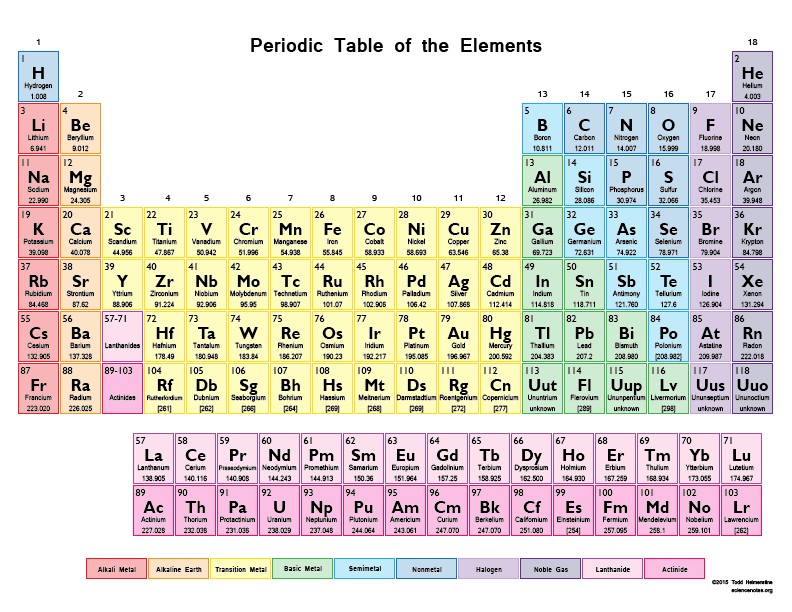
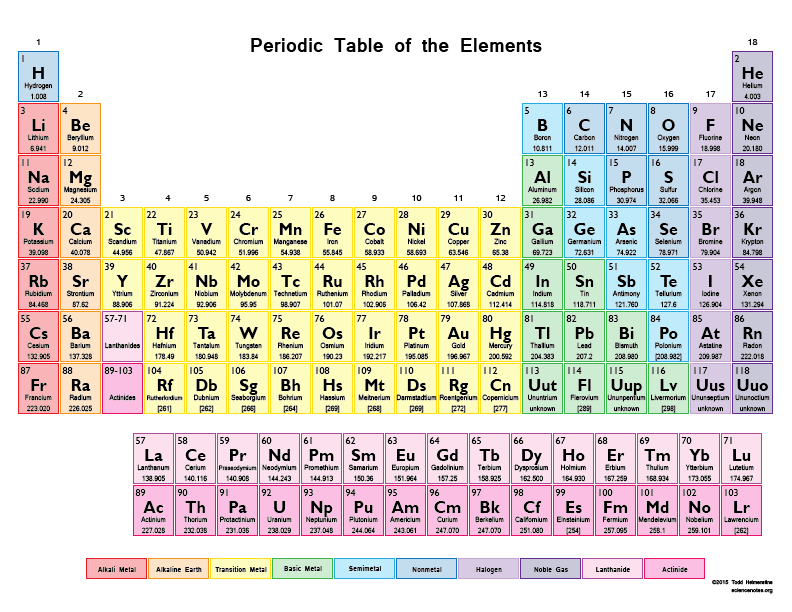
How many protons are in a sodium atom? (tap to enlarge the periodic table)
a)
Sodium has 1 proton.
b)
Sodium has 3 protons.
c)
Sodium has 11 protons
32.
What is the atomic number of Barium? (enlarge the periodic table)
a)
20
b)
38
c)
56
d)
88
33.
An element has the mass number 12 and atomic number  6. The number of neutrons in it is:
a)
6
b)
10
c)
4
d)
8
34.
What subatomic particles would you find in the nucleus of an atom?
a)
Protons only
b)
Protons and Neutrons
c)
Neutrons and Electrons
d)
Protons and Electrons 
35.
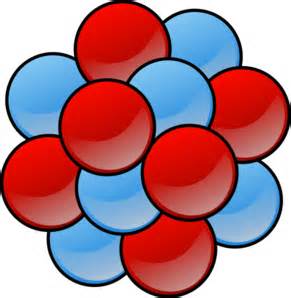
What is the mass number of this atom?
a)
1
b)
2
c)
3
d)
4
36.
An element with a mass number of 11 and an atomic number of 5 has how many neutrons?
a)
11
b)
5
c)
6
d)
16
37.
Most of the mass of an atom is contained here.
a)
electron orbitals 
b)
nucleus
c)
shells
d)
atomic #
38.
A phosphorus atom has 15 protons and 16 neutrons. What is the mass number?
a)
15
b)
16
c)
31
d)
1
39.
An atom of argon has 18 protons and 22 neutrons. How many electrons does it have?
a)
18
b)
22
c)
40
d)
4
40.
What element has 16 protons? (Use your periodic table.)
a)
Oxygen (O)
b)
Sulfur (S)
c)
Phosphorus (P)
d)
Boron (B)
41.
How many electrons does a neutral atom of Neon have?
a)
10
b)
18
c)
20
d)
30
42.
Which particles are NOT included in the mass number?
a)
Protons
b)
Protons and Neutrons
c)
Electrons
d)
Neutrons
43.
What is an ion?
a)
A Charged Atom
b)
A Large Atom
c)
A Small Atom
d)
A Cute Atom
44.
An atom becomes _________ when it gains electrons.
a)
Positive
b)
Negative
c)
Neutral
d)
Invinsible
45.
Which particles change the charge in atoms when ions are formed?
a)
Protons
b)
Electrons
c)
Neutrons
d)
Kittens
46.
When an atom loses a valence electron, it becomes a(n) _____________ ion.
a)
positive
b)
negative
c)
neutral
d)
polyatomic
47.
If an element gains 1 electron, what charge will it have?
a)
+1
b)
-1
c)
+7
d)
-7
48.
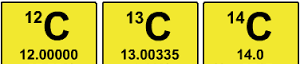
What do these isotopes of carbon all have in common?
a)
neutrons & mass number
b)
atomic number and neutrons
c)
atomic number and electrons
d)
protons, atomic number, and mass number
49.
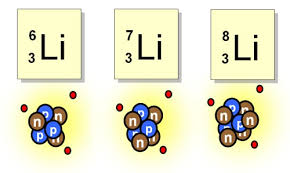
How many neutrons does the isotope of lithium have?
a)
8
b)
3
c)
4
d)
5
50.
What quantities vary between isotopes of an element?
a)
protons, electrons, and atomic mass
b)
protons, electrons, and atomic number
c)
neutrons and electrons
d)
neutrons and atomic mass
51.
which atom has  4 neutrons?
a)
Li-6
b)
Li-7
c)
Li-8
d)
they have the same # of neutrons
52.
Isotopes are atoms of the same element with different #’s of __________ & therefore different __________.
a)
n0 ;  atomic #’s
b)
p+ ; atomic #’s
c)
e- ; atomic masses
d)
n0 ; atomic masses