
 Worksheets
Unit 1 Review
Total questions: 36
Worksheet time: 45mins
Name
Class
Date
1.
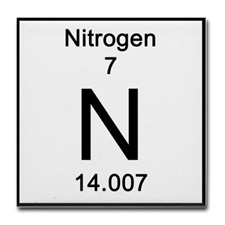
What is the number of protons that the element in this image contain?
a)
14
b)
7
c)
15
d)
18
2.

What characteristic of an atom is determined by the number of protons?
a)
mass
b)
reactivity
c)
identity
d)
if the atom is an isotope
3.
What is the atomic number?
a)
number of protons
b)
number of neutrons
4.
valence electrons can be describe as the ________
a)
electrons in the first energy level
b)
electrons closest to the nucleus
c)
electrons in the outermost level
d)
electrons and electrons
5.

a)
2
b)
3
c)
5
6.

a)
1
b)
2
c)
3
d)
4
7.

a)
6
b)
7
c)
8
d)
9
8.

How many protons are in Zirconium (Zr) ?
a)
40
b)
91
c)
30
d)
65
9.
How many valence electrons are in the outer shell of Xenon (Xe) ?
a)
8
b)
18
c)
10
d)
6
10.

Silicon has how many neutrons?
a)
14
b)
15
c)
28.09
d)
1
11.
Fluorine has an atomic number of 9. What can you conclude about an atom of fluorine from this fact?
a)
it has 9 protons
b)
it weighs 9 grams
c)
it has 9 electron shells
d)
it has a boiling point of 9 degree celsius
12.
Valence Electrons determine an element's _____________.
a)
Reactivity
b)
Location
c)
Identity
d)
Color
13.
Protons determine an element's __________.
a)
Reactivity
b)
Nucleus
c)
Identity
d)
Color
14.

The reactivity of an atom is determined by –
a)
its number of valence electrons
b)
the radius of the atom's nucleus
c)
its atomic mass of the element
d)
the orbital path of its electrons
15.

what does the 6 represent?
a)
Atomic mass
b)
atomic number
c)
chemical symbol
d)
element name
16.

How many electrons would an atom of Krypton have?
a)
83.80
b)
36
c)
12
d)
none
17.
A student cuts a piece of copper wire into the smallest possible pieces. Which statement best describes the smallest piece of copper wire?
a)
The chemical properties of the copper change as the wire is cut.
b)
The smallest piece of wire is no longer copper.
c)
The copper changes properties and becomes a new element.
d)
The wire is still copper and does not change by cutting.
18.
Why does group number 18 have the least reactive elements?
a)
They all have an odd number of protons.
b)
They all have an even number of protons.
c)
They have the largest masses.
d)
Their electron shells are the most filled and do not need to be very reactive.
19.

Beryllium is in group number______.
a)
Group 2
b)
Group 3
c)
Group 4
d)
Group 7
20.

The period for Bromine is ___________.
a)
3
b)
2
c)
4
21.
How many Valance electrons does Iodine Have?
a)
6
b)
16
c)
7
d)
17
22.
Rows on the period table are called _____ while columns are called _____.
a)
groups, families
b)
groups, periods
c)
periods, groups
d)
families, groups
23.
The elements in a column of the periodic table...
a)
have similar atomic numbers
b)
start with the same letter
c)
have similar properties
d)
are not related in any way
24.
What period and group is Flourine on the periodic table?
a)
Period 7, Group 3
b)
Period 5, Group 4
c)
Period 2, Group 17
d)
Period 8, Group 2
25.

What element is represented in this Bohr Model?
a)
Carbon
b)
Hydrogen
c)
Aluminum
d)
Lithium
26.

Where on the periodic table are the metalloids found?
a)
Right Side
b)
Along the Zig Zag Line
c)
Right Side
27.

Where on the periodic table are most of the metals found?
a)
Right Side
b)
Along the Zig Zag Line
c)
Left Side
28.

Where on the periodic table are most of the nonmetals found?
a)
Right Side
b)
Along the Zig Zag Line
c)
Left Side
29.

As you move down the first group, reactivity _________.
a)
Increases
b)
Decreases
c)
Stays the same
d)
They are all inert
30.

Which Period would this element be found on just by looking at the shells/levels?
a)
1
b)
2
c)
3
d)
4
31.

The Periodic Table arranges Elements in order by
a)
decreasing Atomic Mass
b)
increasing Atomic Number
c)
decreasing Atomic Number
d)
increasing Atomic Mass
32.
What does an atom's group tell us?
a)
Number of protons
b)
Number of electrons
c)
Number of valence electrons
d)
Number of shells
33.
The periodic table has __ periods.
a)
18
b)
8
c)
2
d)
7
34.
Elements in the same ________ are more chemically similar.
a)
group
b)
period
c)
club
d)
table
35.
Which elements have the most similar chemical properties?
a)
K and Na
b)
K and Ca
c)
K and Cl
d)
K and S
36.
The periodic table has __ groups.
a)
8
b)
7
c)
18
d)
2
100 %

