
 Worksheets
2.1 and 2.2 Quiz
Total questions: 12
Worksheet time: 7mins
Name
Class
Date
1.
Ions are
a)
atoms with a positive or negative charge
b)
atoms with no charge
c)
atoms with ONLY a positive charge
d)
atoms with ONLY a negative charge
2.
Atoms make up
a)
Elements
b)
Molecules
c)
Compounds
d)
Protons Neutrons and Electrons
3.
Which of the four following items are made up of one or more molecules?
a)
Gold
b)
Hydrogen
c)
Salt
d)
Neon
4.
Covalent compounds
a)
Share electrons
b)
transfer electrons
c)
contain a sea of electrons
d)
conduct electricity
5.
A solution with a pH of 3.6 would be...
a)
Acid
b)
Base
c)
Neutral
d)
Acid and Base
6.
The pH scale is a range from:
a)
1-7
b)
0-14
c)
0-10
d)
1-20
7.
What does pH measure?
a)
Amount of Oxygen Ions
b)
Amount of Hydrogen/Hydronium Ions
c)
The amount of salt in a solution
d)
The density
8.
Water striders can walk across the surface of calm water. Their feet push the surface of the water down slightly, but they do not break the surface. Why?
a)
The insects are light enough so they do not break the hydrogen bonds holding the water molecules together
b)
The insects actually use their wings to hover slightly above the water’s surface and they only skim it with their feet.
c)
The insect’s feet are non-polar, so they are repelled by the polar water molecules and are pushed away from the water’s surface.
d)
The insects are small enough to see the individual water molecules, so they are able to step carefully from one molecule to the next
9.

Attractions between water molecules are called
a)
Covalent bonds
b)
Ionic bonds
c)
Polar bonds
d)
Hydrogen bonds
10.

A molecule, like water, where one side electrically charged partially positive and the other is partially negative is called a _______________.
a)
magnet
b)
polar molecule
c)
solution
d)
electrical molecule
11.
Cohesion and adhesion have this in common:
a)
Hydrogen bonding
b)
They create non-polar molecules
c)
Only relate to water
d)
Universal solvent
12.
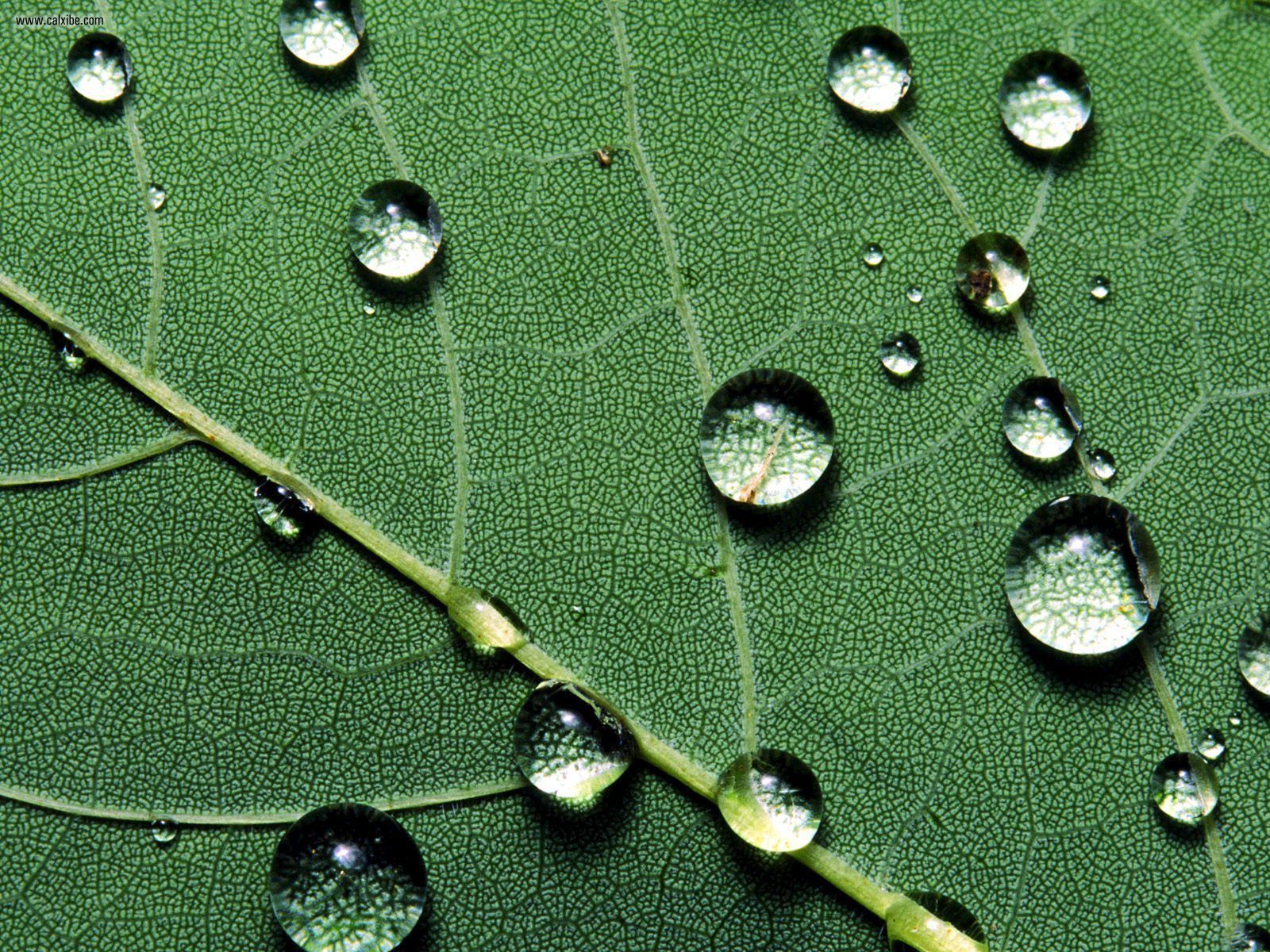
Refer to the picture of water sticking to a leaf; this is occurring because of:
a)
Adhesion
b)
Cohesion
100 %

