
 Worksheets
Cell Transport Quiz
Total questions: 15
Worksheet time: 4hrs 45mins
Name
Class
Date
1.
Which of the following is NOT a type of passive transport?
a)
Osmosis
b)
Diffusion
c)
Endocytosis
2.
Osmosis is the diffusion of _____ across a membrane
a)
glucose
b)
NaCl
c)
proteins
d)
water
3.
Passive transport is called "passive" because it occurs WITHOUT
a)
cause.
b)
energy.
c)
a concentration gradient.
d)
a cell wall.
4.
What does semi-permeable mean?
a)
Only some things can move through membrane
b)
Nothing can move through membrane
c)
Reagan can move through membrane
d)
Membrane connot be moved through
5.
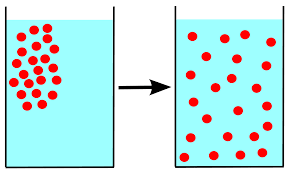
The picture below is an example of _________________.
a)
osmosis
b)
isotonic
c)
diffusion
d)
active transport
6.

_______ regulates what enters and leaves a cell.
a)
Cell Membrane
b)
Nucleus
c)
Mitochondria
d)
Cytoplasm
7.

In this image, the cell is using which type of molecular transport?
a)
Osmosis
b)
Diffusion
c)
Endocytosis
d)
Exocytosis
8.

This picture represents which type of cellular transport?
a)
passive transport
b)
endocytosis
c)
exocytosis
d)
osmosis
9.
Endocytosis and Exocytosis are both...
a)
Active Transport
b)
Passive Transport
10.

What is the difference between active and passive transport?
a)
Active transport requires energy, passive transport doesn't.
b)
Active transport molecules move across a cell membrane and passive transport doesn't.
c)
Active transport involves oxygen and water molecules, passive transport does not.
11.
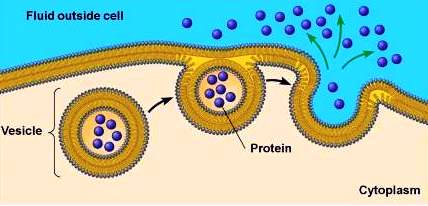
Which form of active transport is being shown?
a)
Pinocytosis
b)
Endocytosis
c)
Exocytosis
d)
Osmosis
12.
In passive transport, molecules move from an area of __________ concentration to an area of __________ concentraiton
a)
high, low
b)
low, high
c)
water, salt
d)
active, passive
13.
Which type of transport gets rid of wastes?
a)
Protein Pumps
b)
Endocytosis
c)
Exocytosis
d)
Facilitated Diffusion
14.
Spraying Axe body spray in a corner of the room and someone on the opposite corner smells it is an example of what?
a)
Osmosis
b)
Facilitated diffusion
c)
Active transport
d)
Diffusion
15.
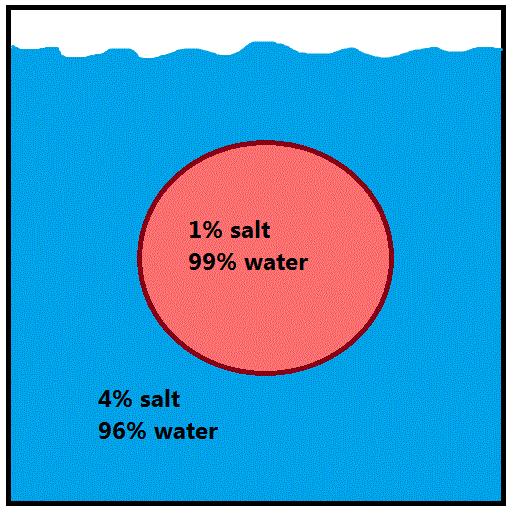
Where will the water go?
a)
Into the cell
b)
Out of the cell
c)
Equally in & out - it's isotonic
d)
There is no water
100 %

