
 Worksheets
Earth's Atmosphere Test Practice
Total questions: 60
Worksheet time: 57mins
Name
Class
Date
1.
Weather happens in the __________________.
a)
Stratoshpere
b)
Troposphere
c)
Exosphere
d)
Thermosphere
2.
The _________________contains ozone.
a)
stratoshpere
b)
exosphere
c)
mesosphere
d)
thermosphere
3.
In the ___________________________, air is very thin, but still produces friction to cause meteoroids to burn up.
a)
stratosphere
b)
exosphere
c)
thermosphere
d)
mesosphere
4.
What is the percentage of nitrogen in Earth's atmosphere?
a)
1%
b)
21%
c)
78%
d)
90%
5.
What is the percentage of oxygen in Earth's atmosphere?
a)
1%
b)
21%
c)
78%
d)
90%
6.
Which gas in our atmosphere is most abundant?
a)
Argon
b)
Oxygen
c)
Nitrogen
d)
Carbon Dioxide
7.
What decreases as you go up in the atmosphere?
a)
Altitude
b)
Atmosphere
c)
Meteors
d)
Air Pressure
8.
What are the 2 most abundant gases in Earth's atmosphere?
a)
carbon dioxide and oxygen
b)
carbon dioxide and nitrogen
c)
nitrogen and oxygen
d)
nitrogen and hydrogen
9.
What does the earth's atmosphere do?
a)
help to regulate the temperature on Earth
b)
Help UV rays to reach the Earth's surface
c)
Creates meteors in the sky
d)
Keep ocean waters cold
10.
As you go higher in the troposphere, the temperature _______________.
a)
decreases
b)
increases
c)
stays the same
11.
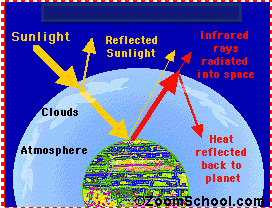
What does this diagram illustrate?
a)
Ozone Layer
b)
The Greenhouse Effect
c)
Ultraviolet Radiation
d)
Layers of the atmosphere
12.
This traps heat and absorbs gases (carbon dioxide, methane..) and keeps the earth warm. Allowing heat to go back into space prevents Earth from becoming too warm
a)
Ozone Layer
b)
The Greenhouse Effect
c)
Greenhouse Gases
d)
Mesosphere
13.
What absorbs ultraviolet rays in the atmosphere?
a)
troposphere
b)
stratosphere
c)
ozone layer
d)
greenhouse gases
14.
This protects us from harmful UV rays from the sun
a)
Troposphere
b)
Stratosphere
c)
Greenhouse Effect
d)
Ozone Layer
15.
Without the Greenhouse Effect the Earth would be
a)
warm
b)
cold
c)
dead
16.
Layer of Earth's atmosphere where most of the water vapor and carbon dioxide is found
a)
thermosphere
b)
mesosphere
c)
stratosphere
d)
troposphere
17.
Uppermost layer of Earth's atmosphere
a)
thermosphere
b)
mesosphere
c)
stratosphere
d)
troposphere
18.
What is the hottest layer in the atmosphere?
a)
Ionosphere
b)
Stratosphere
c)
Thermosphere
d)
Mesosphere
19.
The force of a column of air pressing down is called what?
a)
Air Mass
b)
Air Pressure
c)
Air
d)
Heavy
20.
The coldest layer.
a)
troposphere
b)
thermosphere
c)
exosphere
d)
mesosphere
21.
What happens to the air pressure the higher up in space you go?
a)
the air pressure increases
b)
the air pressure decreases
c)
the air pressure stays the same
d)
there is no air pressure
22.
Which layer has the highest pressure?
a)
thermosphere
b)
stratosphere
c)
troposphere
d)
ionosphere
23.
The kind of heat transfer that travels through space in electromagnetic waves is ______________________.
a)
insulation.
b)
Radiation
c)
Conduction
d)
Convection
24.
The type of heat transfer that happens through direct contact of molecules or particles with each other is ___________________.
a)
Convection
b)
Conduction
c)
Radiation
d)
insulation.
25.
___________________ is the type of heat transfer that occurs in fluids, such as warm air rising and cold air sinking; creating wind.
a)
Convection
b)
Conduction
c)
Radiation
d)
insulation.
26.
Which situation best represents convection?
a)
Heat from a campfire
b)
A hot air balloon taking off
c)
Touching a hot piece of metal
d)
Getting sunburned
27.
Which situation best represents conduction?
a)
Heat from a campfire
b)
A hot air balloon taking off
c)
Touching a hot piece of metal
d)
Getting sunburned
28.
What is the definition of CONVECTION
a)
When heat transfers through waves.
b)
When heat transfers from objects that are touching.
c)
a hot liquid or air that expands, becomes less dense, and rises or becomes more dense, and sinks.
d)
Heat traveling from the sun
29.
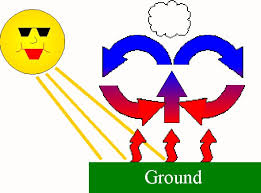
Warm air rises and the cool air sinks demonstrates this type of heat transfer.
a)
conduction
b)
convection
c)
radiation
d)
Insolation
30.

The baby chickens are kept warm from the heat lamps demonstrates this type of heat transfer.
a)
conduction
b)
convection
c)
radiation
31.

The Gulf Stream is a current that brings warm ocean water from the south to the north. What type of heat transfer is this?
a)
conduction
b)
convection
c)
radiation
d)
Insolation
32.

A group of friends gather around a fire to stay warm.
a)
conduction
b)
convection
c)
radiation
33.
Near the ceiling of a room the air is warmer. The warm air rises because of
a)
conduction
b)
convection
c)
radiation
34.
A huge rock at the state park gets so hot during the day because of
a)
conduction
b)
convection
c)
radiation
35.
You get sunburned due to __________ from the sun.
a)
conduction
b)
convection
c)
radiation
36.
The cause of weather systems on earth is
a)
conduction
b)
convection
c)
radiation
37.
The movement in the air caused differences in air pressure ?
a)
Rain
b)
Wind
c)
Air
38.
A low pressure system usually causes
a)
Clearing Weather
b)
Wet Weather
c)
Fair Weather
39.
___________is the result of the weight of a column of air pushing on an area.
a)
air pressure
b)
density
c)
volume
d)
none of the above
40.
As you climb up a mountain what happens to the air pressure?
a)
decreases
b)
increases
c)
stays the same
41.
Air pressure is greatest when near Earth's surface because?
a)
The air molecules are farther apart.
b)
The air molecules are closer together.
c)
Air molecules collide.
d)
Air molecules are tightly packed.
42.
Air pressure is greater _______.
a)
at the top of the mountain
b)
at the bottom of the mountain
c)
at the center of the mountain
43.
Density of air is greater ________.
a)
at the top of the mountain
b)
at the bottom of the mountain
c)
at the center of the mountain
44.

Warm Air...
a)
Sinks
b)
Rises
c)
Flows Horizontally
d)
Doesn't Move
45.

High Pressure Systems on Earth's surface are caused by...
a)
air rising away from Earth's surface.
b)
air sinking towards Earth's surface.
c)
air not moving.
d)
air moving horizontally.
46.

Low Pressure Systems on Earth's surface are caused by...
a)
air rising away from Earth's surface.
b)
air sinking towards Earth's surface.
c)
air not moving.
d)
air moving horizontally.
47.

Which layer of the atmosphere contains most of Earth's weather?
a)
Troposphere
b)
Stratosphere
c)
Mesosphere
d)
Thermosphere
48.

Which location has the highest air pressure?
a)
Station A
b)
Station B
c)
Station C
d)
All Stations
49.

Which location has the lowest air pressure?
a)
Station A
b)
Station B
c)
Station C
d)
All Stations
50.
Large body of air with the same temperature, pressure, and moisture characteristics is called?
a)
warm front
b)
cold front
c)
air mass
d)
jet stream
51.
______ is the average pattern for weather over a long period of time.
a)
climate
b)
weather
c)
forecast
d)
sunlight
52.
What are the 3 major climate zones in order from equator to the poles?
a)
polar, temperate, tropical
b)
tropical, temperate, polar
c)
temperate, polar, tropical
53.
A polar climate is?
a)
warm and cool
b)
consistently moderate
c)
consistently cool
d)
consistently warm
54.
A temperate climate is?
a)
consistently cool
b)
consistently warm
c)
consistently moderate
d)
warm and cool
55.
The temperature of a tropical climate is?
a)
consistently warm
b)
consistently cool
c)
consistently moderate
d)
warm and cool
56.
_____ climate is described as cold all year long and located in high latitudes.
a)
Polar
b)
Continental
c)
Dry
d)
Highland
57.
_______ climate is described as hot and wet, and is located in low latitudes.
a)
Tropical
b)
Dry
c)
Continental
d)
Moderate
58.
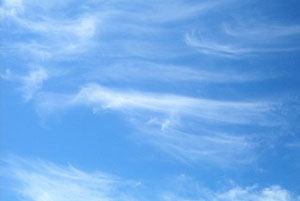
This type of cloud is thin, wispy, and made of ice crystals
a)
cumulus cloud
b)
stratus cloud
c)
cirrus cloud
d)
cumulonimbus cloud
59.
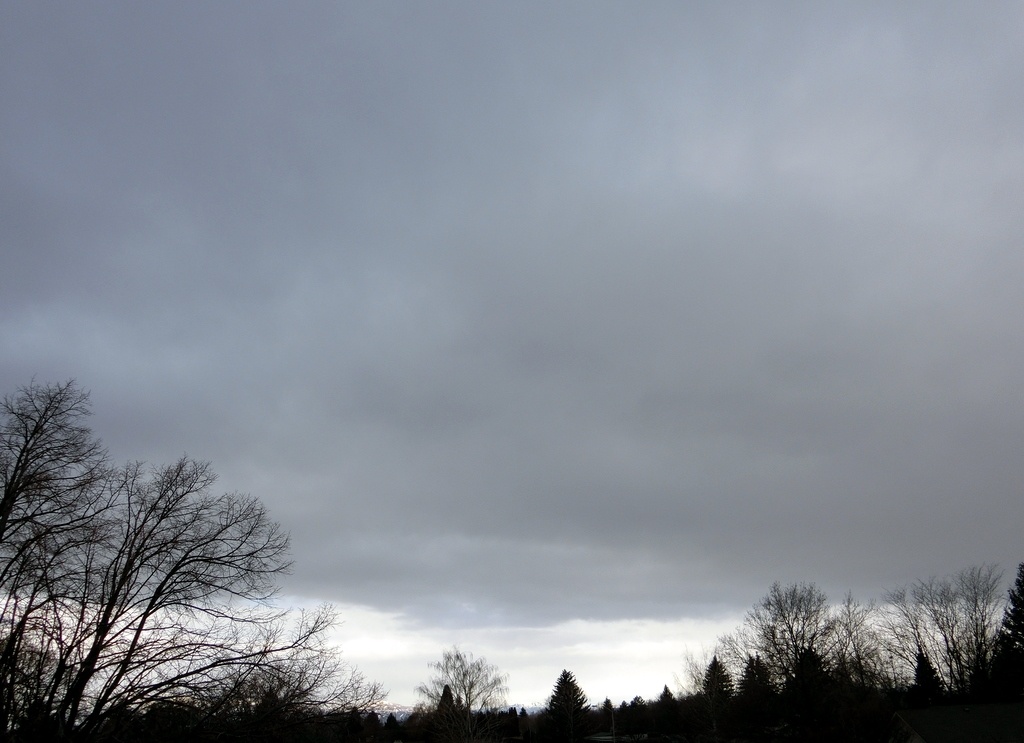
This type of cloud is thin and flat, and the edges are not clearly defined
a)
cirrus cloud
b)
cumulus cloud
c)
stratus cloud
d)
cumulonimbus cloud
60.

what type of cloud is shown?
a)
cumulus
b)
cirrus
c)
stratus
d)
altostratus
100 %

