

wayground logo

Free Printable Worksheets

NEW

Font size

S
M
L
XL
Worksheets

Unit 3 & 4 review

Total questions: 66

Worksheet time: 1hrs 1mins

Name
Class
Date
1.

When was the Mayflower Compact signed?

a)

June 16, 1912

b)

February 14, 1632

c)

December 25, 1213

d)

November 11, 1620

2.

What did the Mayflower Compact establish?

a)

a dinner menu

b)

a travel pattern

c)

a form of self-government

d)

a confirmed religion

3.
Who fought in the French and Indian War?
a)
French vs. Indians
b)
British vs. French
c)
British vs. French and Indians
d)
Indians vs. British
4.

What were the 2 main reasons for the French and Indian War?

a)

Control of the Ohio River Valley

b)

To set slaves free

c)

More access to Gold

d)

To get independence from British Rule

5.
Who won the French and Indian War?
a)
England
b)
France
c)
Indians
d)
Spain
6.
As a result of the cost of the war, what did King George III do to the colonists?
a)
Killed them
b)
Removed them from the land in the colonies just like the Indians.
c)
Imposed taxes to pay for the war
d)
Paid for the war out of his own pocket
7.
What was stated in the Proclamation of 1763?
a)
Colonists were banned from settling west of the Appalachian Mountains.
b)
Colonists were encouraged to begin settling west of the Appalachian Mountains.
c)
The Proclamation ended the French and Indian War. 
d)
The Proclamation proclaimed independence for the American colonists. 
8.
According to the British what was the reason for the Proclamation of 1763?
a)
The Proclamation of 1763 gave all of the land to the American colonists.
b)
It was a law that allowed colonists the chance to  settle west of the Appalachian Mountains.
c)
The Proclamation was a meeting between Native Americans and the colonists. 
d)
It was attempt to end conflicts between Native Americans and colonists west of the Appalachian Mountains.
9.
In general, how did the colonists view the Proclamation of 1763?
a)
They felt that it supported their freedom and they supported it.
b)
They felt it was an infringement on their freedom of movement and were angry about it.
c)
They were not involved so it did not affect them.
d)
They supported it because they believed the King had the AUTHORITY to make this law.
10.
Which statement best describes the role of government according to the Declaration of Independence?
a)
“The main purpose of government is to expand and glorify the state”
b)
“The main purpose of government is to protect the unalienable rights of individuals”
c)
“The main purpose of government is to protect the rights and privileges of His Majesty, the King”
d)
“The main purpose of government is to promote the general welfare of the community by taking steps toward social equality”
11.
 Who wrote the Declaration of Independence?
a)
Benjamin Franklin
b)
James Madison
c)
Thomas Edison
d)
Thomas Jefferson
12.

What are the three unalienable rights that all people have?

a)

Food, Shelter, and Clothing

b)

Life, Liberty and Death

c)

Life, Liberty and the Pursuit of Happiness
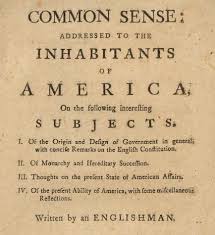
13.
Who wrote a pamphlet called "Common Sense"?
a)
George Washington
b)
Thomas Paine
c)
Thomas Jefferson
d)
Patrick Henry
14.

Which the meaning of Grievances?

a)

Virtues

b)

Complaints

c)

Petitions

d)

Answers

15.

What happened in 1776?

a)

The constitutional convention was held

b)

The American Colonists write the Declaration of Independence

c)

Jamestown, Virginia is established

d)

Plymouth Massachusetts is establish and the Mayflower Compact signed

16.

Why was the first shots fired at Lexington & Concord called “The shot heard ‘round the world?”

a)

Because everyone in the world heard it.

b)

Because it started World War I

c)

Because that first shot started the American Revolution and showed the world that the colonists were serious about fighting for their freedom.

17.
Lexington and Concord were the first battles in what war?
a)
Revolutionary War
b)
World War I
c)
War of 1812
18.
The battle of Saratoga was the _____ battle in the American Revolution.
a)
last
b)
winning
c)
first
d)
turning point
19.
What country decided to provide military support to the Americans after they won the Battle of Saratoga?
a)
France
b)
Canada
c)
Austria
d)
Germany
20.

What was the final battle of the American Revolution?

a)

Yorktown

b)

French Indian War

c)

Civil War

d)

Concord

21.

What year was the Treaty of Paris ending the French and Indian War that effectively kicked the French out of North America signed?

a)

1763

b)

1783

c)

1793

d)

1766

22.

What year was the Treaty of Paris ending the American Revolution and forcing Great Britain to recognize the United States as an independent nation signed?

a)

1763

b)

1783

c)

1793

d)

1766

23.
What was the Tea Act?
a)
The Act of the British raising prices on colonial tea
b)
Smuggling Tea
c)
Boston Tea Party
d)
People drinking tea
24.
Which of these was a common slogan associated (connected) with the American Revolution?
a)
"Remember the Alamo!"
b)
"No taxation without representation!"
c)
"Fifty-four forty or fight!"
d)
"Remember the Maine!"
25.
Who was  involved in the Boston Tea Party?
a)
Sons of Liberty
b)
Native Americans
c)
British soldiers
d)
King George III
26.

Why did the Sons of Liberty dress up as Native Americans and dump tea in the Boston Harbor?

a)

To protest and fight back against the Tea Act

b)

To celebrate 4th of July

c)

To celebrate their American Revolution victory over the British

d)

To protest against the Declaration of Independence

27.
Which colonist were called Patriots?
a)
those who obeyed the laws
b)
those who were willing to fight
c)
those who wanted independence
d)
those who were loyal to the king
28.
A person who wished to stay a British colony and supported the King was called a
a)
Loyalist
b)
Patriot
c)
Neutralist
d)
Kingsman
29.

Who was the commander of the Continental Army?

a)

Thomas Jefferson

b)

George Washington

c)

Haym Solomon

d)

Bernardo De Galvez

30.

Who was the American spy in the British headquarters who posed as a runaway slave?

a)

James Armistead

b)

Crispus Attucks

c)

Wentworth Cheswell

d)

John Paul Jones

31.

Who was the founder of the U.S. Navy and declared "I have not yet begun to fight!"?

a)

George Washginton

b)

Bernardo De Galvez

c)

Marquis De Lafayette

d)

John Paul Jones

32.
He is considered the Father of the American Navy.
a)
Francis Marion
b)
John Paul Jones
c)
Benedict Arnold
d)
George Washington
33.
African-American spy and war hero who helped the Americans achieve independence.  Who am I?
a)
Wentworth Cheswell
b)
James Armistead
c)
Crispus Attucks
d)
John Paul Jones
34.

What does Abigail Adams mean when she writes to her husband during the American Revolution and encourages him to "remember the ladies"?

a)

To keep the way women are being treated the same

b)

To make sure to be sweet to his wife when he gets home by bringing flowers

c)

to consider giving women equal rights to men in the new constitution

d)

To remember the women who had given their lives to the American Revolution

35.

What happened in 1787

a)

The first Colony, Jamestown, Virginia is established

b)

The Americans write the Deceleration of Independence

c)

The Mayflower Compact is signed and Plymouth, Massachusetts colony is established

d)

The Americans met at the Constitutional Convention and write a new constitution of the USA

36.
When creating the legislative branch there were two proposed plans.  Which plan wanted states to have more votes based on population? 
a)
Connecticut Plan 
b)
New Jersey Plan
c)
Virginia Plan
d)
3/5th's Plan 
37.
The Great Compromise accomplished which of the following? 
a)
Created a one house legislature
b)
Postponed the conversation about slavery
c)
Added the Bill of Rights 
d)
Created a two house legislature
38.
What document replaced the Articles of Confederation and established a new national government? 
a)
The Declaration of Independence 
b)
The Constitution 
c)
The Magna Carta 
d)
The English Bill of Rights 
39.
What does ratification mean?
a)
To deny
b)
to ask for
c)
to demand
d)
to approve
40.
-Feared a strong central government.  Believed a bill of rights needed to be added to the Constitution.  opponents of the Constitution.  All describe-
a)
democrats
b)
anti-federalists
c)
federalists
d)
small states
41.
The Constitutional Convention took place-
a)
1781
b)
1787
c)
776
d)
1783
42.
The issue of enslaved people for the purpose of representation was the main issue of -
a)
Great Compromise
b)
One-Third Compromise
c)
Three-Fifths Compromise
d)
Slave Compromise
43.
Someone that favored approval of the Constitution is called-
a)
Federalist
b)
Anti Federalist
c)
Republican
d)
Democrat
44.
Why were the Articles of Confederation replaced?
a)
it created an executive branch
b)
government was took weak to manage state relations
c)
it created a powerful army
d)
it created a judicial branch
45.
The Great Compromise called for a house of representatives and a Senate which is called-
a)
bicameral
b)
unicameral
c)
one camel
d)
Three camels
46.
Who is considered the "Father of the Constitution?
a)
James Madison
b)
Benjamin Franklin
c)
Thomas Jefferson
d)
Patrick Henry
47.
Why do anti-federalist want a Bill of Rights added to the Constitution?
a)
to protect rights of the citizens
b)
to strengthen the power of the federal government
c)
to give each state an equal amount of power
48.
Freedom of speech, press, religion, assembly, and petition.  Which amendment is this?
a)
1st
b)
2nd
c)
3rd
d)
4th
49.
No one has to house quarter soldiers in their home
a)
1st
b)
2nd
c)
3rd
d)
4th
50.
"Right to bear arms" (Gun rights)
a)
1st
b)
2nd
c)
3rd
d)
4th
51.

Guarantees freedom from testifying against yourself and other rights for those accused of crimes

a)

1st Amendment

b)

3rd Amendment

c)

5th Amendment

d)

7th Amendment

52.
Forbids cruel and unusual punishment
a)
2nd Amendment
b)
4th Amendment
c)
6th Amendment
d)
8th Amendment
53.
Guarantees the right to a speedy and public trial
a)
2nd Amendment
b)
4th Amendment
c)
6th Amendment
d)
8th Amendment
54.
Guarantees a jury trial in civil cases
a)
7th
b)
10th
c)
9th
d)
2nd
55.
Rights not listed in the Constitution belong to the people.
a)
Amendment 1
b)
Amendment 3
c)
Amendment 7
d)
Amendment 9
56.
No unreasonable searches or seizures
a)
2nd
b)
5th
c)
4th
57.

Which amendment states that Powers not spelled out in the Constitution are reserved to the states?

a)

4th

b)

10th

c)

9th

58.
Which of the following is an example of checks and balances?
a)
A judge overturning a lower court decision
b)
A legislative bill being vetoed by the President
c)
A governor granting clemency (forgiveness) to a criminal
d)
A governor declaring a tax free period
59.
Which of the following describes federalism?
a)
System with a weak central government and strong states
b)
System with a strong central government and weak states
c)
System of shared power between national and state governments
d)
System of shared power between national government and the king
60.
Which of the following best describes separation of powers?
a)
Having a three branch government system
b)
Having a US Constitution and state constitutions
c)
Having a series of courts that answer to the Supreme Court
d)
Having a US Constitution and Bill of Rights
61.
Which of the three branches of government includes the President, Vice President, and cabinet members?
a)
Legislative
b)
Executive
c)
Judicial
d)
Supreme Court
62.
Which of the following describes the principle of representative democracy (republicanism)?
a)
All voters represent themselves by voting
b)
All voters have to vote for the President of the US
c)
Representatives are elected by voters to vote on legislation
d)
Representatives meet with voters and tally their responses on legislation
63.

Which principle divides the power of government between the three branches: Legislative, Executive, and Judicial?

a)

Republicanism

b)

Checks & Balances

c)

Separation of Powers

d)

Limited Government

64.

Which principle of government is defined as the power of government rests with the people?

a)

Federalism

b)

Limited Government

c)

Individual Rights

d)

Popular Sovereignty

65.

Which principle allows the three branches to control or check the power of the other branches in order to prevent the abuse of power?

a)

Republicanism

b)

Checks & Balances

c)

Separation of Powers

d)

Limited Government

66.

Which principle guarantees individuals certain rights?

a)

Federalism

b)

Limited Government

c)

Individual Rights

d)

Popular Sovereignty
