wayground logo

Free Printable Worksheets

Font size

S
M
L
XL
Worksheets

Onlevel cell structure and function

Total questions: 60

Worksheet time: 56mins

Name
Class
Date
1.
Which of the following is the smallest unit of life that can carry out all life functions?
a)
the mitochondria
b)
the vacuoles
c)
the nucleus
d)
the cell
2.
In a plant cell, a stiff wall surrounds the membrane, giving the cell a rigid, boxlike shape.
a)
cell membrane
b)
cell
c)
ribosome
d)
cell wall
3.
Robert Hooke, Anton van Leeuwenhoek, Theodor Schwann, Rudolf Virchow, and Matthias Schliden were all responsible for what theory?
a)
The Theory of Gravity
b)
The Theory of Relativity
c)
The Cell Theory
d)
The Theory of Continental Drift
4.
You might think of me as the trash collector, but recycler is maybe more accurate. What am I?
a)
cytoplasm
b)
lysosome
c)
vacuole
d)
ribosome
5.
"Storage tanks" Can hold food, water or waste for the cell
a)
Ribosomes
b)
Vacuole
c)
Chloroplast
d)
Nucleolus
6.

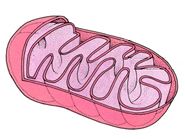
What is the name of the structure shown in the diagram where cellular respiration takes place and energy (ATP) is produced?

a)

Chloroplast

b)

Mitochondrion

c)

Nucleus

d)

Vacuole

7.
Which of the following is found in eukaryotic cells but NOT prokaryotic cells?
a)
Cell membrane
b)
Mitochondria
c)
Ribosomes
d)
DNA
8.
What is the function of nucleus?
a)
Structure that organizes motion of chromosomes. 
b)
Structure that contains DNA and directs the cell 
c)
Membrane that surrounds and protects the cell 
d)
Stack of membranes that packages chemicals
9.
Where are proteins made?
a)
Golgi body
b)
Mitoichondrion
c)
Chromosomes
d)
Ribosomes
10.
Which of the following is NOT found in all cells?
a)
Cell Wall
b)
Cell Membrane
c)
Cytoplasm
d)
Genetic Material
11.

In what organelle does Photosynthesis in plants take place?

a)

Endoplasmic Reticulum

b)

Vacuole

c)

Chloroplasts

d)

Mitochondria

12.
What organelle is considered to be the “gatekeeper” for plant and animal cells?

a)
Cell Wall
b)
Cytoplasm
c)
Nucleous
d)
Cell Membrane
13.
What is the gel-like substance inside of cells called?

a)
photoplasm
b)
photosynthesis
c)
cytoskeleton
d)
cytoplasm
14.
What organelle helps with cell digestion?
a)
Lysosomes
b)
Ribosomes
c)
Golgi Complex
d)
ER
15.
What are tiny organelles that convert glucose into ATP?
a)
Ribosomes
b)
Vesicles
c)
Cytoskeleton
d)
Mitochondria
16.
Which of the following is directly involved in the transportation of materials inside/within the cell?
a)
Endoplasmic Reticulum
b)
Vacuole
c)
Lysosome
d)
Mitochondria
17.
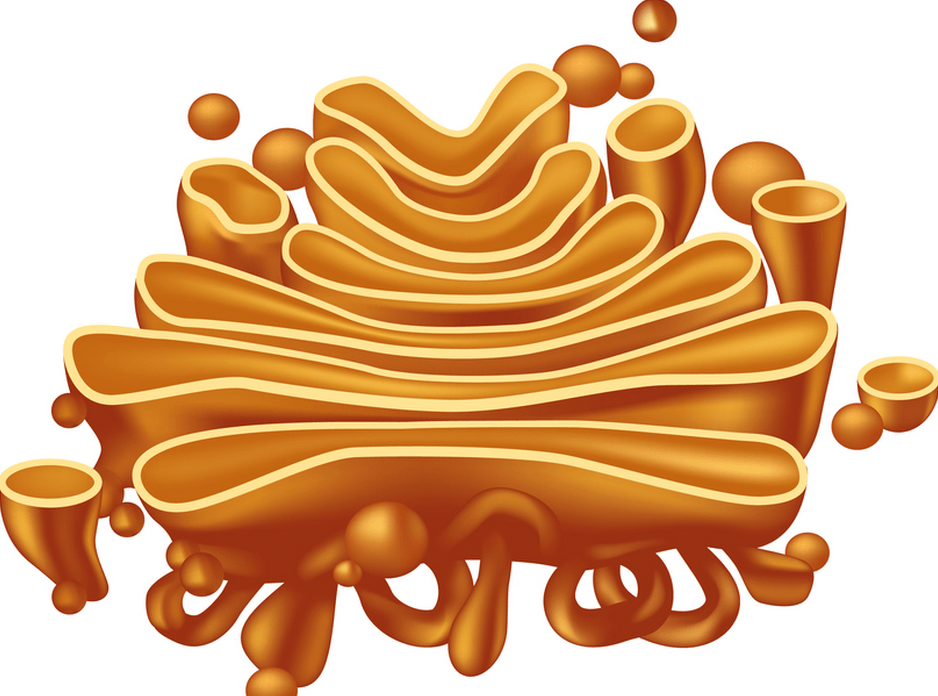
I am a protein packaging and shipping machine! Who am I?
a)
vacuole
b)
ribosome
c)
mitochondrion
d)
golgi apparatus
18.
The ___________ is the basic unit of life
a)
organ
b)
cell
c)
atom
d)
tissue
19.
Which statement is a part of the cell theory?
a)
all cells come from preexisting cells
b)
bacteria are prokaryotic cells
c)
eukaryotic cells are complex
d)
humans are multicellular
20.
What tool do you use to view the cells?
a)
metric ruler
b)
centrifuge
c)
microscope
d)
pipette
21.
Which of the following is NOT a cell theory.
a)
All non-living things are made of cells
b)
All cells come from pre-existing cells
c)
Cells are the basic unit of structure and function of all living things
22.
Cells are often called "the ____ of life."
a)
bread
b)
road map
c)
building blocks
d)
meaning
23.
The nucleus is like the ____________ of the cell.
a)
foot
b)
hand
c)
stomach
d)
brain
24.
This cell is simple. Only genetic material, cytoplasm and ribosomes inside.
a)
Eukaryotic
b)
Prokaryotic
c)
Plant
d)
Animal
25.
Complex cell. Can be plant or animal. Contains membrane bound organelles. 
a)
Eukaryotic Cell
b)
Prokaryotic Cell
c)
Bacteria
d)
Blood cell
26.
Chloroplasts in plant cells allow the plant to perform a function that animal cells cannot do.  What is the main function of the chloroplasts found in plant cells?
a)
to absorb light energy and manufacture food
b)
to remove waste materials by active transport
c)
to manufacture chemical energy from food
d)
to control the shape of the cell
27.
Michael looked at a cell through a microscope.  He identified a nucleus, chloroplast, and cytoplasm.  What kind of cell did Michael observe?
a)
animal
b)
plant
c)
vertebrate
d)
bacteria
28.

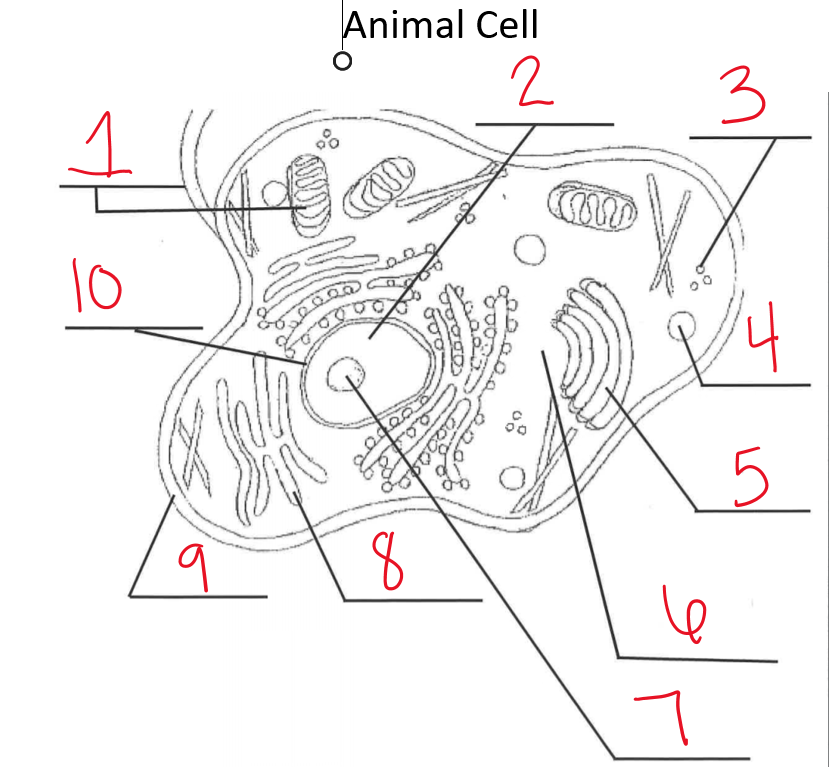
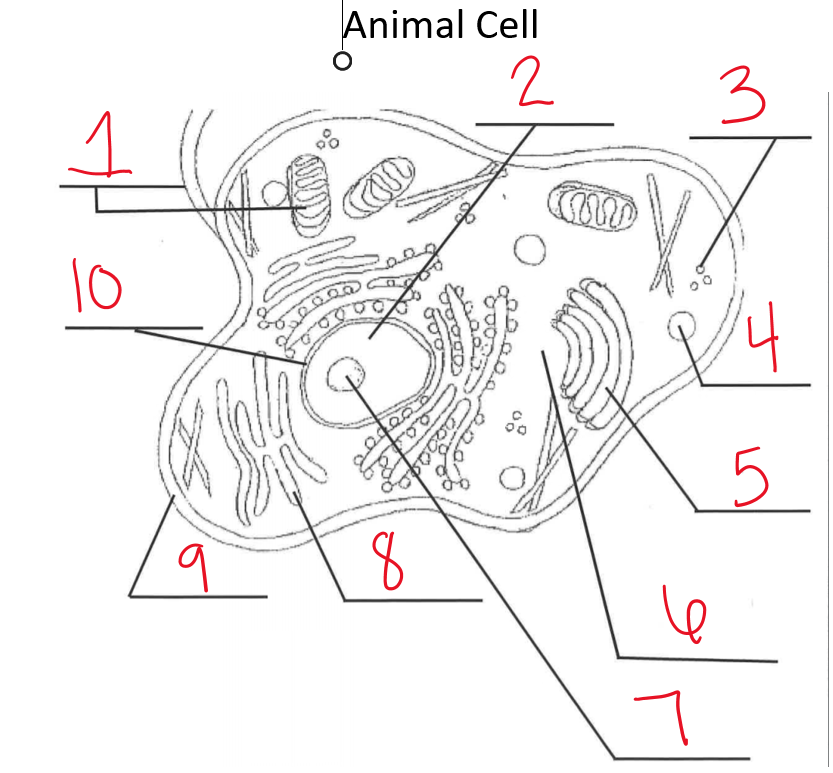
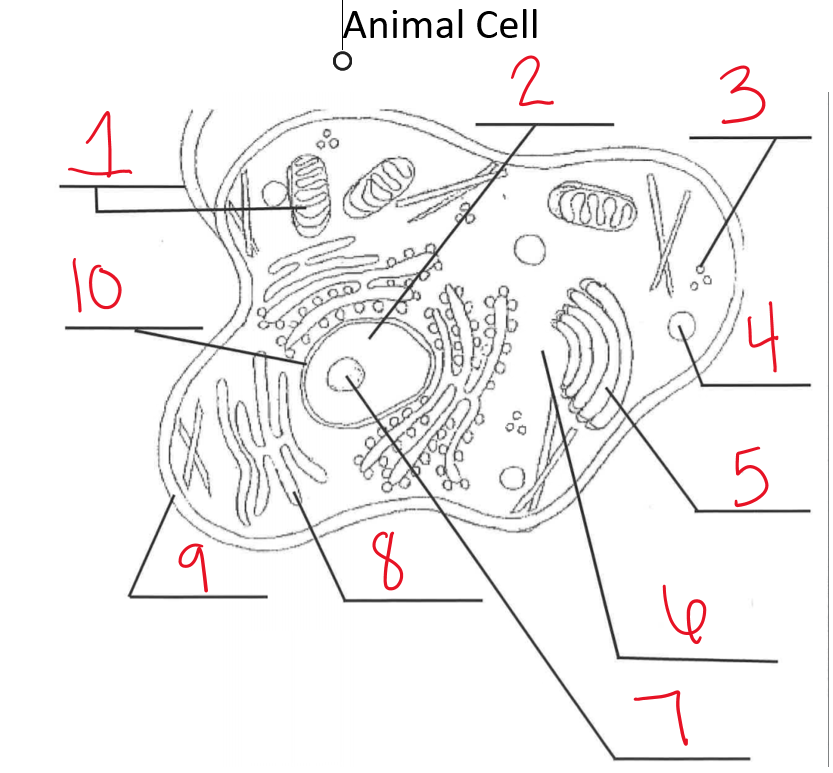
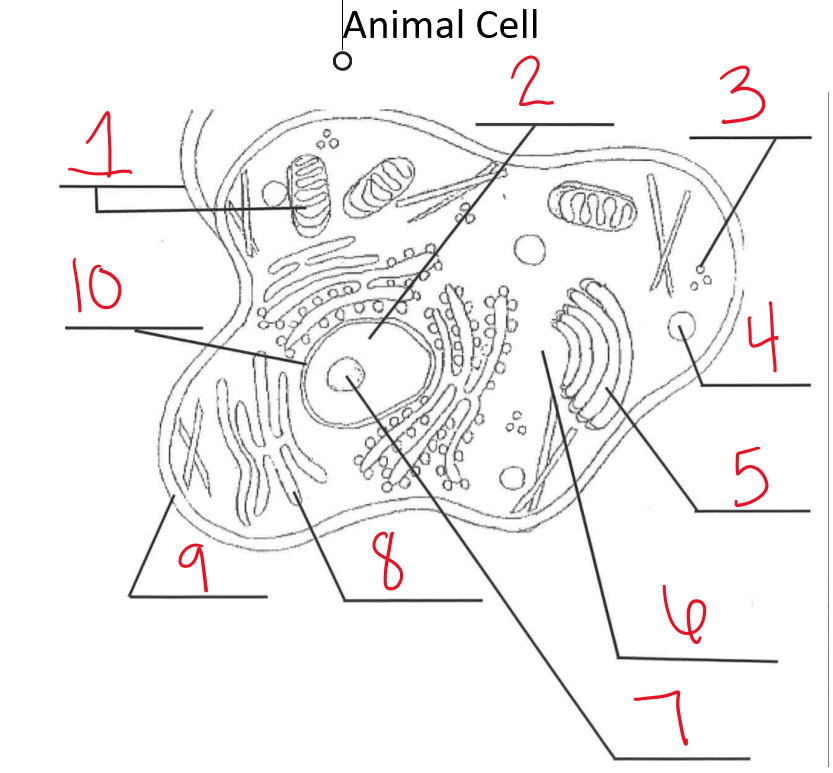
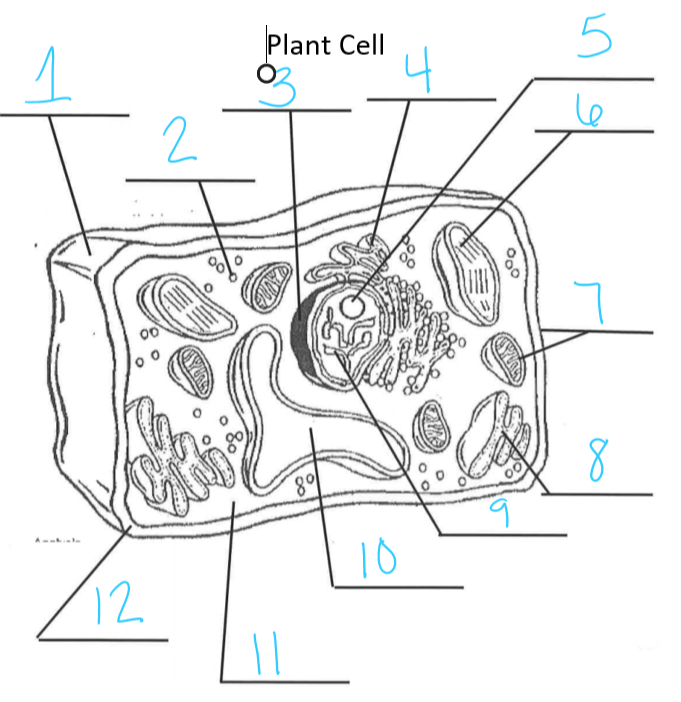
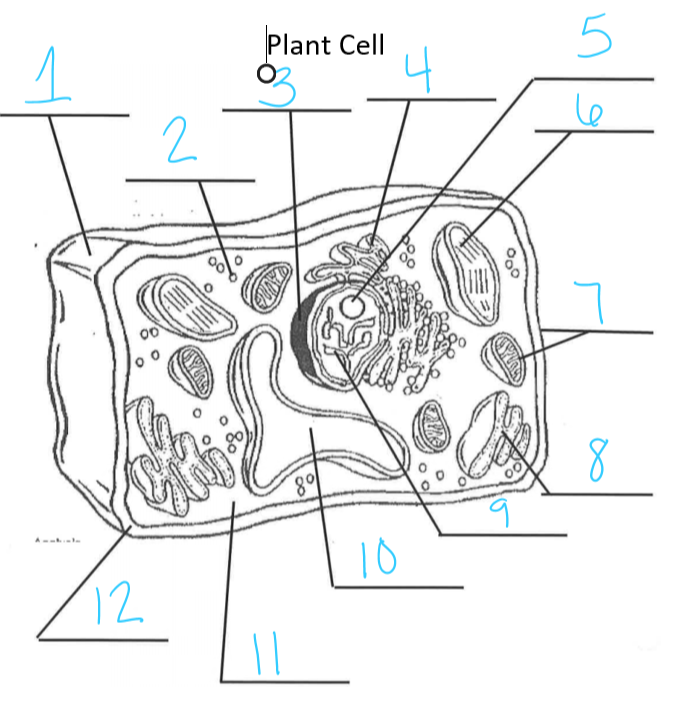
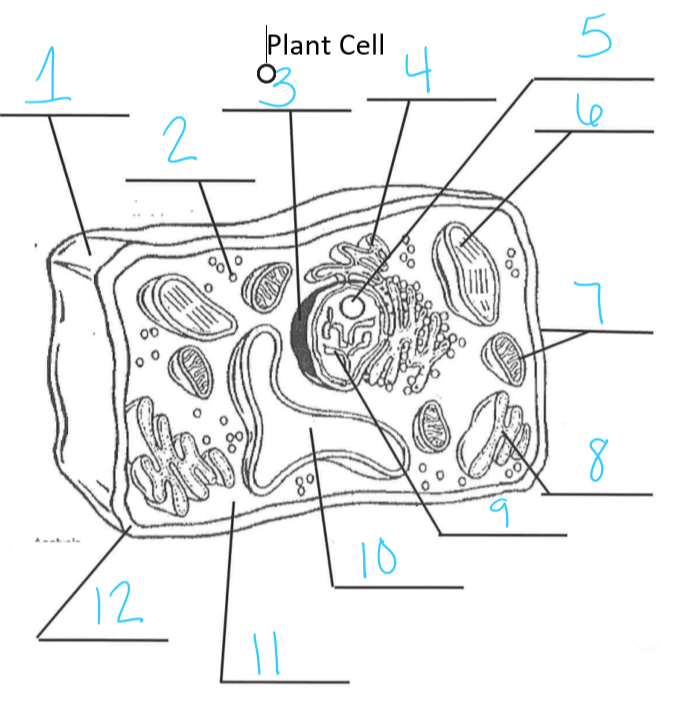
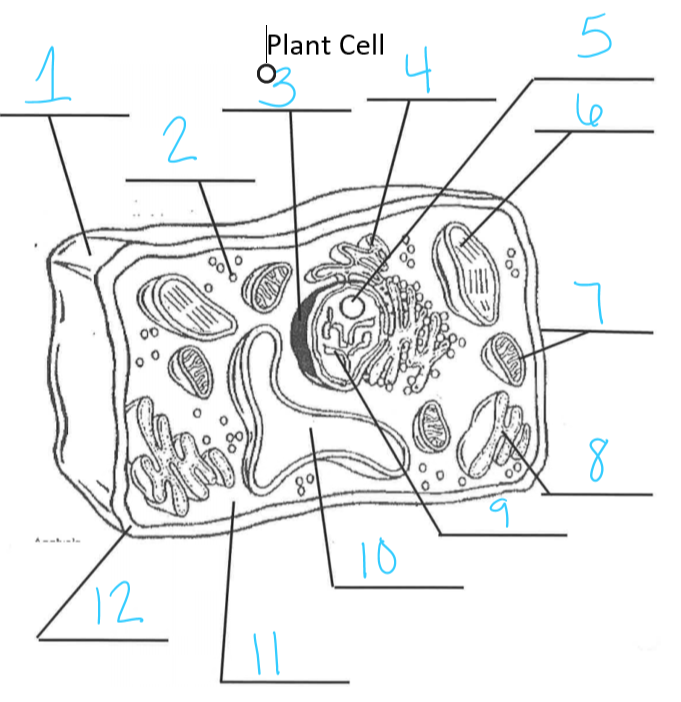
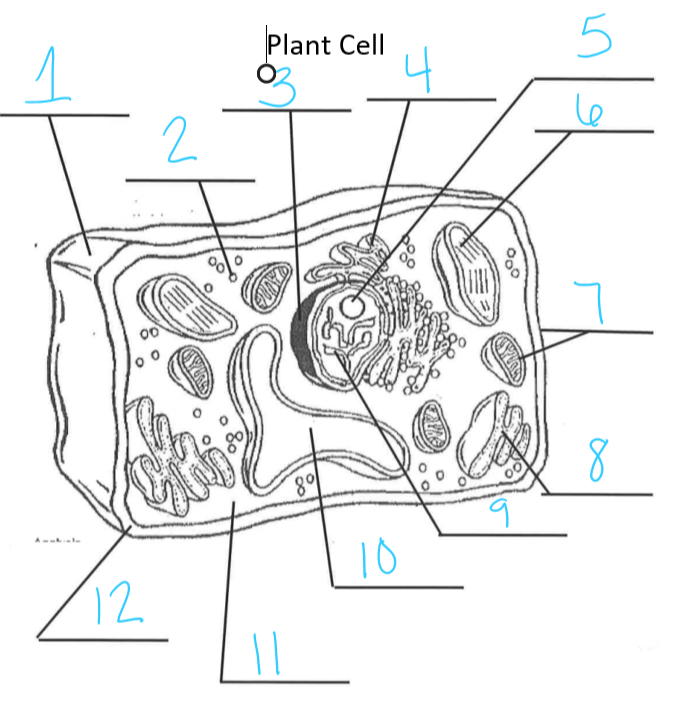
What organelle is labeled #2?

a)

Nucleus

b)

Nuclear membrane

c)

Nucleolus

d)

Cell membrane

29.

What organelle is labeled #3?

a)

Vacuole

b)

Golgi body

c)

Ribosomes

d)

ER

30.

What organelle is labeled #5?

a)

DNA

b)

ER

c)

Golgi body

d)

Nucleus

31.

What organelle is labeled #6?

a)

Nucleolus

b)

Cell membrane

c)

Cytoplasm

d)

Mitochondria

32.

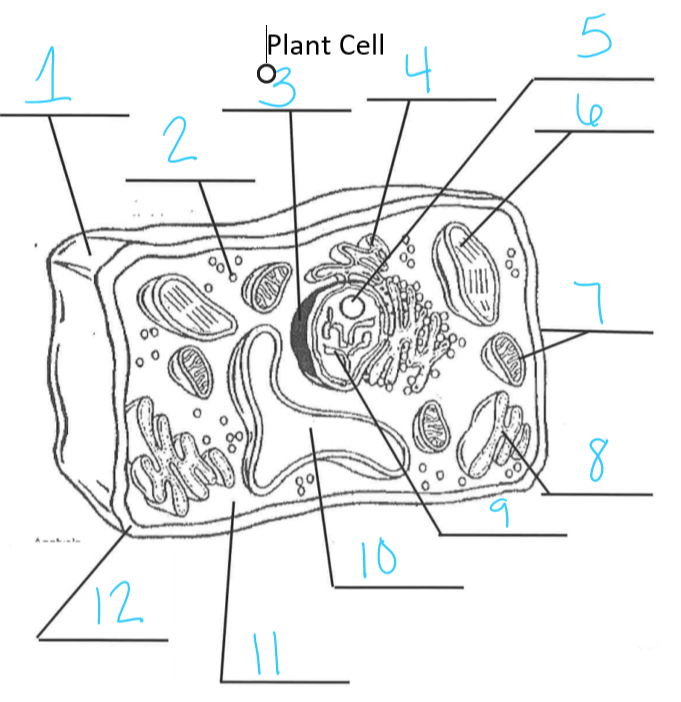
What organelle is labeled #2?

a)

Vacuole

b)

Mitochondria

c)

Ribosomes

d)

Nucleolus

33.

What organelle is labeled #5?

a)

Nucleus

b)

DNA

c)

Nucleolus

d)

Ribosomes

34.

What organelle is labeled #6?

a)

Chloroplasts

b)

Mitochondria

c)

Vacuole

d)

Ribosomes

35.

What organelle is labeled #7?

a)

Chloroplasts

b)

Vacuole

c)

Mitochondria

d)

Golgi body

36.

What organelle is labeled #10?

a)

Cytoplasm

b)

Vacuole

c)

Mitochondria

d)

ER

37.

What organelle is labeled #11?

a)

Cell wall

b)

Cell membrane

c)

Cytoplasm

d)

Chloroplast

38.
What is the difference between rough and smooth ER?
a)
There is no difference.
b)
Plants have rough ER, animals have smooth ER.
c)
What type of injuries the Doctors treat.
d)
Rough has ribosomes, smooth does not.
39.

A biology class made a model of a cell using fruits and vegetables in base made of gelatin. They folded the licorice to represent a system of membranes that can move/transport materials from one part of the cell to another. What organelle is represented by the licorice?

a)

ER

b)

Mitochondria

c)

Golgi

d)

Vacuole

40.

Human liver and muscle cells require a great deal of energy. Which organelle would you expect to appear in large numbers as a result?

a)

Ribosomes

b)

Golgi

c)

Mitochondria

d)

ER

41.

Which list represents the levels of organization in a multicellular organism from the simplest level to the most complex level?

a)

cell, tissue, organ, organ system

b)

tissue, organ, organ system, cell

c)

cell, tissue, organ system, organ

42.

Sort the following statements based on if the statement is talking about prokaryotes or eukaryotes

43.
Question Image

Match the following

a)

Prokaryotes DNA

1.

free floating in the cytoplasm

b)

Eukaryotes DNA

2.

located in the nucleus

c)

Both

3.

contain genetic material (DNA)

44.

Tap on all of the prokaryotic cells

45.

A table comparing the characteristics of four samples is shown. Click on the sample name that is most likely a prokaryote.

46.

Prokaryotic cells and Eukaryotic cells are BOTH surrounded by a ​ (a)   , have ​ (b)   , contain ​ (c)   , and contain ​ (d)   .

Choose from the below words
cell membrane
ribosomes
genetic material
cytoplasm
47.

Which cell is generally MUCH larger?

48.

Label properties of Prokaryotes vs. Eukaryotes

49.

This cell pictured is a ​ (a)   because it has ​ (b)   nucleus ​ (c)   membrane bound organelles.

Choose from the below words
prokaryotic cell
no
or
eukaryotic cell
a
and
50.
Cells are often called "the ____ of life."
a)
bread
b)
road map
c)
building blocks
d)
meaning
51.

The Cell Theory:

  1. 1. All living organisms are composed of one or more ​ (a)   . (Unicellular or Multicellular)

  2. 2. All cells arise from ​ (b)   cells. (Not from Spontaneous Generation)

  3. 3. Cells are the structural and functional unit of ​ (c)   . (Nothing living smaller than a Cell)

Choose from the below words
cells
preexisting
life
52.

Choose the word to complete one part of the Cell Theory:
1) All (a)   things are made of cells​.

Choose from the below words
living
nonliving
chemical
53.

Which organelle is responsible for photosynthesis in plant cells?

a)

Chloroplast

b)

Mitochondria

c)

Nucleus

d)

Ribosome

54.

What is the primary function of ribosomes in a cell?

a)

Energy production

b)

Protein synthesis

c)

DNA replication

d)

Waste removal

55.

Which structure acts as the control center of the cell?

a)

Cell membrane

b)

Nucleus

c)

Golgi apparatus

d)

Endoplasmic reticulum

56.

Which organelle stores water for photosynthesis?

57.

Which organelle supports and protects the cell?

58.
Question Image

Match the following

a)

A

1.

Cell Membrane

b)

B

2.

Cell Wall

c)

E

3.

Nucleus

d)

J

4.

Chloroplast

e)

L

5.

Central Vacuole

59.

Place the following labels in their corresponding categories.

60.
Which of the following is a job of the cell membrane?
a)
Regulates which materials enter and leave the cell.
b)
Breaks apart lipids, carbohydrates, and proteins from foods.
c)
Stores water, salt, proteins, and carbohydrates.
d)
Keeps the cell wall in place.