
 Worksheets
Canterbury Tales, Wife Bath, Pardoner Tales
Total questions: 76
Worksheet time: 47mins
Name
Class
Date
1.

Who did the narrator meet at the Tabbard Inn?
a)
Chaucer
b)
some members of the clergy
c)
29 pilgrims
d)
27 people on a pilgrimmage
2.
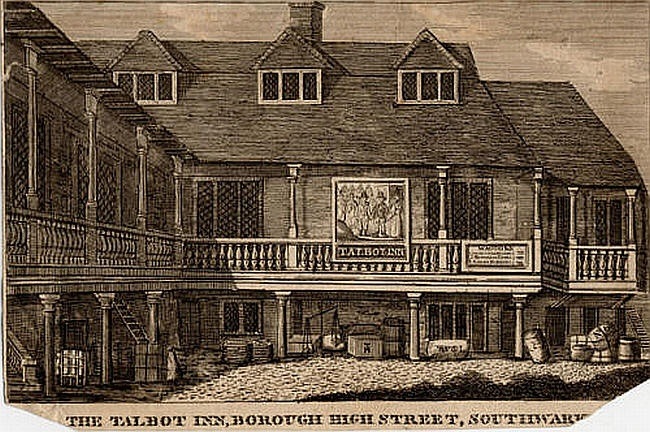
Why was everyone at the Tabbard?
a)
They were on their way making a pilgrimage to Canterbury.
b)
They were on a trip to see the Archbishop.
c)
They were looking for a place to eat.
d)
They were in need of supplies and rest.
3.

What were they going to Canterbury to see?
a)
the sights
b)
the archbishop
c)
the shrine of Thomas a Becket
d)
the narrator
4.

Which of the following best describes the Knight?
a)
brave and strong
b)
truthful
c)
modest clothing
d)
all answer choices are correct
5.

Which of the following best describes the squire?
a)
expert woodsman, strong, and loyal
b)
would rather be hunting, loves the outdoors, big sparkly eyeballs
c)
very thin, only loves books, spends all his money on education
d)
a ladies' man who plays the flute and is proud of his appearance
6.

Which of the following best describes the Yeoman?
a)
loud, less busy than he seemed to be, well-spoken, and very wise
b)
a little too concerned with appearance, expert woodsman, face "brown like a nut"
c)
very thin, only loves books, spends all his money on education
d)
forking beard, very knowledgeable, money management is his downfall
7.

Which of the following best describe the Prioress?
a)
forking beard, very knowledgeable, money management is his downfall
b)
fancy dresser, always wanted to be first at the altar, married 5 times
c)
very delicate and refined, emphasis on appearance, proper eater
d)
honest and hardworking, in peace and harmony with God and nature
8.

Which of the following best describe the Monk?
a)
big sparkly eyeballs, would rather be hunting, personable
b)
fancy dresser, always wanted to be first at the altar, married 5 times
c)
very thin, only loves books, spends all his money on education
d)
a ladies' man who plays the flute and is proud of his appearance
9.

Which of the following best describe the Merchant?
a)
forking beard, money management is his downfall, knowledgeable businessman
b)
loud, probably less busy than he seemed to be, wise
c)
white beard, spent his money freely, well-liked by other pilgrims
d)
an oozing ulcer, questionable personal hygiene, a great cook
10.

Which of the following best describes the Oxford Cleric?
a)
bald and fat, had a preference for fine clothes and luxuries, and didn't care for hard work
b)
loved to learn for the sake of learning, very thin, loves books
c)
seemed wise, made a lot of money as a lawyer, knew the law by rote, less busy than he seemed to be
d)
the Squire's servant, a woodsman
11.

Which of the following best describes the Serjeant at Law?
a)
Oxford student, very thin, loved learning and books
b)
seemed wise, loud, less busy than he seemed to be
c)
liked to eat, drink and be merry, country gentleman with a dagger and a islk purse
d)
forking beard, shrewd businessman, in debt
12.
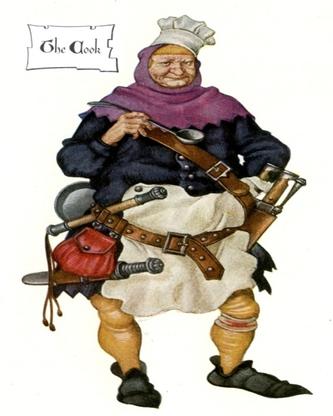
Which of the following best describes the cook?
a)
very fancy dresser, always wanted to be first at the alter to give her offering, well-traveled, married 5 times
b)
big, brawny, tells dirty tavern stories, he is strong and plays the bagpipes
c)
has an oozing ulcer on his knee, questionable hygiene, great cook
d)
very poor, ideal parish priest,well-educated
13.
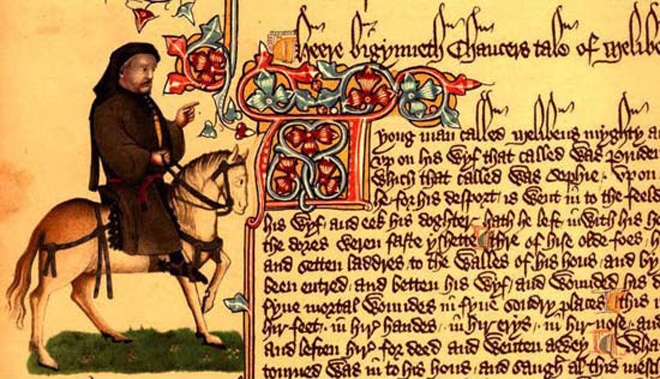
What game does the host propose to the pilgrims?
a)
they tell two stories on the way to Canterbury
b)
they tell two stories on the way from Canterbury
c)
the winner with the best story gets a free meal at the expense of the other travelers
d)
all answer choices are correct
14.

Which of the following best describes the Wife of Bath?
a)
very thin, only loves books, prefers books to clothes - spends all his money on education
b)
an oozing ulcer on his knee, questionable personal hygiene, a great cook
c)
very fancy dresser, always wanted to be first at the altar to give her offering, married 5 times
d)
big, brawny, tells dirty tavern stories, he is strong and plays the bagpipes
15.
According to the Host's plan, each pilgrim would tell
a)
6 tales
b)
2 tales
c)
4 tales
d)
As many tales as he/she wished
16.
At the beginning of "The Pardoner's Tale," we find the three "rioters"
a)
Under a tree
b)
In a tavern
c)
In a hotel
d)
Beside a road
17.
It is fitting that the Pardoner relates this grim tale because he, of all the pilgrims,
a)
has the greatest fear of dying violently on the pilgrimage
b)
has just witnessed such greed and how it affects people
c)
is just as greedy for money as the subject of his tale
d)
is a holy man who does not care for the things of this world
18.
From what business and what city did the pilgrims start their journey?
a)
The Red Lion, London
b)
Three Broomsticks, Hogsmead
c)
Tabard Inn, London
d)
Cheers, Boston
19.
What month of the year was it when the pilgrims began their journey?
a)
June
b)
May
c)
March
d)
April
20.
On their wedding night, the old woman asks the knight what the cause is for his:
a)
Unrest
b)
Happiness
c)
Passion
d)
Exhaustion
21.
What is the Wife of Bath's attitude towards her tale?
a)
Depressed
b)
Humorous
c)
Angry
d)
Unaffected
22.
The knight's initial response to the old woman's demand is:
a)
Rejection and disgust
b)
Chooses death over the demand
c)
Beyond excited
d)
Accepts her mastery
23.
What does the knight finally do at the end of the tale?
a)
He divorces the old woman
b)
He remembers the advice that saved his life
c)
He asks the Queen for advice
d)
He flees from the old woman
24.
The attitude of the tavern-knave towards Death is:
a)
Superiority
b)
Unconcern
c)
Loathing
d)
Respect
25.
The attitude of the three rioters towards Death is:
a)
Unconcern
b)
Loathing
c)
Superiority
d)
Respect
26.
What do the qualities of the rioter symbolize?
a)
Greed and Treachery
b)
Courage and Greed
c)
Old Age and Death
d)
Fame and Fortune
27.
The old man scolds the three rioters for their:
a)
Unconcern towards death
b)
Jollity in a time of death
c)
Consistent drunkenness
d)
Love for a good party
28.
What does the host say will be the prize for the best story?
a)
Dinner paid by the other pilgrims
b)
A free night's stay at the inn
c)
A book of all of the stories
d)
A large sum of money
29.
Chaucer uses the pilgrimage as a device to:
a)
Show vivid imagery
b)
To exaggerate the idea of a pilgrimage
c)
Frame the stories of the individual characters
d)
To make fun of the Catholic Church
30.
What season is described in the opening passage of The Canterbury Tales?
a)
summer
b)
winter
c)
spring
d)
fall
31.
"... Had followed chivalry, truth, honor, generousness and courtesy
a)
merchant
b)
knight
c)
reeve
d)
monk
32.
"She'd had five husbands, all at the church door".
a)
wife of bath
b)
host
c)
pardoner
d)
miller
33.
"Was deeply in debt though no one knew it"
a)
Merchant
b)
Squire
c)
Miller
d)
Host
34.

Who is the author of the Canterbury Tales?
a)
Shakespeare
b)
Ovid
c)
Chaucer
d)
Homer
35.

What crime does the knight in the Wife's Tale commit?
a)
perjury
b)
murder
c)
kidnapping
d)
rape
36.

What is the Knight's original sentence by King Arthur?
a)
banishment
b)
torture
c)
beheading
d)
imprisonment
37.

What quest is the Knight sent on?
a)
He is to find the holy grail.
b)
He is to find what women most desire.
c)
He is to find Excaliber.
d)
He is to find out what women need.
38.

How long does the Knight have to complete his quest?
a)
one year
b)
one week
c)
a year and a day
d)
a month and a day
39.
Who finally gives the Knight the correct answer to the question?
a)
a beautiful fairy
b)
a nymph
c)
an old hag
d)
a maiden
40.

Before he sees the old woman in the woods, he sees-
a)
a figure of death
b)
his face in a pool of water
c)
more than 24 dancing ladies
d)
his future in a dream
41.

In exchange for giving the knight the correct answer & saving his life, what does the hag want?
a)
titles
b)
a child
c)
wealth
d)
marriage
42.

What does the knight decide regarding his wife?
a)
She should become young.
b)
She should decide for herself.
c)
She should remain old.
d)
She should marry another man.
43.

As a result of the knight's choice, his wife chooses ...?
a)
to remain old.
b)
to become young.
c)
to leave.
d)
another husband.
44.

The Wife of Bath’s philosophy of marriage shows that she —?
a)
is a strong person with a keen sense of her own rights.
b)
cares only for pleasure, not for right and wrong.
c)
tends to say one thing and do the opposite
d)
trusts too much to thought instead of feeling.
45.

The hag gives the knight a choice of her being ugly & loyal or becoming young, beautiful &__?
a)
faithful
b)
dead
c)
unfaithful
d)
immortal
46.

Who decided that the Knight should have a different sentence?
a)
The King
b)
The Queen
c)
The Maiden
d)
The Pardoner
47.

If the Knight fails to complete his quest in the time frame, what is the consequence?
a)
imprisonment
b)
loss of his titles
c)
marriage
d)
death
48.

What answer does the Knight give the court to judge?
a)
love
b)
mastery
c)
honor
d)
independence
49.

How did one of the rioters friends die in the beginning of the tale?
a)
Plague
b)
heart attack
c)
he was murdered
d)
God tapped on his shoulder
50.

what were they looking for?
a)
money
b)
freedom
c)
death
d)
life
51.

where did the old man say that "Death" was?
a)
Under a tree
b)
under a bridge
c)
In an abandoned house
d)
he wasn't in town anymore
52.

why did the rioters want to take the money at night instead of the day time?
a)
they didn't want death to see them
b)
They need to get equipment
c)
They didn't want to be seen
53.
What was the theme of this tale?
a)
greed is the root of all evil
b)
friends can turn on each other
c)
death is unfortunate
54.

What did the three rioters find under the tree?
a)
Death
b)
Money
c)
Happiness
d)
poison
55.

What did the youngest rioter do while in town?
a)
Bread and wine
b)
Bread and wine and poison
c)
Money
d)
A towns person
56.

What happened to the youngest rioter at the end?
a)
The other two rioters killed him
b)
He got the most money
c)
He took the money for himself
57.

What happened to the last two rioters at the end of the tale?
a)
They left town
b)
They split the money
c)
One rioter killed the other
d)
They drunk the poisoned wine
58.

What does Avarice mean?
a)
greed
b)
hungry
c)
smart
d)
big
59.
What was ironic about the old man saying that "Death" was under the tree?
a)
They found death but not in they way they thought they would
b)
There was money under there instead
c)
They actually found someone under the tree
d)
They didn't find anything at all
60.
What does miscreants mean?
a)
viliains
b)
good people
c)
supporters
d)
evil
61.
Why was the rioters finding the money significant?
a)
they became better friends
b)
they wanted live longer to make more money
c)
they just left the money
d)
because they forgot about death completely
62.
what is ironic about everyones attitude towards death?
a)
they didn't know how to feel about him
b)
They hate him as though he is a real person
c)
they loved him for getting rid of evil people
63.
Along the way to death who do they meet?
a)
little girl
b)
haggy women
c)
a really old man
d)
shy little boy
64.
You would most likely predict that the three rioters will meet death because...
a)
they mourn the loss of their friend
b)
one of the three already has the plague
c)
the tavern boy tells them to be wary of death
d)
a taven boy discusses the history of the city
65.
After the rioters' rude greeting, the old man
a)
ignores their questions, preferring to speak of his own life
b)
responds to them with patience, advice, and warning
c)
focuses solely on their perpetual death-in-life state
d)
encourages them to seek the treasures and pleasures of life
66.
What prediction would you most likely make?
At once the three young rioters began
To run, and reached the tree, and there they found A pile of golden florins on the ground, New-coined, eight bushels of them as they thought. No longer was it Death those fellows sought,
For they were all so thrilled to see the sight,
The florins were so beautiful and bright, That down they sat beside the precious pile.
At once the three young rioters began
To run, and reached the tree, and there they found A pile of golden florins on the ground, New-coined, eight bushels of them as they thought. No longer was it Death those fellows sought,
For they were all so thrilled to see the sight,
The florins were so beautiful and bright, That down they sat beside the precious pile.
a)
People think that the rioters stole the money.
b)
The rioters will happily split the money equally.
c)
Death uses the gold as a reward for a challenge.
d)
The gold will be the downfall of the rioters.
67.
The youngest rioter buys poison because he...
a)
wants all the treasure for himself
b)
hopes to help the old man find death
c)
notices wild animals around the treasure
d)
knows that the other two are planning his death
68.
While the youngest rioter goes back to town for food and wine, what do the other two plan?
a)
how to help the old man
b)
what story to tell others about the gold they found
c)
how to carry the coins back to town
d)
how to kill the youngest rioter
69.
Chaucer uses the pilgrimage to Canterbury primarily as a device to
a)
emphasize the characters' religious beliefs
b)
Frame the story told by individual characters
c)
Describe the difficulties of medieval life
70.
What is ironic about the pledge the rioters make in the following lines from “The Pardoner’s Tale”?
They made their bargain, swore with appetite./ These three, to live and die for one another/
As brother-born might swear to his born brother.
They made their bargain, swore with appetite./ These three, to live and die for one another/
As brother-born might swear to his born brother.
a)
They have only just met that morning
b)
They don't realize that death is listening to them.
c)
They later plot to kill one another over the gold.
71.
When analyzing “The Pardoner’s Tale” as an allegory, the rioters would represent which of these qualities?
a)
greed and homicide
b)
fame and fortune
c)
old age and death
72.
What becomes clearer when reading the following passage from “The Pardoner’s Tale”?
...if it be your design/
To find out Death, turn up this crooked way/
Towards that grove. I left him there today/
Under a tree, and there you’ll find him waiting.
...if it be your design/
To find out Death, turn up this crooked way/
Towards that grove. I left him there today/
Under a tree, and there you’ll find him waiting.
a)
The plague will kill the three rioters before the make it to the tree.
b)
The old man is pointing the three rioters towards their own deaths.
c)
The three rioters will avoid deat
73.
In what way is the old man correct in saying they will find death under the tree?
a)
death appears as a skeleton under the tree
b)
the gold under the tree leads to death
c)
the coffin is buried under the tree
74.
What archetypal number is used in "The Pardoner's Tale?"
a)
4
b)
2
c)
3
75.
What is ironic about the Pardoner telling a moral tale of greed being the root of all evil?
a)
the pardoner despises greedy people
b)
the pardoner himself is greedy
c)
the pardoner doesn't accept money
76.
Who sold fake relics; his indulgences were most often sold at handsome prices?
a)
Pardoner
b)
Reeve
c)
Manciple
d)
Skipper
100 %

