
 Worksheets
Aquatics Exam 1
Total questions: 22
Worksheet time: 21mins
Name
Class
Date
1.
What is a watershed?
a)
Land that collects and channels water froma small body of water to a larger body of water
b)
the shape of the land determined by elevation
c)
A natural stream of water of considerable volume
d)
a river and all its tributaries
2.
How do wetlands help prevent flooding?
a)
They provide habitat
b)
They absorb extra runoff
c)
The provide nutrients
3.

Water that stands or flows across the Earth’s surface.
a)
Groundwater
b)
Surface water
c)
Runoff
d)
Divide
4.

What is the soil, silt, and other material that is suspended in water and eventually settles out on the bottom of a river, lake, or other body of water?
a)
Sediment
b)
Fertilizer
c)
Pesticide
d)
Watershed
5.
agricultural runoff
a)
excess water that runs over the land
b)
runoff from farms and land
c)
runoff from city environments
d)
small or large pockets of ground water
6.
Urban runoff
a)
Excess water that runs over the land
b)
Water that flows underground
c)
Runoff from farms and land
d)
Runoff from city environments
7.
Which of the following make up part of Earth's groundwater?
a)
wetlands
b)
rivers
c)
aquifers
d)
lakes
8.
Most water pollution is the result of __________________.
a)
natural processes
b)
animal waste
c)
human activities
d)
acid rain
9.
What is erosion?
a)
When rocks and sand are moved by water
b)
When water gets contaminated
c)
When plants grow next to a river
d)
When rocks are broken apart by water
10.

What two elements make up water?
a)
Helium and oxygen
b)
Hydrogen and oxygen
c)
helium and carbon
d)
oxygen and carbon
11.

What word describes when water is attracted to other substances?
a)
cohesion
b)
adhesion
c)
capillary action
d)
surface tension
12.

The attraction that causes water and other liquids to form drops on thin films is called ________________. This is also water’s ability to be attracted to other water molecules.
a)
adhesion
b)
capillary action
c)
cohesion
d)
surface tension
13.

molecule in which opposite ends have opposite electric charges
a)
cohesion
b)
polar molecule
c)
hydrogen bond
d)
solution
14.
Why does ice float?
a)
As water freezes, it expands and its density decreases.
b)
As water freezes, it takes up more hydrogen from the atmosphere, causing it to have a greater buoyancy.
c)
As water freezes, air becomes trapped between the hydrogen bonds of water molecules.
d)
As water freezes, it takes up more oxygen from the atmosphere, causing it to have a greater buoyancy.
15.
Water beads up on the surface of a penny because of this property.
a)
Adhesion
b)
High Surface Tension
c)
Universal Solvent
d)
Changes in Density
16.
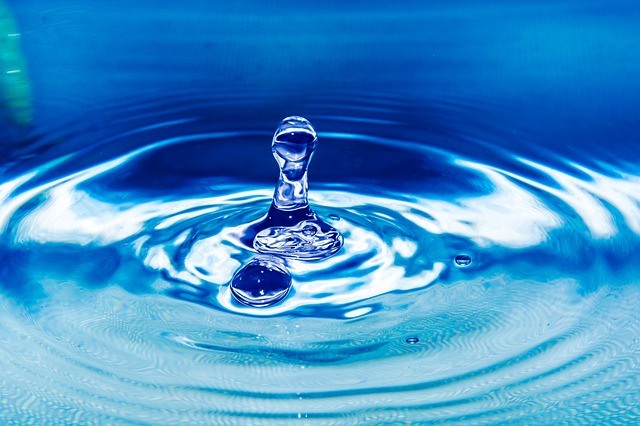
Which is NOT a unique property of water?
a)
Frozen water floats on liquid water.
b)
Water covers most of the Earth’s surface and retains a large amount of heat.
c)
Water molecules stick to each other through hydrogen bonds.
d)
Water cools very rapidly.
17.
What is the water cycle?
a)
the 3 forms of water
b)
the movement of water on, above, or below the surface of the Earth
c)
when water melts
d)
when clouds form
18.
Which is the opposite of condensation?
a)
runoff
b)
evaporation
c)
precipitation
d)
transpiration
19.
Which best explains why runoff is important?
a)
It returns water to other locations on Earth
b)
It increases the chance of flooding
c)
It makes evaporation occur faster
d)
It increases condensation
20.

What is it called when plants give off water vapor as a waste product?
a)
condensation
b)
evaporation
c)
sublimation
d)
transpiration
21.
The first step in the water cycle
a)
evaporation
b)
condensation
c)
precipitation
d)
there is no first step
22.
The water cycle is also known as ..........
a)
Hypertonic Solution
b)
Hydrological Cycle
c)
Hyperlogical Cycle
d)
None of these
100 %

