wayground logo

Free Printable Worksheets

Font size

S
M
L
XL
Worksheets

CBA 2 Review

Total questions: 92

Worksheet time: 1hrs 27mins

Name
Class
Date
1.
What product was first made using machines in factories?
a)
Steel
b)
textiles
c)
locomotives
d)
flying shuttles
2.
Which of the following was NOT associated with early factory working conditions?
a)
Low wages
b)
Safe working conditions
c)
Dangerous working conditions
d)
Widespread pollution
3.
Mass production led to:
a)
Products being more superior in quality
b)
goods became less expensive
c)
laborers received higher wages
d)
industries moved to rural areas
4.
Before the Industrial Revolution all products were created by
a)
Factories
b)
Hand
c)
Slaves
d)
Royalty
5.
What is the movement from rural to urban areas called?
a)
Moving
b)
colonization
c)
inflation
d)
urbanization
6.
Why did people move to the cities during the Industrial revolution?
a)
Jobs in factories
b)
Jobs on the farm
c)
Family
d)
Friends
7.
This machine allowed factories to be built anywhere, powered by coal.
a)
flying shuttle
b)
steam engine
c)
spinning jenny
d)
cotton gin
8.
The Industrial Revolution happening during the _____ and the ____.
a)
1700s, 1800s
b)
1800s, 1900s
c)
1900s, 2000s
d)
1500s, 1600s
9.
What country did the Industrial Revolution begin in?
a)
France
b)
Britian
c)
United States
d)
Spain
10.
The Industrial Revolution was triggered by sweeping changes in what?
a)
Religion
b)
Education
c)
Agriculture
d)
Politics 
11.
Which 2 natural resources were the backbone of the Industrial Revolution?
a)
wood and peat
b)
oil and natural gas
c)
coal and iron
d)
cotton and tobacco
12.
Iron, minerals, coal and plants are examples of which productive resource?
a)
land
b)
labor
c)
entrepreneurship
d)
capital
13.
Which factor of production would you consider a lawn mower?
a)
Land
b)
Labor
c)
Capital
d)
Entrepreneur
14.
What is an entrepreneur?
a)
A person who starts a new business.
b)
A leader of a country.
c)
A worker in a factory.
d)
A student in college.
15.

Minerals would be classified as what?

a)

Land

b)

Labor

c)

Capital

d)

Entrepreneurship

16.
Machines, computers, phones, etc are which type of investment
a)
Capital
b)
Human Capital
c)
Entrepreneurs 
d)
Natural Resrouces
17.
The term "factors of production" means:
a)
things or skills needed to produce goods or services
b)
how we spend our money
c)
the resources of the government
d)
how society creates jobs
18.
The term, "entrepreneurship" means:
a)
Person who organizes the factors of production to produce goods/services; business owners.
b)
Goods not created for their own use, but to make other goods/services.
c)
Work the people do to produce goods and services.
d)
The natural resources used to produce goods or services.
19.
The term, "labor" means:
a)
Work the people do to produce goods and services.
b)
The natural resources used to produce goods or services.
c)
Person who organizes the factors of production to produce goods/services; business owners.
d)
Goods not created for their own use, but to make other goods/services.
20.

Wallerstein’s three-tier regionalization of the world includes all of the following EXCEPT

a)

core.

b)

semi-core

c)

periphery.

d)

semi-periphery.

21.

Countries that have both low levels of HDI and also high younger-person dependency ratios?

a)

core

b)

island of development

c)

semi-periphery

d)

periphery

22.

Wallerstein´s capitalist world economy argues that global economic activities are controlled by

a)

Countries of the periphery

b)

Core countries

c)

European counties

d)

Heartland countries

23.
Who created the world-systems theory?
a)
Wallerstein
b)
Hoyt
c)
Sauer
d)
Malthus
24.
The hearth of the Industrial Revolution
a)
Great Britain
b)
France
c)
Belgium
d)
Germany
25.
A newly industrialized country can have many jobs in this economic level?
a)
Primary 
b)
Secondary 
c)
Tertiary 
26.

What are the types of indicators that are analyzed when determining a country's level of development?

a)

Social and Economic

b)

GNP and GDP

c)

Demographics and Immigration

d)

Literacy Rates and access to school

27.
The following image shows a job in which sector?
a)
Primary sector
b)
Secondary sector
c)
Tertiary sector
d)
Quinary sector
28.

What best describes Wallersteins world theory

a)

5 stages to economic growth

b)

Three regions: Core, semi-periphery, and periphery, and they all depend on eachother

c)

A theory that states that Periphery and semi-periphery will eventually become core

d)

A theory based on world trade

29.

Wallerstein's three-tier structure looks at _____ goods are produced.

a)

what

b)

how

c)

when

30.

Geographers are attracted to the world systems theory because it incorporates space, time and politics that shape the context in which development takes place.

a)

True

b)

False

31.

resources should be conserved so that people living today can meet their needs without limiting the ability of future generation

a)

Globalization

b)

Capitalism

c)

Socialism

d)

Sustainable Development

32.
What are factories in Mexico that are located close to the United States border and are owned by U.S., Japanese, and European countries?
a)
urban
b)
climate
c)
maquiladoras
d)
commodities
33.
What is land that is good for farming?
a)
climate
b)
arable
c)
lumber
d)
deforestation
34.

Loss of industrial activity in a region.

a)

Core-periphery model

b)

Deglomeration

c)

Deindustrialization

d)

Outsource

35.

What is a key principle of a market economy?

a)

The means of production are controlled by the state.

b)

Supply and demand determine production and price.

c)

Employment opportunities are determined by social class.

d)

Businesses are owned by the people collectively.

36.
In a market economy, who decides on the prices of goods and services?
a)
government
b)
buyers and sellers
c)
firms
d)
local leaders
37.

A political theory derived from Karl Marx, advocating class war and leading to a society in which all property is publicly owned and each person works and is paid according to their abilities and needs.

a)

Communism

b)

Free enterprise system

c)

Capitalism

d)

Law of competition

38.
What is Capitalism?
a)
A system where the government controls business
b)
Capitalism is an economic system where the means of production are privately owned and operated for profit! 
c)
A economic system in which the people have limited rights
d)
An economic system in which most property and resources, such as factories or farms, are publicly owned or controlled.
39.
______________get to make the economic decisions under capitalism.
a)
Individuals
b)
Government
c)
Literally no one
d)
The President 
40.
Which is NOT a characteristic of Capitalism?
a)
Market Economy
b)
Supply and Demand
c)
Freedom of Competition
d)
Classless Society
41.
The government or groups of workers might control these resources but the profits are divided among the people.
a)
Capitalism
b)
Communism 
c)
Socialism
d)
Mixed Economy
42.
In a socialist country, citizens pay LESS in taxes than those who live in a capitalist country. 
a)
True 
b)
False
43.
This economic system aims to make the best products for the lowest amount of money, which often times leads to bad treatment of workers.
a)
Socialism
b)
Communism
c)
Mixed Market Economy 
d)
Capitalism 
44.
The United States is an example of what economic systems? 
a)
Capitalism
b)
Socialism 
c)
Mixed Economy 
d)
Communism 
45.
Who owned everything under communism?
a)
Wealthy people
b)
The secret police
c)
The government
d)
The poor people
46.
What is NOT true about communism?
a)
People were poor.
b)
People were rich.
c)
No one could own property.
d)
People had very little freedoms.
47.
What is a key difference between capitalism and communism?
a)
Private Property is allowed in Capitalism
b)
Communism allows for a free market
c)
Capitalism, in theory, spreads the wealth evenly
d)
Communism encourages entrepreneurship 
48.
Who were the fathers of Communism and Capitalism, respectively?
a)
Locke and Voltaire
b)
Meiji and Tokugawa
c)
Marx and Smith
d)
Cavour and Garabaldi
49.
In a "pure" communist society, who are the wealthiest and most powerful people?
a)
Intellectuals
b)
Business leaders
c)
Military leaders
d)
No One--every member of society is supposed to be equal
50.
Who owned everything under communism?
a)
Wealthy people
b)
The secret police
c)
The government
d)
The poor people
51.
What is NOT true about communism?
a)
People were poor.
b)
People were rich.
c)
No one could own property.
d)
People had very little freedoms.
52.
What are the 3 main fossil fuels?
a)
Coal, Oil, and Gasoline
b)
Coal, Oil, and Natural Gas
c)
Electricity, Gasoline, Petroleum
d)
Coal, Oil, Non-renewable Resources
53.
Petroleum and natural gas form from...
a)
strong winds
b)
cooled magma
c)
radioactive materials
d)
remains of plants and animals 
54.
Which of the following is a fossil fuel?
a)
Wind
b)
Coal
c)
Solar
d)
Biomass
55.
Which of the following is a nonrenewable resource?
a)
milk
b)
coal
c)
biomass
d)
water
56.
Fossil fuels are classified as nonrenewable because they.......
a)
require expensive equipment
b)
take millions of years to replace
c)
can be found all over 
d)
provide all the energy we use
57.
What is the definition of a renewable resource?
a)
things that don't run out
b)
things that do run out
c)
stuff that makes things happen
d)
none of the above
58.
Which of the following is not a fossil fuel?
a)
natural gas
b)
electricity
c)
oil
d)
petroleum
59.
What is coal made of?
a)
decomposed animal and plant remains
b)
water
c)
electricity
d)
all of the above
60.
Fossils give us evidence about which of the following?
a)
plants and animals that lived long ago
b)
how weathering and erosion break down rocks
c)
the other planets in our solar system
d)
the transfer of energy from one form  to another
61.
 Which type of mining is associated with disturbing more land?
a)
Surface mining 
b)
Sub-surface mining
c)
Mining in the oceans
62.
Mineral deposits being removed from near the surface is the definition of:
a)
Subsurface mining 
b)
Open Pit Mining 
c)
Strip Mining 
d)
Surface Mining 
63.
Offshore drilling is a common practice for obtaining supplies of oil. Which best describes a concern with using offshore drilling to obtain oil?
a)
Offshore drilling is not cost effective, requiring specialized equipment.
b)
Offshore drilling is not very efficient, requiring a large amount of energy input to obtain a small amount of oil.
c)
Offshore drilling produces oil that cannot be used directly; it must be further refined through several expensive processes.
d)
Offshore drilling can lead to oil spills and contamination of marine ecosystems, threatening the organisms living in these ecosystems.
64.
How does coal compare to natural gas?
a)
Both are renewable.
b)
Both are non-renewable.
c)
Coal is renewable, while natural gas is non-renewable.
65.
Which best describes a problem associated with burning fossil fuels?
a)
Fossil fuels produce air pollution.
b)
Fossil fuels renew oxygen levels in the air.
c)
Fossil fuels produce more fossil fuels as they burn.
66.
Which energy source is best described as non-renewable?
a)
solar
b)
fossil fuels
c)
hydroelectric
67.
Why is petroleum extracted from the earth described as a nonrenewable energy source?
a)
After drilling, it is made into gasoline fuel.
b)
It takes millions of years to form.
c)
Oil reserves are plentiful.
68.
Fishing, Mining, Farming, and Forestry are examples of what economic activity?
a)
Primary
b)
Secondary
c)
Teritiary
d)
Quaternary 
69.
Milling lumber into plywood is an example of what economic activity?
a)
Primary
b)
Secondary
c)
Tertiary
d)
Quaternary 
70.
Turning gold into a bracelet is an example of which economic activity?
a)
Primary
b)
Secondary
c)
Tertiary
d)
Quaternary
71.
Which economic activity provides a business or professional service
a)
Primary
b)
Secondary
c)
Tertiary
d)
Quaternary
72.
Which economic activity would lawyers, doctors, salespeople, and customer service representatives fall under?
a)
Primary
b)
Secondary
c)
Tertiary
d)
Quaternary
73.
Which economic activity would intellectual occupations which are advanced and specialized such as thinking, research and developing new ideas fall under?
a)
Primary
b)
Secondary
c)
Tertiary
d)
Quaternary
74.
Which economic activity includes key words such as scientist, thinking, and research?
a)
Primary
b)
Secondary
c)
Tertiary
d)
Quaternary
75.

How much people earn per year

a)

Life expectancy

b)

Literacy Rate

c)

GDP

76.

HIGH literacy rate

a)

Developed

b)

Newly Industrialized

c)

Developing

77.

LOW life expectancy

a)

Developed

b)

Newly Industrialized

c)

Developing

78.

GROWING GDP

a)

Developed

b)

Newly Industrialized

c)

Developing

79.

HIGH life expectancy

a)

Developed

b)

Newly Industrialized

c)

Developing

80.

GROWING literacy rate

a)

Developed

b)

Newly Industrialized

c)

Developing

81.

Newly Industrialized

a)

Manufacturing Jobs

b)

Service Jobs

c)

Agricultural Jobs

82.

Developing Countries

a)

Manufacturing Jobs

b)

Service Jobs

c)

Argricultural Jobs

83.

Figuring out how to feed and shelter population

a)

Developed

b)

Developing

c)

Newly Industrialized

84.

Figuring out how to give people luxuries in life

a)

Newly Industrialized

b)

Developing

c)

Developed

85.

Based on the chart above, what country has the lowest standard of living?

a)

Mexico

b)

Kenya

c)

Germany

d)

USA

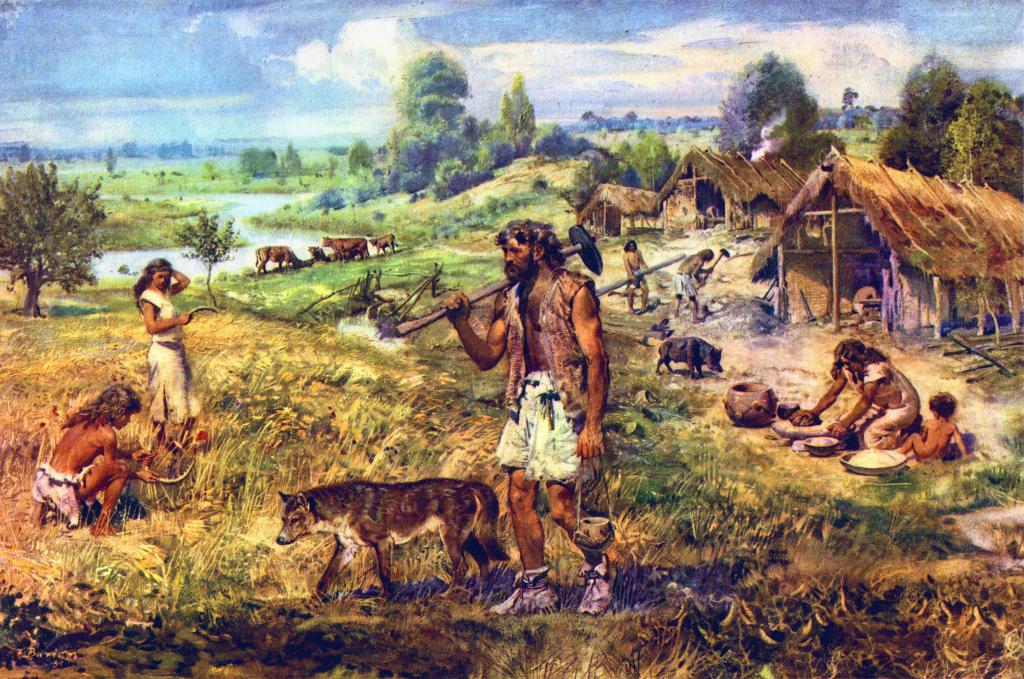
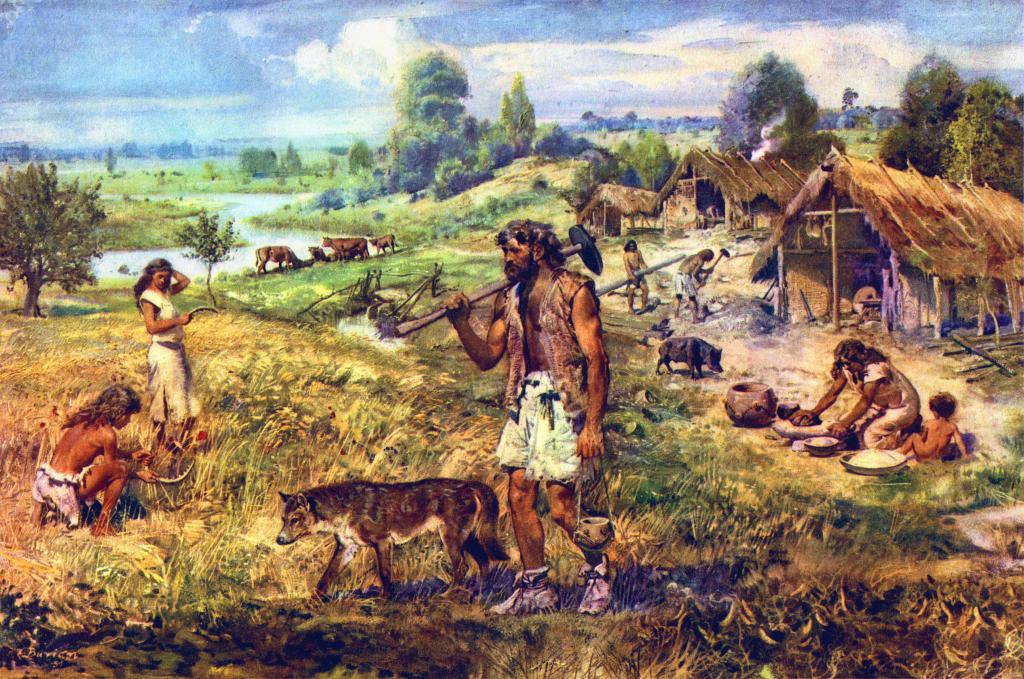
86.
What change marked the beginning of the Neolithic Revolution? 
a)
beginning of hunting and gathering
b)
man learned to write
c)
man began farming
d)
man built towns and cities
87.
What is another word for farming?
a)
industry
b)
Paleolithic
c)
agriculture
d)
migration
88.
Before the _______________________ Revolution, people were  _______________________.
a)
Paleolithic, monsters
b)
Neolithic, nomads
c)

innovations, cultivation
d)
Neolithic, hunter-gatherers
89.
During Neolithic times, people engaged in  _______________________ of the land and  _______________________ of animals and plants. Because people could now grown their own food, known as farming or  _______________________, they were able to establish permanent settles, develop many  _______________________, or improvements, to make their lives easier.
a)
innovations, shelters, cultivation, migration
b)
settlements, cultivation, innovations, shelter
c)
cultivation, migration, shelters, domestication
d)
cultivation, demestication, agriculture, innovations
90.
In the U.S., many farms are integrated into a large food production industry. This is known as:
a)
commercial farming.
b)
agribusiness.
c)
food processing.
d)
mechanized farming.
91.
The Third Agricultural Revolution is also known as 
a)
GMO Revolution
b)
Seed Agricultural Revolution
c)
Green Revolution
d)
Industrial Revolution
92.
What type of farming is practiced to produce food for sale off the farm?
a)
Commercial
b)
subsistence
c)
seed
d)
vegetative