
 Worksheets
Waves
Total questions: 23
Worksheet time: 15mins

Longitudinal waves...
carry radiation toward an object
carry energy in the same direction as the waves
carry energy in a different direction than the waves
carry light energy from a light bulb
________ carry energy in a direction that is perpendicular to the wave.
longitudinal waves
transverse waves
sound waves
universal waves

The part of the wave with the greatest amount of energy
peak
trough
wavelength
volume

What does sound travel through?
outer space, air and water
solids, liquids and gases
houses, telephones, outer space
empty space

When the amplitude of a wave is taller...
...the pitch is higher.
...the pitch is lower.
...the volume is louder.
...the volume is quieter.

_____________________ is the distance between two waves.
Amplitude
Wavelength
Frequency
Crest


All waves carry ________ as they travel from one place to another.
matter
space
energy
surfers
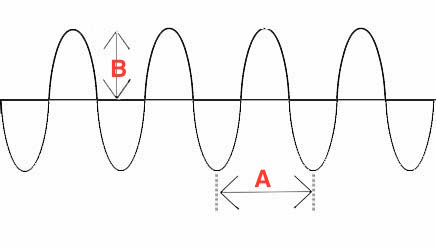
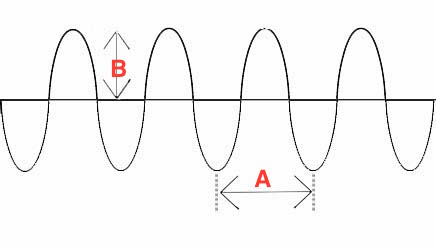
What property of this wave is represented by the letter "A"
amplitude
crest
trough
wavelength
A sound wave cannot travel through...
empty space
water
air.
glass

If you make sound waves closer together, what happens?
The pitch is higher.
The pitch is lower.
The volume is louder.
The volume is quieter.


A soft sound occurs when a sound wave has a...
Small (Low) Amplitude
Large (High) Amplitude

The top slinky (a) models sound moving as a...
transverse wave
ocean wave
permanent wave
longitudinal wave

What is the distance between two compressions or two rarefactions?
wavelength
amplitude
10 miles


During a thunderstorm, you see lightning before you hear thunder. This is because
sound and light travel at the same speed
sound is faster than light
light is faster than sound

