
NEW
Font size
S
M
L
XL
 Worksheets
5 Themes of Geography Review
Total questions: 65
Worksheet time: 43mins
Name
Class
Date
1.
What is a Region
a)
Tells us ways in which the places in an area are alike
b)
Tells us what makes an area special and what makes it different from every other area
c)
Tells us where people and places are
2.
What is movement?
a)
Tells us how people, goods, recourses, and ideas move from one place to another
b)
Tells us what makes an area special and what makes it different from every other area
c)
Tells us ways in which the places in an area are alike.
3.
What is location?
a)
Tells us where people and places are
b)
Tells us what makes an area special and what makes it different from every other area.
c)
Tells how people, goods, resources, and ideas move from one place to another.
4.
Latitude lines run
a)
East/West
b)
North/South
5.
Longitude lines run _________.
a)
East/West
b)
North South
6.
The imaginary line that runs through the middle of the earth east and west is called?
a)
Prime Meridian
b)
Equator
c)
Date Line
7.
Cutting down trees to build houses is an example of which?
a)
Location
b)
Place
c)
Human-Environment Interaction
d)
Movement
8.
People leaving their homes in Syria and travelling to Turkey to avoid ISIS is an example of which?
a)
Human-Environment Interaction
b)
Movement
c)
Absolute Location
d)
Relative Location
9.
The Middle East is an example of which?
a)
Human-Environment Interaction
b)
Relative Location
c)
Movement
d)
Region
10.
The fact that Africa is south of Europe is an example of which?
a)
Movement
b)
Absolute Location
c)
Relative Location
d)
Place
11.
Biochemical warfare that pollutes the water in a country is an example of which?
a)
Place
b)
Human-Environment Interaction
c)
Region
d)
Movement
12.
Where is it exactly on the Earth?
a)
Place
b)
Perfect Location
c)
Absolute Location
d)
Relative Location
13.
Where is it?
a)
Place
b)
Location
c)
Movement
d)
Region
14.

What is the Relative Location of the Gulf of Mexico?
a)
west of Houston
b)
85 degrees W by 27 degrees N
c)
85 degrees N by 27 degrees W
d)
west of Miami
15.
Using lines of latitude and longitude to find an exact location is...
a)
Absolute Location
b)
Relative Location
c)
Prime Meridian
d)
Place
16.
The Five Themes of Geography are the Following:
a)
Place, Region, Interaction, Land-forms, Movement
b)
Place, Region, Interaction, Location, Movement
c)
People, Race, Interaction, Location Movement
d)
Power, Region, Interaction, Location Movement
17.
The theme Place consist of:
a)
Human and Physical characteristics
b)
the movement of people and trade
c)
places that are similar with one another
d)
The location of an area
18.
The theme movement has to do with what two ideas:
a)
Migration and Trade
b)
Latitude and longitude
c)
Pollution
d)
Human and Physical Characteristics
19.
Only people move.
a)
True
b)
False
20.
Regions can be based off more than one feature.
a)
True
b)
False
21.
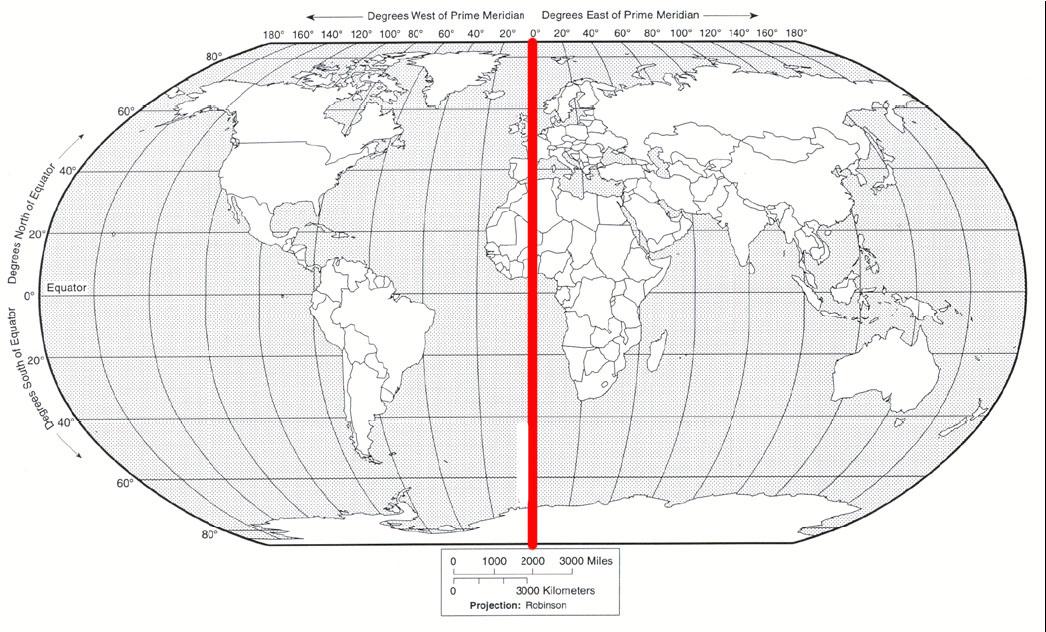
What is the name of the line at zero degrees longitude?
a)
Equator
b)
Prime Meridian
c)
North Pole
d)
South Pole
22.
Latitude and Longitude are measured in______.
a)
kilometers
b)
degrees
c)
miles
d)
hours
23.
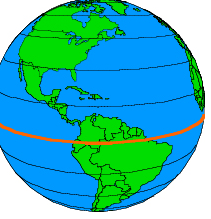
a)
The map shows lines of longitude.
b)
The map shows lines of latitude.
24.

A set of degrees of latitude and longitude that help you locate a place on a map.
a)
coordinates
b)
positions
c)
hemispheres
d)
locations
25.

To locate a place on the earth, you need to look at...
a)
where the lines of latitude and longitude meet
b)
the lines of latitude only
c)
the lines of longitude only
d)
the compass rose
26.
Rules that people need to live together without conflict.
a)
Social Groups
b)
Religion
c)
Government
d)
Economy
27.
Past events
a)
Religion
b)
Economy
c)
Government
d)
History
28.
Groups of people in a society
a)
Arts
b)
Daily Needs
c)
Language
d)
Social Groups
29.
Way of speaking or communication
a)
Daily Needs
b)
Arts
c)
Language
d)
Religion
30.
Things people accept that help them answer basic questions about life's meaning.
a)
Religious Beliefs
b)
Economy
c)
Arts
d)
Daily needs
31.
sets rules for deciding what goods and services to produce and who will receive them
a)
Economy
b)
Daily Needs
c)
History
d)
Religion
32.
A way people express what they think is beautiful and meaningful
a)
Religion
b)
Arts
c)
History
d)
Language
33.
The basic things humans need to survive
a)
Government
b)
Religion
c)
Daily Needs
d)
Social Groups
34.
Dialect is part of what element?
a)
Arts
b)
Economy
c)
Language
d)
History
35.
Laws are part of what element?
a)
Religion
b)
Economy
c)
History
d)
Government
36.
Recreation is part of what element?
a)
Language
b)
Daily Life
c)
Arts
d)
History
37.
Money is part of what element?
a)
Economy
b)
Social Groups
c)
Arts
d)
Daily Needs
38.
Heritage is part of what element?
a)
Religion
b)
History
c)
Economy
d)
Social Groups
39.
Drama is part of what element?
a)
Arts
b)
Social Groups
c)
Economy
d)
Daily Life
40.
The number of births compared to the total number of people in a population
a)
death rate
b)
birth rate
c)
baby boom
d)
doubling time
41.

The number of deaths compared to the total number of people in a population
a)
death rate
b)
doubling time
c)
population decline
d)
birth rate
42.

Which is NOT a reason for the decreasing death rate?
a)
Better health care
b)
Greater food supply
c)
Cleaner water
d)
More pollution
43.

Which of the following is NOT a challenge to a growing population?
a)
Overcrowding
b)
Housing shortages
c)
Overuse of resources
d)
Increased food supplies
44.
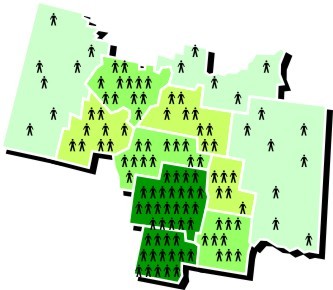
The average number of people per square mile
a)
population distribution
b)
population density
c)
urbanization
d)
population rate
45.

Sparsely populated areas such as the country side
a)
Urban areas
b)
Rural areas
c)
Suburbs
d)
Urbanization
46.

Densely populated areas such as cities
a)
Urban areas
b)
Rural areas
c)
Countryside
d)
Suburbs
47.
The movement of people from place to place
a)
Migration
b)
Urbanization
c)
Modernization
d)
Industrialization
48.

To enter and live in a new country
a)
Emigration
b)
Immigration
c)
Urbanization
d)
Industrialization
49.
The total number of people living an area
a)
emigrate
b)
net migration
c)
population density
d)
population
50.
One reason the world is growing so quickly is because...
a)
The world has infinite resources for everyone
b)
Birth rate is higher than death rate
c)
There are more and more places for people to live
d)
Death rate is higher than birth rate
51.
Most of the world's population lives in...
a)
North America
b)
Europe
c)
Africa
d)
Asia
52.
A person forced to flee their country due to war, violence, or natural disaster is called a...
a)
Immigrant
b)
A runner
c)
Refugee
d)
An illegal alien
53.
A useful material found in the environment is known as a
a)
nonrenewable resource
b)
renewable resource
c)
natural resource
d)
energy resource
54.
Which of the following is an example of a nonrenewable resource?
a)
oil
b)
soil
c)
water
d)
animals
55.
When there is a change in order to fit new conditions or a new environment it is
a)
adaptation
b)
modification
56.
When there is a change to the environment to meet the needs of people
a)
Adaptation
b)
Modification
57.
Building dams, plowing and irrigating fields, and digging mines are examples of...
a)
depending
b)
adapting
c)
modifying
58.
What question does the theme: Human Environment Interaction ask?
a)
How do humans negatively impact the earth?
b)
What is the relationship between humans and the environment?
c)
How are humans and their environment similar?
59.
What are the three ways humans interact with their environment?
a)
depend, modify, love
b)
adapt, depend, positive
c)
depend, modify, adapt
d)
adapt, modify, negative
60.
In ancient times, the annual flooding of the Nile River produced good soil for growing crops. This is an example of...
a)
adapting
b)
modifying
c)
depending
61.

a)
Depend
b)
Adapt
c)
Modify
62.

a)
Depend
b)
Adapt
c)
Modify
63.
How do humans affect their environment?
a)
positvely
b)
negatively
c)
both
64.
How does the environment affect humans?
a)
positively
b)
negatively
c)
both
65.
Made by nature
a)
human characteristics
b)
location
c)
physical characteristics
d)
movement
Reset

