
 Worksheets
SV Economics Chapter 2 Review
Total questions: 36
Worksheet time: 18mins
Name
Class
Date
1.
The four types of economic systems are:
a)
Traditional, Command, Mixed, & Market
b)
Traditional, Command, Combined, & Market
c)
Communism, Capitalism, Free Market, and Macroeconomics
d)
Microeconomics, Macroeconomics, Individual, and Traditional.
2.
A command economy is when the government is in control.
a)
True
b)
False
3.
Which of the following is an economic system in which economic decisions are made according to social roles & culture?
a)
Market economy
b)
Command economy
c)
Traditional economy
d)
Mixed economy
4.
In which type of society would we most likely find a traditional economic system?
a)
a major city
b)
an established country
c)
rural and under-developed territory
d)
all of the above
5.

There are four types of economic systems. Most economies are _____.
a)
Traditional
b)
Command
c)
Market
d)
Mixed
6.

This type of government typically goes with the Command Economy.
a)
Democracy
b)
Republic
c)
Autocracy
d)
Communism
7.

The government has little to no role in the production of goods in this type of economy.
a)
Traditional
b)
Mixed
c)
Command
d)
Market
8.

In this type of economy, the government places control on businesses, but the individual decides what to make.
a)
Mixed
b)
Market
c)
Command
d)
Traditional
9.
This economic system discourages new ways of doing things
a)
Traditional
b)
Market
c)
Command
d)
Mixed
10.
People cast “dollar votes” in this economic system.
a)
Traditional
b)
Market
c)
Command
d)
Mixed
11.
Capitalism flourishes here in this economic system.
a)
Traditional
b)
Market
c)
Command
d)
Mixed
12.
Profit does not have great importance in deciding what to produce in this economic system
a)
Mixed
b)
Market
c)
Command
13.
This economic system often experiences a lower standard of living.
a)
Traditional
b)
Market
c)
Command
d)
Mixed
14.
These economic systems answer the three economic questions before being production of a good or service.
a)
Traditional
b)
Market
c)
Command
d)
ALL
15.
If price changes and so does demand, then the good is _________
a)
elastic
b)
inelastic
c)
marginal
d)
not affected
16.
If people can delay a purchase, demand would be
a)
inelastic
b)
unelastic
c)
elastic
d)
none
17.
Milk and cookies are
a)
opposite
b)
none
c)
substitutes
d)
compliments
18.
A pool float and sunscreen are
a)
inelastic
b)
compliments
c)
subsititues
d)
demand
19.
Sugar cookies and chocolate chip cookies are
a)
compliments
b)
inelastic
c)
none
d)
substitutes
20.
If an item has substitutes, demand for this item would be
a)
inelastic
b)
elastic
21.
If the price of a good goes up and people still continue to buy it, then it is
a)
elastic
b)
inelastic
22.
Which economist believed in communism?
a)
Milton Friedman
b)
Adam Smith
c)
John Kenneth Galbrieth
d)
Karl Marx
23.
Incentives for individuals to choose in the best interest of society by pursuing their own self-interest is better known as.....
a)
Profit
b)
Invisible Hand Theory
c)
Psychic Income
d)
Utility
24.
Name a country that has a command economy.
a)
United States
b)
Great Britain
c)
Germany
d)
N. Korea
25.
Name a country that has a free market economy.
a)
United States
b)
Cuba
c)
N. Korea
d)
Russia
26.
What type of economy has a private and public sector, the characteristics of a free market, and is the most common economic system today?
a)
Free Market Economy
b)
Mixed Economy
c)
Command Economy
d)
Traditional Economy
27.
Which type of economic system bases its decisions on custom and historical precedent?
a)
Free Market Economy
b)
Mixed Economy
c)
Command Economy
d)
Traditional Economy
28.
Economic efficiency:
a)
produces the maximum amount of goods and services
b)
uses the maximum amount of land, labor, and capital
c)
produces the least amount of goods and services
d)
maximizes utility
29.
Adam Smith's "Invisible Hand"
a)
Traditional
b)
Command
c)
Market
30.

Any movement along the PPF (production possibilities frontier) involves produce less of one good to produce more of the other.
a)
True
b)
False
31.

An outward shift of the PPF (production possibilities frontier) reflects an economic downturn.
a)
True
b)
False
32.
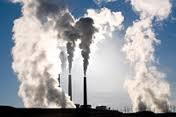
Suppose a steel factory pollutes the water that local residents must drink, but the market price of steel fails to reflect such costs. Because the pollution costs are outside the market transaction, they are called
a)
public costs
b)
opportunity costs
c)
externalities
d)
rules of the game
33.

A system of exchange in which products are traded directly for other products is
a)
money
b)
barter
c)
division of labor
d)
privatization
34.
What could shift an economy's PPF?
a)
changes in resources available
b)
changes in capital goods
c)
changes in technology
d)
All of these
35.
What do points inside the PPF represent?
a)
inefficiency
b)
unattainable combinations of resources
c)
division of labor
d)
none of these
36.
What do points outside the PPF represent?
a)
inefficiency
b)
unattainable combinations of resources
c)
division of labor
d)
none of these
100 %

