wayground logo

Free Printable Worksheets

Font size

S
M
L
XL
Worksheets

Populations

Total questions: 25

Worksheet time: 16mins
Name
Class
Date
1.
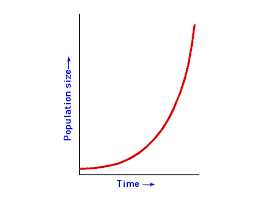
What type of growth is shown in the diagram?
a)
exponential growth
b)
logistic growth 
c)
predator-prey cycle
d)
boom-bust curve
2.
Largest number of individuals of a population that the environment can support...  
a)
carrying capacity
b)
population crash
c)
lag phase
d)
mutualism
3.
When a population grows past the ecosystem's carrying capacity, what happens to the population?
a)
Continues to grow
b)
The population starts to die off to return to carrying capcity
c)
The population will go extinct due to lack of resources
d)
The population grows then finds a new carrying capacity
4.
Natural disasters and weather patterns like earthquakes, floods, and tornadoes, blizzards, and heatwaves are considered ___________ ____________ limiting factors
a)
Density-dependent
b)
Density-independent
5.
A population is...
a)
A group of one species in one area
b)
Multiple species that live in one area
c)
All of the living and nonliving things in an area
d)
None of these
6.

There are 150 Saguaro cacti plants per square kilometer in a certain area of Arizona desert. To which population characteristic does this information refer?

a)

growth rate

b)

geographic distribution

c)

age structure

d)

population density

7.
Which of the following best describes a population?
a)
members of the same species living in the same place at the same time
b)
all the red birds in an area
c)
all types of organisms living in the same place
d)
all members of the same species
8.
Which of the following would most likely cause a large number of density independent deaths in a population?
a)
winter storms
b)
predators
c)
limited resources
d)
disease carrying insects
9.

If birth rate is low and death rate is high, the population growth will be:

a)

Positive

b)

Negative

c)

Zero

10.

Which of the following is one of the main properties used to describe a population?

a)

number of individuals

b)

color of individuals

c)

number of species

d)

kinds of adaptations

11.

The density of a population is

a)

the number of individuals born every year

b)

the proportion of males and females

c)

the number of individuals living in cities

d)

the number of individuals per unit area

12.

In which of the following relationships is neither species harmed?

a)

predation

b)

competition

c)

parasitism

d)

commensalism

13.

Which of the following has the greatest effect on reproductive potential?

a)

producing more offspring at a time

b)

reproducing more often

c)

having a longer life span

d)

reproducing earlier in life

14.

What can occur if a population has plenty of food and space, and has no competition or predators?

a)

reduction of carrying capacity

b)

exponential growth

c)

zero population growth

d)

coevolution

15.

A true statement about parasitism is that parasites

a)

may cause their hosts to become more vulnerable to predators.

b)

do not live on or in their hosts' bodies

c)

are always animals and never plants

d)

immediate;y kill their hosts

16.
Any thing or organism that regulates the size of a population of another organism is known as __________.
a)
a limiting measure
b)
a limiting factor
c)
factorization
d)
materialization of precipitation
17.
Barnacles sometimes live on the outside surface of other larger shelled organisms without causing any harm. What is the ecological relationship?
a)
Mutualism
b)
Parasitism
c)
Commensalism
d)
Predator-Prey
18.
Cows and pronghorn both eat the same types of food in areas of Utah. What is the ecological relationship?
a)
Cooperation
b)
Parasitism
c)
Commensalism
d)
Competition
19.
Ants protect soft bodied aphids and in return the aphids feed the ants a sugary drink. What is the ecological relationship?
a)
Cooperation
b)
Parasitism
c)
Commensalism
d)
Mutualism
20.
Native sponges and introduced muscles are both filter feeders in many of the Great Lakes.  What is the ecological relationship?
a)
Predator-Prey
b)
Parasitism
c)
Carnivore
d)
Competition
21.
An example of a population is
a)
all trees in a forest
b)
all maple trees in a forest
c)
all plants in a forest
d)
all animals in a forest
22.
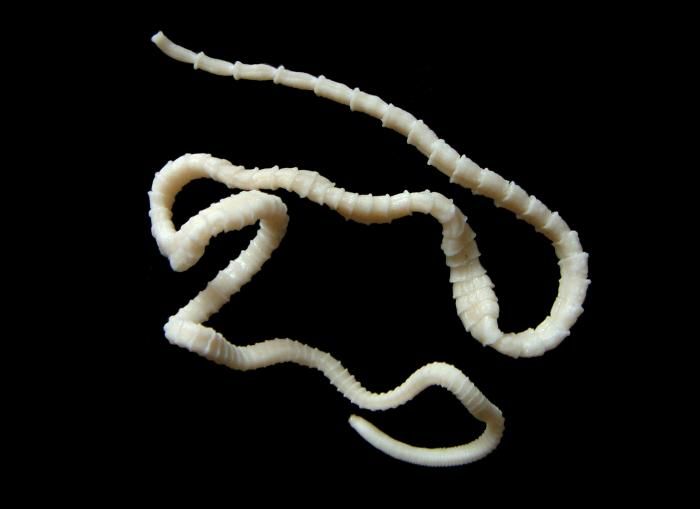
A tapeworm and a cat have this type of relationship.
a)
mutualism
b)
parasitism
c)
commensalism
d)
competition
23.
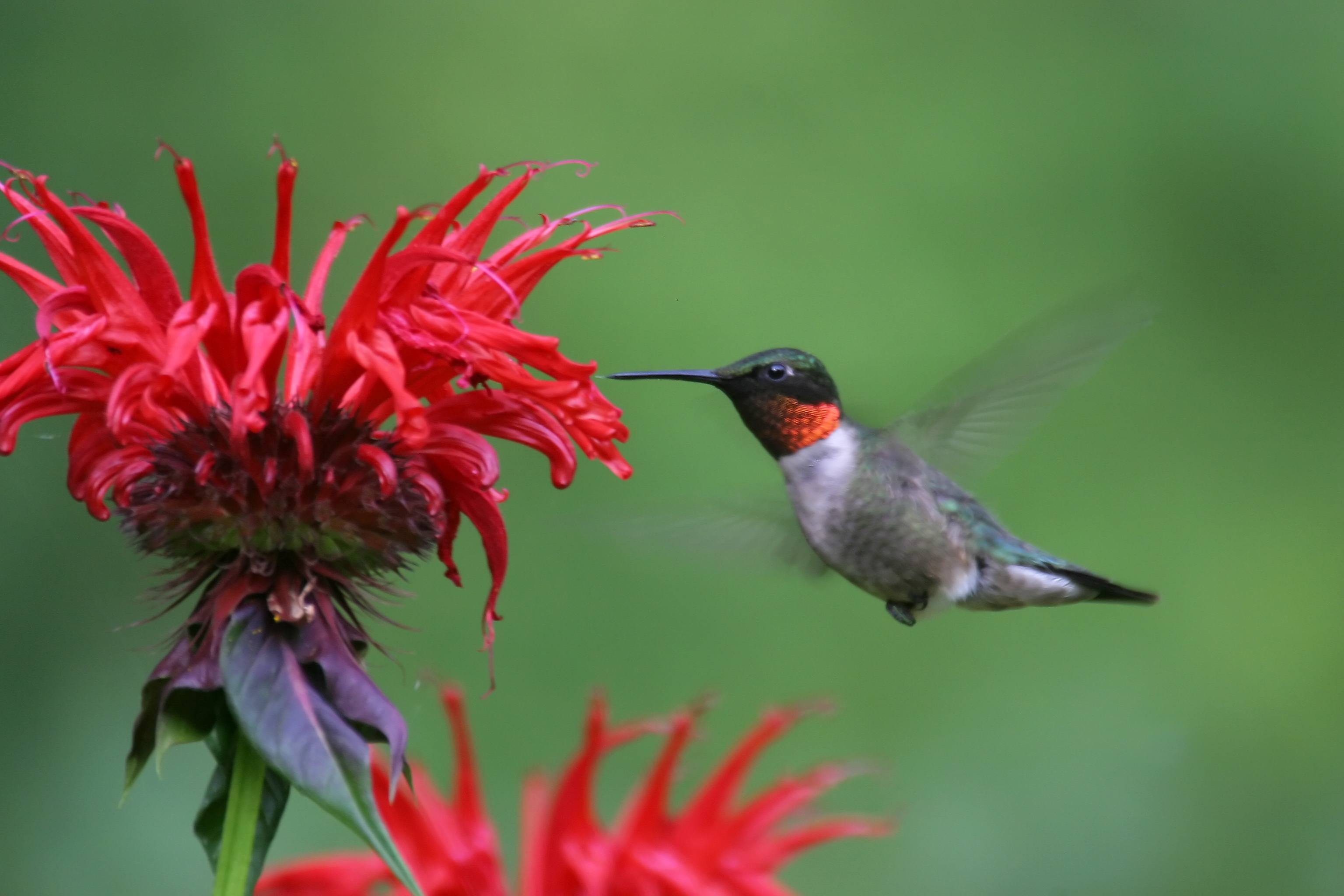
What type of symbiosis?  Hummingbirds feed on nectar from flowers.  The flowers are pollinated by hummingbirds as they move from flower to flower.
a)
commensalism
b)
mutualism
c)
parasitism
d)
predation
24.
A relationship between two organisms in which both organisms benefit. 
a)
Mutualism 
b)
Competition
c)
Parasitsm 
d)
Commensalism 
25.
The number of wild horses per square kilometer in a prairie is the horse population’s 
a)
density
b)
dispersion 
c)
size
d)
birthrate