
 Worksheets
States of Matter & Solutions
Total questions: 20
Worksheet time: 10mins
What are the states of matter?
solid, liquid, and juice
sun, sea and sky
solid and gas
solid, liquid, and gas


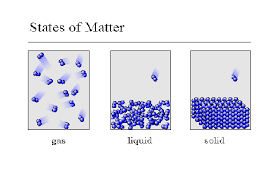
Particles in a liquid touch, but are free to slide past each other. This means liquids...
have a definite shape.
can flow and take the shape of a container.
have fast-moving particles that are far apart.

Which form of matter has a definite shape and has definite volume?
liquid
solid
gas
clay

At higher temperatures
particles in an object have less energy
particles in an object move faster
a gas condenses to a liquid
liquid
What is condensation?
gas to solid
gas to liquid
liquid to solid
solid to liquid
What is freezing?
Solid to gas
Liquid to solid
Gas to solid
Liquid to gas
Dissolving salt in water is a.....
physical change.
change that makes something completely new.
chemical reaction.
A solution is always a mixture, but a mixture is NOT always a solution.
True
False
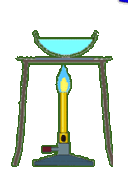
To separate a mixture of salt and water what separation method is used?
distillation
filtration
evaporation
chromatography
A substance that dissolves (e.g. sugar) is called a...
solid
solution
solvent
solute
How can we separate an insoluble solid from a liquid?
chromatography
evaporation
filtration
condensation
Boiling point is a point at which liquid turns in to...
solid
liquid
molten
gas
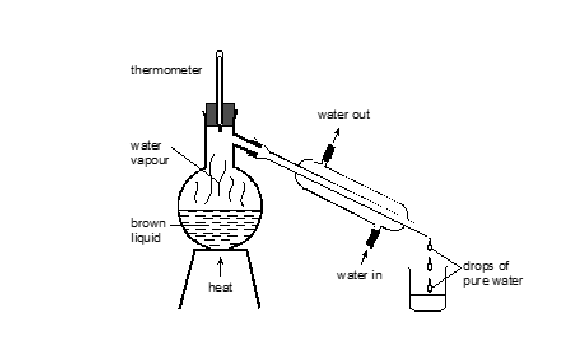
Which separation technique uses the apparatus shown in the diagram?
filtration
evaporation
distillation
chromatography
Water and ink can be separated by distillation because of their
different densities
different boiling points
different colours
different melting points

Chromatography separates the mixture of dyes based on their.....
density
solubility
gravity
boiling point

