
 Worksheets
Weathering, Erosion, & Deposition
Total questions: 22
Worksheet time: 10mins
What is weathering?
The geological process in which sediments, soil and rocks are added to a land form or land mass.
The process of eroding or being eroded by wind, water, or other natural agents.
breaking down of rocks, soil, and minerals
What is erosion?
breaking down of rocks, soil, and minerals
The process of eroding or being eroded by wind, water, or other natural agents.
The geological process in which sediments, soil and rocks are added to a land form or land mass
Select the two answers that are NOT a type of weathering.
Fire
Plant Action
Ice Wedging
Animal Action
Chemical Ice
Rain washing away soil from a hillside is an example of what?
Weathering
Erosion
Deposition
Compaction
Waves dropping sand on the beach is an example of what?
Weathering
Erosion
Deposition
Compaction
Deltas forming at the mouths of rivers are examples of what?
Weathering
Erosion
Deposition
Compaction
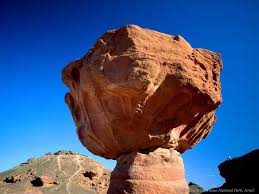

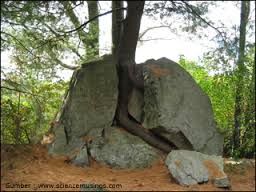
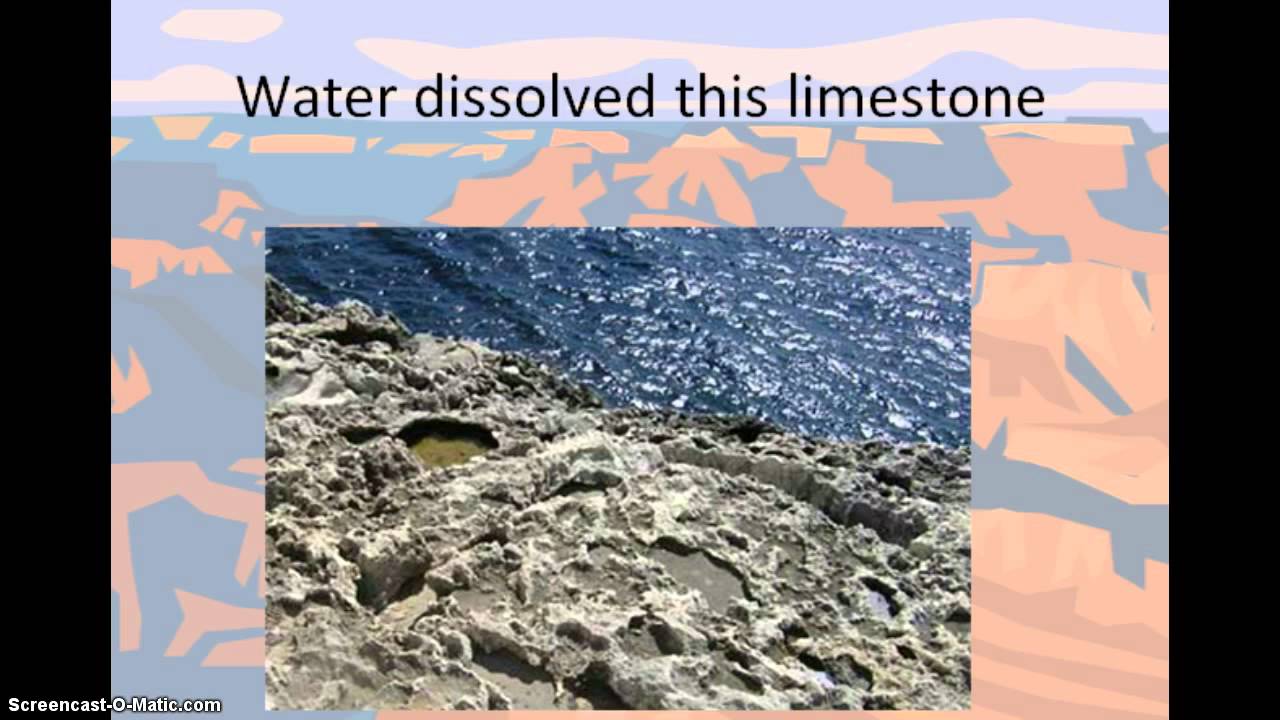

This is showing an example of______________________.
physical weathering
chemical weathering
acid precipitation
erosion
Oxidation is_____________________________.
an example of chemical weathering
when oxygen reacts with compounds in rocks, causing a reaction
when the oxygen in the air mixes with precipitation
The following are agents of physical weathering:
acid precipitation and acid in ground water
oxidation
animal action and plant action
wind, water and gravity
temperature and pressure changes
How does wind, water and gravity change the Earth's surface?
The wind blows rocks around.
Water causes rocks to move.
Gravity moves rocks.
They cause abrasion to occur, breaking rock down.
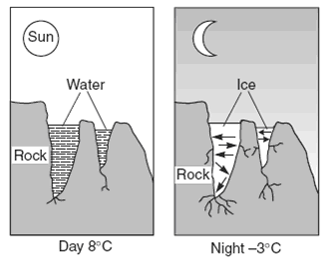
Which statement best explains why this process results in weathering?

This picture is an example of what kind of weathering:
Greening
Statue Of Liberty
Oxidation
Pennies

What type of weathering is this?
acid groundwater
acid rain
acid stalagmites

