wayground logo

Free Printable Worksheets

Font size

S
M
L
XL
Worksheets

Math Review

Total questions: 114

Worksheet time: 4hrs 45mins

Name
Class
Date
1.
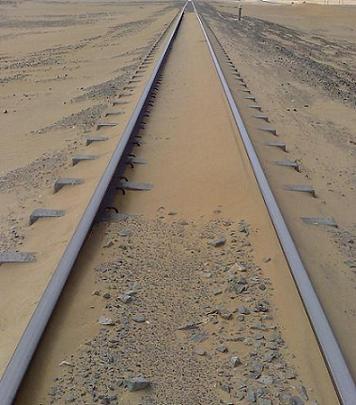
What type of line does the picture represent?
a)
Parallel 
b)
Intersecting
c)
Perpendicular
2.
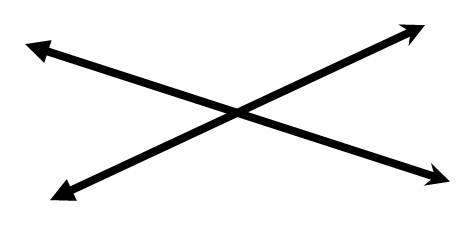
What type of line does the picture represent?
a)
Parallel
b)
Intersecting
c)
Perpendicular
3.
What type of line does the picture represent?
a)
Parallel
b)
Intersecting
c)
Perpendicular
4.
What type of line does the picture represent? 
a)
Parallel
b)
Intersecting
c)
Perpendicular
5.
What type of line does the picture represent?
a)
Parallel
b)
Intersecting
c)
Perpendicular 
6.
What type of line does the picture represent? 
a)
Parallel
b)
Intersecting
c)
Perpendicular
7.
What type of lines does the picture represent? 
a)
Parallel
b)
Intersecting
c)
Perpendicular
8.
What type of lines does the picture represent?
a)
Parallel
b)
Intersecting
c)
Perpendicular 
9.
Right, acute, or obtuse?
a)
Acute
b)
Right
c)
Obtuse
10.
Right, acute, or obtuse?
a)
Right
b)
Acute
c)
Obtuse
11.
Right, obtuse, acute?
a)
Right
b)
Obtuse
c)
Acute
12.
What kind of angle is the red angle?
a)
A right angle
b)
A left angle
c)
An obtuse angle
d)
An acute angle
13.
This is what kind of angle?
a)
right
b)
acute
c)
obtuse
d)
straight
14.
This is what kind of angle?
a)
acute
b)
obtuse
c)
right
d)
straight
15.
This is what kind of angle?
a)
right
b)
acute
c)
obtuse
d)
straight
16.
This is what kind of angle?
a)
obtuse
b)
right
c)
straight
d)
acute
17.
What kind of angle is the red angle?
a)
A right angle
b)
A left angle
c)
An obtuse angle
d)
An acute angle
18.
What is the measurement of the red angle?
a)
90°
b)
34°
c)
1°
d)
What angle?
19.
What kind of angle is the red angle?
a)
A right angle
b)
A left angle
c)
An obtuse angle
d)
An acute angle
20.
Name this angle.
a)
acute
b)
right
c)
obtuse
d)
none of the above
21.
Santa's elves made 5 toys for each  house on Main Street that Santa would visit. There are 5 houses on Main Street. How many toys in all did the elves make then?
a)
15
b)
9
c)
20
d)
25
22.
Tom went to the store and bought chairs. Each chair cost 5 dollars. How much money did Tom spend for the 4 chairs he bought?
a)
$20
b)
$1
c)
$15
d)
$10
23.
Mark is making ten kites.  He uses 5 yards of ribbon for each kite.  He has already made 2 of the kites.  How many yards of ribbon will Mark need to make the rest of the kites?
a)
10 yards
b)
50 yards
c)
40 yards
d)
13 yards
24.
Sunrise Goat Farm has 5 pens.  
Each pen has 9 goats.  How many goats are on the farm?
a)
59
b)
45
c)
15
d)
96
25.
Simone has 3 shells.  She finds 4 more shells to add to her collection.  How many shells does she have
a)
12
b)
1
c)
7
d)
8
26.
What is my number?
I am a factor of 12.  The other factor is 3.  What number am I?
a)
9
b)
36
c)
4
27.

Logyn has 11 boxes of gum. Each box has 5 pieces. How many pieces of gum does Logyn have? (by Logyn)

a)

16 pieces

b)

55 pieces

c)

50 pieces

d)

60 pieces

28.
What problem below does this array represent?
a)
4 x 4 = 20
b)
4 x 5 = 20
c)
5 x 4 = 20
d)
4 x 6 =24
29.
What problem below does this array represent?
a)
6 x 3 = 18
b)
3 x 6 = 18
c)
3 x 3 = 18
d)
8 x 3 = 24
30.
What problem below does this number line represent?
a)
6 x 4 = 24
b)
24/4=6
c)
4 x 6 = 24
d)
24/8=3
31.
What problem below does this equal set represent?
a)
3 ÷ 2 = 6
b)
6 x 2 = 3
c)
6 ÷ 2 = 3
d)
6 ÷ 2 = 12
32.
What problem below does this number line represent?
a)
12/4=3
b)
4 x 3 = 12
c)
3 x 3 = 12
d)
12/6=2
33.
Harris solved 8 math problems every day for 7 days.  How many problems did he solve all together?
a)
45
b)
32
c)
64
d)
56
34.
Naelyn walked 3 miles every day for one week. How many days had she walked by the end of the week?
a)
15
b)
21
c)
12
d)
9
35.
What problem below does this equal set represent?
a)
4 x 2 = 8
b)
4 x 4 = 8
c)
2 x 4 = 8
d)
2 x 2 = 8
36.
Lianne types 20 words per minute. How many word can Lianne type in 6 minutes?
a)
100
b)
120
c)
200
d)
300
37.
What problem below does this number line represent?
a)
5 x 3 = 15
b)
15/3=5
c)
5/3=15
d)
15/5=3
38.
What problem below does this equal set represent?
a)
3 ÷ 5 = 15
b)
5 ÷ 3 = 15
c)
15 x 3 = 5
d)
15 ÷ 3 = 5
39.
What problem below does this array represent?
a)
6 x 2 = 10
b)
6 x 6 = 12
c)
2 x 6 = 12
d)
6 x 2 = 12
40.
Select the correct number model with the rectangular array
a)
4+4+4+4=16
b)
2+2+2+2=8
c)
5+5+5+5=20
d)
3+3+3+3=12
41.
Which equation matches this array?
a)
5 x 3 = 15
b)
4 x 3 = 12
c)
3 x 4 = 12
d)
3 x 5 = 15
42.
3 x 1
a)
4
b)
3
43.
10 x 0
a)
10
b)
0
c)
1
d)
100
44.
Select the correct number model with the rectangular array
a)
4+4+4+4=16
b)
5+5+5+5+5=25
c)
4+4+4+4+4=20
d)
5+5+5+5=20
45.
Select the multiplication sentence for the follow example:
a)
3 x 8 = 24
b)
6 x 5 = 30
c)
2 x 9 = 18
d)
6 x 3 = 18
46.
Which one goes up and down?
a)
columns
b)
rows
47.
Which example DOES NOT show the identity property?
a)
10 x 1 = 10
b)
5 x 1= 5 
c)
3 x 4 = 4 x 3
d)
0 x 1 = 0
48.
Which property is this an example of?
6 x 7 = 7 x 6
a)
Associative Property of Multiplication
b)
Commutative Property of Multiplication
c)
Inverse Property of Multiplication
d)
Distributive Property
49.
What does the Zero Property mean?
a)
When you can change the grouping 
b)
When you multiply any number by 1 and get 1
c)
When you multiply any number by zero and get zero
50.
What does the Identity Property mean?
a)
When you can change the grouping 
b)
When you multiply any number by zero and get zero
c)
When you multiply any number by 1 and get that number
51.
What is a factor?
a)
Numbers that are multiplied to get a product
b)
The product a number times another whole number
52.
What does product mean?
a)
Answer to a addition problem
b)
Answer to a subtraction problem
c)
Answer to a division problem
d)
Answer to a multiplication problem
53.
22x1=22
a)
Zero Property
b)
Identity Property
c)
Commutative Property
d)
Associative Property
54.
8x0=0
a)
Zero Property
b)
Identity Property
c)
Commutative Property
d)
Associative Property
55.
45 x 6 = 6 x 45
a)
Associative
b)
Commutative
c)
Identity
d)
Zero
56.
What property of multiplication does the following problem show?
100 x 0 = 0
a)
Identity Property
b)
Zero Property
c)
Distributive Property
d)
Commutative Property
57.

Which breaks down 3x9 correctly?

a)

(3x4)+(3x4)

b)

(3x3)+(3x3)

c)

(3x4)+(3x5)

d)

(3x5)+(3x5)

58.

Which breaks down 5x7 correctly?

a)

(5x3)+(5x5)

b)

(5x2)+(5x2)

c)

(5x5)+(5x5)

d)

(5x5)+(5x2)

59.

Which breaks down 6x7 correctly?

a)

(6x6)+(6x10)

b)

(6x2)+(6x5)

c)

(6x7)+(6x2)

d)

(2x5)+(3x3)

60.

Use the distributive property to solve: (5x2)+(5x5)

a)

10+10 = 20

b)

15+15 = 30

c)

20+25 = 45

d)

10+25 = 35

61.

Use the distributive property to solve: (4x3)+(4x5)

a)

12+20 = 32

b)

20+25 = 45

c)

20+20 = 32

d)

12+10 = 22

62.

Find the original multiplication problem: (5x4)+(5x3) = 20+15 = 35

a)

5x5

b)

4x3

c)

5x7

d)

3x3

63.

Find the original multiplication problem: (6x2)+(6x10)

a)

6x2

b)

6x6

c)

6x10

d)

6x12

64.
Round to the nearest ten:
37
a)
10
b)
20
c)
30
d)
40
65.
Round to the nearest hundred:
752
a)
700
b)
800
c)
750
d)
760
66.
Which of the following numbers will NOT round to 400? 
a)
409
b)
445
c)
345
d)
398
67.
Tyler says 753 rounds to 800.  Alexis says 753 rounds to 750.  Who is correct?
a)
Tyler
b)
Alexis
c)
Both of them are right, it depends on whether you are rounding to the nearest ten or hundred
d)
Niether of them are right
68.
Round to the nearest ten:
149
a)
100
b)
200
c)
150
d)
140
69.
Which number is the greatest?
a)
8,341
b)
8,431
c)
8,134
d)
8,143
70.
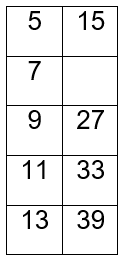
What is the missing number in the ratio table?
a)
21
b)
24
c)
27
d)
25
71.
What is the rule?
a)
Multiply by 2
b)
Multiply by 3
c)
Add 3
d)
Add 4
72.
What is the missing number in the ratio table?
a)
21
b)
24
c)
27
d)
25
73.
What is the missing number in the ratio table?
a)
75
b)
77
c)
88
d)
85
74.
What is B?
a)
3
b)
9
c)
2
d)
6
75.
What is B?
a)
3
b)
9
c)
2
d)
6
76.
What is the rule?
a)
Multiply by 2
b)
Multiply by 3
c)
Add 3
d)
Add 4
77.
Which fact is missing?
5+2=7
______
7-2=5
7-5=2
a)
5+5=10
b)
20-2=18
c)
2+3=5
d)
2+5=7
78.
Which fact is missing?
7+4=11
_______
11-4=7
11-7=4
a)
11-11=0
b)
4+7=11
c)
2-1=1
d)
7+4=11
79.
2 + 3 = 5
a)
5 + 3 = 8
b)
5 + 2 = 7
c)
3 + 2 = 5
d)
3 - 2 = 1
80.
6 - 5 = 1
a)
5 + 1 = 6
b)
5 - 1 = 4
c)
6 + 1 = 7
d)
1 - 5 = 6
81.
3 + 7 = 10
a)
7 - 3 = 4
b)
10 + 3 = 13
c)
7 + 10 = 17
d)
10 - 7 = 3
82.
8 + 2 = 10
a)
10 - 2 = 8
b)
10 + 2 = 12
c)
10 + 8 = 2
d)
8 - 2 = 6
83.
4 - 1 = 3
a)
4 + 1 = 5
b)
3 - 1 = 2
c)
4 - 3 = 1
d)
4 + 3 = 1
84.
6 + 0 = 6
a)
0 + 0 = 6
b)
6 - 0 = 6
c)
6 + 6 = 12
d)
6 - 6 = 6
85.
12 - 9 = 3
a)
12 - 3 = 9
b)
9 + 12 = 3
c)
9 - 3 = 6
d)
3 - 9 = 12
86.
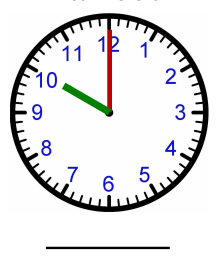
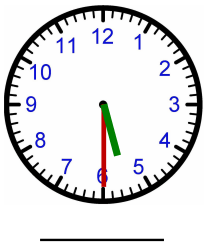
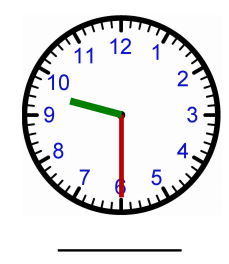
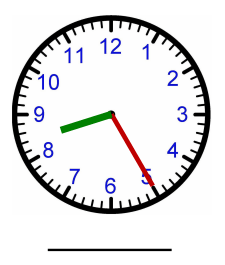
What time is it?
a)
6:10
b)
2:00
c)
2:30
d)
2:06
87.
Is the time 12:10 or 10:00
a)
12:10
b)
10:00
88.
What time is it?
a)
5:06
b)
5:30
c)
6:25
89.
What time is it?
a)
9:30
b)
9:00
c)
6:45
90.
Is the time 3:30 or 6:15?
a)
3:30
b)
6:15
91.
What time is it?
a)
11:00
b)
1:11
c)
11:05
d)
11:01
92.
What time is it?
a)
3:05
b)
1:15
1:15
c)
3:01
d)
3:00
93.
Is the time 2:30?
a)
Yes
b)
No
94.
a)
9:12
b)
11:45
c)
12:09
d)
12:45
95.
a)
3:26
b)
5::07
c)
4:26
d)
3:05
96.
a)
5:32
b)
6:25
c)
6:05
d)
5:06
97.
a)
4:59
b)
5:00
c)
12:05
d)
11:25
98.
a)
7:43
b)
9:07
c)
9:35
d)
7:09
99.
a)
10:19
b)
4:10
c)
10:04
d)
11:19
100.
a)
2:12
b)
1:12
c)
12:01
d)
12:08
101.
What time is it?
a)
11:00
b)
1:11
c)
11:05
d)
11:01
102.
What time is it?
a)
9:25
b)
8:25
c)
8:05
d)
9:05
103.
What is the 'long hand' on the clock called?
a)
Hour Hand
b)
Right Hand
c)
Short Hand 
d)
Minute Hand
104.

Which number is even?

a)

292,800

b)

292,807

c)

49

d)

61,803

105.

2,987 is

a)

EVEN

b)

ODD

106.

Which number is odd?

a)

298

b)

78

c)

746

d)

201

107.

Which number doesn't belong: 13, 38, 57, 61

a)

13

b)

38

c)

57

d)

61

108.

2,886,440

a)

EVEN

b)

ODD

109.

Which number is odd?

a)

11

b)

10

c)

8

d)

6

110.

Which number doesn't belong: 0, 26, 382, 441

a)

0

b)

26

c)

382

d)

441

111.

ODD numbers end in: 1, 3, 5, 7, and 9

a)

TRUE

b)

FALSE

112.

1

a)

Even

b)

Odd

113.

4

a)

Even

b)

Odd

114.

2

a)

Even

b)

Odd