wayground logo

Free Printable Worksheets

Font size

S
M
L
XL
Worksheets

Relative Age of Earth (Plus Review) Test

Total questions: 110

Worksheet time: 2hrs 4mins

Name
Class
Date
1.

A principle that geologic processes that occurred in the past can be explained by current geologic processes.

a)

Uniformitarianism

b)

Unconformity

c)

Nonconformity

d)

Disconformity

2.

The age of an object in relation to the age of other objects.

a)

Absolute Age

b)

Relative Age

c)

Index fossil

d)

Trace fossil

3.

Layers of rock.

a)

Geologic Time Scale

b)

Geologic Column

c)

Strata

d)

Geologic Map

4.

The principle that a sedimentary rock layer is older than the layers above it and younger than the layers below it if the layers are not disturbed.

a)

Law of Superposition

b)

Law of Crosscutting Relationships

c)

Principle of Lateral Continuity

d)

Principle of Original Horizontality

5.

Rocks that are undisturbed will remain in horizontal layering.

a)

Principle of Lateral Continuity

b)

Law of Crosscutting Relationships

c)

Principle of Fossil Succession

d)

Principle of Original Horizontality

6.

The principle that a fault or body of rock is younger than any other body of rock that it cuts through.

a)

Law of Superposition

b)

Law of Crosscutting Relationships

c)

Absolute Age

d)

Relative Age

7.

A fossil that is used to establish the age of a rock layer because the fossil is distinct, abundant and widespread and the species that formed that fossil existed for only a short span of geologic time.

a)

Trace Fossil

b)

Fossil

c)

Index Fossil

d)

Relative Fossil

8.

A fossilized mark that formed in sedimentary rock by the movement of an animal on or within soft sediment.

a)

Fossil

b)

Index Fossil

c)

Trace Fossil

d)

Absolute Fossil

9.

The numeric age of an object or event, often stated in years before the present, as established by an absolute-dating process, such as radiometric dating.

a)

Relative Age

b)

Index Fossil

c)

Absolute Age

d)

Trace Fossil

10.
Relative dating of rock layers tells us that the deeper we dig, _______.
a)
the younger the rocks get
b)
the smellier the rocks get
c)
the harder the rocks get
d)
the older the rocks get
11.
The Geologic Time Scale is a record of what?
a)
old geologists
b)
sweet geology music
c)
the known history of rocks and fossils
d)
a list of every living thing ever
12.
How old do Paleontologists believe the Earth is?
a)
2015 years old
b)
3.6 billion years old
c)
4.6 billion years old
d)
4.6 million years old
13.
According to the law of superposition, the oldest fossils are found 
a)
At the top of the rock layers
b)
Near the bottom of the rock layers
c)
In the middle of the rock layers
d)
Somewhat near the surface
14.
The process by which running water, wind, or ice carry away bits of broken-up rock
a)
weathering
b)
sedimentation
c)
erosion
d)
cementation
15.
Which rock layer in the diagram seems to be the oldest?
a)
F
b)
E
c)
B
d)
A
16.
When scientists use logic to determine the age of one fossil compared to another, they use this type of dating.
a)
Relative
b)
Carbon
c)
Absolute
17.
An organism that no longer exists on Earth is called
a)
Decayed
b)
Evolved
c)
Extinct
d)
Preserved
18.
Fossils are usually found in 
a)
igneous rock
b)
extrusions
c)
intrusions
d)
sedimentary rock
19.
Which layer is oldest?
a)
A
b)
W
c)
G
d)
Z
20.
Analyze the seashell found in the white layer.  Which statement is true of the rock layer that contains this fossil?
a)
It could also contain a fossil from the bottom layer.
b)
It is older than the layers below it.
c)
It is younger than the layers above it.
d)
It is older than the layers above it.
21.
How do geologists use relative dating?
a)
Placing rocks in order from youngest to oldest
b)
Placing rocks in order by minerals they contain
c)
Classifying rocks by different textures
d)
Classifying rocks by different isotopes
22.
According to the law of superposition, which layer is the youngest?
a)
A
b)
B
c)
C
23.

Which of the following correctly lists the layers in order from oldest to youngest?

a)

A, B, C, D, E

b)

E, B, C, D, A

c)

E, D, C, B, A

d)

C, B, A, D, E

24.
What is the oldest layer in the outcrop?
a)
B
b)
C
c)
D
d)
E
25.
What is the youngest layer in the outcrop?
a)
A
b)
B
c)
C
d)
D
26.
In this rock layer diagram there are two unconformities, a fault at E and an intrusion at D. Which unconformity occurred first?  How do you know?
a)
Intrusion D occurred first because the instrusion has been moved by the fault.
b)
The fault occurred first because it has moved the intrusion D.
c)
Intrusion D occurred first because it can be seen in all of the rock layers.
d)
Fault E occurred first because it is a normal fault.
27.

Look at the diagram, what layer did animal E first show up in?

a)

Layers #4

b)

Layers #5

c)

Layers #6

d)

Layers #8

28.
In rock layers, jellyfish fossils are found lower than trilobite fossils, and trilobite fossils are found lower than ammonite fossils. What can be determined from this information?
a)
Trilobites existed before jellyfish and ammonites.
b)
Jellyfish existed before trilobites and ammonites. 
c)
Ammonites existed before trilobites and jellyfish.
d)
Jellyfish, trilobites, and ammonites lived together.
29.
Which of the following orders the rock layers accurately from oldest to youngest?
a)
A, B, C, D, E, F, G, H
b)
B, F, G, C, D, H, A, E
c)
B, G, C, D, E, H, A, F
d)
F, A, H, E, D, C, G, B
30.
Which of the following orders the rock layers accurately from youngest to oldest?
a)
1, 2, 3, 4, 5
b)
5, 4, 3, 2, 1
c)
2, 3, 4, 5, 1
d)
1, 2, 3, 5, 4
31.
What is the correct order of the rock layers from oldest to youngest?
a)
B, C, D, E, A
b)
A, B, C, D, E
c)
E, D, C, B, A
d)
B, C, D, A, E
32.
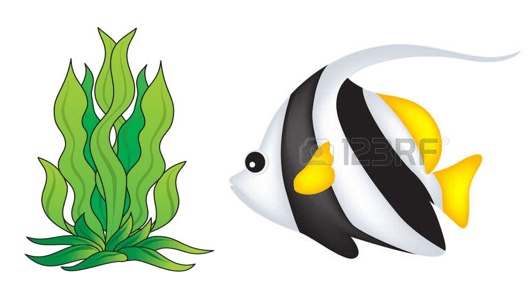
Suppose both of these living things die on the same day.  Which one is more likely to become a fossil?  EXPLAIN your answer!
a)
The plant because it is bigger.
b)
The fish because it has more hard parts than the plant.
c)
The plant because it is green.
d)
The fish because it has gills.
33.
Becoming trapped in tar and amber, and freezing are other processes besides fossilization that organisms can be preserved.
a)
True
b)
False
34.
The best index fossils have which two traits?
a)
widespread geographically, long lifespan
b)
widespread geographically, short lifespan
c)
specific place, long lifespan
d)
specific place, short lifespan
35.
One of the oldest organisms discovered is called a(n) _________.
a)
dinosaur
b)
micro-organism
c)
trilobite
d)
cast and mold fossil
36.
Gaps in rock layers caused by erosion are called
a)
law of superposition
b)
unconformities
c)
uniformitarianism
d)
relative dating
37.
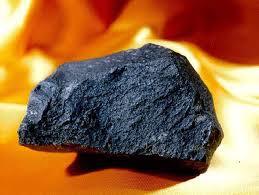
This rock was another type of rock that was heated and compressed over time. What type of rock is this?
a)
Sedimentary
b)
Igneous
c)
Metamorphic
38.
This rock was formed by smaller pieces of rock that settled at the bottom of a lake millions of years ago. What type of rock is this?
a)
Sedimentary
b)
Igneous
c)
Metamorphic
39.
Letter "F" is a....
a)
inclusion
b)
intrusion
c)
fault
d)
unconformity 
40.

The rock formation labeled "P" is a(n)...

a)

fault

b)

intrusion

c)

inclusion

d)

unconformity

41.
The cooled and hardened magma from volcanoes form what rocks?
a)
igneous
b)
sedimentary
c)
metamorphic 
d)
fossils
42.

Which type of plate boundary would cause mountains to form?

a)

Transform

b)

Convergent

c)

Divergent

d)

Reform

43.

Transform boundaries are most likely to produce what phenomenon?

a)

volcanoes

b)

deep sea trenches

c)

underwater mountain ranges

d)

earthquakes

44.

What type of boundary is the SAN ANDREAS FAULT on?

a)

Covergent

b)

Transformers

c)

Divergent

d)

Transform

45.

Another name for Earth’s crust is?

a)

Asthenosphere

b)

Lithosphere

c)

Mesosphere

d)

Molten rocks

46.

What causes the motion of convection currents?

a)

Rising Heated Air cycles with Sinking Cooled Air

b)

Rising Cooled magma cycles with Sinking Heated Magma

c)

Rising Heated Magma cycles with Sinking Cooled Magma

47.
A metamorphic rock changes into an igneous rock by what two processes?
a)
Melting and cooling
b)
Extreme heat and pressure
c)
Compaction and cementation
d)
Weathering and erosion
48.
What is the MAIN way rocks are classified?
a)
Their color and shapes
b)
How they form
c)
Mineral bands
d)
Where they form
49.
When sediments are pressed together tightly, this is called ____________.
a)
Compaction
b)
Cementation
c)
Weathering
d)
Erosion
50.
This rock was found near the mouth of a volcano. What type of rock is this?
a)
Sedimentary
b)
Igneous
c)
Metamorphic
51.
What are the 3 major types of rocks?
a)
Igneous, Metamorphic, Sedimentary
b)
Metamorphic, Igneous, Cementation
c)
Brown, Red, Gray
d)
Streak, Hardness, Breakage
52.
This rock started as lava that cooled and then was heated and put under pressure over time. What type of rock is this?
a)
Sedimentar
b)
Igneous
c)
Metamorphic
53.
This rock started as molten magma. What type of rock is this?
a)
Sedimentary
b)
Igneous
c)
Metamorphic
54.
This rock is made from tiny pieces of other rocks that settled to the bottom of a valley millions of years ago. What type of rock is this?
a)
Sedimentary
b)
Igneous
c)
Metamorphic
55.
This rock cooled on the outside of a volcano and contained air bubbles when it was forming. What type of rock is this?
a)
Sedimentary
b)
Igneous
c)
Metamorphic
56.
Each rock type can follow only one pathway of the rock cycle.
a)
True
b)
False
57.
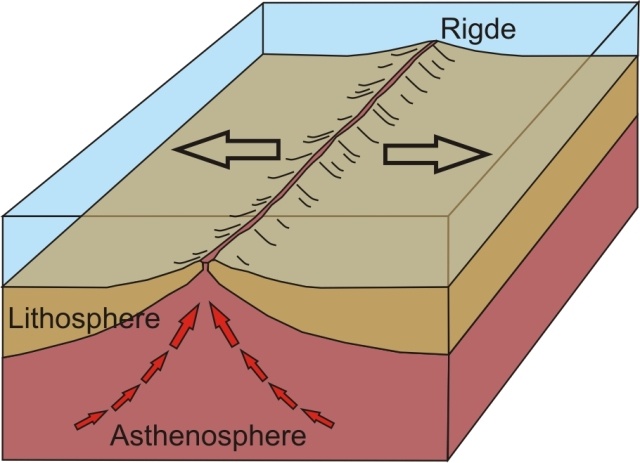
What kind of plate boundary is shown here?
a)
divergent
b)
convergent
c)
transform
d)
subducting
58.
What kind of plate boundary is shown here?
a)
divergent
b)
convergent
c)
transform
d)
submergent
59.
What kind of plate boundary is shown here?
a)
divergent
b)
convergent
c)
transform
d)
strike slip
60.
What geologic feature/event would you most likely to find at a convergent boundary between two pieces of continental crust?
a)
Volcano
b)
Mountain
c)
Rift
d)
Island Arc
61.
A subduction zone is formed...
a)
when one tectonic plate sinks below another
b)
at every type of convergent plate boundary
c)
at every type of divergent plate boundary
d)
at transform boundaries
62.
The area where two or more plates meet is called a __________________.
a)
fault
b)
plate boundary
c)
plate edge
d)
ring of fire
63.
How do mountains form?
a)
An ocean plate sinks beneath another plate and begins to melt, sending melted rock to the surface, which forms volcanic mountains or islands.
b)
Hot rock from within the earth risies through ocean floor as plates separate. This forms a volcanic mountain chain, or ridge, on the ocean floor.
c)
Two continental plates collide, and the land folds and crumples like paper.
d)
All of the above.
64.
 When a continental plate and an oceanic plate collide, the oceanic plate slides beneath the continental plate. This is called subduction. Why does this happen?
a)
The oceanic plate has water on top of it so it sinks.
b)
The continental plate is denser therefore it pushes down the oceanic plate.
c)
The oceanic plate is denser causing it to slide beneath the less dense continental plate.
d)
The continental plate is thicker therefore it stays on top.
65.
Hot, molten rock beneath Earth's crust is called
a)
lava
b)
magma
c)
lithosphere
d)
asthenosphere
66.

What is true of tectonic plates?

a)

They are constantly moving

b)

Earthquakes cause them to move

c)

They don't move for centuries at a time

d)

There are fewer and fewer of them

67.

The diagram above shows an oceanic-continental subduction zone. Which of the following accurately describes an effect of subduction in this setting?

a)

Magma rises upward through the overriding continental plate.

b)

The continental plate plunges below the oceanic plate and is recycled into the Earth's interior.

c)

A trench forms in the asthenosphere below the continental plate.

d)

A volcanic arc forms on the subducting oceanic plate.

68.
This layer of Earth is the thickest part
a)
crust
b)
outer core
c)
mantle
d)
inner core
69.
Who came up with the idea of Continental Drift?
a)
Alfred Wagon
b)
Albert Wegener
c)
Alfred Wegener
d)
Albert Wagoner
70.
What process is occurring at Z?
a)
Convection currents       
b)
 Subduction 
c)
Two plates moving apart
d)
New ocean floor forming
71.
A. Wegener believed that all the continents were connected at one time.  What did he call this one large land mass?
a)
Pancakes
b)
Pangaea
c)
Pancreas
d)
Patches
72.
The Inner and Outer Cores are mainly made up of these two metals.
a)
Iron and Copper
b)
Copper and Nickel
c)
Silver and Iron
d)
Iron and Nickel
73.

What is this image...

a)

Revolving boundary

b)

San Andreas (Transform)

c)

Convergent

74.

Which of the following is NOT a tectonic boundary?

a)

Convergent

b)

Divergent

c)

Sedergent

d)

Transform

75.
Which of the following is NOT evidence to support the theory of plate tectonics?
a)
Fossils
b)
Mountains
c)
Glaciers
d)
Sand Erosion
76.
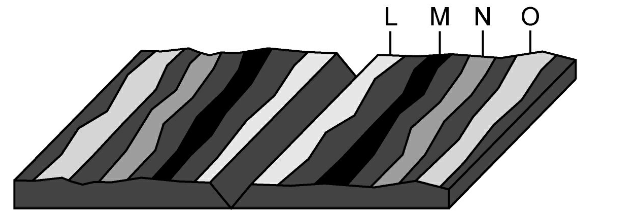
Where would the oldest rock be found?
a)
L
b)
M
c)
N
d)
O
77.
How is it possible for new crust to be formed without increasing the surface area of the Earth?
a)
Crust is destroyed at the same time it is created
b)
New crust is underwater where it sinks
c)
New crust breaks more easily than old crust
78.
The youngest material of the ocean floor is found at mid-ocean _________.
a)
ridges
b)
trenches
c)
basins
d)
rifts
79.
The presence of the same ________ on several continents supports the idea of continental drift.
a)
rocks
b)
fossils
c)
both fossils and rocks
d)
neither fossils nor rocks
80.
The theory of _______ states that Earth’s crust and upper mantle are broken into sections that are in constant, slow motion.
a)
plate tectonics
b)
continental drift
c)
seafloor spreading
d)
divergent boundaries
81.
The _________ is the thinnest layer of Earth.
a)
outer core
b)
inner core
c)
mantle
d)
crust
82.
The theory of seafloor spreading was first proposed by __________.
a)
Thomas Edison
b)
Harry Hess
c)
Benjamin Franklin
d)
Alfred Wegener
83.
_________ currents carry heat from the hot inner core to the cooler outer mantle and back again.
a)
River
b)
Radiation
c)
Convection
d)
Conduction
84.
As you travel from the inner core to the crust, how would temperature, pressure and density of the material change?
a)
They would all increase
b)
They would all decrease.
c)
They would stay the same.  
d)
Temperature would decrease, but pressure and density would increase. 
85.
What would happen to the convection currents if the heat from the inner core disappeared? 
a)
They would stop. 
b)
They would change directions. 
c)
It would not change. 
d)
They would speed up. 
86.
The area around the pacific plate where boundaries form is called...
a)
death ring
b)
fire zone
c)
ring of fire
d)
zone of fire
87.
This is a picture of glacier scars found in Africa.  What are these evidence for?
a)
Africa has always been near the equator
b)
Africa was once in an area of the Earth that had a very cold climate
c)
The continents have not moved
d)
sea floor spreading
88.
What does the theory of continental drift state?
a)
The continents were once joined in a super-continent and have moved over time
b)
Continents are stationary and do not move
c)
The Earth is broken into lithospheric plates that move due to convection currents
d)
none of the above
89.
What evidence did Wegener use in his theory?
a)
Continents and fossils fitting together/matching-up like puzzle pieces 
b)
glacier scars and evidence from temperature
c)
mountain ranges and coal deposits line up across continents
d)
all of the above
90.
Why did no one believe Wegener's thoery?
a)
He could not explain HOW the continents moved
b)
He didn't have evidence
c)
His data was wrong
d)
He didn't use the right technology to gather data
91.
What specific technology did Wegener use in his study?
a)
GPS
b)
Sonar
c)
Radar
d)
Maps
92.
What are the two types of crust?
a)
continental and oceanic
b)
ocean and basin
c)
lower and upper
d)
thick and thin
93.
What type of evidence was NOT used by Alfred Wegener to support his continental drift hypothesis?
a)
evidence from landforms
b)
evidence from fossils
c)
evidence from human remains
d)
evidence from climate
94.
What discovery caused scientists to rethink Wegener's continental drift theory?
a)
discovery of earthquake activity in California
b)
discovery of the ring of fire in the Pacific Ocean
c)
discovery of seafloor spreading in the Atlantic Ocean
d)
discovery of deep trenches off the coast of South America
95.
The best evidence that the continents were once connected is that they have matching
a)
Weather, fossils, and Rock Types
b)
Rock types, fossils, coastlines
c)
Coastlines, weather, rock types
d)
Coastlines, weather, fossils
96.
Of the following statements, which best supports the continental drift theory?
a)
All oceans are salty
b)
Igneous rocks are found on all continents 
c)
Fossils of the same species of extinct land plants have been found in both South America and Africa
d)
Early humans migrated to North America over a land bridge from eastern Asia
97.
Which of the following is the best evidence that Earth's continents were once in vastly different positions than they are today?
a)
Penguins only found in southern hemisphere
b)
Fossils of tropical plants found in Antartica
c)
Volcanoes encircling Pacific Ocean
d)
Major rivers from deltas from continental erosion
98.
Which is false about the continents of the world?
a)
They are all on much larger tectonic plates
b)
All are inhabited by humans
c)
They are all affected by weathering and erosion
d)
They have the same climate
99.
What is the shaking of the Earth’s crust caused by a release of energy?
a)
Earthquake
b)
Epicenter
c)
Fault
d)
Plate
100.
Where is the point on the Earth’s surface directly above the focus of an earthquake?
a)
Epicenter
b)
Fault
c)
Hypocenter
d)
Tremor
101.
What is an instrument that detects and records waves produced by earthquakes? (This piece of equipment can measure the magnitude of an earthquake.)
a)
Epicenter
b)
Fault
c)
Seismogram
d)
Seismograph
102.
What is the measure of the amount of energy released in an earthquake?
a)
Earthquake
b)
Epicenter
c)
Magnitude
d)
Seismogram
103.
What is the opening in Earth's crust through which molten rock, gases, and ash erupt?
a)
Divergent Boundary
b)
Magma
c)
Subduction Boundary
d)
Volcano
104.
The volcanoes on the Hawaiian Islands form due to which of the following?
a)
Divergent Boundary
b)
Hot Spot
c)
Subduction Boundary
d)
Transform Boundary
105.
Where are most volcanoes found?
a)
Southern Hemisphere
b)
Ring of Fire
c)
Mid-Atlantic Ridge
d)
Hot Spots
106.
What is molten rock that has reached the Earth's surface?
a)
Aa
b)
Lava
c)
Magma
d)
Pahoehoe
107.
Where do volcanoes come from?
a)
Places where plates move apart
b)
Places where plates are moving together
c)
Hot Spots
d)
All of these options
108.
California, Japan, Chile, Nepal, and India have all experienced earthquakes before. What type of plate boundary must be near
a)
Reform
b)
Divergent
c)
Convergent
d)
Transform
109.
How many layers are there in the Earth?
a)
40
b)
5
c)
89
d)
4
110.
Is the Outer core solid or liquid?
a)
solid
b)
liquid