
NEW
Font size
 Worksheets
Fossils Review
Total questions: 29
Worksheet time: 28mins
What is a fossil?
The hardened remains of a plant or animal that lived a year ago.
The hardened remains of a plant or animal that lived long ago.
The hardened remains of only an animal that lived long ago.
The hardened remains of only a plant that lived long ago.
Where will you most likely find fossils?
Sedimentary rocks
Metamorphic rocks
Igneous rocks
Moon rocks
What part of an animal becomes a fossil?
bones
muscles
hair
Plant fossils are harder to find than animal fossils.
True
False
How can scientists determine the age of a fossil?
By the number of rings in it.
By the rock layer they find it in.
By its size.
Type of fossil that is a mark in solid rock.
Mold
Fossil
Imprint
Fossil fuel



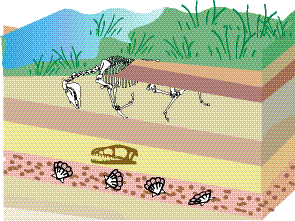

The _______fossil is when water seeps into the ground and minerals fill in the hollow spaced and harden.
Impression
Mineral Replacement
Preserved
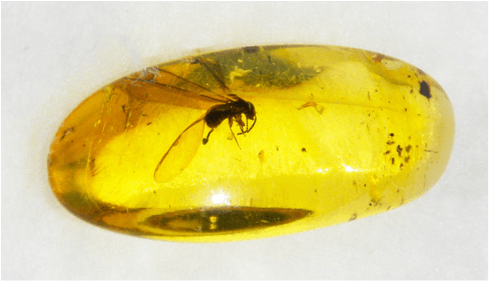

Amber is fossilized tree _________ or resin and holds some perfectly preserved organisms like insects, birds, lizards, and a baby snake.
sap
leaves

What type of fossil is shown here?
trace
mold
cast
permineralized/petrified
What could a fossil of a tooth tell a scientist?
What animal it was
How big the animal was
What the animal ate
All of the above
Why are there more animal fossils than plant fossils?
The plants were trapped in volcanoes.
The plant parts are softer and decompose easier.
Minerals destroyed the plants.
Animals ate all the plants.
How long does it take fossils to form?
10 days
1 day
Millions of years
Hundreds of years

What kind of fossil is this?
Mold fossil
Cast fossil
True Form fossil
Trace fossil

What type of fossil is this?
Imprint
Mold
Cast
Trace
Which of the following is an example of an imprint fossil?


Which of the following is an example of a Cast Fossil?


Petrified Fossils are...
Minerals that replace bone, shell or other hard part of the organism
Organism dies and becomes buried under sediment
Model in the shape of a living thing or it's remains
Tracks, footprints, trails
Under What Conditions Do Fossils Form?
Organism having soft parts like worms and die slowly
Organism having hard parts (e.g., bones
or a shell) and a rapid burial following death.
Organism having died 2 years ago.
Organism having wings only and are uncover for a long period.

What were the sequence and conditions that allowed this organism to become a fossil?
The fish was taken to the top of the mountain by a big bird that lived in the past.
the fish was formed at the top of the mountain by itself.
That the top of the mountain once had a body
of water on it and as that water source dried up a fish was left in the mud and covered by sediment.
The mountain grew fish and they died their and became fossils

Fossilization sequence:
replaced by minerals, buried,
dead, turned into stone, and sealed into rock.
dead, buried,
replaced by minerals, turned into stone, and sealed into rock.
replaced by minerals, buried,
turned into stone, and sealed into rock, dead.
buried,
turned into stone, and sealed into rock, dead, replaced by minerals.

