Wayground logo

Free Printable Worksheets

Font size

S
M
L
XL
Worksheets

American Revolution

Total questions: 58

Worksheet time: 2hrs 56mins

Name
Class
Date
1.
What was the name of the British king during the American Revolution?
a)
Charles III
b)
George III
c)
William III
d)
James III
2.
Who was the major author of the Declaration of Independence?
a)
Benjamin Franklin
b)
John Adams
c)
Thomas Jefferson
d)
Patrick Henry
3.
Where were the first armed conflicts of the American Revolution?
a)
Yorktown
b)
Saratoga
c)
Lexington and Concord
d)
Bunker Hill
4.
This American victory was the turning point in the war.
a)
Saratoga
b)
Yorktown
c)
Bunker Hill
d)
Lexington and Concord
5.
Surrounded by French and Continental armies, a large British army surrendered here.
a)
Saratoga
b)
Yorktown
c)
Bunker Hill
d)
Lexington and Concord
6.
This member of the Continental Congress helped gain French support for American independence.
a)
Thomas Jefferson
b)
Benjamin Franklin
c)
Patrick Henry
d)
John Adams
7.
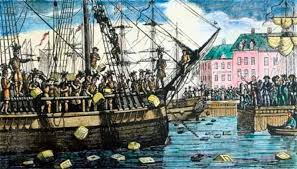
What event is depicted in this image?
a)
Boston Massacre
b)
Boston Tea Party
c)
Battle of Bunker Hill
d)
Lexington and Concord
8.
This patriot made a daring ride to warn colonists that British soldiers were approaching.
a)
Patrick Henry
b)
Paul Revere
c)
Phillis Wheatley
d)
Samuel Adams
9.
Samuel Adams and Paul Revere led members of the Sons of Liberty in this protest against taxes.
a)
First Continental Congress
b)
Boston Massacre
c)
Boston Tea Party
d)
Stamp Act Congress
10.
This enslaved person wrote poems and plays supporting American independence.
a)
Harriet Tubman
b)
Benjamin Banneker
c)
Paul Revere
d)
Phillis Wheatley
11.
Of the following events, which happened first? 
a)
Saratoga
b)
Yorktown
c)
Declaration of Independence
d)
Treaty of Paris of 1783
12.
Of the following events, which happened last?
a)
First Continental Congress
b)
Boston Massacre
c)
Boston Tea Party
d)
Stamp Act
13.
Of the following people, who did not help write the Declaration of Independence?
a)
Thomas Jefferson
b)
Patrick Henry
c)
John Adams
d)
Benjamin Franklin
14.
Which one of these is not an advantage that helped the American patriots defeat Great Britain.
a)
defense of their own land, principles and beliefs
b)
support from France
c)
superior numbers of soldiers and greater experience
d)
strong leadership from men like George Washington
15.
What patriot leader is represented by this image?
a)
John Adams
b)
Samuel Adams
c)
Paul Revere
d)
Patrick Henry
16.
The U.S. was founded on July 4, 1776, by the approval of this document.
a)
the Treaty of Paris
b)
the Constitution
c)
the Declaration of Independence
d)
the Virginia Charter
17.
The location of what event is shown on this map?
a)
Lexington and Concord
b)
First Continental Congress
c)
Saratoga
d)
Yorktown
18.
This was a tax on all printed materials in the 13 Colonies.
a)
Stamp Act
b)
Sugar Act
c)
Tea Act
d)
Townshend Act
19.
Finish this American Colonist Motto, "No Taxation without..."
a)
Transportation
b)
Relaxation
c)
Representation
d)
Sensation
20.
Why were the American Colonist taxed after the French and Indian War?
a)
Britain was in debt and needed money
b)
That was the agreement with the Native Americans
c)
They made too much money
d)
Townshend Acts
21.
How did the colonist protest against the tea tax?
a)
Dressed up like Native Americans
b)
Boston Massacre
c)
Dumped tea into Boston harbor
d)
Didn't pay the tax on the East India Tea
22.
This type of American Colonist was in support of the British parliament.
a)
Patriot
b)
Loyalist
c)
Yes man
d)
Neutral
23.
The Second Continental Congress addressed the steps to the colonies governing themselves and the creation of what military group?
a)
Colonial militias
b)
Marines
c)
Continental Army
d)
Navy
24.
Who was the first choice to command the Continental Army?
a)
Thomas Jefferson
b)
Benjamin Franklin
c)
Thomas Paine
d)
George Washington
25.
This type of colonist was ready for rebellion and the fight for independence.
a)
Loyalist
b)
Patriot
c)
Neutral
d)
British 
26.
Colonists were forbidden to settle west of the Appalachian Mountains.
a)
Proclamation line of 1763
b)
Proclamation boundary
c)
Manifest Destiny
d)
Borderlands
27.
What does Quartering mean?
a)
To allow troops to stay in your home
b)
Hitting someone with a quarter
c)
To give someone a quarter
d)
Giving a quarter of your earnings to Britain
28.
To refuse to buy goods from someone as a form of protest . . .
a)
occupy
b)
boycott
c)
damage
d)
repeal
29.
The Olive Branch Petition was written as a last attempt at …
a)
Freedom 
b)
Peace 
c)
Loyalty 
d)
Rebellion 
30.
Why did King George III tax the colonists so heavily?
a)
He hated the colonist
b)
He wanted more money for himself
c)
The national debt increase from the French and Indian War
d)
To make money for the colonies
31.
Arguably the first "battle" of the Revolutionary War occurred when the Massachusetts Minutemen fired on British troops at -
a)
Boston
b)
Philidelphia
c)
Saratoga
d)
Lexington and Concord
32.
A snowball fight between the colonists and soldiers in Boston that ended in 5 colonists being killed was called
a)
Boston Tea Party
b)
Boston Massacre
c)
Boston Party
d)
Boston Parliament
33.
Great Britain was responsible for making the laws for the colonists, similar to our Congress. What was this group called? 
a)
Senate
b)
House of Representatives
c)
Congress
d)
Parliament
34.
The Sons of Liberty dumped tea into the Boston Harbor. This act of protest is known as 
a)
the Boston Tea Party
b)
the Stamp Act
c)
Committees of Correspondence
d)
Boston Massacre
35.
Many colonists did not want to remain loyal to Great Britain and King George. They wanted to be free from British rule. These colonists were called 
a)
Patriots
b)
Republicans
c)
Democrats
d)
Loyalists
36.
Colonists who supported the Bitish king were called 
a)
Patriots
b)
Republicans
c)
Democrats
d)
Loyalists
37.
The tax on all items in the colonies made of paper was called the
a)
Stamp Act
b)
Sugar Act
c)
Townshend Act
d)
Boston tea Party
38.
Who rode to Lexington from Boston to warn the militia to prepare to fight?
a)
George Washington
b)
Paul Revere
c)
Benedict Arnold
d)
Thomas Jefferson
39.
The 13 colonies were fighting for freedom from England. What is another word for freedom? 
a)
taxes
b)
tariff
c)
liberty
d)
patriot
40.
What 2 countries were fighting in the French and Indian War?
a)
America and France
b)
France and Britain
c)
Britain and Germany
d)
France and Spain
41.

Who won the Revolutionary war

a)

The Colonists

b)

The British

42.

Who wrote the common sense

a)

Benjamin Franklin

b)

Thomas Paine

c)

George Washington

d)

Ethan Allen

43.

In the American Revolution, the American colonists were at odds with which country?

a)

France

b)

Britain

c)

Spain

d)

Portugal

44.

Which is NOT one of the causes for the colonists going to war with Britain?

a)

The Stamp Act

b)

Slavery

c)

British troops in the colonies

d)

The Boston Massacre

e)

Declaratory Act

45.

The First Continental Congress was

a)

the cabinet of the President

b)

A group of representatives from each of the colonies who were leaders in making decisions for the colonies

c)

George Washington's elite army

46.
One reason for Great Britain taxing the colonies was
a)
To raise revenue to pay the cost of the war
b)
To show the colonists they were more powerful
c)
To gain control of the fur trade
d)
To demonstrate how government should be run
47.
What is Parliament?
a)
The colonial legislature of Virginia
b)
The British Legislature
c)
The Legislature of the United States
d)
The Advisors for King George III
48.
Who is being described below:
most powerful person in the colonies
appointed by the king
resented by the colonists
a)
King George III
b)
Colonial Legislator
c)
Colonial Governor
d)
British war general
49.
Colonial legislatures made ___________.
a)
cake
b)
laws
c)
trouble
d)
trade
50.
Which of the following is not a source of colonial dissatisfaction?
a)
The colonies had representation in Parliament.
b)
The colonies opposed British taxes.
c)
The colonists resented the colonial governors.
d)
The Proclamation of 1763
51.

On what date was the Declaration of Independence approved?

a)

July 4, 1492

b)

September 4, 1776

c)

July 4, 1776

d)

August 4, 1700

52.

What was the main reason the Americans lost the Battle of Bunker Hill?

a)

The Americans ran out of ammo

b)

American soldiers ran away without orders

c)

The British didn't have anyone to lead them

d)

The British couldn't climb up the hil

53.

Which is the best description of a traitor?

a)

a person who helps an enemy

b)

a sudden, complete change in government

c)

hired soldiers

d)

a compromise

54.

What does the word morale mean?

a)

the blocking of an area by ships

b)

a person who betrays their country

c)

Lives lost during a battle

d)

emotions or well being of an army

55.
Who were the Hessian mercenaries?
a)
enslaved Africans who were forced to fight in the war
b)
women who were hired to work in the American army camps
c)
People who had sacrificed their life for a noble cause.
d)
professional soldiers from a German state hired to fight for Britain
56.
Who was the commander of the Continental Army?
a)
Joseph Brant
b)
George Washington
c)
James Forteen
d)
John Paul Jones
57.

What were the British looking for in Concord?

a)

John Hancock and Sam Adams

b)

Bunker Hill

c)

Cannons and Amunition

d)

A water route to Asia

58.

Which of the following was a disadvantage of the british army?

a)

They were unfamiliar with the land

b)

Their soldiers were not well trained

c)

They did not have enough money to fight

d)

The British wanted independence