wayground logo

Free Printable Worksheets

Font size

S
M
L
XL
Worksheets

Final Exam Review

Total questions: 111

Worksheet time: 1hrs 26mins

Name
Class
Date
1.
Component of hormones which maintains and controls biochemical reactions inside cells:
a)
carbohydrates
b)
proteins
c)
fats
d)
starch
2.
This  nutrient is considered a building block of the body.
a)
Carbohydrate
b)
Protein
c)
Fats
3.
This nutrient is considered the body’s primary fuel source.
a)
Carbohydrate
b)
Protein
c)
Fats
4.
This nutrient is a stored form of energy.
a)
Carbohydrate
b)
Protein
c)
Fat
5.
By fulfilling the major energy needs of the body, this nutrient spares protein.
a)
Carbohydrate
b)
Protein
c)
Fats
6.
This nutrient keeps skin, hair, nails healthy.
a)
Carbohydrate
b)
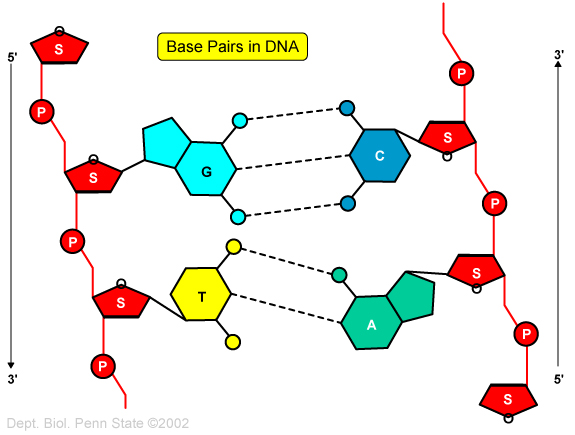
Protein
c)
Fat
7.
Proteins are composed of what smaller subunits?
a)
amino acids
b)
nucleic acids
c)
fatty acids
d)
nucleotides
8.
What are the monomers of DNA?
a)
glycerols
b)
amino acids
c)
fatty acids
d)
nucleotides
9.
What is the monomer of a carbohydrate? 
a)
Monosaccharides
b)
Amino Acids
c)
Fatty Acids
d)
Nucleotides
10.
What are lipids composed of? 
a)
Monosaccharides
b)
Amino Acids
c)
Fatty Acids
d)
Nucleotides
11.

a single unit or molecule

a)

polymer

b)

dimer

c)

monomer

d)

macromolecule

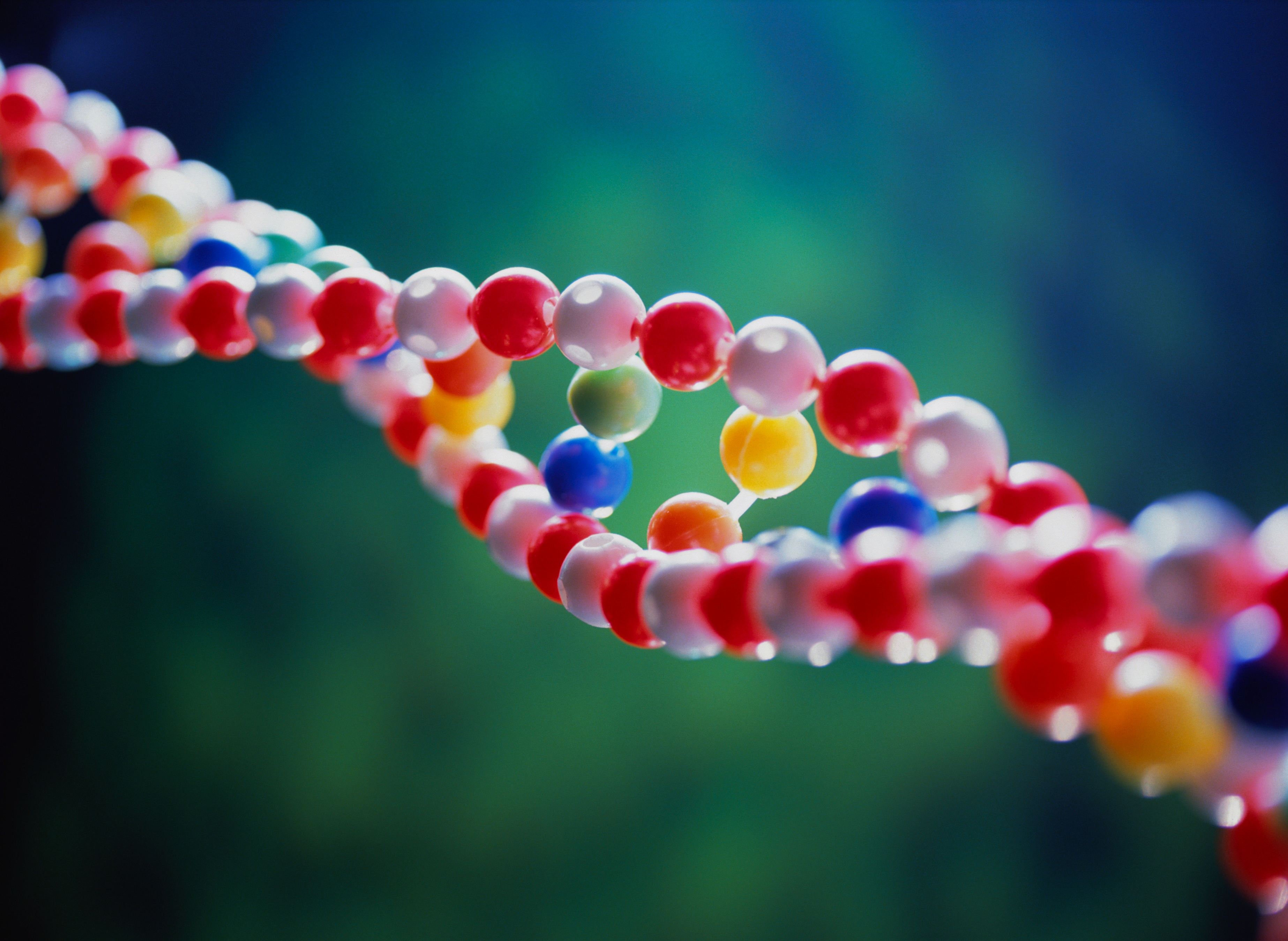
12.

How many monomers are shown here?

a)

1

b)

3

c)

5

d)

7

13.
Which biomolecule contains fats, oils, and waxes?
a)
Proteins
b)
Nucleic Acid
c)
Lipids
d)
Carbohydrate
14.
Which biomolecule contains pastas and breads?
a)
Lipid
b)
Protein
c)
Nucleic Acid
d)
Carbohydrate
15.
What is the function of the mitochondria?
a)
Pack and ship proteins
b)
Make proteins
c)
Make energy (ATP)
d)
Removes waste
16.
I am the control center of the cell and house the DNA. Who am I?
a)
Cytoplasm
b)
Nucleus
c)
Ribosome
d)
Golgi Apparatus
17.
I am the tough exterior that protects plant cells and gives them their shape. Who am I?
a)
Cell wall
b)
Cell membrane
c)
Cytoplasm
d)
Mitochondria
18.
What is the function of the ribosomes?
a)
Transport proteins
b)
Make proteins
c)
Package and ship proteins
d)
Store water, food, and wastes
19.
I am very present in muscles in order to provide massive amounts of ATP for movement and exercise. Who am I?
a)
Nucleus
b)
ER
c)
Mitochondria
d)
Ribosomes
20.
I am the "security gate" of the cell and controls what enters and leaves. Who am I?
a)
Cell wall
b)
Golgi Apparatus
c)
Cytoplasm
d)
Cell membrane
21.
I am the "security gate" of the cell and controls what enters and leaves. Who am I?
a)
Cell wall
b)
Golgi Apparatus
c)
Cytoplasm
d)
Cell membrane
22.
The main function of chloroplasts is:
a)
To control what enters and leaves the cell.
b)
To break down food to release energy for the cell.
c)
To control all activities of the cell.
d)
To produce food for the cell using the sun's energy.
23.
Using this image, what organelle is G?
a)
Cell Wall
b)
Mitochondria
c)
Vacuole
d)
Chloroplast
24.

The molecule shown is _________.

a)

ADP

b)

ATP

c)

A Nucleotide

25.

The letter "C" in the diagram represent ________ .

a)

Nitrogen Molecules

b)

Phosphate Groups

c)

Ribose Sugars

d)

Unicorn Eggs

26.

Which numbered bond do we break in order to get energy from an ATP molecule?

a)

1

b)

2

c)

3

d)

4

27.

Which of the Following is the chemical formula for photosynthesis:

a)

There isn't one

b)

a. 6H2O + 6CO2 + sunlight ---------> 6O2 + C6H12O6

c)

a. 6H2O + C6H12O6 + sunlight ---------> 6CO2 + 6O2

28.

The products the plant produces during photosynthesis include

a)

O2 and H2O

b)

Glucose, H20 and O2

c)

Glucose and O2

29.

The main light-absorbing molecule (not the organelle) found in plant leaves are called

a)

Chloroplasts

b)

Chlorophyll

c)

Mitochondria

d)

Thylakoids

30.

The products of cellular respiration are:

a)

Glucose and ATP

b)

ATP, CO2 and water

c)

Glucose and O2

31.

The bubbles being emitted (leaving) by the plant are what?

a)

Carbon Dioxide

b)

Methane

c)

Oxygen

32.

The point of photosynthesis is to make __________ .

a)

ATP

b)

Glucose

c)

Oxygen

d)

Carbon Dioxide

33.

What is metabolism?

a)

how much you eat

b)

The amount of weight you gain each time you eat

c)

All of the chemical reactions that happen in an organism

d)

A factor in your glucose levels

34.

The equation for photosynthesis is CO2 + H20 = C6H12O6 + O2

a)

true

b)

false

35.

If you want to ADD energy potential to this molecule, what would you need to add to it?

a)

Glucose

b)

another Phosphate

c)

Electricity

d)
36.

A good analogy for these two batteries would be....

a)

Glucose and Glucase

b)

Respiration and Photosynthesis

c)

ATP and ADP

d)

ATP and a Lone Phosphate

37.

Prokaryotic cells will be unable to do cellular respiration because.....

a)

They too small, bro!

b)

They lack chloroplasts, ya dig?

c)

Bro...they don't have mitochondria!

d)

Duh!!! They don't have a nucleus.

38.
Energy is released from ATP when
a)
a phosphate group is added
b)
adenine bonds to ribose
c)
ATP is exposed to sunlight
d)
a phosphate group is removed
39.
Enzymes are considered to be 
a)
Lipids
b)
Carbohydrate
c)
Protein
d)
Nucleic Acid
40.
What is the purpose  of an enzyme?
a)
give permission for the reaction
b)
raise activation energy
c)
speed up reactions
d)
control how many reactions occur
41.
Where do substrates bind on an enzyme?
a)
voltage-gated channels
b)
surface receptor
c)
calcium channels
d)
active site
42.
Enzymes are capable of increasing the rate of a chemical reaction within a living cell.  Enzymes accomplish this through which of the following means?
a)
reducing the number of products   
b)
reducing the activation energy
c)
increasing the temperature of the cell
d)
increasing the concentration of reactants 
43.
What is structure A?
a)
Substrate
b)
Active site
c)
Enzyme
d)
Products
44.
How do enzymes speed up chemical reaction?
a)
Increasing activation energy
b)
Decreasing activation energy
c)
Increasing deactivation energy
d)
Decreasing deactivation energy
45.
What 3 letters do enzymes typically end in?
a)
-ose
b)
-ase
c)
-ese
d)
-tic
46.
Which of the following conclusions can be drawn from this graph?
a)
The optimum pH of the enzyme is 6.6.
b)
The optimum pH of the enzyme is 5.8
c)
The enzyme’s activity increases as pH increases 5.0 to 9.0
d)
The enzyme’s activity is greater around pH of 8.0 .
47.
Any substance that is acted upon by an enzyme is called a(n)?
a)
Coenzyme
b)
Substrate
c)
Vitamin
d)
Polypeptide
48.
The center cell is experiencing  the following phase
a)
telophase
b)
metaphase
c)
anaphase
d)
prohase
49.

The process involved in how multi-celled organisms grow.

a)

mitosis

b)

meiosis

c)

drinking milk

d)

none of these

50.
Humans have ________ pairs of chromosomes.
a)
21
b)
23
c)
46
d)
None of the above
51.
Uncontrollable cell growth is known as _____
a)
obesity
b)
cancer
c)
diabetes
d)
hepatitis
52.
Eukaryotic cells store their genetic information(DNA) in __________.
a)
Chromosomes
b)
Centromeres
c)
karyotypes
d)
Proteins
53.
Eukaryotic cells store their genetic information(DNA) in __________.
a)
Chromosomes
b)
Centromeres
c)
karyotypes
d)
Proteins
54.
Eukaryotic cells store their genetic information(DNA) in __________.
a)
Chromosomes
b)
Centromeres
c)
karyotypes
d)
Proteins
55.
When an area of a chromatid is exchanged with the matching area on a chromatid of its homologous chromosome, _________________ occurs
a)
crossing over
b)
mutagenesis
c)
hybridization
d)
fertilization
56.
What causes genetic variation in meiosis?
a)
chromosomes lining up
b)
crossing over of chromosomes
c)
separation of chromosomes
d)
chromosomes pulling apart
57.
Which process and type of resulting cells are represented?
a)
mitosis, gametes
b)
mitosis, body cells
c)
meiosis, gametes
d)
meiosis, body cells
58.
A male shark has 40 chromosomes in each of its sex cells. How many would be present in its body cells?
a)
20
b)
40
c)
80
d)
160
59.
A male shark has 40 chromosomes in each of its sex cells. How many would be present in its body cells?
a)
20
b)
40
c)
80
d)
160
60.
A human zygote should have _____ chromosomes inside.
a)
46
b)
23
c)
92
d)
64
61.
Which of the following best describes a DNA molecule?
a)
double helix
b)
contains ribose
c)
made of amino acids
d)
contains Uracil
62.
Which of the following units are repeatedly joined together to form a strand of DNA? (This is the MONOMER of DNA.) 
a)
amino acids
b)
nucleotides
c)
fatty acids
d)
polysaccharides
63.
Adenine bonds with ______________.
a)
Guanine
b)
Thymine
c)
Cytosine
d)
Adenine
64.
Guanine bonds with ______________.
a)
Adenine
b)
Guanine
c)
Cytosine
d)
Thymine
65.
Why is DNA important?
a)
it is very small and very complicated
b)
it's in everything
c)
it serves as the blueprint for traits of all living things
d)
because we eat it every day for energy
66.
Which 2 molecules forms the sides (backbone) of the DNA ladder?
a)
deoxyribose and adenine
b)
deoxyribose and a hydrogen bond
c)
sugar and the nucleus
d)
deoxyribose (sugar) and phosphate
67.
A process in which DNA has the unique ability to make an exact copy of itself.
a)
Replication
b)
Translation
c)
Transcription
68.
Which sequence of DNA bases would pair with this partial strand
ATG TGA CAG
a)
ATG TGA CAG
b)
TAC ACT GTC
c)
GTA AGT GAC
d)
CAT TCA CTG
69.
Nitrogenous bases are joined by which type of bond?
a)
polar bonds
b)
ionic bonds
c)
covalent bonds
d)
hydrogen bonds
70.
Replicate the following strand of DNA: 
AATCATGGA
a)
AATCATGGA
b)
TTAGTACCT
c)
UUAGUACCU
d)
GGATAUCUA
71.
DNA replication results in two DNA molecules,
a)
each one with two original strands
b)
each one with two new strands
c)
each one with one new strand and one original strand
d)
one with two new strands and the other with two original strands
72.

Transcribe the following DNA strand: CTG AAT

a)

GAC TTA

b)

CTG AAT

c)

GAC UUA

d)

CUG AAU

73.

What is the order for Protein Synthesis?

a)

Transcription -> Translation -> Protein

b)

Translation - > Transcription -> Protein

c)

Protein -> Transcription -> Translation

d)

Translation -> Protein -> Transcription

74.
What will be the resulting mRNA from this DNA sequence:
GAT-TAC-AGA-TTA-CAT?
a)
CTA-ATG-TCT-AAT-GTA
b)
GAU-UAG-UGA-UUA-GUT
c)
CUA-AUG-UCU-AAU-GUA
d)
CAT-ACA-TAC-ATA-TAG
75.
The process to go from mRNA to a protein is called ____
a)
transcription
b)
rRNA
c)
replication
d)
translation
76.
The process to go from DNA to mRNA is _______
a)
translation
b)
transcription
c)
replication
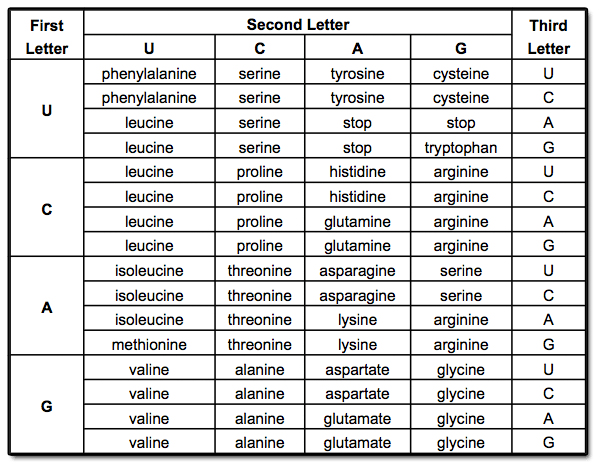
77.
What amino acid is represented by the codon UUA?
a)
Phenylalanine
b)
Tyrosine
c)
Leucine
d)
Stop codon
78.
 which is heterozygous ?  
a)
Tt
b)
TT
79.

What do we call the complete genetic makeup of an organism

a)

heterozygous

b)

punnet square

c)

genotype

80.
Two brown eyed parents (Bb) have a baby. What is the chance the baby is blue eyed?
a)
0 %
b)
25%
c)
50%
d)
75%
81.
An organism's appearance is known as its
a)
heredity
b)
phenotype
c)
genotype
d)
pedigree
82.
What is the phenotype of the heterozygous parent in the punnett square?
a)
green
b)
yellow
c)
hybrid
d)
purebred
83.

Condition in which both alleles for a gene are expressed when present - both traits are visible

a)

Codominance

b)

Dominance

c)

Complete dominance

d)

Incomplete dominance

84.
What are small stretches of DNA that code for traits
a)
Nucleus
b)
Chromosomes
c)
Gene
d)
Centromeres
85.
How many chromosomes do you get from each parent?
a)
22
b)
23
c)
44
d)
46
86.
The genetic transmission (passing on) of characteristics from parents to offspring.
a)
Inheritance
b)
Genotype
c)
Phenotype
d)
Genetics
87.
I have 1 X chromosome and 1 Y chromosome. What am I?
a)
Male
b)
Female
88.
T - tall and t = short
In the punnett square below, what belongs in the missing square
a)
tt
b)
Tt
c)
Bb
d)
TT
89.

Georgie is a tall, blue-eyed boy with freckles. He loves to read books and watch movies. He has good grades in school but isn't very athletic. Georgia has some problems with his eyesight so he doesn't play sports.


Which of Georgie's traits did he not inherit from his parents?

a)

eye color

b)

reading ability

c)

eyesight

d)

height

90.
Heredity is the passing of traits from _____________________ to _____________________
a)
predators to prey
b)
water to rain
c)
parents to offspring
d)
fungi to protists
91.
One trait that is ALWAYS present and causes the other traits to disappear is a ________________________
a)
recessive trait
b)
aggressive trait
c)
absent trait
d)
dominant trait
93.

During a cross of two heterozygous Pea Plants that carry the dominant (Green color) and the recessive (yellow color) alleles, some of the offspring will be yellow and some will be green. This represents .....

a)

Mendel's Law of Segregration

b)

Mendel's Law of Independent Assortment

c)

Newton's First Law of Thermodynamics

d)

The Law of the Jungle

93.

During a cross of two heterozygous Pea Plants that carry the dominant (Green color) and the recessive (yellow color) alleles, some of the offspring will be yellow and some will be green. This represents .....

a)

Mendel's Law of Segregration

b)

Mendel's Law of Independent Assortment

c)

Newton's First Law of Thermodynamics

d)

The Law of the Jungle

94.

What percentage of the female offspring will be a carrier for this recessive disease?

a)

0%

b)

50%

c)

100%

d)

25%

95.

Spongebob's parents are both round shaped, while Spongebob is square shaped. The best explanation for this is because...

a)

Spongebob's parents are homozygous recessive for round shape

b)

Spongebob is homozygous dominant for square shape

c)

Spongebob's parents are heterozygous with square shape being recessive

d)

Mrs. Squarepants was unfaithful

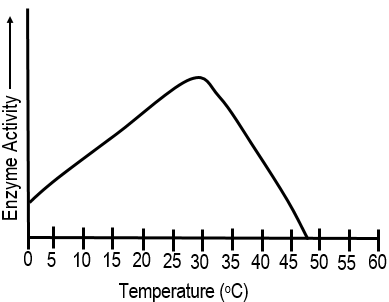
96.
Based on the graph, what is the optimal temperature for this enzyme? 
a)
15oC
b)
40oC
c)
30oC
d)
35oC
97.
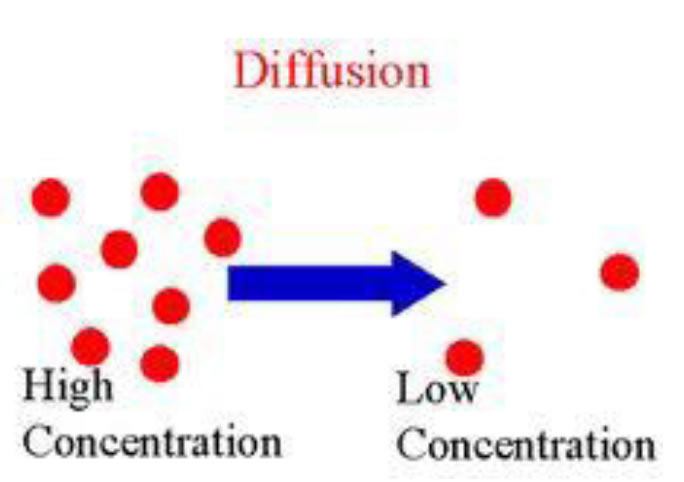
Movement of particles from high to low concentration. 
a)
Passive Transport
b)
Active Transport
98.
a)
Passive Transport
b)
Active Transport
99.
Solutes move with the concentration gradient, therefore no energy is used. 
a)
Passive Transport
b)
Active Transport
100.
a)
Passive Transport
b)
Active Transport
101.
What is it called when molecules move across the cell membrane from an area of high concentration to an area of low concentration through a carrier protein?
a)
Diffusion
b)
Osmosis
c)
Active Transport
d)
Facilitated Diffusion
102.
Osmosis is the movement of _____ across a membrane.
a)
food
b)
energy
c)
oxygen
d)
water
103.
Due to the higher concentration of oxygen in the air than your blood, oxygen goes from the lungs into the red blood cells by....
a)
Facilitated Diffusion
b)
Simple Diffusion
c)
Active Transport
d)
Osmosis
104.
This cell organelle helps organisms maintain homeostasis by controlling what substances may enter or leave cells.
a)
vacuole
b)
nucleus
c)
cell membrane
d)
cell wall
105.
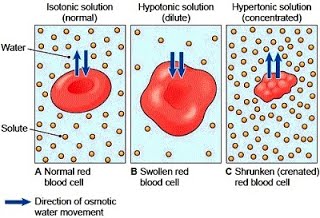
The cell below is in a _________ solution.
a)
Hypotonic
b)
Hypertonic
c)
Isotonic
106.
The cell below is in a _________ solution.
a)
Hypotonic
b)
Hypertonic
c)
Isotonic
107.
The cell below is in a _____________ solution.
a)
Hypertonic
b)
Hypotonic
c)
Isotonic
108.
A cell in an isotonic solution will
a)
swell
b)
shrink
c)
stay the same size
d)
impossible to tell
109.
When a cell is placed in a hypotonic solution (less concentrated), water
a)
moves from the inside of the cell to the solution
b)
moves from the solution to the inside of the cell
c)
moves equally in and out of the cell
d)
none of these
110.
When a cell is placed in a hypertonic (more concentrated) solution water
a)
moves from the inside of the cell to the solution
b)
moves from the solution to the inside of the cell
c)
moves equally in and out of the cell
d)
none of these
111.
What type of transport is this?
a)
facilitated diffusion
b)
active transport
c)
diffusion
d)
osmosis