Wayground logo

Free Printable Worksheets

Font size

S
M
L
XL
Worksheets

DC Biology Fall Semester Review

Total questions: 213

Worksheet time: 3hrs 28mins

Name
Class
Date
1.
What is the correct order of organization
a)
tissues-cells-organs-organ systems-organism
b)
cell-tissue-organs-organ systems-organism
c)
organism-cells-tissues-organ systems-organism
d)
tissues-cells-organs-organ sytems-organism
2.
Scientists call the organized ways they answer questions the _________________________ .
a)
scientific method
b)
scientific explanation
c)
scientific notation
d)
scientific guesses
3.
The first step of the scientific method is to make a(n) ____________ of something in the world.
a)
observation
b)
paper airplane
c)
hypothesis
d)
conclusion
4.
The information you record in an experiment is called your ____________.
a)
data
b)
conclusions
c)
notebook
d)
inquiry
5.
Another word for asking questions and seeking answers in science is called:
a)
inquiry
b)
data
c)
hypothesis
d)
procedure
6.
The one variable you change is called the ___________ variable.
a)
independent
b)
dependent
c)
controlled
7.
The change that happens because of your experiment is called the ___________ variable.
a)
independent
b)
dependent
c)
controlled
8.
The final results and answers to your big question is shared in your ________________.
a)
conclusion
b)
hypothesis
c)
observation
d)
inquiry
9.
The summary at the end of an experiment that explains the results. 
a)
conclusion
b)
procedures
c)
materials
d)
hypothesis
10.
A controlled experiment is one where
a)
you change only one variable.
b)
you change many variables.
11.

Which of the following graphs is not used to represent qualitative data?

a)

Pie chart

b)

Bar chart

c)

Histogram

d)

Pareto chart

12.

These kind of observation use your senses to observe results.

a)

qualitative

b)

quantitative

13.

These kind of observations are made using instruments such as rulers, balances and thermometers.

a)

qualitative

b)

quantitative

14.

The mass of the chocolate cake is 250 g.

a)

qualitative

b)

quantitative

15.

The clouds are grey and ground is wet.

a)

qualitative

b)

quantitative

16.
Which group does NOT contain any variable?This is the comparison group. 
a)
Experimental Group
b)
Control Group
c)
Constants
d)
Participants 
17.
Which best describes a radioactive isotope?
a)
There are many isotopes.
b)
There is only one other isotope.
c)
An atom is stable.
d)
An atom is unstable.
18.
What does not like water very much in the cell membrane?
a)
Hydrophilic
b)
hydrophobic
c)
Hypertonic
d)
Hypotonic
19.
What end of the cell membrane does not like water?
a)
h20
b)
Hydrophibic
c)
Hydrophobic
d)
cell membrane
20.
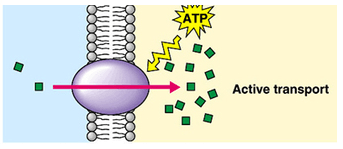
What kind of transport requires energy
a)
osmosis
b)
anaerobic
c)
passive
d)
active transport
21.
What kind of transport doesn't require energy
a)
active
b)
slow
c)
no energy required
d)
passive
22.
Where does photosynthesis occur?
a)
chlorophyll
b)

chloroplasts

c)

sun

d)
the stem of the plant
23.

The cell membrane is..

a)

not permeable

b)

semi-permeable

c)

permeable

24.

The phosphate head is..

a)

hydrophobic

b)

hydrophilic

25.

The fatty acid tail is..

a)

hydrophobic

b)

hydrophilic

26.

Hydrophilic means

a)

attracted to fats

b)

attracted to water

c)

repelled by fats

d)

repelled by water

27.

hydrophobic means..

a)

attracted to water

b)

attracted to fats

c)

repelled by water

d)

repelled by fats

28.

the phospholipids are arranged as a..

a)

layer

b)

bilayer

c)

trilayer

29.

Which of the following methods of transportation require energy?

a)

osmosis

b)

facilitated diffusion

c)

diffusion

d)

active transport

30.

The cell membrane is also called the __________ __________.

a)

Nucleus Membrane

b)

Plasma Membrane

c)

Phosphorous Membrane

d)

Insane Membrane

31.
Which of the following is true about structural isomers?
a)
Have the same molecular formula
b)
Have different physical and chemical properties.
c)
Have the same number of elements
d)
all of the above
32.

This is an example of a(n) ___________.

a)

cis isomer

b)

trans isomer

c)

enantiomer

d)

structural isomer

33.

This is an example of a(n) ___________.

a)

enantiomer

b)

structural isomer

c)

cis isomer

d)

trans isomer

34.
Which molecular chemical bond found commonly in organic compounds?
a)
Hydrogen Bond
b)
Ionic Bond
c)
Van Der Waals Force 
d)
Covalent Bond
35.
What is the functional group of an alcohol?
a)
-COO-
b)
-COOH
c)
-C=C-
d)
-OH
36.
What is the functional group of a carboxylic acid?
a)
-COO-
b)
-COOH
c)
-C=C-
d)
-OH
37.
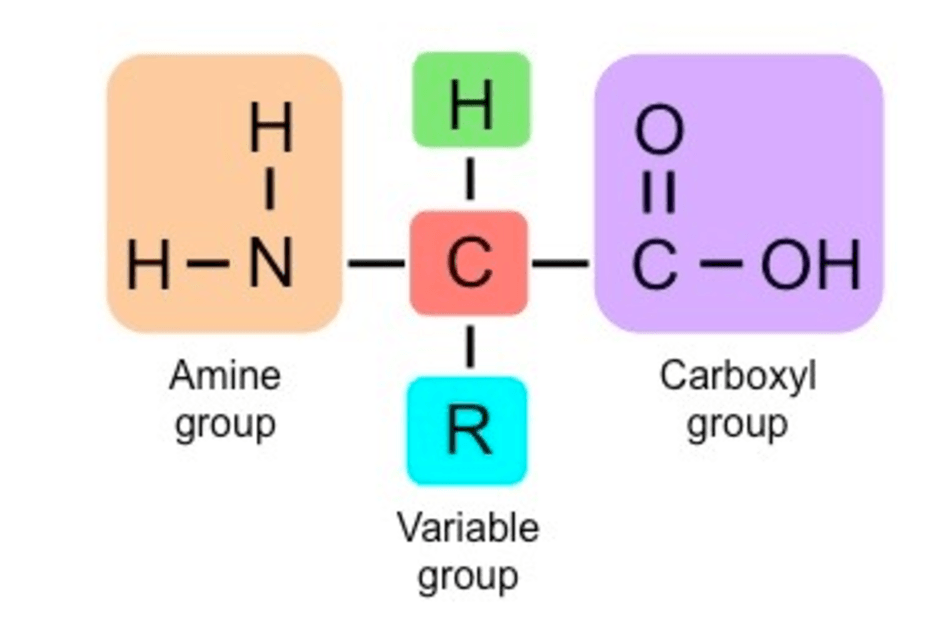
Classify the compound based on the functional group present.
a)
amine
b)
amide
c)
ether
d)
ester
38.
Which of the following describes covalent bonds?
a)
Bonds form because of opposite charges
b)
Bonds form to fill outer electron shells
c)
Electrons are transferred between atoms
d)
Covalent bonds are magical
39.
Hydrogen bonding occurs in molecules when ___________________.
a)
a hydrogen atom forms a covalent bond with another atom.
b)
a hydrogen atom in a molecule forms a bond with any atom.
c)
a hydrogen atoms form an ionic bond with another atom on an adjacent molecule.
d)
a hydrogen atom bonded to F, O or N is attracted to an electron pair on a F, O or N atom on an adjacent molecule.
40.
What is the maximum number of hydrogen bonds one molecule of water can form?
a)
1
b)
2
c)
3
d)
4
41.

Which is the correct description about van der Waals' forces?

a)

They are the weakest of the intermolecular forces arising from instantaneous dipole - induced dipole interactions.

b)

They are the strongest of the intermolecular forces arising from dipole - dipole interactions.

42.

What element in a water molecule has a partial positive charge?

a)

Hydrogen

b)

Oxygen

43.

The bond that holds together the oxygen and hydrogen in a water molecule is what type of bond?

a)

Ionic

b)

Covalent

c)

Metallic

d)

Hydrogen

44.

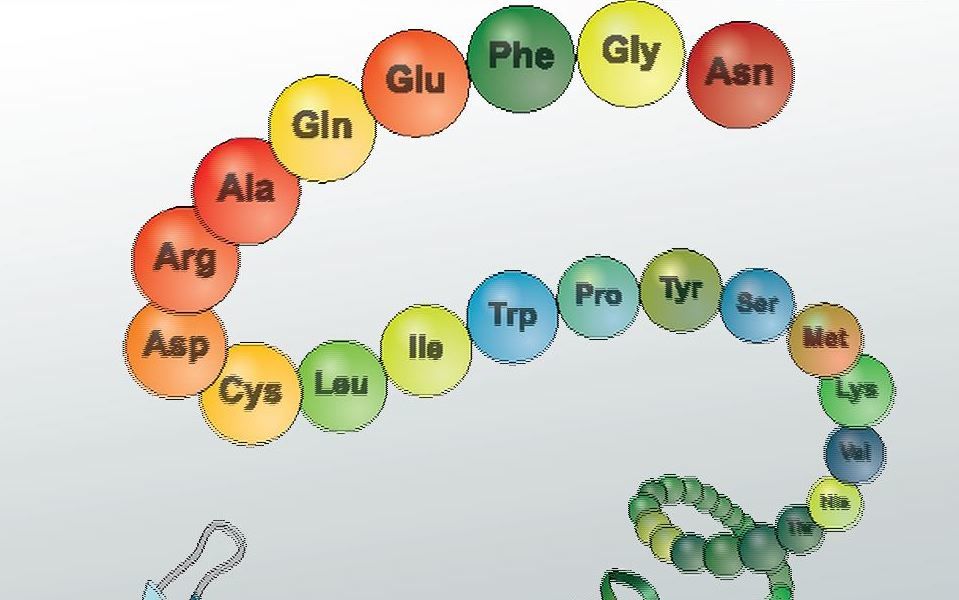
which of the following terms refers to the order in which amino acids are linked together in a protein.

a)

Primary

b)

Secondary

c)

Tertiary

d)

Quaternary

45.

The chain of amino acids folds and coils on itself

a)

Primary

b)

Secondary

c)

Tertiary

d)

Quaternary

46.

The entire polypeptide forms a three-dimensional structure

a)

Primary

b)

Secondary

c)

Tertiary

d)

Quaternary

47.

Two or more polypeptides attached together and work as one unit

a)

Primary

b)

Secondary

c)

Tertiary

d)

Quaternary

48.
What is the monomer of a protein?
a)
amino acid
b)
monosaccharide
c)
fatty acid
d)
nucleic acid
49.
The name of the initial chain of monomers in a protein is called.....
a)
polypeptide
b)
polysaccharide
c)
polyester
d)
polynucleotide
50.
Which of the following best describes a DNA molecule?
a)
double helix
b)
contains ribose
c)
made of amino acids
d)
contains Uracil
51.
In DNA, Adenine bonds with ______________.
a)
Guanine
b)
Thymine
c)
Cytosine
d)
Adenine
52.
Guanine bonds with ______________.
a)
Adenine
b)
Guanine
c)
Cytosine
d)
Thymine
53.
What are the 4 nitrogen bases?
a)
adenine, thymine, cytoplasm, and guanine
b)
adenine, thymine cytosine, and guanine
c)
adenine, thymine, cytosine, and gylcerol
d)
adenine, thymine, cytosine, and glucose
54.
The instructions for inherited traits
a)
Avery
b)
Hershey
c)
Griffiths
d)
Genes
55.
subunits of DNA made of three parts
a)
Phosphate
b)
Carbohydrate
c)
Nucleotide
d)
Nitrogenous Base
56.
the base-pairing double ring structure
a)
Purines
b)
Pyrimindines
c)
Nucleotide
d)
Genes
57.
the base-pairing single ring structure.
a)
Purines
b)
Pyrimidines
c)
Nucleotides
d)
Genes
58.

What are Purines?

a)

Adenine

b)

Cytosine and adenine

c)

Adenine and guanine

d)

Guanine

59.

What are Pyrimidines?

a)

Cytonise

b)

Guanine

c)

Thymine and Cytosine

d)

Adenine and Thymine

60.

Protective layer that covers a cell's surface and acts as a barrier between the inside of a cell and the cell's environment

a)

Cytoplasm

b)

Cell Membrane

c)

DNA

d)

Nucleus

61.

Cellular Respiration happens in the organelle

a)

Ribosome

b)

Lysosome

c)

Mitochondria

d)

Endoplasmic Reticulum

62.

Organelle where photosynthesis takes place

a)

Chloroplast

b)

Vacuole

c)

Mitochondria

d)

Golgi Complex

63.

Living things are organized in the following ways:

a)

Cell, Organ System, Organelle

b)

Cells, Tissues, Organs, Organ Systems, Organism

c)

Tissue, Cells, Organism, Organelle

64.

Which group of organelles is directly responsible for the production of new molecules within a cell?

a)

Ribosomes, the endoplasmic reticulum, and Golgi apparatus

b)

Golgi apparatus, lysosomes, and the plasma membrane

c)

The endoplasmic reticulum, plastids, and vacuoles

d)

The nucleolus, vacuoles, and ribosomes

65.

During which cellular process does telophase occur?

a)

Transcription

b)

Translation

c)

Mitosis

d)

Interphase

66.

Oncogenes are mutated forms of genes. Oncogenes can transform a cell into a tumor cell. How does the presence of an oncogene lead to the formation of a tumor?

a)

Cell division is unregulated

b)

Antibody activity is unregulated

c)

Somatic cell growth is inhibited

d)

ATP production is inhibited

67.

In what part of a cell is hereditary information found?

a)

Chloroplasts

b)

Nucleus

c)

Cytoplasm

d)

Membranes

e)

Mitochondirion

68.

Cytoplasm is found in

a)

plant cells only

b)

animal cells only

c)

both plant and animal cells

d)

Neither plant nor animal cells

69.

Which of the following cell organelles is primarily responsible for photosynthesis?

a)

Nucleus

b)

Chloroplast

c)

Vacuole

d)

Mitochondria

e)

Cell Wall

70.

Which organelle is the site for cellular respiration?

a)

Chloroplast

b)

Mitochondria

c)

Nucleus

d)

Vacuole

e)

Cell Wall

71.

Which cell structure is composed primarily of cellulose?

a)

Cell Wall

b)

Mitochondria

c)

Nucleus

d)

Vacuole

72.

Which phrase best describes the function of mitochondria?

a)

located in the cytoplasm

b)

bacteria-sized organelle

c)

converts energy for cell use

d)

contains a folded inner membrane

73.

What process, essential to plant life, is the primary function of chloroplast?

a)

Photosynthesis

b)

DNA Replication

c)

Cellular Respiration

d)

Growth

74.

What process, essential to the life of all organisms, is the primary function of the mitochondria?

a)

Photosynthesis

b)

DNA Replication

c)

Cellular Respiration

d)

Digestion

75.
What is the function of the ribosomes?
a)
Membrane that surrounds and protects the cell
b)
Sac filled with digestive chemicals
c)
Structure that contains DNA and directs the cell.
d)
Small structure that synthesizes proteins
76.
What is the function of the lysosomes?
a)
Membrane that surrounds and protects the cell
b)
Sac filled with digestive chemicals
c)
Structure that contains DNA and directs the cell.
d)
Small structure that synthesizes proteins
77.
Which cell structure converts nutrients to energy?
a)
mitochondria
b)
Golgi apparatus
c)
endoplasmic reticulum
d)
ribosomes
78.
Which component of the cell membrane functions to isolate the cell from its environment?
a)
carbohydrates
b)
cholesterol
c)
phospholipids
d)
proteins
79.
Which component of the cell membrane functions to help move materials across the membrane?
a)
carbohydrates
b)
cholesterol
c)
phospholipids
d)
proteins
80.

The ____________ mosaic model describes the plasma membrane and its molecules

a)

solid

b)

fluid

81.
What does selectively-permeable mean?
a)
The cell controls what passes in and out of the cell
b)
Nothing gets through
c)
The cell lets only large substances through
d)
The cell only lets small molecules through
82.

Passive Transport stops when the concentration has reached equilibrium - true or false?

a)

true.

b)

false

83.
When both inside and outside of a cell have the same amount of water it is said that the cell has reached a state of ___________.
a)
osmosis
b)
equilibrium
c)
diffusion
d)
hypertonic
84.
The movement of water through a semi-permeable membrane is called?
a)
cell membrane
b)
respiration
c)
osmosis
d)
diffusion
85.
Special proteins help move particles, but NO energy is needed. This is..
a)
facilitated diffusion
b)
exocytosis
c)
active transport
d)
equilibrium
86.
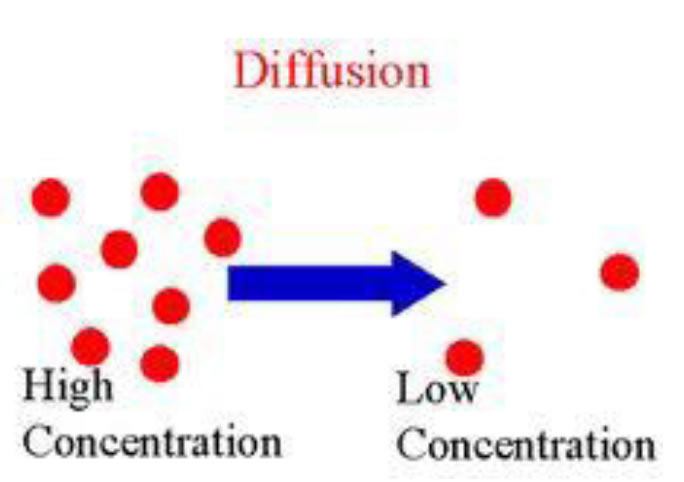
When particles move from areas of high concentration to areas less concentrated, this has taken place.
a)
diffusion
b)
mitosis
c)
endocytosis
d)
photosynthesis
87.
Movement of particles from high to low concentration. 
a)
Passive Transport
b)
Active Transport
88.
Osmosis is a form of ______________. 
a)
Passive Transport
b)
Active Transport
89.
ATP is a form of energy.
a)
Passive Transport
b)
Active Transport
90.
What is it called when molecules move across the cell membrane from an area of high concentration to an area of low concentration through a carrier protein?
a)
Diffusion
b)
Osmosis
c)
Active Transport
d)
Facilitated Diffusion
91.
What is Osmosis?
a)
equal concentration
b)
diffusion of water through a selectively-permeable membrane
c)
high to low concentration
d)
non-polar tail
92.
The movement of atoms, ions, or molecules from an area of high concentration to an area of low concentration.
a)
osmosis
b)
active transport
c)
diffusion
d)
hypertonic
93.
Which of the following is the correct equation for PHOTOSYNTHESIS?
a)
CO2 + light + H2O --> O2 + Sugar
b)
CO2 + sugar + H2O --> O2 + light
c)
O2 + light + H2O --> CO2 + Sugar
d)
CO2 + O2 + H2O --> Light+ Sugar
94.
What process occurs when light energy is captured in autotrophs and converted into sugar?
a)
Photosynthesis
b)
Cellular Respiration
95.
What are the products of photosynthesis?
a)
water and carbon dioxide
b)
oxygen and glucose
c)
oxygen and carbon dioxide
d)
oxygen and water
96.
Chloroplasts are...
a)
Structures of animal cells to produce ATP
b)
Organelles where lipids are elaborated
c)
Specialized structures of plants where food is made
d)
Waste organelle of plants
97.
What is the pigment in chloroplasts that performs photosynthesis?
a)
Chlorosynthesis
b)
Chlorophyll
c)
ADP
d)
Electron Transport
98.
What is produced as a result of photosynthesis?
a)
Glucose and Chlorophyll
b)
Glucose and Oxygen
c)
Water and Light energy
d)
Carbon dioxide and Water
99.
What is one of the reactants of cellular respiration?
a)
energy
b)
glucose
c)
carbon dioxide
d)
water
100.
______________ produces the most ATP.
a)
photosnthesis
b)
aerobic respiration
c)
anaerobic respiration
d)
glycolysis
101.
What are the products of aerobic respiration?
a)
Glucose and oxygen
b)
Carbon dioxide and water
c)
Lactic acid
d)
Carbon monoxide
102.
The mitochondria is responsible for ...
a)
photosynthesis
b)
anaerobic respiration
c)
aerobic respiration
d)
fermentation
103.
In which way are photosynthesis and cellular respiration different?
a)
Cellular respiration stores ATP, while photosynthesis releases ATP.
b)
Cellular respiration produces oxygen, while photosynthesis uses oxygen.
c)
Photosynthesis releases energy, while cellular respiration stores energy.
d)
Photosynthesis used carbon dioxide, while cellular respiration produces carbon dioxide.
104.
What is the correct equation for cellular respiration?
a)
6O2 + C6H12O6 -> 6CO2 + 6H2O + Energy
b)
6O2 + C6H12O6 + Energy -> 6CO2 + 6H2O
c)
6CO2 + 6H2O -> 6O2 + C6H12O6 + Energy
d)
6CO2 + 6H2O + Energy -> 6O2 + C6H12O6
105.

Where does the Krebs Cycle take place?

a)

Cristae

b)

Matrix

c)

cytoplasm

d)

nucleus

106.
Cellular Respiration's goal is to
a)
make water
b)
make ATP
c)
make glucose
d)
make  oxygen
107.
What is cellular respiration?
a)
the breakdown of glucose  to release ATP
b)
the breakdown of glucose to release NADH
c)
the breakdown of glucose to release FADH
d)
the breakdown of glucose to release carbon
108.
The energy carrier that the cell uses to power its day to day activities is 
a)
ATP
b)
NADH
c)
FADH2
d)
glucose
109.

What is glucose converted to during glycolysis?

a)

Acetyl-Co A

b)

Coenzyme A

c)

Pyruvate

d)

Sucrose

110.

What comes next after glycolysis if oxygen is present

a)

Krebs cycle

b)

Electron transport chain

c)

Alcoholic Fermentation

d)

Lactic Acid Fermentation

111.
This process releases chemical energy from sugars and other carbon-based molecules to make ATP when oxygen is present.
a)
photosynthesis
b)
light-independent reaction
c)
cellular respiration
d)
light-dependent reaction
112.
Glycolysis 
a)
does not need oxygen
b)
does need oxygen
113.
Glycolysis takes place in the 
a)
mitochondria
b)
cell membrane
c)
cytoplasm
d)
nucleus
114.
This is the first step of cellular respiration
a)
Glycolysis
b)
Lactic Acid Fermentation
c)
Alcoholic Fermentation
d)
Aerobic Respiration
115.
This process produces molecules that carry energy to the second part of cellular respiration
a)
Photosynthesis
b)
Kreb's Cycle
c)
Glycolysis
d)
Electron Transport Chain
116.
This is made of proteins that need energy-carrying molecules from the Krebs cycle and oxygen to make ATP
a)
Glycolysis
b)
Kreb's Cycle
c)
Photosynthesis
d)
Electron Transport Chain
117.
This process does not make ATP alone, but it allows glycolysis to continue making ATP when oxygen is unavailable for cellular respiration.
a)
Fermentation
b)
Electron Transport Chain
c)
Glycolysis
d)
Kreb's cycle
118.

chemical reaction that releases some form of energy, such as light or heat

a)

exergonic reaction

b)

exothermic reaction

c)

endergonic reaction

d)

endothermic reaction

119.

chemical reaction that requires energy input (heat, light, or electricity) in order to proceed

a)

endergonic reaction

b)

endothermic reaction

c)

exergonic reaction

d)

exothermic reaction

120.
Where does glycolysis occur?
a)
Inner mitochondrial membrane
b)
Mitochondrial Matrix
c)
Cytosol
d)
At a ribosome
121.
Which molecule enters Kreb's Cycle?
a)
Pyruvate
b)
Glucose
c)
Acetyl CoA
d)
reducing powers
122.
ATP molecules are made by this process during the ETC.
a)
Tinkerbell
b)
Substrate Level Phosphorylation
c)
Oxidative Phosphorylation
d)
Photo-phosphorylation
123.
Where do the dark reactions take place? 
a)
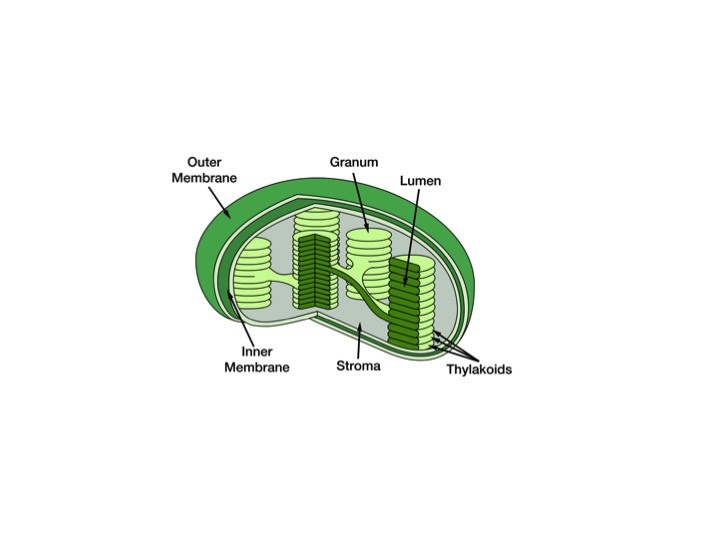
thylakoid membrane
b)
lumen
c)
stroma
124.
What does NADPH do? 
a)
carries electrons to the Calvin cycle
b)
carries electrons to the ETC
125.
The two main stages of photosynthesis are the...
a)
light reactions and respiration
b)
dark reactions and the Calvin cycle 
c)
light reactions and the Calvin cycle
d)
dark reactions and fermentation
126.
What is the name of the simple sugar that is produced in photosynthesis?
a)
Sucrose
b)
Dextrose
c)
Glucose
d)
Lactose
127.
What molecules created in the light dependent reactions supply the energy to run the Calvin cycle?
a)
ATP & NADPH
b)
ADP & NADH
c)
chlorophyll & ATP 
d)
carotenoids & chlorophyll
128.
Which organelle performs photosynthesis?
a)
Chloroplast
b)
Mitochondria
c)
Chlorophyll
d)
Vacuoles
129.
Which of the following is the correct equation for PHOTOSYNTHESIS?
a)
6CO2 + 6H2O --> 6O2 + C6H12O6
b)
6CO2 + C6H12O6 + 6H2O --> O2 
c)
6O2 + 6H2O --> 6CO2 + C6H12O6
d)
C6H12O6 + 6O2 ---> 6H2O + 6CO2 
130.
Which substance from the light-dependent reactions of photosynthesis is a source of energy for the light-independent reactions?
a)
ADP
b)
H2O
c)
NADPH
d)
pyruvic acid
131.
Which of the following best describes photosynthesis?
a)
Photosynthesis converts radiant energy into chemical energy.
b)
Photosynthesis produces carbohydrates.
c)
Plants need ATP, oxygen, water, nutrients, and chlorophyll to complete photosynthesis.
d)
Plants use mitochondria, water, and carbon dioxide to make sugar.
132.
Which pigments absorbs green and blue light but reflects orange and red light?
a)
Carotenoids
b)
Chlorophylls
133.
Light energy is used to 
a)
split water into H and O
b)
weld C, H and O together
c)
make water
134.
What is the five carbon molecule that begins the Calvin Cycle?
a)
carbon dioxide
b)
oxygen
c)
NADPH
d)
RuBP
135.
What is the name of the enzyme that fixes carbon in photosynthesis?
a)
Rubisco
b)
NADPH reductase
c)
Carbon Fixase
d)
Calvinase
136.
a)
Prophase
b)
Interphase
c)
Anaphase
d)
Telophase
137.
a)
Anaphase
b)
Cytokinesis
c)
Telophase
d)
Metaphase
138.
a)
Cytokinesis
b)
Interphase
c)
Anaphase
d)
Metaphase
139.
a)
Cytokinesis
b)
Anaphase
c)
Telophase
d)
Prophase
140.
The phase in mitosis where chromosomes move away and are pulled apart by spindles to opposite sides of the cell.
a)
prophase
b)
anaphase
c)
metaphase
d)
telephase
141.
Chromosomes condense from long stands into paired rod like structures. 
a)
Prophase
b)
Interphase
142.
The process by which the nuclear material is divided equally between two new cells
a)
mitosis
b)
cancer
c)
spindle
d)
centromere
143.
In mitosis, the two resulting cells are
a)
different from the starting cell and identical to each other.
b)
different from the starting cell and different from each other.
c)
identical to the starting cell and different from each other.
d)
identical to the starting cell and identical to each other.
144.
The cell spends most of its time in (in between) which phase?
a)
anaphase
b)
interphase
c)
prophase
d)
metaphase
145.
Structure A refers to the _____.
a)
chromatid
b)
chromosome
c)
centromere
146.
Before cells can divide, what must be copied?
a)
mitochondria
b)
cytoplasm
c)
DNA
d)
Cell Wall
147.
When cells divide they make two ____ cells.
a)
daughter
b)
son
c)
Mom
d)
Dad
148.
Cluster of proteins and pigments that capture the sun's energy
a)
Krebs
b)
ETC
c)
Thylakoid
d)
Reactants
149.
Where does the Calvin Cycle (Dark Rxn) occur?
a)
thylakoid
b)
stroma
c)
lumen
d)
mitochondria
150.

When a receptor protein in a cell membrane acts as a enzyme, the receptor protein

a)

changes its shape to allow the signal molecule to enter the cell

b)

Causes chemical changes in the cell

c)

activates a 2nd messenger that acts as a signal molecule

d)

changes the permeability of the cell membrane

151.

Which of the following is NOT a characteristic of an ion channel

a)

It extends from one side of the cell membrane to the other

b)

It may or may not have a gate

c)

It is polar, so charged substances such as ions can pass through the nonpolar lipid bilayer

d)

it allows ions to move against their concentration gradient

152.

Cell surface proteins allow a cell to ____________ with other cells

a)

communicate

b)

against

c)

gated ion channel

d)

second messenger

153.

A _____________ _____________ amplifies the communication from a signal molecule.

a)

Facilitated diffusion

b)

against

c)

gated ion channel

d)

second messenger

154.

A _____________ _____________ _________________ in the cell membrane may be opened or closed.

a)

Facilitated diffusion

b)

against

c)

gated ion channel

d)

second messenger

155.
Messenger molecules are divided into two types, which are:
a)
Local and Long
b)
Fast and Slow
c)
Green and Blue
d)
Square and Circle
156.
Synaptic Signaling occurs in which type of cell?
a)
Muscle cell
b)
Nervous System cell
c)
White Blood Cell
d)
Red Blood
157.
Local Messengers are NOT
a)
Autocrine
b)
Paracrine
c)
Neural or Synaptic Signals
d)
Endocrine
158.
What determines whether a cell is a target cell for a particular signal molecule?
a)
phosphorylation cascade
b)
cAMP
c)
signal receptors
d)
phosphatase
159.
The three stages of cell signalling are
a)
paracrine, local, and synaptic
b)
reception, transduction, and response
c)
transcription, translation, and folding
d)
alpha, beta, and gamma
160.
A signal molecule that binds to a plasma-membrane protein is a
a)
ligand
b)
second messenger
c)
protein kinase
d)
receptor protein
161.
Which of the following can activate a protein by transferring a phosphate group to it?
a)
cAMP
b)
G Protein
c)
protein kinase
d)
protein phosphatase
162.
What do second messengers do?
a)
transport a signal through the lipid bilayer
b)
relay a signal from the outside to the inside of the cell
c)
relay message from the inside of the mebrane throughout the cytoplasm
d)
dampen the message
163.
What does a protein kinase do?
a)
removes phosphates
b)
transfers phosphates from ATP to proteins
c)
activates an enzyme
164.
Which of the following is an example of a second messenger?
a)
cAMP
b)
GTP
c)
insulin
d)
epinephrine
165.
What type of transmembrane receptor is being shown?
a)
G-protein receptor
b)
tyrosine kinase receptor
c)
gated ion channel
166.
What is the name of the pathway that occurs when a signal is received and then converted into a cellular response?
a)
signal transduction
b)
biochemical
c)
catabolic
d)
anabolic
167.
What is the name of the molecule used in signal transduction pathways that readily diffuse and broadcast signals quickly?
a)
secondary messengers
b)
ligand
c)
kinases
d)
phosphatases
168.
Which of these is NOT an example of a hormone?
a)
Thyroid hormone
b)
insulin
c)
G protein-coupled receptor
d)
testosterone
169.

Sutherland won the Nobel Prize for his work on communication. What was missing in his test tube that was present in the cell?

a)

Glycogen phosphorylase

b)

Glycogen

c)

Glucose

d)

Membrane Receptors

170.
Which of the following correctly describes the reception stage of this signal transduction pathway?
a)
epinephrine binds to a g-protein coupled receptor protein present in the cell membrane
b)
the g protein changes shape, is activated, activates adenyl cyclase, which activates cAMP, which activates protein kinases
c)
protein kinases phosphoylate molecules
d)
glycogen synthesis is inhibited and glycogen breakdown is promoted
171.
p53 triggers which of the following to occur?
a)
apoptosis
b)
cell cycle
c)
cancer
d)
uncontrolled cell division
172.
Which of the following can activate a protein by transferring a phosphate group to it?
a)
cAMP
b)
G Protein
c)
protein kinase
d)
protein phosphatase
173.

What type of protein helps start mitosis and gene expression and is illustrated in the image?

a)

Receptor Tyrosine Kinases

b)

G-Proteins

c)

Ligand Mediated Ion Channels

d)

Enzymatic Protein Kinases

174.
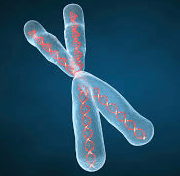
Each identical side of a chromosome is the 
a)
centromere
b)
chromatin
c)
centriole
d)
chromatid
175.
The structure labeled A is a(n)
a)
chromatid
b)
centriole
c)
centromere
d)
chromophere
176.
During what phase of the cell cycle is DNA replicated?
a)
G1 phase
b)
S phase
c)
G2 phase
d)
M phase
177.
During what phase of the cell cycle does the cell grow?
a)
G1 phase
b)
S phase
c)
M phase
d)
Cytokinesis
178.
During what phase of the cell cycle does the cell prepare for mitosis?
a)
G1 phase
b)
S phase
c)
G2 phase
d)
M phase
179.
In which phase does the cell spend most of it's life?
a)
Interphase
b)
Nuclear Division
c)
Telophase
d)
Mitosis
180.
These structures pull the spindle fibers and attached chromosomes to opposite ends of the cell.
a)
Spindle fiber
b)
Centriole
c)
Nucleus
d)
Centromere
181.
prokaryotic cells are divided by which process?
a)
binary fission
b)
both
c)
mitosis
d)
none
182.
Most of a bacterium's DNA is in the form of a single circular chromosome.  Which process would the bacterium go through to reproduce?
a)
binary fission
b)
both
c)
mitosis
d)
none
183.
The cells produced via meiosis are called:
a)
sex cells
b)
somatic cells
c)
body cells
d)
skin cells
184.
Unlike mitosis, meiosis in male mammals results in the formation of
a)
one haploid gamete
b)
three diploid gametes
c)
four diploid gametes
d)
four haploid gametes
185.
The chromosomes that pair up during meiosis, are called __________ chromosomes.  
a)
homozygous 
b)
asexual
c)
homologous
d)
genes
186.
Identify the phase.
a)
Metaphase I
b)
Metaphase II
c)
Prophase I
d)
Anaphase II
187.
How many daughter cells are produced from meiosis ?
a)
10
b)
6
c)
4
d)
2
188.
Name the growth phase of the cell cycle for both Mitosis and Meiosis.
a)
metaphase
b)
telophase
c)
interphase
d)
anaophase
189.
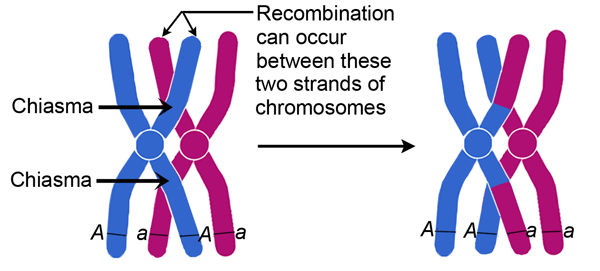
This image shows chromosomes during Prophase 1. Which of the following correctly describes the process shown?
a)
segregation of sister chromatids
b)
condensation and segregation of alleles
c)
mutationin which the DNA content of the gene is altered
d)
crossing - over in which alleles are exchanged
190.
Human eggs and sperm are _____, and each has ____ chromosomes.
a)
diploid, 23
b)
diploid, 46
c)
haploid, 23
d)
haploid, 46
191.

What kind of cells are made in MEIOSIS?

a)

Haploid Gametes

b)

Diploid Somatic Cells

c)

Skin Cells

d)

Liver Cells

192.
The result of meiosis is:
a)
two diploid cells
b)
two haploid cells
c)
four diploid cells
d)
four haploid cells
193.
Photograph of chromosomes grouped in ordered pairs
a)
pedigree
b)
Punnett Square
c)
Venn Diagram
d)
Karyotype
194.
Females have ____ and males have _____ chromosomes.
a)
XX, XY
b)
XY, XX
c)
XX, XX
d)
XY, XY
195.
Chromosomes 1-22 in humans which contain genes for characteristics unrelated to sex.
a)
autosomes
b)
genome
c)
X-linked gene
d)
clone
196.
A homozygous dominant dog with brown fur is crossed with a heterozygous dog with brown fur. What are the percentages of the possible genotypes?
a)
100% BB
b)
75% BB and 25%Bb
c)
50 % BB and 50% Bb
d)
50% Bb and 50% bb
197.
Genotype refers to the ...
a)
physical expression of the genes
b)
the possible combination of alleles in a gene
c)
whether an allele is dominant or recessive
d)
how an organism will appear
198.
One form of a gene is called_______________
a)
a DNA
b)
a Phenotype
c)
a trait
d)
an allele
199.
the condensed form of DNA is called________________
a)
an allele
b)
a gene
c)
a chromosome
d)
a phenotype
200.
What is the percentage of offspring that have green pods?
a)
100%
b)
75%
c)
50%
d)
25%
201.
A homozygous dominant dog with brown fur is crossed with a heterozygous dog with brown fur. What are the percentages of the possible genotypes?
a)
100% BB
b)
75% BB and 25%Bb
c)
50 % BB and 50% Bb
d)
50% Bb and 50% bb
202.
An allele whose trait always shows up in the organism when the allele is present.
a)
recessive allele
b)
dominant allele
c)
hidden allele
d)
present allele
203.
An allele whose trait only shows up when no dominant allele is present.
a)
hidden allele
b)
dominant allele
c)
recessive allele
d)
present allele
204.
one set of instructions for an inherited trait
a)
heredity
b)
allele
c)
trait
d)
gene
205.
an organism's appearance or other detectable characteristic
a)
genotype
b)
phenotype
c)
genetics
d)
heterozygous
206.
genetic makeup
a)
phenotype
b)
genotype
c)
heterzygous
d)
allele
207.
Term for homozygous organisms that display two dominant phenotypes at the same time
a)
codominance
b)
incomplete dominance
c)
multiple alleles
d)
linked genes
208.
W=white hair
w= non-white hair
If you cross a horse with WW and a horse with ww what fraction of the offspring would be expected to have white hair?
a)
none
b)
3/4
c)
1/2
d)
all
209.
If a heterozygous tall pea plant is crossed with a short pea plant, what are the possible genotypes of the future offspring?
a)
100% Tt
b)
50% Tt, 50% tt
c)
75%Tt, 25%tt
d)
25%TT, 50%Tt, 25%tt
210.
In a dihybrid cross
a)
one trait is crossed.
b)
two traits are crossed.
c)
four boxes are needed for the punnett square.
d)
mom's alleles are dominant.
211.
A male beetle has the genotype Ttbb. If this beetle mates with a female with genotype TTBb, what is the chance their offspring will have the genotype TtBb?
a)
12.5%
b)
25%
c)
50%
d)
75%
212.
A vampire bat mom is homozygous dominant for red eyes (RR) and heterozygous for fluffy ears (Ff).
The vampire bat father is homozygous recessive for black eyes (rr) and has fluffy ears.
If some of the vampire bat babies have smooth ears, what percentage of babies will have the same eyes and ears as their mom?
a)
25%
b)
50%
c)
75%
d)
100%
213.
Cross Two Homozygous plants
(
RRYY x rryy)
R = round seeds, r  = wrinkled seeds Y = yellow seeds, y = green seeds
What percent will have Round and Yellow seeds? 
a)
0%
b)
25%
c)
50%
d)
100%