
 Worksheets
States of Matter and Phase Change
Total questions: 13
Worksheet time: 10mins
Name
Class
Date
1.
Particles of a liquid
a)
are tightly packed together and stay in a fixed position.
b)
have no viscosity.
c)
decrease in volume with increasing temperature.
d)
are free to move around one another but still touch.
2.
What term describes a solid changing to a gas?
a)
Deposition
b)
Sublimation
c)
Evaporation
d)
Freezing
3.
What is condensation?
a)
gas to solid
b)
gas to liquid
c)
liquid to solid
d)
solid to liquid
4.

Which state of matter has particles arranged like this?
a)
solid
b)
liquid
c)
gas
5.

Which state of matter has particles arranged like this?
a)
solid
b)
liquid
c)
gas
6.

Which state of matter has particles arranged like this?
a)
solid
b)
liquid
c)
gas
7.
Gas particles moving at high speed collide with a surface whose particles absorbed the kinetic energy of the gas. The gas particles slow down and their attractions pull them closer into a liquid form.
a)
sublimation
b)
freezing
c)
condensation
d)
evaporation
8.
Particles of a liquid are heated which increases their speed of motion. Their attractions are no longer capable of holding them as close together and some particles break free, floating away as a gas.
a)
condensation
b)
sublimation
c)
evaporation
d)
melting
9.
Which statement is true?
a)
The quicker a molecule moves, the colder it is.
b)
The slower a molecule moves, the warmer it is.
c)
The quicker a molecule moves, the warmer it is
d)
The movement on molecule don�t affect its temperature
10.
The movement of heat through a substance is called...
a)
hotness
b)
phase change
c)
sublimation
d)
conduction
11.
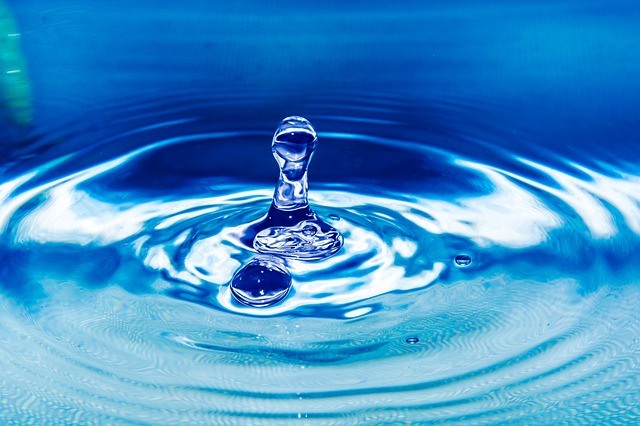
Which is NOT a unique property of water?
a)
Frozen water floats on liquid water.
b)
Water covers most of the Earth’s surface and retains a large amount of heat.
c)
Water molecules stick to each other through hydrogen bonds.
d)
Water cools very rapidly.
12.
Change from Gas to Solid is called........
a)
Sublimation
b)
Deposition
c)
Fusion
d)
condensation
13.
What happens to particles when they are heated?
a)
They speed up and spread out
b)
They slow down and compress
c)
They stop moving
d)
They move closer together and speed up
100 %

