
 Worksheets
AQA GCSE Chemistry History of the Atom
Total questions: 20
Worksheet time: 12mins
Name
Class
Date
1.
The first person to ever talk about an atom was
a)
Democritus
b)
Rutherford
c)
Dalton
d)
Bohr
2.
Who stated that all atoms of the same element are excacty alike?
a)
Democritus
b)
Dalton
c)
Thomson
d)
Borh
3.

What scientist is best known for his "Plum Pudding" model of the atom?
a)
J.J. Tomson
b)
Ernest Rutherford
c)
John Dalton
d)
Democritus
4.

J.J. Thomson provided evidence that an atom...
a)
is the smallest particle of matter
b)
contains negatively charged particles
c)
has an overall negative charge
d)
has an overall positive charge
5.
A tiny but very dense, positively charged portion of the atom that holds most of the atomic mass
a)
Electron Shells
b)
Orbitals
c)
Electron Cloud
d)
Nucleus
6.
Who is credited with the Atomic Theory?
a)
Dalton
b)
Thomson
c)
Bohr
d)
Democritus
7.
Who discovered the neutrally charged subatomic particles?
a)
Dalton
b)
Goldstein
c)
J.J. Thomson
d)
Chadwick
8.
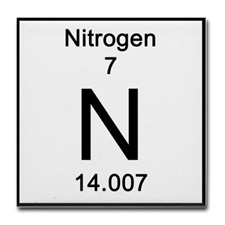
What is the number of protons that the element in this image contain?
a)
14
b)
7
c)
15
d)
18
9.
What particles would you find in the nucleus of an atom?
a)
Protons only
b)
Protons and Neutrons
c)
Neutrons and Electrons
d)
Protons and Electrons
10.

What is the number of protons that the element in this image contain?
a)
14
b)
7
c)
15
d)
18
11.

Which letter represents a proton?
a)
A
b)
B
c)
C
d)
D
12.
Which letter represents a neutron?
a)
A
b)
B
c)
C
d)
D
13.

How many protons does oxygen have?
a)
8
b)
16
c)
15.999
d)
24
14.

How many neutrons does oxygen have?
a)
8
b)
7.999
c)
15.999
d)
24
15.

These particles orbit around the nucleus of an atom. What are they called?
a)
electrons
b)
protons
c)
neutrons
d)
photons
16.

What are the names of the particles in the nucleus?
a)
protons and neutrons
b)
protons and electrons
c)
photons and neutrons
d)
nucleons and protons
17.

What is the atomic number of this nucleus?
a)
1
b)
3
c)
4
d)
7
18.
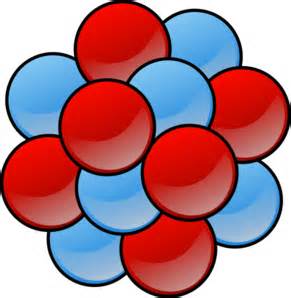
What does the nucleus of an atom contain?
a)
Electrons and neutrons
b)
Protons and neutrons
c)
Neutrinos and positrons
d)
DNA and RN
19.
The positive particles of an atom are _________.
a)
positrons
b)
electrons
c)
protons
d)
neutrons
20.
Which of these is a property of metals?
a)
It's malleable
b)
It can't conduct electricity
c)
They are used in food
d)
It's very brittle
100 %

