wayground logo

Free Printable Worksheets

NEW

Font size

S
M
L
XL
Worksheets

SS6 Review #2

Total questions: 46

Worksheet time: 29mins

Name
Class
Date
1.
How does the Amazon Rainforest get its name?
a)
It is Amaz-ing.
b)
It is named after the Amazon River.
c)
It is in South America.
d)
It is a rainforest.
2.
The rain forest gets larger every year
a)
True
b)
False
3.
What percent of the earth's surface is covered by rainforests?
a)
less than 10%
b)
between 20 & 40%
c)
approximately 50%
d)
more than 75%
4.

What is shown in green?

a)

Amazon rainforest

b)

Andes Mountains

c)

Amazon River

5.

What is shown in blue?

a)

Amazon rainforest

b)

Andes Mountains

c)

Amazon River

6.

What is shown in brown?

a)

Amazon rainforest

b)

Andes Mountains

c)

Amazon River

7.
What is the name of the largest rainforest in the world?
a)
Amazon Prime 
b)
The Amazon Rainforest
c)
The Favela Rainforest
d)
The Rio Rainforest
8.
Which letter on the map represents Brazil?
a)
A
b)
B
c)
C
d)
D
9.
Name the country that built the Panama Canal.
a)
Colombia
b)
Cuba
c)
United States
d)
Panama
10.
Prior to 1903, which country owned the land of Panama?
a)
United States
b)
Panama
c)
Mexico
d)
Colombia
11.
The Panama Canal was completed in this year.
a)
1914
b)
1934
c)
1945
d)
1979
12.
Who gained control of the Panama Canal in 1999?
a)
Panama
b)
Colombia
c)
Cuba
d)
United States
13.
Early on, what caused most workers to want to flee from Panama?
a)
Scary Animals
b)
Diseases
c)
Landslides
d)
Pay
14.
The Aztecs were feared warriors and built a great empire by:
a)
being kind to everyone
b)
conquering many tribes
c)
giving gifts to others
15.
The Aztecs built Chinampas. What were they?
a)
Mexica food
b)
floating gardens
c)
pyramids
16.
The advantage of having their city built on a lake was: 
a)
protection from enemies
b)
a source of water for crops
c)
bathing and washing
d)
all of the above
17.
What did the Spanish want from the Aztecs?
a)
Gold and riches
b)
convert them to Christianity
c)
claim the land for Spain
d)
all of the above
18.
The Spanish were able to defeat the Aztecs due to:
a)
superior weapons
b)
disease
c)
help from a rival tribe
d)
all of the above
19.
The conquered city of Tenochtitlan is now the modern day city of:
a)
Valdez
b)
Cortez City
c)
Mexico City
20.
Who invented the Caravel?
a)
Spanish
b)
Portuguese
c)
Phoenicians
d)
Caravellians
21.
What was the purpose of the square sails on a Caravel?
a)
They caught the wind that blew from behind the ship
b)
They provided stability during heavy storms
c)
They let other ships know who was on board
d)
They helped with steering
22.

Cultural diffusion is best described as...

a)

sharing music from one culture to another

b)

Cultural margarine

c)

the spreading of religion

d)

the spreading of people, products, or ideas from one place to another

23.

What statement is an example of cultural diffusion?

a)

Venezuela has large reserves of oil

b)

Texas has large amounts of oil

c)

students in China learn Chinese in school

d)

young people dance to rock music in Japan

24.
Culture is a set of learned behaviors passed down through generations.
a)
True 
b)
False
25.
Culture is spread by...
a)
Movement of people
b)
TV and Internet
c)
War and conquest
d)
All are correct
26.
The Columbian Exchange refers to:
a)
 the military conflict between Old and New World
b)
the transfer of peoples, plants, and animals between the Old and New World
c)
the control of the Caribbean basin by Christopher Columbus and members of his family
d)
the exchange of scientific knowledge from the New World to the Old. 
27.

The part of the world that was known before the discovery of the Americas is known as:

a)

New World

b)

Old World

c)

New World and Old World

28.
What is the transfer of plants, animals, ideas, and diseases between the "Old" and "New Worlds?
a)
Stock Exchange
b)
Hemisphere Transfer
c)
Columbian Exchange
d)
Foreign Exchange
29.
"Old" World as defined by the history book authors and early explorers in Europe was what three continents?
a)
Africa, Asia, Europe
b)
Antartica, Africa, Australia
30.
"New" World continents from the perspective of the Europeans were
a)
North and South America
b)
Africa and Asia
31.
What is the continent that is red?
a)
North America
b)
Europe
c)
Africa
d)
Australia
32.
What is the continent that is dark green?
a)
North America
b)
South America
c)
Europe
d)
Australia
33.
What is the continent that is yellow?
a)
Africa
b)
Australia
c)
Asia
d)
Antarctica
34.
What is the continent that is light green?
a)
North America
b)
South America
c)
Africa
d)
Australia
35.
The lines on the globe represent lines of...
a)
longitude
b)
latitude
c)
meridians
d)
hemispheres
36.
Look at the map. Which continent is located at 45oN, 120oE?
a)
North America
b)
South America
c)
Africa
d)
Asia
37.
Which side of this map is west?
a)
top
b)
bottom
c)
left
d)
right
38.
This is the name given to a portion of land that is surrounded with water on three sides
a)
isthmus
b)
peninsula
c)
coast 
d)
island
39.
This is the name of land that rises above the surrounding land and has steep sides-
a)
hill
b)
mountain
c)
valley
d)
coast
40.
Cutting down trees to build houses is an example of which?
a)
Location
b)
Place
c)
Human-Environment Interaction
d)
Movement
41.
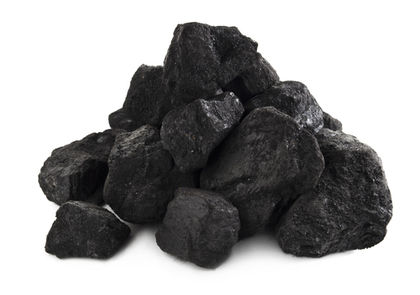
Coal is a __________ energy resource.
a)
Renewable
b)
Nonrenewable
42.

Looking at the graph, what percent of the total energy used in the US in 2009 came from fossil fuels?

a)

83%

b)

37%

c)

25%

d)

46%

43.
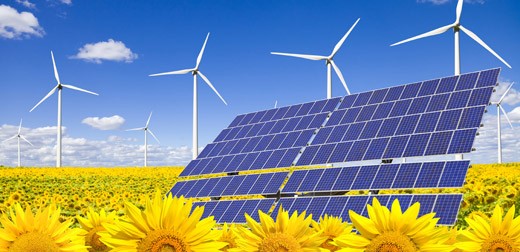
__________ is an energy resource that WILL NOT run out in the next several hundred years.
a)
Renewable Energy Resource
b)
Nonrenewable Energy Resource
44.
Who invented the printing press?
a)
Alexander Graham Bell
b)
Johann Gutenberg
c)
Thomas Farnsworth
d)
Guglielmo Marconi
45.

What invention by Johannes Guttenburg came out in 1450?

a)

Screen Printing

b)

Offset Lithography

c)

Digital Printing

d)

Printing Press

46.
What does 'agriculture' mean?
a)
ranching
b)
farming
c)
space travel