Worksheets
General Music Review
Total questions: 123
Worksheet time: 1hrs 6mins
The four main properties of musical sounds are pitch, dynamics, tone color, and…
Duration
Rhythm
Melody
Medium
The relative highness or lowness of a sound is called
Timbre
Pitch
Dynamics
Amplitude
The ___________ of a sound is decided by the frequency of its vibrations.
Dynamics
Pitch
Timbre
Amplitude
In general, the smaller the vibrating element, the __________ its pitch
Higher
Softer
Lower
Louder
The distance in pitch between any two tones is called
Duration
Dynamic accent
Timbre
Interval
Dynamics in music refers to
The quality that distinguishes musical sounds
The relative highness or lowness we hear in a sound
An exemplary performance
Degrees of loudness and softness
A gradual increase in loudness is known as a
Decresendo
Cresendo
Fortissimo
Dimunuendo
Timbre is synonymous with ____________
Sound
Vibrations
Tone Color
Dynamic Accent
The ___________ is a regular, recurrent pulsation that divides music into equal units of time.
Beat
Sncopation
Tempo
Rhythm
The element of music defined as the ordered flow of music through time, or more specially, the particular arrangement of note lengths in a piece of music, is..
Beat
Tempo
Rhythm
Meter
The organization of beats into regular groups is called..
Meter
Syncopation
Tempo
Dynamics
The first, or stressed, beat of a measure is known as the
Downbeat
Upbeat
Head
Intro
In musical notation, pitches are written on a set of five horizontal lines called a…
Clef
Bar
Staff
Stem
Melody may be defined as:
An emotional focal point in tune
A resting place at the end of a phrase
A series of single notes which add up to a recognizable whole
The organization of beats into regular groupings
A chord is..
A pattern of accents used in music
A combination of three or more tones sounded at once
A series of individual tones heard one after another
A Resting point at the end of a phrase
Tonality is another term for:
Key
Scale
Chromaticism
Modulation
When two of more melodic lines of equal interest are performed simultaneously, the texture is..
Monophonic
Homophonic
Polyphonic
Heterophonic
The texture of a single melodic line without accompaniment is..
Contrapuntal
Homophonic
Monophonic
Polyphonic
Homophonic texture consist of:
A single melodic line without accompaniment
One main melody accompanied by chords
Two or more melodies of relatively equal interest preformed simultaneously
Two or more different versions of the same basic melody performed simultaneously
Three- part form can be represented as:
A B A
A B A'
Statement, contrast, return
All answers are correct
Name the Lines of the Bass clef.
ACEG
EGBDF
FACE
GBDFA
Name the Lines of the Treble Clef.
ACEG
EGBDF
FACE
GBDFA
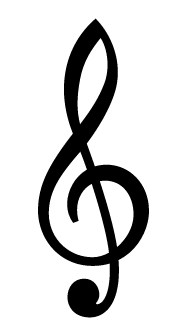
Bass clef is also known as the ___________ clef.
B clef
A clef
G clef
F clef
Treble clef is also known as the _____________ clef.
B clef
A clef
G clef
F clef
How many lines does a staff?
3
4
2
5
What is tempo?
how loud or soft
how fast or slow a song is played
how high or low
how many beats
What is pitch?
how loud or soft
how fast or slow
how high or low a note is
how many beats
Who devised solfege (singing standard syllables for certain notes of the scale (do, re, mi))?
Palestrina
Monteverdi
Guido of Arezzo
Leonardo Da Vinci
What is a musical drama, invented by Monteverdi?
dances
consorts
opera
choirs
Which answer has the musical characteristics of the Baroque era?
energetic and bouncy
complex, flowery, and emotional
flowing and simple
boogie woogie
Which composer was nicknamed the Red Priest?
Vivaldi
Bach
Pachelbell
Handel
What did critics say about Vivaldi's work?
They were boring
They were too long
They were all the same
They were stolen from Bach
Handel's most famous oratorio was called _____.
The Messiah
Kyrie eleison
Four Seasons
Judas Maccabaeus
A piece written for soloists, chorus, and orchestra and based on the Bible is called a _____.
fugue
oratorio
cantata
concerto
During life, how did Bach make his money?
Conducting Orchestras
Playing Organ
Composing Music
As a Servant
Why will we never know what Bach's organ playing was really like?
No one knew how to write music
He didn't actually play the organ
He improvised as he played
He was a recluse so no one heard him play
Choose 2 of the 3 forms from the Classical Era.
Symphony
Cantata
Oratorio
Sonata
Concerto
Which composer was lifelong friends with Mozart and a teacher to Beethoven?
Bach
Berlioz
Haydn
Vivaldi
Where was the center of music in the Classical Era.
London, England
Vienna, Austria
St. Petersburg, Russia
Paris, France
Which Classical composer began composing at age 4?
Mozart
Beethoven
Haydn
Mendelsohn
Which Classical composer only wrote 9 symphonies?
Mozart
Beethoven
Haydn
Brahms
Select 3 of Weber's 4 famous contributions to the orchestra. (check 3 boxes)
Held sectional rehearsals
Arranged the sections on stage
Added the string bass
He removed the oboe
Used a baton to conduct
Romantic composers got their inspiration from...
the rigid structures of the Classic Era.
nature, especially thunderstorms and sunsets.
trying to recreate the Greek muses.
dancing and going to parties.
Which composer "ignored the rules" so much that he had to write notes to convince the orchestra they were "on purpose"?
Chopin
Weber
Berlioz
Paganini
Which composer wanted to strengthen his ring finger but paralyzed it instead?
Strauss
Liszt
Schumann
Chewbacca
Which pianist had published music by age 7, and was a concert pianist at age 8?
Chopin
Weber
Berlioz
Schumann
What 2 inventions from 1900 and 1877 changed music forever?
iPhones and mP3
Morse code and the telephone
piano and guitar
radio and phonograph
Which answer describes Tin Pan music?
emotional and complex
a combination of blues and folk
easy to sing and sentimental
loud and shouting
What was Vaudeville?
stage shows with a variety of acts rotating nightly
a movie where a hero needs to save the day
when white people put on black paint to do a show
a radio show with 2 hosts
How was a song's popularity measured during the Tin Pan Alley Era?
the number of iTunes downloads
the amount of sheet music that was sold
how many people requested it on the radio
how many movies it was featured in
Where did the name Tin Pan Alley come from?
it was so easy to make money that people often dropped change in the streets and someone wrote a song about it
a man whose last name is Tin wrote a song about a pan handler that lived in an alley
the sound of many pianos being played at once sounded like people banging pans
there was a parade and a bunch of famous musicians decided to play tin pans
To whom were the Tin Pan songs marketed?
baseball players
adults
teenagers
artists
Where did jazz start?
New Orleans, Louisiana
Atlanta, Georgia
Kansas City, Missouri
Tupelo, Mississippi
What group made the first jazz recording?
Benny Goodman Quartet
Original Dixieland Jass Band
Glenn Miller Orchestra
Original Morton Band
Which answer has the 4 types of music that blended to make jazz?
pop, rock and roll, and country
sonatas, cantatas, oratorios, and symphonies
spirituals, blues, marches, and ragtime
folk, blues, Irish jigs, and classical western music
What mix of people brought about jazz?
Irish fiddlers, Spanish guitarists, and southern banjo players
There was a conference that specifically brought together clarinet, saxophone, and trumpet players.
Jelly Roll Morton was tired of playing classic music and so he started playing more emotional music.
French, Native Americans, blacks, and Cubans living in an area started merging their musical ideas.
Who had the first integrated band to play professionally?
Jelly Roll Morton
Benny Goodman
Glenn Miller
Count Basie
By the 1940s musician were tired of playing the same old swings songs so the invented a new kind of fast and challenging jazz. What was it called?
Hip-hop
Bebop
Hot Jazz
the J.A.W.
In what U.S. region did country music start?
the South
the North
the Pacific Islands
Canada
What was the FIRST important city of country music? (It lasted about 20 years)
Chattanooga, Tennessee
Atlanta, Georgia
Nashville, Tennessee
Memphis, Tennessee
Who was the first significant African American country singer?
Darius Rucker
Charley Pride
DeFord Bailey
Louis Armstrong
What was the Bakersfield sound?
when country bands first stated using electric guitars
the sound of the band created by Charles Bakersfield
a special kind of amplifier developed in Bakersfield, California
a gritty and rebellious kind of country music developed by Merle Haggard and Buck Owens
What were the traditional instruments of country music?
trumpet, piano, saxophone, string bass
electric guitar, drums, piano
banjo, guitar, fiddle
violin, cello, timpani
What was one of the styles that contributed to Rock 'n' Roll?
Funk
Pop
Rhythm and Blues
Bebop
Rock 'n' Roll features...
high drive and energy
laid back, relaxed philosophy
off-beat rhythms
extremely fast tempos
Choose 2 Rock 'n' Roll performers.
Chuck Berry
Johnny Cash
Bill Haley and the Comets
Susan B. Anthony
Jelly Roll Morton
What movie was the song "Rock Around the Clock" used in?
Jailhouse Rock
Blackboard Jungle
Hello Dolly
La La Land
Rock 'n' Roll was aimed at which demographic?
Adults
1st time home buyers
Teenagers
The Elderly
What young artist added significantly to the popularity of rock and roll, because of his dancing flare and movies?
Elvis Presley
The Platters
The Beatles
Diana Ross
When talking about portions of a performer's range, you use the word ______________. The ranges include low medium and high.
Pitch
Sound
Melody
Register
What is considered valuable and one of the most fundamental musical instruments?
Song
Lyrics
Human Voice
Instrument
What does the acronym SATB mean?
Soprano, Alto, Tempo, Baritone
Solo, Alto, Timbre, Bass
Soprano, Alto, Tenor, Bass
Solo, Alto, Time, Bass
It is the highest of the four standard singing voices. It is considered a female or boy singer with a high pitched voice
Alto
Soprano
Mezzo Soprano
Tenor
A voice, instrument, or part below the highest range and above tenor.
Soprano
Mezzo Soprano
Alto
Tenor
The highest male voice. a singing voice between baritone and alto is _______________.
Tenor
Baritone
Bass
Alto
A voice, instrument, or sound of the lowest range, in particular. It is the lowest adult male singing voice.
Bass
Baritone
Alto
Tenor
All of the following are characteristics about Woodwind instruments except which one?
They use a brass mouthpiece to produce sound.
The air column is controlled by opening or closing small holes along the side of the instrument with fingers or pads activated by a key mechanism.
A reed is used to produce sound .
These instruments produce sound when air is blown through the tube-like body of the instrument.
Which choice describes the Transverse Flute ?
Side Blown
Developed before the 1750's
Woodwind instrument
All of the above
A whistle-type instrument blown from the mouthpiece at the end.
Flute
Clarinet
Recorder
Lute
Instruments with double reeds that buzz against each other. It creates a slightly nasal tone quality. The instruments are known as _____________________.
Buzzy Instruments
Brass Instruments
String Instruments
Keyboard Instruments
Which instrument isn't a buzzy instrument ?


The continuous note that is heard when Bagpipes are played is called a__________________.
Drone
Pipes
Reed
It was invented in the mid-nineteenth century by Adolphe Sax (1814-1894) of Brussels. It uses a single reed mouthpiece.
Clarinet
Flute
Piccolo
Saxophone
Music is written on a Staff of ____________lines and ___________ spaces between.
5;3
4;5
3;5
5; 4
The study of the structure of music.
Music Appreciation
Music History
Music Theory
Music

How many measures are in the image?
Two
Four
Three
Five
Oval-shaped symbols that are placed on the lines and in the spaces are called ______________________. They represent musical sounds known as _____________
Pitch : Notes
Notes : Pitch
Pitch : Pitch
Notes : Notes

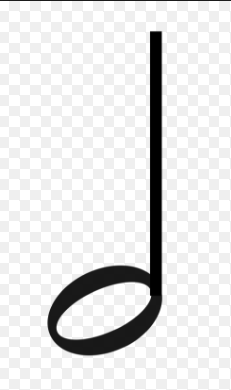
What is the displayed note?
Whole Note
Quarter Note
Half Note
Eighth Note
It is sound organized in a meaningful way, and may include a melody, harmony, rhythm and form.
Sound
Music
Arrangement
Pitch
It is the Tune.It has a shape, moving up or down in ways that capture and hold our attention over a span of time. It has a beginning, a middle, and an end.
Melody
Harmony
Rhythm
Timbre
It is the ordering of music through time.
Rhythm
Melody
Timbre
Harmony
It is the sound created by multiple voices playing or singing together. It enriches the melody by creating a fuller sound than can be produced by a single voice.
Harmony: Supporting
Melody
Rythmn
Timbre
This may be a single soloist or a group of singers singing the same note.
Symphonic
Monophonic
Polyphonic
Unison
The same melody sounds very different when performed by a violin, a clarinet, a guitar, or a human voice.
Timbre: The Color of Music
Harmony
Rhythm
Pitch