
NEW
Font size
S
M
L
XL
 Worksheets
CSP Fall Final Review
Total questions: 60
Worksheet time: 41mins
Name
Class
Date
1.
A single unit of information represented by a 1 or 0...
a)
Binary
b)
Byte
c)
Bit
d)
Bit Rate
2.
Short for picture element; it is a single dot of color.
a)
API
b)
Tree
c)
Node
d)
Pixel
3.
112 is equal to
a)
110
b)
210
c)
310
d)
410
4.
A set of step by step instructions
a)
algorithm
b)
abstraction
c)
iteration
d)
invitation
5.
One time through a series of steps that get repeated is called _________.
a)
iteration
b)
sequencing
c)
processing
d)
execution
6.
Which of the following is an example of abstraction?
a)
Writing a function for code you repeat often
b)
Using logic symbols like < and >
7.
The number system used by computers
a)
binary
b)
decimal
c)
octal
d)
hexadecimal
8.
Why do we use functions?
a)
Make the program easier to read
b)
Avoid retyping the same lines of code
c)
Both
d)
Neither
9.
"George" is a(n)...
a)
String
b)
Integer
c)
Float
d)
Boolean
10.
Which statement will check to see if a is equal to b?
a)
if a == b
b)
if a = b:
c)
if a != b:
d)
if a == b:
11.
Numbers with a decimal point belong to a type called...
a)
boolean
b)
integer
c)
fancy
d)
float
12.
Which of the following can be used to combine two strings to create a new string?
a)
concatenation
b)
algorithm
c)
conditional
d)
variable
13.
What is pseudocode?
a)
simplified programming language
b)
specific syntax in a programmming language
c)
code that can be used on a computer
d)
a debugging toolcode
14.

Which statement best describes this block?
a)
uses a test condition
b)
infinite loop
c)
a set number of iterations
d)
stops scripts
15.
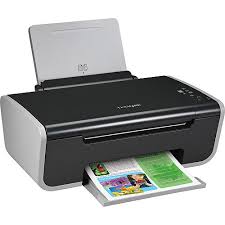
Is this device Input or Output?
Printer
a)
Input
b)
Output
16.
What is an Algorithm?
a)
A chart showing the flow of a series of events
b)
Step-by-step instructions used to solve a problem
c)
A decision arrived at by following instructions
d)
A computer program that follows a chart
17.
Removing details from a solution so it will work for many problems
a)
Decompose
b)
Pattern
c)
Abstraction
d)
Algorithm
18.
A list of steps that allow you to complete a task
a)
Decompose
b)
Pattern
c)
Abstraction
d)
Algorithm
19.
A piece of code that can be called over and over
a)
Algorithm
b)
Parameter
c)
Function
d)
Interface
20.
Finding and fixing problems in code
a)
Abstraction
b)
Decompose
c)
Programming
d)
Debugging
21.
Extra bits of information that you can pass into a function to customize it
a)
Parameters
b)
Data
c)
Function codes
d)
Computations
22.
In the context of writing code, what is a condition?
a)
Something you test in your code that ends up being true or false
b)
The order in which you write your commands
c)
It tells you whether or not the code will run
d)
It is an action that will only run when the code has a function
23.
Why would I want to use conditional code (an if / else statement, for example) when writing my code?
a)
If I have multiple steps that I want to condense into something smaller and more manageable
b)
If the situation I am coding for is constantly changing; the code will be successful no matter how the situation changes
c)
If I want something to repeat over and over without me having to recode it
d)
If I have a bug in the code and I want something to find it for me
24.
Performing an action depending on IF a criteria is met is called a
a)
sequence
b)
statement
c)
loop
d)
condition
25.

What in this picture is the condition?
a)
When flag clicked
b)
Touching paddle
c)
Forever if
d)
Move 5 steps
26.

What would the sprite do if touching the mouse pointer?
a)
Change the color of the sprite.
b)
Change the brightness of the sprite.
c)
Make the Sprite clickable.
d)
Make the sprite bigger.
27.
Conditionals are used when computers need to make _____________.
a)
decisions
b)
a cake
c)
dinner
d)
a friend
28.
Describe why a variable is being used in a program.
a)
Event
b)
Handler
c)
Encapsulation
d)
Variable roles
29.
Part of a program that causes an error or undesired output.
a)
Iteration
b)
Bug
c)
Debugging
d)
Execute
30.
The process of figuring out why code doesn't behave as expected and eliminating bugs to make it work as desired.
a)
Iteration
b)
Bug
c)
Debugging
d)
Execute
31.
A “trigger” from the user or from a program that causes a specific part of the program to execute.
a)
Event
b)
Handler
c)
Encapsulation
d)
Variable roles
32.
Evaluates to either true or false; used in the conditional of an if-structure.
a)
Boolean Expression
b)
Execute
c)
Central Processing Unit Core
d)
Integrated Development Environment
33.
Which of the following is an aspect of SCRUM?
a)
Product Backlog
b)
Product Description
c)
Product Flow Diagram
d)
Agile Flow Diagram
34.
Which of these is NOT a difference between the Waterfall and AGILE design methodologies?
a)
Testing occurs at the end vs. throughout the project
b)
All user requirements are generally gathered at the start vs. throughout
c)
Uses large teams vs. smaller teams
d)
Better for large vs small projects
35.
In the AGILE design methodology, how long does a sprint usually last?
a)
3-4 months
b)
6-8 months
c)
1-4 weeks
d)
9-12 months
36.
Convert 65 to binary
a)
01100001
b)
00100001
c)
01000001
d)
00100101
37.
Convert 37 to binary
a)
00100101
b)
00100011
c)
00100111
d)
01000101
38.
Convert 00010001 to decimal
a)
17
b)
27
c)
37
d)
47
39.
Convert 00100100 to decimal
a)
26
b)
36
c)
46
d)
56
40.
Which of the following is an example of thinking computationally?
a)
Planning out your route when going to meet a friend
b)
When going to meet a friend, wandering around until you find them
c)
When going to meet a friend, asking a parent to plan your route for you
41.
What is Computational thinking?
a)
•– the use of computers to solve problems.
b)
representing 'real world' problems in a computer using variables and symbols and removing unnecessary elements from the problem
c)
•breaking down a large problem into smaller sub-problems.
d)
•identifying the steps involved in solving a problem.
42.
Which of the following is NOT a computational thinking technique?
a)
Decomposition
b)
Abstraction
c)
Coding
43.
Why do we need to think computationally?
a)
To help us program
b)
To help us solve complex problems more easily
c)
To help us to think like a computer
44.
What is Abstraction?
a)
•– the use of computers to solve problems.
b)
representing 'real world' problems in a computer using variables and symbols and removing unnecessary elements from the problem
c)
•breaking down a large problem into smaller sub-problems.
d)
•identifying the steps involved in solving a problem.
45.
Which is NOT a method of abstraction?
a)
Separation of concerns
b)
Removing details
c)
Focusing on individual problems
d)
Defining a strategy to handle complexity
46.
Which of the following is at the lowest level of the ladder of abstraction?
a)
Voltage and current
b)
Physics
c)
Bytes and bits
47.
Which of the following is the lowest level of abstraction most coders work with?
a)
Application software
b)
Low-level languages (Assembler, C)
c)
High-level languages
48.
Which level of abstraction does a computer processor understand?
a)
Bytes and bits
b)
Low level languages
c)
High-level lenguages
d)
Voltage and current
49.
Which data type is used to store:
100
100
a)
Integer
b)
Double
c)
Boolean
d)
String
50.
Which data type is used to store:
"Miss Read"
"Miss Read"
a)
Integer
b)
Double
c)
Boolean
d)
String
51.
Which data type is used to store:
99.10
99.10
a)
Integer
b)
Float
c)
String
d)
Boolean
52.
Which data type is used to store:
TRUE
TRUE
a)
Boolean
b)
Double
c)
String
d)
Integer
53.
Stores a list of values built up over time and remembers separate individual values.
a)
Accumulator Variable
b)
Aggregator Variable
c)
Global Variable
d)
Boolean Expression
54.
Maintains a running total.
a)
Aggregator Variable
b)
Best-so-far Variable
c)
Accumulator Variable
d)
Algorithm
55.
Keeps track of a record best or worst and updates when a new record best or worst has been reached.
a)
Debugging
b)
Fixed Variable
c)
Best-so-far Variable
d)
Memory
56.
Stores a value that will not change over the course of the entire program.
a)
Controlled Variable
b)
Walker Variable
c)
Fixed Variable
d)
Stepper Variable
57.
Stores user input or stores information about a program’s state that changes unpredictably.
a)
Stepper Variable
b)
Waterfall Variable
c)
Most Recent Variable
d)
Fixed Variable
58.
Stores whether a condition has been true yet; reset before iteration and possibly raised during iteration.
a)
Fixed Variable
b)
Most Recent Variable
c)
One-way Flag Variable
d)
Waterfall Variable
59.
A variable that counts in an arithmetic sequence, usually counting by ones starting at 0 or 1.
a)
Stepper Variable
b)
Variable Roles
c)
Walker Variable
d)
Waterfall Design
60.
Stores one item from a list at a time during iteration.
a)
One- Way Variable
b)
Walker Variable
c)
Fixed Variable
d)
Waterfall Variable
Reset

