Wayground logo

Free Printable Worksheets

Font size

S
M
L
XL
Worksheets

Fossils 3rd Grade

Total questions: 24

Worksheet time: 18mins

Name
Class
Date
1.
People who study fossils are called ____.
a)
meterologists
b)
fossilologists
c)
paleontologists
d)
fossil hunters
2.
In which kind of rock do we usually find a fossil?
a)
sedimentary  rock
b)
metamorphic rock
c)
igneous rock
3.
In order for a fossil to form, which of the following events must happen FIRST?
a)
Slowly, minerals in the water replace the bone.
b)
Sediment covers the bone.
c)
An animal dies.
d)
The bone is no longer a bone, but a rock copy.
4.
The hardened remains of a living thing that died long ago.
a)
extinct
b)
cast
c)
fossil
d)
bone
5.

Which type of fossil would look just like an actual body part of a once-living thing?

a)

a cast

b)

an imprint

c)

a mineral

d)

a footprint

6.
Which is an imprint fossil?
a)
bone
b)
a cast
c)
petrified wood
d)
an animal track
7.

A fossilized animal had a mouth full of sharp, pointed teeth. What can you infer about the animal?

a)

The animal ate fruits and vegetables.

b)

The animal is closely related to a shark.

c)

The animal did not live on land.

d)

The animal ate meat.

8.
A fossil is...
a)
a hole in sedimentary rock.
b)
the body of a dinosaur.
c)
the remains or traces of an organism that lived long ago.
d)
rock that resembles a dinosaur or sea creature.
9.
Which of the following steps are in order?
a)
Sediment covers a clam.  The soft part of the clam decays.  Its shell leaves a clam-shaped hole in the sedimentary rock called a mold.  The mold fills with minerals.
b)
The mold fills with minerals.  Sediment covers a clam.  Its shell leaves a clam-shaped hole in the sedimentary rock called a mold.The soft part of the clam decays.  
c)
The mold fills with minerals.  Sediment covers a clam.  The soft part of the clam decays.  Its shell leaves a clam-shaped hole in the sedimentary rock called a mold.
d)
Its shell leaves a clam-shaped hole in the sedimentary rock called a mold.  The mold fills with minerals. Sediment covers a clam.  The soft part of the clam decays.
10.
What is the name of the wood of a tree that has been replaced by rock?
a)
sedimentary
b)
trace
c)
petrified
d)
Mr. Wood
11.

this type of fossil is a mark or cavity (hole) made in sediment in the shape of a shell or other body

a)

cast

b)

trace

c)

petrified

d)

mold

12.

This type of fossil is a mold filled with sediment that creates a solid copy of an organism.

a)

mold

b)

petrified

c)

cast

d)

trace

13.

This material does an excellent job of preserving insect remains.

a)

cast

b)

amber

c)

mold

d)

carbon film

14.

A fossil made inside a mold when minerals seeped in and hardens into shapes of the mold.

a)

glue

b)

resin fossil

c)

sap

d)

cast fossil

15.
Why do bones and teeth remain as part of some fossils?
a)
they are white
b)
bones are large
c)
the parts are hard 
d)
bones decay easily
16.
Which animal part would MOST LIKELY form a fossil?
a)
fur
b)
lung
c)
bone
d)
muscle
17.
Fossils of fish are found under land where cows now live. What does this tell you?
a)
the fish were dropped their by flying birds
b)
this land was once under the ocean
c)
farmers fed the fish to the cows
d)
fish used to live on land
18.
Why are there more animal fossils than plant fossils?
a)
Animals eat plants.
b)
Plants are smaller than animals.
c)
Plants have softer body parts than animals. 
d)
There were more ancient animals than ancient plants.
19.
What are the remains of once living things called?
a)
amber
b)
fossils
c)
species
d)
extinct
20.
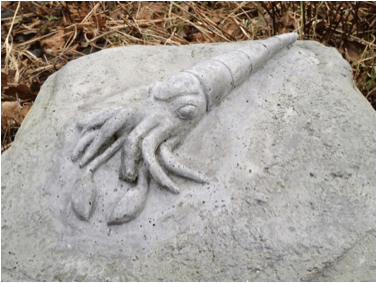
Which type of fossil is pictured?
a)
Mold
b)
Cast
c)
Trace
d)
Body
21.
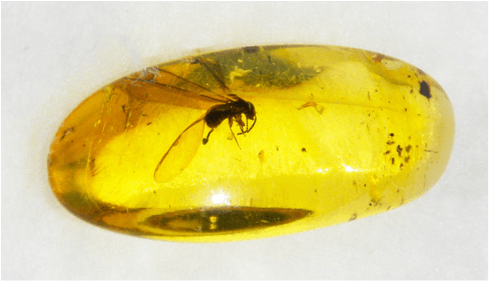
Which fossil is pictured?
a)
Mold
b)
Cast
c)
Body
d)
Trace
22.
Fossils form ....
a)
quickly
b)
over a few years
c)
over a few months
d)
over thousands of years.
23.
Fossils give clues about the past.
a)
True
b)
False
24.

The remains or trace of a living thing that lived long ago is called....

a)

cast

b)

mold

c)

preserved parts

d)

fossil