Wayground logo

Free Printable Worksheets

Font size

S
M
L
XL
Worksheets

Introduction to Business Pre-Test

Total questions: 54

Worksheet time: 1hrs 4mins

Name
Class
Date
1.

What type of information should you include on a resume?

a)

Your social security number

b)

Your family information

c)

Your contact information, job skills, experience, andwork history

d)

Your family tree

2.
A tool that provides information about you to a potential employer.
a)
Career Portfolio
b)
Resume
c)
References
d)
Cover Letter
3.

individuals who can attest to the applicant’s abilities at work, school and in character

a)

Friends

b)

Contact Information

c)

Parents

d)

References

4.

A face-to-face meeting between the employer and the applicant

a)

lunch date

b)

interview

c)

resume

d)

employment

5.
How many sheets of paper should your resume take?
a)
front and back
b)
1/2 sheet
c)
one page
d)
two pages
6.
Questions about age, race, marital status and health are ____.
a)
always asked
b)
politically correct
c)
to be answered
d)
illegal
7.

Degree obtained through a community or Jr. college- usually takes 2 years

a)

Bachelor's degree

b)

Doctorate degree

c)

Specialist's degree

d)

Associate's degree

8.

After high school is considered

a)

graduation

b)

secondary

c)

presecondary

d)

postsecondary

9.
The part of a letter that greets the person you are writing to is called the:
a)
Solution
b)
Greeting
c)
Opener
d)
Salutation
10.
When you sign a letter, it can only be in what 2 colors of ink?
a)
Red or Black
b)
Blue or Red
c)
Black or Blue
d)
Pencil or Blank Ink
11.

The part of the letter that begins with Dear is called the:

a)

Greeting

b)

Closing

c)

Body

12.

The purpose of the business letter is included in the _____.

a)

Body

b)

Greeting

c)

Closing

13.

What type of computer program would most likely be used to type a letter?

a)

spreadsheet

b)

database

c)

word processing

d)

presentation

14.
The Financial Plan is the most essential part of your Business Plan. It shows investors the time frames you have scheduled to make profits. 
a)
True
b)
False
15.
Short-term Forecast:  Projects either the current year or a rolling 12-month period by month. This type of forecast should be updated at least monthly and become the main planning and monitoring vehicle. 
a)
True
b)
False
16.
Budget:  Translates goals into detailed actions and interim targets. A budget should provide details, such as specific staffing plans and line-item expenditures
a)
True
b)
False
17.
Strategic Forecast:  Incorporates the strategic goals of the company into the projections. For startup companies, the initial Business Plan should include a month-by-month projection for the first year, followed by annual projections for a minimum of three years. 
a)
True
b)
False
18.
Business Plans are critical for the success of a company. 
a)
True
b)
False
19.
Different businesses will require different types of Business Plans. 
a)
True
b)
False
20.
The business plan may be read by employees, investors, bankers, venture capitalists, suppliers, customers, advisors, and consultants.
a)
True
b)
False
21.
An entrepreneur is someone 
a)
Someone who works for a new business
b)
Someone who starts a new business
c)
Someone who takes over an existing business
d)
Someone who does not want to work
22.
Most entrepreneurs start what type of business?
a)
Partnership
b)
Corporation
c)
Sole Proprietorship
23.
An entrepreneur must know...
a)
Only the parts of the business they like
b)
No parts of the business management
c)
all parts of business:  finance, marketing, etc.
24.
An entrepreneur must be...
a)
disorganized
b)
organized
c)
lazy
25.
One benefit of starting a corporation is...
a)
You are the only one responsible
b)
There is limited liability
c)
You have to come up with ALL of the start money
26.
A negative (drawback) of starting a sole proprietorship is...
a)
You have to raise ALL of the money yourself
b)
You make all of the decisions
c)
All of the profits belong to you
27.
plastic card with a specific amount of credit
a)
credit limit
b)
credit card
c)
debit card
28.
smallest amount you can pay
a)
minimum payment
b)
due date
c)
debit card
29.
plastic card that takes money from your bank account
a)
credit card
b)
debit card
c)
due date
30.
last day to make a payment
a)
minimum payment
b)
due date
c)
credit limit
31.
percent of your balance that they add to your bill
a)
interest
b)
annual
c)
balance transfer
32.
money they charge for the using the card
a)
credit
b)
fee
c)
debit
33.
when you don't pay your bill on time
a)
annual
b)
balance
c)
late payment
34.

Most credit cards have a limit.

a)

True

b)

False

35.

Which of the following are TRUE about gross income and net income?

a)

Gross income and net income are the same

b)

Net income is sometimes called "take home pay"

c)

Gross income is the total amount earned before deductions
d)

Net income is the total amount earned before deductions

36.

Which of the following are TRUE about gross income and net income?

a)

Gross income and net income are the same

b)

Net income is sometimes called "take home pay"

c)

Gross income is the total amount earned before deductions

d)

Net income is the total amount earned before deductions

37.

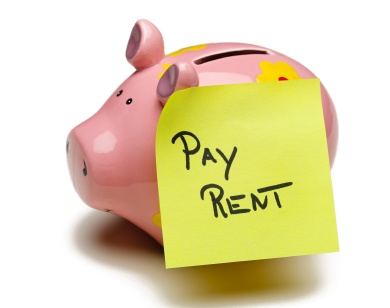
According to a rule of thumb, rent shouldn't take up more than ___ % of your take-home pay.

a)

7-12%

b)

10-15%

c)

15-20%

d)

25-30%

38.

What is a deductible?

a)

The cost you and your insurance share

b)

The amount your insurance pays before you pay

c)

The discount you get on your health insurance every year

d)

The amount you pay before your insurance begins to pay

39.
What is disposable income?
a)
Money that you have left to spend or save after taxes and other required deductions are taken
b)
Income that you are free to spend on whatever you would like
c)
Money left in your bank account
40.
What is a budget?
a)
Set of goals for spending, saving, and investing the money you receive.
b)
Spending and saving plan based on your expected income and expenses. 
c)
Money that you should spend on "fun" activities.
41.
What is an overdraft?
a)
Written order to a bank to pay the amount stated to the person.
b)
Writing a check hoping to deposit money to cover them before they clear.
c)
A check that is written for more money than your bank account contains.
42.

This is what happens if you spend more than you save:

a)

you have extra savings

b)

you can invest the money

c)

you have debt

d)

you can open a C.D.

43.

When you buy something at the store, you must pay:

a)

income tax

b)

social security tax

c)

toll

d)

sales tax

44.

What are enforceable rules of conduct in society?

a)

Codes

b)

Laws

c)

Procedures

d)

Rules

45.

What are the first ten amendments to the Constitution?

a)

Bill of Rights

b)

U.S. Constitution

c)

Articles of Confederation

d)

Declaration of Indpendence

46.

This is when someone promises not to do something.

a)

Forebearance

b)

Consideration

c)

Gift

d)

Nominal Consideration

47.

A nonviolent illegal act that involves business is called:

a)

Petty theft

b)

Felony

c)

White-collar crime

d)

Larceny

48.

Embezzlement means that someone has_____.

a)

Taken something without permission.

b)

Driven a car without the owner’s permission.

c)

Made international telephone call using someone else’s permission.

d)

Converted funds or property without the legal owner’s permission.

49.

Determine the tax for the filing status Single with a gross income of $57,723.

a)

$10,763

b)

$10,775

c)

$7,856

d)

$10,788

50.

Calculate the tax for a gross income of $11,000.

a)

$1,100

b)

$1,145

c)

$0

d)

$5,975

51.

Calculate the tax for a gross income of $38,750

a)

$5,240

b)

$1,145

c)

$11,450

d)

$6,957.50

52.

Gordon's gross pay for the week was $423.84. He had the following deductions: federal tax $62.05, state tax $21.56, medical insurance $13.10, and dental insurance $5.69. Social Security tax $26.28 and Medicare tax $6.15. What was his net pay for the week?

a)

$557.85

b)

$423.84

c)

$134.01

d)

$289.01

53.

Gordon makes an hourly wage of $8.15. For hours worked over 40, he is paid at time and a half. Last week, he worked 48 hours. What is his weekly gross pay?

a)

$326

b)

$97.84

c)

$423.84

d)

$391.20

54.

Brenda is taxed at 21% tax rate for her federal taxes. Last year, she reduced her taxable income by contributing $325 per biweekly paycheck to her tax deferred retirement account and $52 per biweekly paycheck to her FSA. Her gross biweekly pay is $1,800. How much did she reduce her annual federal taxes by?

a)

$79.17

b)

$378

c)

$2,058.42

d)

$377