
 Worksheets
Atomic Structure & Periodic Table
Total questions: 31
Worksheet time: 26mins
Name
Class
Date
1.
The positive particles of an atom are
a)
electrons
b)
positrons
c)
neutrons
d)
protons
2.
Particles in an atom that are neutral and have no charge are
a)
negatrons
b)
electrons
c)
neutrons
d)
protons
3.
An atoms overall charge is
a)
positive
b)
depends on its mood
c)
neutral
d)
negative
4.
The smallest particle of any particular type of matter is known by which of the following terms?
a)
Compound
b)
Atom
c)
Chemical
d)
Element
5.
all matter is made of what
a)
energy
b)
atoms
c)
electrons
d)
compounds
6.
If an atom has 3 electrons, how many protons does it have?
a)
1
b)
2
c)
4
d)
3
7.
The subatomic particle with a negative charge is the
a)
electron
b)
proton
c)
neutron
d)
nucleus
8.
If the number of protons equal the number of _____, the atom will have no charge
a)
protons
b)
neutrons
c)
electrons
d)
nucleus
9.
What is the atomic number?
a)
the number of protons
b)
the number of protons and neutrons
c)
the number of neutrons
d)
the number of protons and electrons
10.
What is the mass number?
a)
the number of protons
b)
the number of protons and neutrons
c)
the number of neutrons
d)
the number of protons and electrons
11.
Ions are:
a)
atoms with a positive or negative charge
b)
atoms with no charge
c)
atoms with ONLY a positive charge
d)
atoms with ONLY a negative charge
12.
An atom with an unequal number of protons and electrons is said to have (a) ___.
a)
no charge
b)
balance
c)
charge
d)
unbalance
13.

How many neutrons does the isotope of lithium have?
a)
8
b)
3
c)
4
d)
5
14.
Two atoms of the same element but with different mass numbers are called________
a)
electrons
b)
isotopes
c)
variables
d)
electron cloud
15.

How many protons does this isotope of titanium have?
a)
48
b)
22
c)
26
d)
70
16.
a)
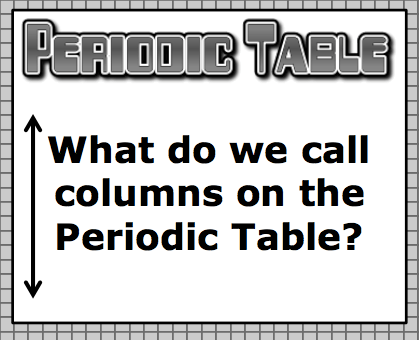
Periods
b)
Groups
17.
a)
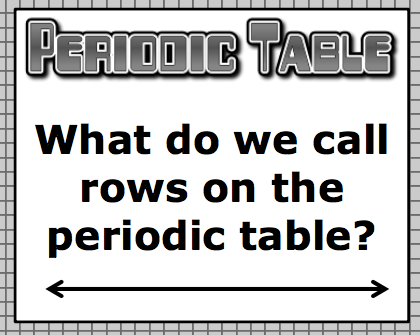
Periods
b)
Groups
18.
In the modern periodic table elements are arranged by:
a)
atomic mass
b)
atomic number
c)
valence electrons
d)
number of isotopes
19.
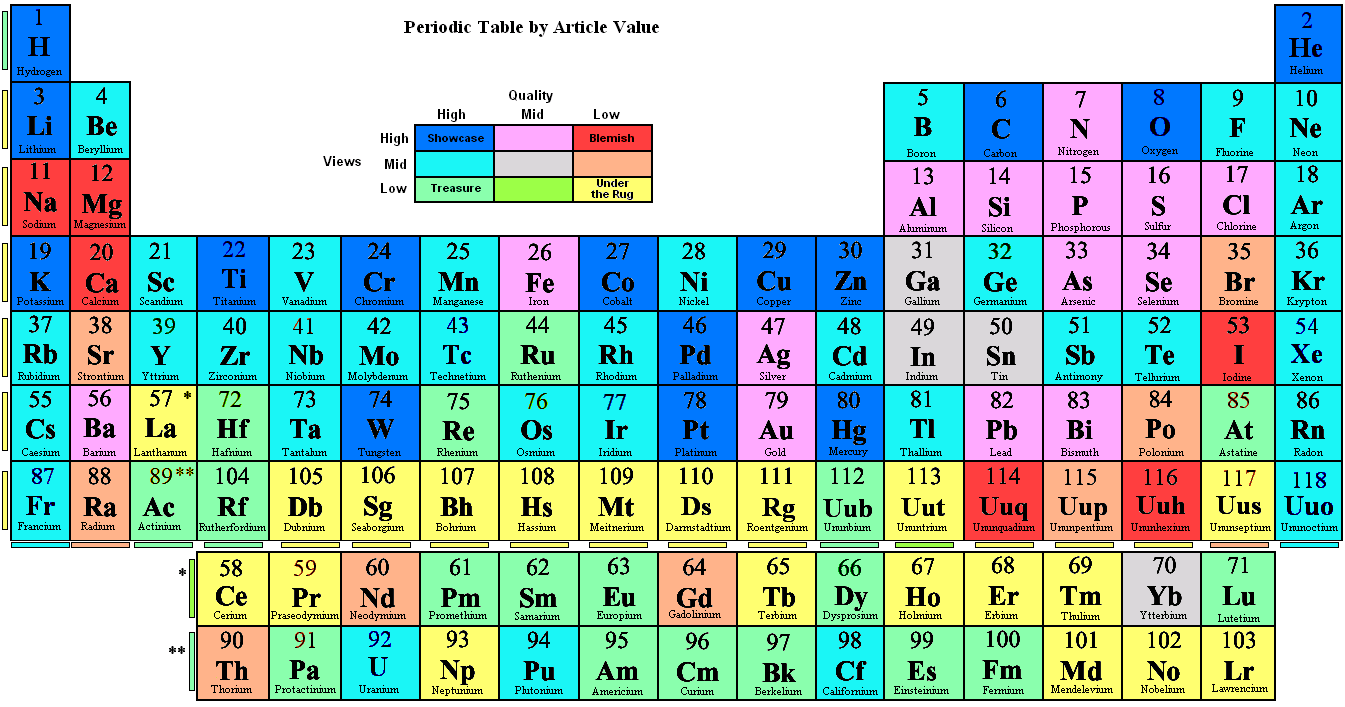
Beryllium is in group number______.
a)
Group 2
b)
Group 3
c)
Group 4
d)
Group 7
20.
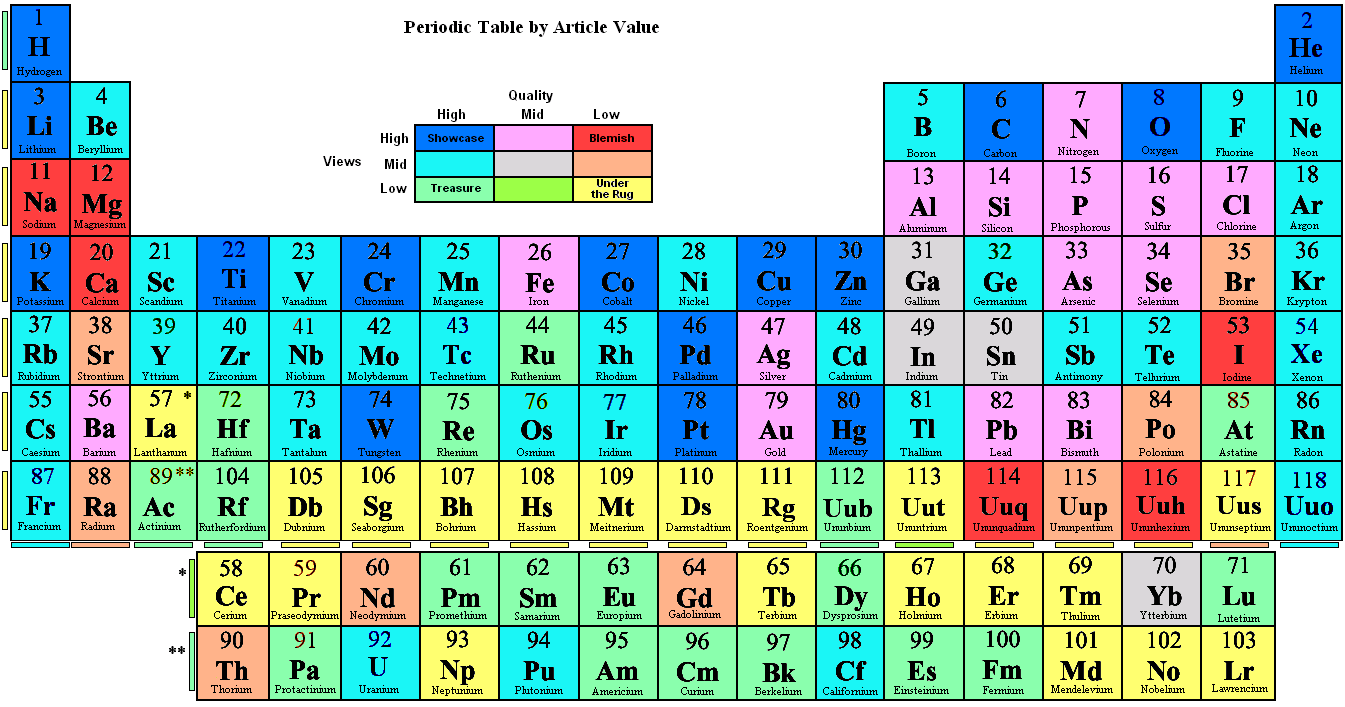
The period for Bromine is ___________.
a)
3
b)
2
c)
4
21.
The periodic table has __ periods.
a)
18
b)
8
c)
2
d)
7
22.
An element's identity is determined by the number of
a)
electrons.
b)
protons.
c)
neutrons.
d)
valence.
23.
Elements in the same ________ are more chemically similar.
a)
group
b)
period
c)
club
d)
table
24.
What period and group is Silver (Ag)?
a)
Period 2, Group 1
b)
Period 3, Group 16
c)
Period 5, Group 11
d)
Period 2, 14
25.

How many protons are in Beryllium?
a)
4
b)
9
c)
5
d)
2
26.
Why is water NOT on the periodic table?
a)
It is naturally occuring
b)
It is a compound, not an element
c)
It exists as a solid, a liquid, and a gas
d)
Its chemical formula doesn't fit
27.
As you move from left to right across the periodic table, the atomic number increases.
a)
True
b)
False
28.
The chemical symbol for each element consists of the first letter (or two) of the element's name.
a)
True
b)
False
29.
What is the chemical symbol for boron?
a)
B
b)
Bo
c)
Bn
d)
W
30.
Each element is unique based on its number of protons, also known as the...
a)
atomic mass
b)
valence number
c)
atomic symbol
d)
atomic number
31.
The chemical symbol of an element is made up of either one capital letter or one capital letter and one lowercase letter.
a)
True
b)
False
100 %

