wayground logo

Free Printable Worksheets

Font size

S
M
L
XL
Worksheets

Keystone Biology Game Pt. 2

Total questions: 219

Worksheet time: 3hrs 41mins

Name
Class
Date
1.
Among the following, the term that includes the others is ___.
a)
interphase
b)
nuclear division
c)
mitosis
d)
cell cycle
2.
The longest phase of the cell cycle 
a)
prophase
b)
interphase
c)
metaphase
d)
mitosis
3.
Identify the phase of mitosis
a)
prophase
b)
metaphase
c)
anaphase
d)
telophase
4.
Which phase comes NEXT?
a)
prophase
b)
metaphase
c)
anaphase
d)
telophase
5.
the phase of mitosis in which the sister chromatids separate (pull apart) from each other
a)
prophase
b)
metaphase
c)
anaphase
d)
telophase
6.
Which is Metaphase?
a)
A
b)
E
c)
C
d)
F
7.
In what stage are chromosomes separated and moved to opposite poles?
a)
prophase
b)
metaphase
c)
anaphase
d)
telophase
8.
The point on the chromosome where the two chromatids are held together is the
a)
centromere
b)
centriole
c)
chromosome
d)
chromatid
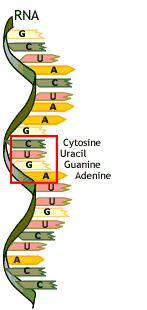
9.
The structure of coiled DNA and proteins that forms in the cells nucleus prior to mitosis is 
a)
centromere
b)
centriole
c)
chromosome
d)
chromatid
10.
A jelly-like substance found inside a cell surrounding its organelles is
a)
cytokenisis
b)
cytoplasm
c)
mitosis
d)
epithelial
11.
Contains the genetic material and serves as the control center of the cell
a)
nuclear membrane
b)
spindle fibers
c)
nucleus
d)
telophase
12.
What is this phase of mitosis?
a)
prophase
b)
metaphase
c)
anaphase
d)
telophase
13.
Put the stages of mitosis in the correct order.
a)
prophase - metaphase - anaphase - telophase
b)
metaphase - anaphase - prophase - telophase
c)
anaphase - prophase - telophase - metaphase
d)
telophase - metaphase - prophase - anaphase
14.
Chromosomes are made up of two identical sister _____________.
a)
chloroplasts
b)
nuclei
c)
chromatids 
d)
gens
15.
During which stage of the cell cycle does the cell spend a majority of its time?
a)
Prophase
b)
Interphase
c)
Metaphase
d)
Cytokinesis
16.
Which of the following describes the purpose of the mitosis cell cycle?
a)
To make more of the same cells.
b)
For growth and repair.
c)
To prevent the cell from becoming too large.
d)
All of the above.
17.
How does cytokinesis differ in plant and animal cells?
a)
Cytokinesis only takes place in animal cells.
b)
Cytokinesis only takes place in plant cells.
c)
Plant cells form a cell plate, animal cells form a cleavage furrow.
d)
Animal cells form a cell plate, plant cells form a cleavage furrow.
18.
Which cell structure produces the spindle fibers?
a)
Centromeres
b)
Centrioles
c)
Chromatids
d)
Ribosomes
19.
What is the result of mitosis?
a)
1 cell
b)
2 genetically identical cells
c)
2 genetically different cells
d)
4 genetically identical cells
20.

Identify the correct order in which breast cancer develops.

a)

mutation of normal cells – tumor growth – invasion of tissues – metastasis – metastatic tumor

b)

invasion of tissues – metastasis – mutation of normal cells – tumor growth – metastatic tumor

c)

metastasis – mutation of normal cells – invasion of tumors – metastatic tumor – tumor growth

21.

What are internal and external regulators?

a)

lipids

b)

carbohydrates

c)

proteins

22.

Which of the following is a good reason for why tobacco smoke is considered a carcinogen?

a)

It causes mutations leading to cancer.

b)

It causes mutations leading to apoptosis.

c)

It causes mutations leading to inhibition of cell division.

23.

Select the appropriate statement about healing wounds.

a)

Cell growth increases both toward the beginning and the end of the healing process.

b)

Cell growth increases toward the beginning of the healing process and slows down toward the end of healing process

c)

Cell growth slows down toward the beginning of the healing process and increases toward the end of healing process.

24.

Which one of these is characteristic of cancer cells?

a)

They undergo apoptosis.

b)

They exhibit metastasis.

c)

They respond to growth inhibitors.

25.

What must a cell do first to divide successfully?

a)

duplicate its genetic information

b)

increase its ratio of surface area to volume

c)

increase its number of chromosomes

26.

Which of the following is an effect of a decrease in the surface-area-to-volume ratio of a cell?

a)

Genes mutate, resulting in a cancerous cell

b)

Waste removal becomes slower.

c)

The cell cycle speeds up.

27.

Which is a function of cyclins?

a)

Cyclins are carbohydrates that regulate DNA replication during the mitosis phase of the cell cycle.

b)

Cyclins are glycoproteins that repair DNA in the beginning of cell cycle.

c)

Cyclins are proteins that regulate when and how often a cell divides.

28.

Bacteria are single-celled organisms that perform all life functions within one cell. Therefore, bacteria are:

a)

multicellular

b)

unicellular

c)

polycellular

d)

tricellular

29.

Animals need many different types of cells to carry out our life processes. Therefore, we are _______________ organisms.

a)

unicellular

b)

multicellular

c)

singe-celled

30.

Growing from one single cell to trillions of specialized cells that perform different functions is a process that is regulated by:

a)

DNA

b)

mitochondria

c)

ATP

d)

carbohydrates

31.

Cells that have the ability to become any type of specialized cell in the body are called:

a)

cell membranes

b)

stem cells

c)

nerve cells

d)

cardiac cells

32.

The process by which information from a gene is used to make the structures of a cell is called:

a)

gene expression

b)

translation

c)

energy production

d)

cell differentiation

33.

Chromosomes are made up of:

a)

DNA and proteins

b)

carbohydrates and lipids

c)

RNA and ribosomes

34.

Nerve cells and lung cells have the same DNA, but they are different from each other because they express different genes.

a)

True

b)

False

35.

The two proteins that enable muscle cells to contract are:

a)

actin and myosin

b)

natural and artificial

c)

protease and promyosin

d)

amylase and gyrase

36.

Environmental factors can also influence gene expression and cell differentiation. In Himalayan rabbits, genes that code for fur color are turned on and off depending on ___________________.

a)

food supply

b)

temperature

c)

mating patterns

d)

hunger

37.

_____________ controls the way cells function.

a)

DNA

b)

ribosome synthesis

c)

mitochondrial energy production

d)

enzyme activity

38.

In order for cells to make proteins, the DNA code is transcribed into ______, which is then translated by ribosomes within the cell.

a)

mRNA

b)

mitochondria

c)

lipids

d)

channels

39.

Wolves in Alaska have white fur during the cold, snowy winter months but brown fur in the warmer dry summers. What is the likely reason for this?

a)

Expression of genes that regulate fur color in Alaskan wolves is influenced by environmental factors such as temperature.

b)

Alaskan wolves are healthier in the winter.

c)

The fur appears brown because the wolves roll in brown dirt during the summer months.

d)

The reflection of sunlight in the summer causes the wolves' fur to appear brown.

40.

How does gene expression lead to protein synthesis within the cell?

a)

The shape of the DNA in the expressed gene transforms into a protein.

b)

The DNA of expressed genes is transcribed into mRNA, which is then translated by ribosomes into a chain of amino acids, creating the protein encoded by DNA.

c)

Glucose taken up by the cell provides the energy for gene expression.

d)

Protein synthesis occurs randomly, independent of gene expression.

41.

Genes are sequences of DNA found on chromosomes. Therefore the building blocks of genes are:

a)

lipids

b)

carbohydrates

c)

nucleic acids

d)

amino acids

42.
The cells produced via meiosis are called:
a)
sex cells
b)
somatic cells
c)
body cells
d)
skin cells
43.
Unlike mitosis, meiosis in male mammals results in the formation of
a)
one haploid gamete
b)
three diploid gametes
c)
four diploid gametes
d)
four haploid gametes
44.
If the Diploid number of Carrots is 18, the haploid number is
a)
18
b)
9
c)
27
d)
36
45.
If a body cell in a butterfly contains 24 chromosomes, a butterfly egg would contain
a)
3
b)
6
c)
12
d)
24
46.
The chromosomes that pair up during meiosis, are called __________ chromosomes.  
a)
homozygous 
b)
asexual
c)
homologous
d)
genes
47.
Identify the phase.
a)
Metaphase I
b)
Metaphase II
c)
Prophase I
d)
Anaphase II
48.
How many daughter cells are produced from meiosis ?
a)
10
b)
6
c)
4
d)
2
49.
Name the growth phase of the cell cycle for both Mitosis and Meiosis.
a)
metaphase
b)
telophase
c)
interphase
d)
anaophase
50.
How many cells are produced during telophase I ?
a)
4
b)
8
c)
2
d)
0
51.
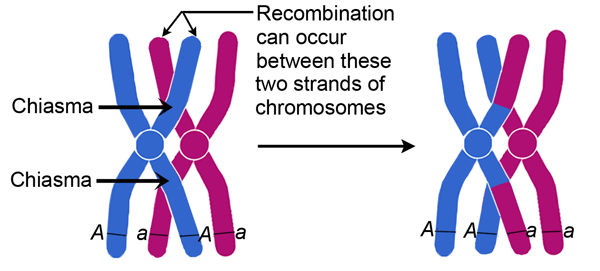
This image shows chromosomes during Prophase 1. Which of the following correctly describes the process shown?
a)
segregation of sister chromatids
b)
condensation and segregation of alleles
c)
mutationin which the DNA content of the gene is altered
d)
crossing - over in which alleles are exchanged
52.
A human zygote should have _____ chromosomes inside.
a)
46
b)
23
c)
92
d)
64
53.

At the end of mitosis you have _____ cells

a)

identical

b)

different

c)

identical twins

d)

variety

54.
products of meiosis are genetically
a)
different
b)
identical
55.
This picture shows which process? 
a)
mitosis
b)
meiosis
c)
the cell cycle
56.
This picture shows which process?
a)
mitosis
b)
meiosis
c)
the cell cycle
57.
Human eggs and sperm are _____, and each has ____ chromosomes.
a)
diploid, 23
b)
diploid, 46
c)
haploid, 23
d)
haploid, 46
58.
How are your chromosomes inherited?
a)
most of your chromosomes from your mother
b)
most of your chromosomes from your father
c)
a random number of chromosomes from each parent
d)
half your chromosomes from your mother and half from your father.
59.
Name the phase of Mitosis:
a)
Prophase
b)
Metaphase
c)
Anaphase
d)
Telophase
60.
Which of the following best describes a DNA molecule?
a)
double helix
b)
contains ribose
c)
made of amino acids
d)
contains Uracil
61.
A nucleotide includes...?
a)
pentose sugar
b)
nitrogenous base
c)
phosphate group
d)
all of the above
62.
In DNA, Adenine bonds with ______________.
a)
Guanine
b)
Thymine
c)
Cytosine
d)
Adenine
63.
Guanine bonds with ______________.
a)
Adenine
b)
Guanine
c)
Cytosine
d)
Thymine
64.
Why is DNA important?
a)
it is very small and very complicated
b)
it's in everything
c)
it serves as the blueprint for making proteins
d)
because we eat it every day for energy
65.
Which 2 molecules forms the sides (backbone) of the DNA ladder?
a)
deoxyribose and adenine
b)
deoxyribose and a hydrogen bond
c)
sugar and the nucleus
d)
deoxyribose (sugar) and phosphate
66.
Which shows the correct complementary base pairing for DNA?
a)
C-A, T-G
b)
A-G, C-T
c)
C-G, U-A
d)
T-A, G-C
67.
What is responsible for holding the two strands of the DNA double helix together?
a)
hydrogen bonds
b)
alleles
c)
London dispersion forces
d)
deoxyribose sugars
68.
What does DNA stand for?
a)
Deoxyribonucleic acid
b)
Denitrogenous acid
c)
Deribonucleic acid
d)
Diribonucleic acid
69.
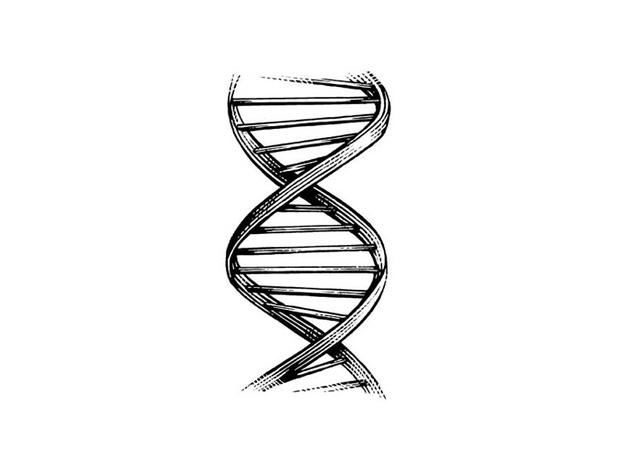
Name this structure
a)
double helix
b)
nucelotide
c)
twisted ladder
d)
hydrogen bond
70.
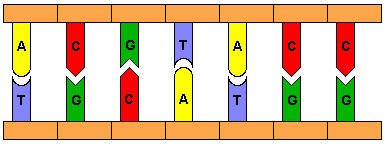
Which sequence of DNA bases would pair with this partial strand
ATG TGA CAG
a)
ATG TGA CAG
b)
TAC ACT GTC
c)
GTA AGT GAC
d)
CAT TCA CTG
71.
Which sequence of DNA bases would pair with this partial strand
ATG TGA CAG
a)
ATG TGA CAG
b)
TAC ACT GTC
c)
GTA AGT GAC
d)
CAT TCA CTG
72.
Adenine bonds with ______________.
a)
Guanine
b)
Thymine
c)
Cytosine
d)
Adenine
73.
In a molecule of double-stranded DNA, the amount of Adenine present is always equal to the amount of
a)
cytosine
b)
guanine
c)
thymine
d)
uracil
74.
Replicate the following strand of DNA: 
AATCATGGA
a)
AATCATGGA
b)
TTAGTACCT
c)
UUAGUACCU
d)
GGATAUCUA
75.
The enzyme that unzips the DNA to prepare for replication
a)
helicase
b)
replicase
c)
polymerase
d)
synthase
76.
DNA replication results in two DNA molecules,
a)
each one with two original strands
b)
each one with two new strands
c)
each one with one new strand and one original strand
d)
one with two new strands and the other with two original strands
77.
RNA contains the sugar
a)
ribose
b)
deoxyribose
c)
glucose
d)
lactose
78.
Which of the following is a base that is NOT contained in DNA?
a)
Adenine
b)
Thymine
c)
Uracil
d)
Guanine
79.
Which of the following statements is true?
a)
DNA is single-stranded
b)
RNA is single-stranded
c)
DNA contains uracil
d)
RNA contains deoxyribose
80.

RNA A pairs with?

a)

g

b)

4

c)

u

d)

t

81.
What does this picture represent?
a)
amino acid
b)
base pairing
c)
nucleotide
d)
the DNA molecule
82.
In eukaryotic cells, I travel out of the nucleus to a ribosome.
a)
Both DNA and RNA
b)
DNA
c)
RNA
83.
I include the bases guanine, cytosine, and adenine.
a)
DNA
b)
RNA
c)
Both DNA and RNA
84.
What is the product of translation?
a)
DNA
b)
mRNA
c)
tRNA
d)
proteins
85.
What is the difference between DNA and RNA in terms of bases?
a)
RNA contains uracil in place of thymine
b)
RNA contains uracil in place of adenine
c)
RNA contains uracil in place of guanine
d)
RNA contains uracil in place of  cytosine
86.
How many nucleotides make a codon?
a)
1
b)
2
c)
3
d)
6
87.

The process of creating a protein from RNA

a)

Transcription

b)

Translation

c)

Replication

88.

The Process of creating RNA from DNA

a)

Transcription

b)

Translation

c)

Replication

89.

In RNA the base T is replaced with

a)

U

b)

G

c)

C

d)

A

90.

Transcribe the following DNA strand: CTG AAT

a)

GAC TTA

b)

CTG AAT

c)

GAC UUA

d)

CUG AAU

91.

What combines together to make a protein?

a)

Amino Acid

b)

RNA

c)

Ribosome

d)

DNA

92.

What organelle is the site of translation?

a)

Nucleus

b)

Ribosome

c)

Mitochondria

d)

Chloroplast

93.

What is the order for Protein Synthesis?

a)

Transcription -> Translation -> Protein

b)

Translation - > Transcription -> Protein

c)

Protein -> Transcription -> Translation

d)

Translation -> Protein -> Transcription
94.
In RNA, Uracil pairs with ______. 
a)
cytosine
b)
adenine
c)
guanine
d)
thymine
95.
Choose the nucleotide sequence of the RNA strand that would be complementary to the following strand: 
GTAGTCA
a)
UATUAGA
b)
ACGACTG
c)
CAUCAGU
d)
CATCAGT
96.
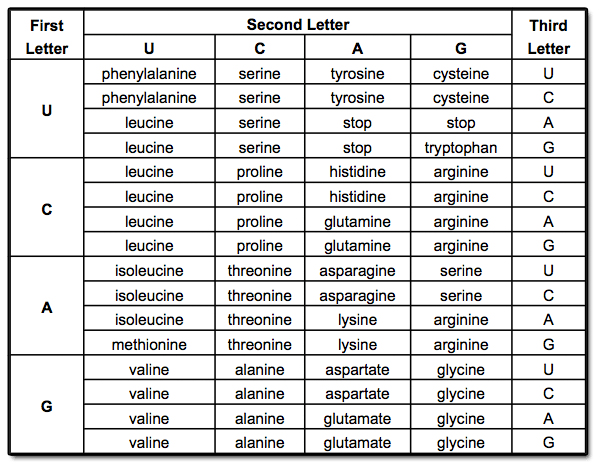
What amino acid is represented by the codon UUA?
a)
Phenylalanine
b)
Tyrosine
c)
Leucine
d)
Stop codon
97.
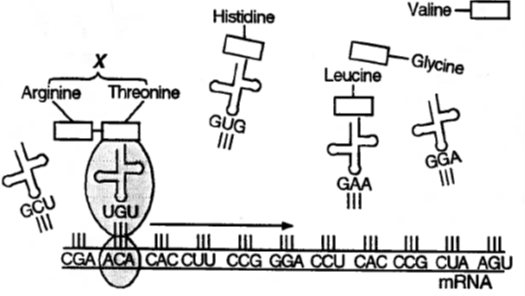
What process is going on in this photo? 
a)
Transcription 
b)
Translation 
c)
Replication 
d)
All the above 
98.
Which component of DNA determines the traits of an organism? 
a)
Nitrogen Bases
b)
Sugar-Phosphate Backbone
c)
Hydrogen bonds
99.
What is the location in the cell for translation?
a)
nucleus
b)
mitochondria
c)
ribosome
d)
chloroplast
100.
What is the three base sequence of mRNA that codes for a single amino acid?
a)
Anticodon
b)
Codon
c)
Protein
101.
Which is the mRNA molecule that would be transcribed from this DNA template:
TGGCAAGTACGT
a)
ACCGTTCATGCA
b)
UGGCAAGUACGU
c)
UCCGUUCUUGCU
d)
ACCGUUCAUGCA
102.
DNA has a _____________ structure. 
a)
double helix
b)
single strand
c)
ring 
d)
chain
103.
In DNA, Adenine pairs with ___________. 
a)
Guanine
b)
Cytosine
c)
Thymine
d)
Uracil
104.
Translation is the process where
a)
mRNA is created in the Nucleus
b)
mRNA is decoded to form a protein 
c)
glucose molecules are made
d)
is where lipids are synthesised
105.
Does the order of amino acids in a protein matter?
a)
YES!
b)
NO!
106.
DNA molecule segment is : TTACGCAAG
The mutated DNA segment is TTCGCAAG. This is an example of ___ mutation.
a)
Substitution
b)
Deletion
c)
Insertion
d)
Inversion
107.
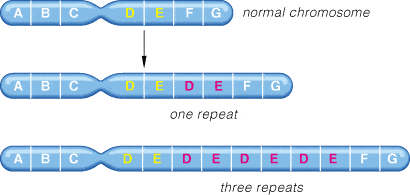
What type of chromosomal mutation is this?
a)
Inversion
b)
Translocation
c)
Deletion
d)
Duplication
108.
a change in the nucleotide sequence of DNA 
a)
is a mutation
b)
can be a mutation or an epigenetic change
c)
is an epigenetic change
d)
always leads to a permanent change in DNA
109.
Identify the mutation in the picture.
a)
Inversion
b)
Deletion
c)
Duplication
d)
Translocation
110.
Identify the mutation in the picture.
a)
Inversion
b)
Duplication
c)
Deletion
d)
Translocation
111.
When can a mutation be passed on to offspring?
a)
only when the mutation is present during or occurs during mitosis
b)
only when the mutation is present during or occurs during meiosis
c)
when the mutation occurs during mitosis or meiosis
d)
when the mutation occurs in somatic cells
112.
What do experts say is the most common form of Down Syndrome?
a)
Trisomy 47
b)
Trisomy 46
c)
Trisomy 21
d)
Trisomy 23
113.
If a mutation occurs in a body cell, will the trait be passed onto the organism's offspring?
a)
No, the trait is in a somatic cell
b)
Yes, the trait is in a somatic cell
c)
No, the trait must be in a sex cell
d)
Yes, the trait is in a sex cell
114.
Why are insertion and deletion mutations so harmful?
a)
They change all of the codons from the mutation on down the line, which changes the amino acid sequence
b)
They insert things that an organism doesn't need.
c)
They often delete things that organisms need.
d)
Insertion and deletions are not any more harmful than substitution mutations.
115.

A picture of a person's chromosomes

a)

Genome

b)

Karyotype

c)

Sex Chromosome

d)

Sex-Linked Gene

116.

A male's complete set of genetic DNA is represented by which of the following?

a)

XX, 46

b)

XY, 46

c)

XX, 23

d)

XY, 23

117.

Which two things below make up a karyotype?

a)

Autosomal Chromosomes

b)

Sex Chromosomes

c)

Genotype

d)

Sex-Linked Gene

118.

A chromosome involved with determining the sex of an organism

a)

Genome

b)

Karyotype

c)

Sex Chromosome

d)

Autosome

119.

Colorblindness and Hemophilia are examples of

a)

Karyotypes

b)

Multiple Alleles

c)

Sex-Linked Traits

d)

Dominant traits

120.
Which genetic disorder or disease is a sex-linked trait and carried on the X chromosome?
a)
Cystic Fibrosis
b)
Sickle-cell Disease
c)
Hemophilia
d)
Down Syndrome
121.
What is the name of the protein that is not normal in people with sickle-cell disease?
a)
mucus
b)
clotting protein
c)
karyotype
d)
hemoglobin
122.

To trace the occurrence of a trait through several generations of a family, you could create ______________.

a)

a pedigree

b)

dog food

c)

family tree

123.

The allele for the sickle-cell trait is ________________ with the normal allele.

a)

codominant

b)

incomplete dominant

124.
The purpose of selective breeding is to 
a)
Get bigger animals
b)
get smaller animals
c)
create animals with desirable traits
d)
create animals with bad traits
125.
A farmer has bred his pineapple plants from the sweetest pineapples from his last harvest to get even sweeter pineapple plants. What is this an example of?
a)
Selective breeding
b)
Natural selection
c)
Extinction
d)
Mutagenesis
126.

What is one of the processes involved in selective breeding?

a)

allowing organisms to reproduce without interference

b)

choosing individuals with desirable characteristics to be parents of the next generation

127.
Organisms within a population have genetic differences in their traits called.
a)
Genotypes
b)
Variation
c)
Natural Selection
d)
Heterozygous
128.
Use the following table to answer the next question.A farmer wants to grow a crop that is resistant to disease while producing more fruit per plant.  Which plants should the farmer select to cross to get the desired combination of traits?
a)
1 and 2
b)
2 and 4
c)
1 and 3
d)
3 and 4
129.
Use the following table to answer the next question. A family visited a dog breeder and requested a puppy that had short fur and was friendly and lovable.  Which dogs should the breeder select to be the parents of the requested puppy?
a)
1 and 2
b)
2 and 3
c)
1 and 4
d)
2 and 4
130.
Which of the following is used to cut DNA so it can be studied?
a)
Gel Electrophoresis
b)
Restriction Enzymes
c)
Karyotypes
d)
Haplotypes
131.
The human genome project is an attempt to 
a)
Sequence everyones DNA
b)
Copy DNA
c)
Sequence the human genome
d)
Cure genetic disease
132.
The process of making changes in the DNA code of a living organism is called 
a)
Selective Breeding
b)
Inbreeding
c)
Genetic Engineering
d)
Di-hybrid Cross
133.
A DNA molecule produced by combining DNA from different sources is referred to as
a)
Mutant
b)
Polyploid
c)
Diploid
d)
Recombinant
134.
What is an advantage of transgenic plants?
a)
Producing clones
b)
Increased food supply
c)
Using more pesticide
d)
Studying the human genome
135.
What process can prospective parents use to determine if they are carrying recessive alleles for a disease?
a)
Genetic Testing
b)
DNA Figerprinting
c)
Gene Therapy
d)
DNA Extraction
136.
What is shown here?
a)
DNA Microarrays
b)
Virus Scans
c)
Recombinant DNA
d)
DNA Fingerprints
137.
Which Suspect Committed the crime?
a)
Suspect #1
b)
Suspect #2
c)
Suspect #3
d)
Suspect #4
138.
A genetically engineered organism that contains a gene from another organism is called
a)
Bacterial
b)
Genetic
c)
Transgenic
d)
Multigenic
139.
In gel electrophoresis, which DNA Fragments move farthest from the starting point?
a)
Large Fragments
b)
Small Fragments
c)
Medium Fragments
d)
Smooth Fragments
140.
A member of group of genetically identical cells produced from a single cell is called 
a)
Vector
b)
Clone
c)
Hybrid
d)
Genome
141.
The small ring of DNA found in a bacterial cell used as a biological vector
a)
Helix
b)
Plasmid
c)
Clone
d)
Nucleotide
142.
Based on these results whose blood was found in the blood stain at the crime scene?
a)
Bob
b)
Sue
c)
John
d)
Lisa
143.
Which two bear species are most closely related?
a)
Bear 1 and Bear 2
b)
Bear 1 and Bear 3
c)
Bear 2 and Bear 3
d)
There’s no way to tell
144.
Which male is the father of this child?
a)
Male 1
b)
Male 2
c)
Neither could be the father
d)
Either could be the father
145.
Which two bat species are most closely related?
a)
 Bat 1 and Bat 2
b)
Bat 1 and Bat 3
c)
Bat 2 and Bat 3
d)
There’s no way to tell
146.

I formed the theory of evolution by natural selection after my research of various species of finches on the Galápagos Islands. Who am I?

a)

James Hutton

b)

Charles Darwin

c)

Charles Lyell

d)

Jean Baptiste Lamarck

147.
Darwin noted that plant and animal breeders would breed only the largest hogs, the fastest horses, or the cows that produced the most milk. Darwin termed this process ______________ selection.
a)
Natural
b)
Formal
c)
Traditional
d)
Artificial 
148.
Which of the following is a term for a group of similar organisms that can reproduce fertile offspring?
a)
individual
b)
population
c)
species
d)
fossil
149.
Which of the following is a fossil?
a)
a plant that has recently died
b)
a group of organisms that can reproduce
c)
a structure or organ that no longer functions
d)
a trace of an organisms that existed in the past
150.
The difference in the physical traits of an individual from those of other individuals in a group is called a(n)
a)
change
b)
adaption
c)
species
d)
variation
151.
Over time, adaptions can lead populations to experience 
a)
environmental changes
b)
genetic changes
c)
geological changes
d)
extinction
152.
what did Charles Darwin observe in finch populations of the Galapagos Islands off the coast of South America?
a)
different species on different islands
b)
all species on one of the islands
c)
identical species on all the islands
d)
the same species as North America
153.
In natural selection, the selective agent is the
a)
humans
b)
mutations
c)
breeders
d)
environment
154.
All rabbits living in a particular area would be an example of a(n)
a)
population
b)
species
c)
fossil
d)
individual organism
155.
a bird that can easily outcompete other birds for food and that can produce many eggs has a high
a)
life expectancy
b)
mutation rate
c)
fitness
d)
adaptability
156.
which of the folllowing is an exammple of a vestigial structure?
a)
the wings of a red-tailed hawk
b)
the hind limbs of a house cat
c)
the fins of sharks
d)
the wings of an ostrich
157.

What is suggested by the anatomical similarity of different species of vertebrates?

a)

no evolutionary relationships between the groups

b)

recent common ancestry

c)

similar environments in the past

d)

evolution from a distant common ancestor

158.
Some organisms that share a common ancestor have features that have different functions, but similar structures.  These are known as
a)
vestigial structures
b)
analogous structures
c)
homologous structures
d)
fossil structures
159.
protein sequences in one organism that resemble those of another suggest a 
a)
coincidence
b)
lack of evolutionary relationship
c)
great number of mutations
d)
shared ancestry
160.
a measure of how commonly a particular allele occurs in a population is known as the 
a)
gene pool
b)
allele frequency
c)
mutation rate
d)
phenotype
161.

The more genetic variation a population has,

the more likely it is for some individuals to

a)

evolve

b)

migrate

c)

survive

d)

mutate

162.
Genetic variation can arise from a random change in the DNA of a gene.  The change is called a(n)
a)
mutation
b)
gene flow
c)
gene pool
d)
allele
163.
What increases genetic variation when animals move  from one population to another
a)
genetic drift
b)
sexual selection
c)
bottleneck effect
d)
gene flow
164.

The five-factors for evolution are gene flow, genetic drift, mutation, natural selection and ....

a)

non-random mating

b)

controlled mating

c)

emigration

d)

immigration

165.
Mutations are important because they bring about
a)
death of the organism in which they develop
b)
genetic variation needed for a population to evolve
c)
benefits for the individual, not for the population
d)
Hardey-Weinberg equilibrium within a population
166.
What is speciation?
a)
combining of tow species to form one with different traits
b)
isolation that affects mating behaviors
c)
timing of mating that prevents normal sexual selection
d)
divergence of two or more species from an existing one
167.
An earthquake causes an ocean channel top open and separate an island into two.  the species on each section are now in
a)
geographic isoliation
b)
behavioral isolation
c)
disruptive selection
d)
temporal isolation
168.
What kid of isolation occurs when two populations of birds have different courtship dances?
a)
geographic
b)
sexual
c)
temporal
d)
behavioral
169.
two species are in different environments and look very similar.  However, that are not closely related (analogous).  Their resemblance is most likely an example of.
a)
sexual selection
b)
temporal isolation
c)
convergent evolution
d)
divergent evolution
170.

Other insects cannot, but, a bumble bee has just enough weight to open up the snapdragon flower and pollinate. This adaption is ....

a)

convergent evolution

b)

co-evolution

c)

divergent evolution

d)

speciation

171.
asexual reproduction produces offspring with
a)
half of a single parent's genes
b)
the same genes as the parent
c)
a mix of genes from two parents
d)
lots of genetic variation
172.

What is the term for a feature that allows an organism to survive better in its environemtn?

a)

variation

b)

adaptation

c)

homologous structure

d)

vestigial structure

173.
the hind leg bones in a whale are examples of
a)
homologous structures
b)
analogous structures
c)
fossils
d)
vestigals
174.
What is the process in which humans breed organisms for certain traits?
a)
natural selection
b)
inheritance
c)
artificial selection
d)
descent withOUT modification
175.

The combined alleles of all individuals in a population is called the population's

a)

phenothype

b)

gene pool

c)

mutation rate

d)

allele frequency

176.

Natural selection could not occur without

a)

geographic isolation

b)

variation in the population

c)

stable environments

d)

competition for unlimited resources

177.
Has membrane bound organelles
a)
Prokaryote
b)
Eukaryote
c)
both
178.
Smaller
a)
Prokaryote
b)
Eukaryote
c)
both
179.
Has Mitochondria
a)
Prokaryote
b)
Eukaryote
c)
both
180.

Which has ribosomes?

a)

Prokaryote

b)

Eukaryote

c)

both

181.
Has nucleus
a)
Prokaryote
b)
Eukaryote
c)
both
182.
Has nucleus
a)
Prokaryote
b)
Eukaryote
c)
both
183.
Bacteria
a)
Prokaryote
b)
Eukaryote
c)
both
184.
Has chloroplast
a)
Prokaryote
b)
Eukaryote
c)
both
185.
multicellular
a)
Prokaryote
b)
Eukaryote
c)
both
186.
more complex
a)
Prokaryote
b)
Eukaryote
c)
both
d)
both
187.
plants
a)
Prokaryote
b)
Eukaryote
c)
both
188.
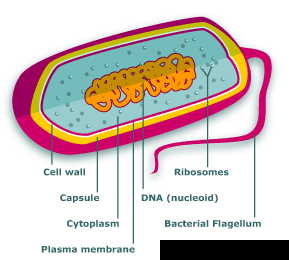
Which type of cell?
a)
Prokaryote
b)
Eukaryote
189.
Which type of cell?
a)
Prokaryote
b)
Eukaryote
190.
A single-celled organism that lacks a membrane-bound nucleus, mitochondria, or any other membrane -bound organelle .
a)
Prokaryote
b)
Eukaryote
c)
Nucleus
d)
Single-celled organism
191.
What type of cell has a nucleus? 
a)
eukaryotic
b)
prokaryotic 
192.
What type of cell does not have a nucleus?
a)
eukaryotic 
b)
prokaryotic 
193.
Plants and animal cells are examples of ___ cells 
a)
prokaryotic cells 
b)
eukaryotic cells 
194.

Which fungus is unicellular?

a)

toadstool

b)

yeast

c)

mushroom

d)

mucor (mould)

195.
Which of the following is the correct order of organization in living things from most basic (simple) to most complex?
a)
a.  Organism, cell, tissue, organ, organ system
b)
a.  Organ system, organ, tissue, cell, organism
c)
a.  Cell, tissue, organ, organ system, organism
d)
a.  Cell, organ, tissue, organ, organism, organ system
196.
Anything that can perform life processes by itself is a/an
a)
cell
b)
organ
c)
organism
d)
organ system
197.
A group of similar cells that come together to perform a specific function is a/an
a)
organ
b)
organism
c)
organ system
d)
tissue
198.
When a group of organs work together to perform a particular function they create a/an
a)
organ system
b)
organism
c)
tissue
d)
organ
199.
The smallest level of organization of life in an organism
a)
tissue
b)
cell
c)
organ
d)
organ system
200.
The cell is the building block of all living things.
a)
True
b)
False
201.
A group of organs that work together to perform big jobs for your body is an organ system.
a)
True
b)
False
202.
Which is an example of an organism?
a)
a beetle
b)
a lake
c)
a rock
d)
a shell
203.
The basic unit of structure and function in the human body is the....
a)
organ
b)
organ system
c)
cell
d)
tissue
204.
What is the difference between a cell and a tissue?
a)
cell is basic unit of life; tissue is group of cells that work as one
b)
cell is group of tissues; tissue is basic unit of life
c)
cell is basic unit of life; tissue is groups of different cells
d)
cell is group of organs; tissue is group of different cells
205.
Tissue that works together to perform a function
a)
organ
b)
cell
c)
organ system
d)
organism
206.
What do you have when organ systems work together?
a)
organs
b)
organism
c)
cells
d)
tissue
207.
A group of cells that work together
a)
organ system
b)
organism
c)
organ
d)
tissue
208.
The heart contains different types of tissue. What level is the heart?
a)
cell
b)
organ system
c)
organ
d)
tissue
209.
The digestive system includes the stomach. What level is the stomach?
a)
organ
b)
tissue
c)
cell
d)
organism
210.
A group of different tissues working together to do a job is called a/an _____.
a)
tissue
b)
organ
c)
stem cell
d)
organ system
211.
This is a example of........ 
a)
organ system
b)
cells
c)
organ
d)
tissue
212.
This is a example of ........
a)
cell
b)
organ system
c)
organ
d)
tissue
213.
This is a example of ........
a)
organ
b)
organ system
c)
tissue
d)
cell
214.

Pulling your hand away when you get burned.

a)

stimulus

b)

response

215.

Smelling pizza cooking in the microwave.

a)

stimulus

b)

response

216.

Running from a barking dog.

a)

stimulus

b)

response

217.

Pulling your hand away when you get burned.

a)

stimulus

b)

response

218.
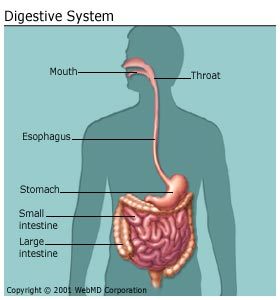
Bile is made by which digestive organ?
a)
Gallbladder
b)
Stomach
c)
Rectum
d)
Liver
219.
Which digestive organ makes digestive juices to help the small intestine absorb nutrients?
a)
Liver
b)
Gallbladder
c)
Pancreas
d)
Esophagus