Wayground logo

Free Printable Worksheets

Font size

S
M
L
XL
Worksheets

Volcano Practice Test

Total questions: 30

Worksheet time: 16mins

Name
Class
Date
1.
What is the definition of dormant?
a)
sleeping
b)
extinct
c)
active
d)
invisible
2.
A volcano that has gentle sloping sides and is formed from runny lava
a)
Shield volcano
b)
Cinder cone
c)
Composite
d)
None of these
3.
A volcano that has steep sides and is formed from lava chunks is called
a)
a shield volcano
b)
a cinder cone volcano
c)
a composite volcano
4.
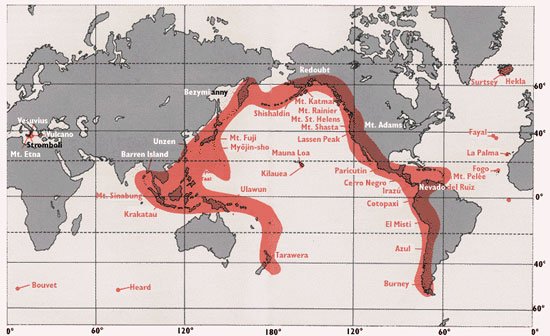
This is the name for the chain of volcanos around the edge of the Pacific Plate.
a)
Circle of Fire
b)
Ring of Lava
c)
Ring of Fire
d)
Circle of Magma
5.
What is the opening in Earth's crust through which molten rock, gases, and ash erupt?
a)
Divergent Boundary
b)
Magma
c)
Subduction Boundary
d)
Volcano
6.
What is molten rock that has formed deep within the Earth?
a)
Hot Spot
b)
Magma
c)
Lava
d)
Volcano
7.
The volcanoes on the Hawaiian Islands form due to which of the following?
a)
Divergent Boundary
b)
Hot Spot
c)
Subduction Boundary
d)
Transform Boundary
8.
What type of lava cools quickly and forms rock with jagged edges?
a)
Aa
b)
Magma
c)
Pahoehoe
d)
Pillow Lava
9.
What type of lava cools slowly and forms rock with smooth, ropelike features?
a)
Aa
b)
Magma
c)
Pahoehoe
d)
Pillow Lava
10.
What is the resistance of a liquid, such as lava, to flow?
a)
Elasticity
b)
Pyroclasticity
c)
Silica
d)
Viscosity
11.
What type of volcano is Kilauea, which is located in Hawaii?
a)
Caldera
b)
Cinder Cone
c)
Composite Volcano
d)
Shield Volcano
12.

What kind of magma produces violent volcanic eruptions?

a)

Magma low in viscosity

b)

Magma that is fluid, and runny

c)

Magma that is high in gas content

d)

Magma is hotter than 1500 F

13.
Where do volcanoes come from?
a)
Places where plates move apart
b)
Places where plates are moving together
c)
Hot Spots
d)
All of these options
14.

D is a

a)

Conduit

b)

magma chamber

c)

fissure

d)

parasitic dome

15.
B is a 
a)
Conduit
b)
Magma chamber
16.

F is a

a)

Parasitic Dome

b)

Ash Plume

c)

Magma Chamber

d)

Crater

17.

What does letter C represent?

a)

Ash

b)

Crater

c)

Lava

d)

Tephra

18.

A term that describes a mixture of water and rock fragments that flows down the slopes of a volcano and typically enters a river valley.

a)

lava

b)

pyroclastic flow

c)

volcanic bombs

d)

lahar

19.
It contains a high-density mix of hot lava blocks, pumice, ash and volcanic gas which moves at very high speed down volcanic slopes, typically following valleys.
a)
pyroclastic flow
b)
ash fall
c)
ballistic projectile
d)
lahar
20.

Magma that bursts out of a volcano is called

a)

lava

b)

molten magma

c)

steam

21.

What two factors play a role in determining the characteristics of a volcano?

a)

lava viscosity and gas level

b)

elevation and slope

c)

magma and lava

22.

All of the following may create volcanoes, except

a)

subduction

b)

transform faults

c)

hot spot

d)

divergent plate boundaries

23.

What type of volcano is this?

a)

Fissure

b)

Shield

c)

Dome

d)

Stratovolcano/ Composite

24.

What type of volcano is this?

a)

Fissure

b)

Cinder Cone

c)

Dome

d)

Stratovolcano/ Composite

25.
What type of volcano is made of lava fragments that have been ejected from a volcanic vent?
a)
Caldera
b)
Cinder Cone
c)
Composite Volcano
d)
Shield Volcano
26.
Smaller volcanoes that typically throw ash into the air during eruption
a)
cinder cone
b)
shield
c)
composite
d)
fissure
27.

All of the following are hazards associated with a shield volcano, except

a)

small bits of tephra, close to the vent

b)

lava flows

c)

poisonous gas

d)

lahar

28.

The type of volcano shown in letter A is

a)

cindercone

b)

lava

c)

stratovolcano

d)

dome

29.

Which volcano shown is the most dangerous?

a)

A

b)

B

c)

C

30.

Volcanoes may form at letter C through the process of ____________.

a)

subduction

b)

sea-floor spreading

c)

seismic activity