wayground logo

Free Printable Worksheets

NEW

Font size

S
M
L
XL
Worksheets

APES Earth's Formation

Total questions: 25

Worksheet time: 18mins

Name
Class
Date
1.

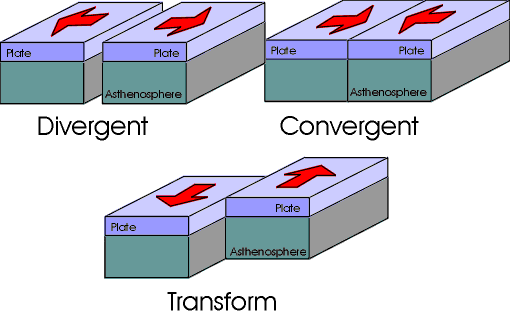
In a transform plate boundary, the ...

a)

plates are the same age

b)

convergent plate is older, oceanic plate is younger

c)

convergent plate is younger, divergent plate is older

d)

closer the plates are the younger they are
2.

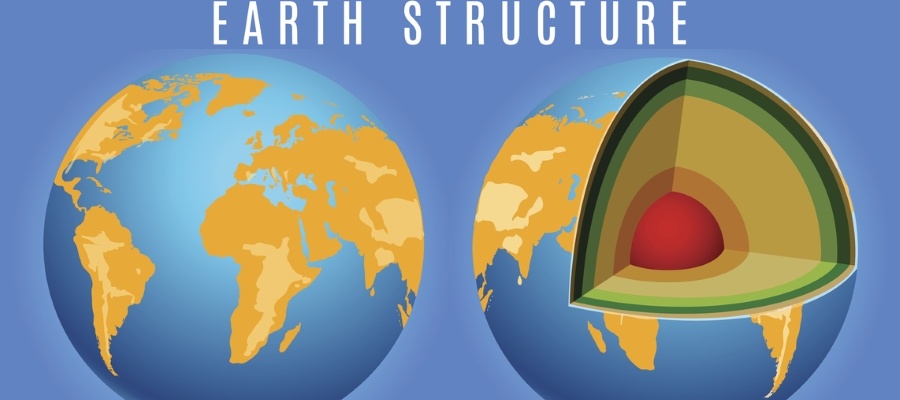
The surface of the earth, otherwise known as the ______, is broken into seven major pieces and sits atop a liquid layer called the _______

a)

lithosphere, asthenosphere

b)

astenosphere, mantle

c)

crust, litosphere

d)

asthenosphere, lithosphere

3.

Plate boundaries that come together, causing the younger oceanic plate to sink under the older continental plate is called the

a)

convergent plate boundary

b)

divergent plate boundary

c)

transform plate boundary

d)

continental plate boundary

4.

The most dense layer of the earth is found:

a)

in the center of the earth

b)

in the outer layer of the earth

c)

on the surface of the earth

d)

the rock layer under the ocean floor
5.
The San Andrea's Fault in California is which type of boundary?
a)
Convergent
b)
Divergent
c)
Subductive Zone
d)
Transform
6.
At which type of plate boundary does seafloor spreading occur?
a)
Tranform
b)
Convergent
c)
Divergent
d)
Subductive Zone
7.
What type of boundary is formed when plates slide past each other?
a)
convergent
b)
horizontal
c)
divergent
d)
transform
8.
Which type of rock results from melting and cooling of magma?
a)
Igneous
b)
Metamorphic
c)
Sedimentary
d)
Extrusive
9.
Which type of rock forms from extreme heat and pressure?
a)
Igneous
b)
Sedimentary
c)
Organic
d)
Metamorphic
10.
Wind, water, and ice breaking down rock is called
a)
Erosion
b)
Deposition
c)
Compaction
d)
Weathering
11.
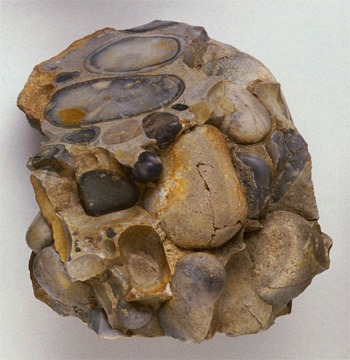
This rock was formed by smaller pieces of rock that settled at the bottom of a lake millions of years ago. What type of rock is this?
a)
Sedimentary
b)
Igneous
c)
Metamorphic
12.
_______ is the type of soil used most often with plants and on farms. It is a mixture of clay, sand, and silt.
a)
loam
b)
humus
c)
soil
d)
dirt
13.
Soil formation begins with the weathering of_______.
a)
Humas
b)
Subsoil
c)
Litter
d)
Rock
14.
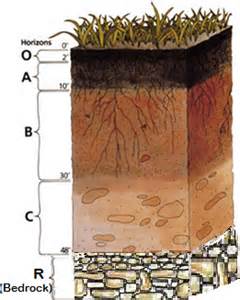
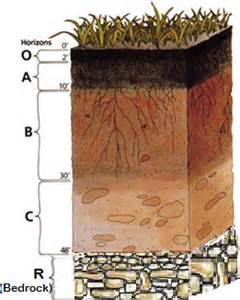
The layer of soil which the topsoil is found.
a)
Horizon A
b)
Horizon B
c)
Horizon C
d)
Horizon D or R
15.
Decayed organic material in soil is called______.
a)
Litter
b)
Silt
c)
Humus
d)
Clay
16.
Which horizon is made up of partially weathered rocks?
a)
Horizon A
b)
Horizon B
c)
Horizon C
d)
Horizon D or R
17.
In which horizon is most of the HUMUS?
a)
Horizon A
b)
Horizon B
c)
Horizon C
d)
Horizon D or R
18.
In which horizon is the Bedrock
a)
Horizon A
b)
Horizon B
c)
Horizon C
d)
Horizon D or R
19.
All of the processes below occur when obtaining minerals EXCEPT:
a)
Exploration
b)
Elimination
c)
Enrichment
d)
Extraction
20.
The process of returning soil and vegetation to a mine site is called?
a)
Reversing
b)
Rehabilitation
c)
Removal
d)
Restoring
21.
Acid mine drainage is cause by which element?
a)
carbon
b)
sulfur
c)
nitrogen
d)
boron
22.
Which of the following is NOT environmental impacts of mining?
a)
Destroys natural communities over large areas.
b)
Acid drainage pollutes groundwater.
c)
Creates minimal dust.
d)
Mass wasting is common when overburden is loosened.
23.
 Which type of mining is associated with disturbing more land?
a)
Surface mining 
b)
Sub-surface mining
c)
Mining in the oceans
24.
Which regulation requires miners to clean up after themselves?
a)
General Mining Act of 1872
b)
Mineral Leasing Act of 1920
c)
Surface Mining Control and Reclamation Act
25.
Which of the following is NOT one of the three layers of soil?
a)
topsoil
b)
undersoil
c)
subsoil
d)
bedrock