wayground logo

Free Printable Worksheets

NEW

Font size

S
M
L
XL
Worksheets

Properties of Waves

Total questions: 35

Worksheet time: 32mins

Name
Class
Date
1.

The material through which a mechanical wave travels is

a)

a medium.

b)

empty space.

c)

ether.

d)

air.

2.

A _______________ wave travels through a medium as a series of

compressions and rarefactions

a)

sine

b)

longitudinal

c)

pulse

d)

transverse

3.

A wave is passing through a uniform medium. As the frequency of this

wave increases, its wavelength

a)

depends on amplitude

b)

decreases.

c)

increases.

d)

does not change

4.

The amplitude of a mechanical wave determines how much

________________ the wave transfers per unit time.

a)

energy

b)

air

c)

wavelength

d)

matter

5.
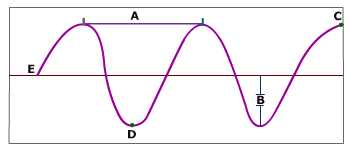
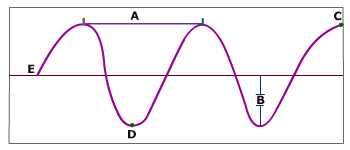
Which letter represents wavelength?
a)
A
b)
B
c)
C
d)
D
6.
Which letter represents the wave crest?
a)
A
b)
B
c)
C
d)
D
7.
Which letter represents the wave trough?
a)
A
b)
B
c)
C
d)
D
8.
Which letter represents amplitude?
a)
A
b)
B
c)
C
d)
D
9.
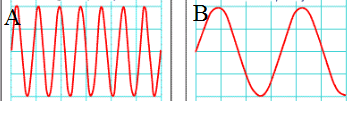
Which wave has a greater frequency?
a)
A
b)
B
10.
What is another name for wave height?
a)
Frequency
b)
Amplitude
c)
Wavelength
d)
Origin
11.
What is measured from crest to crest or trough to trough?
a)
Frequency
b)
Amplitude
c)
Wavelength
d)
Origin
12.
If a wave has a greater frequency, what happens to the wavelength?
a)
increases
b)
decreases
c)
stays the same
13.
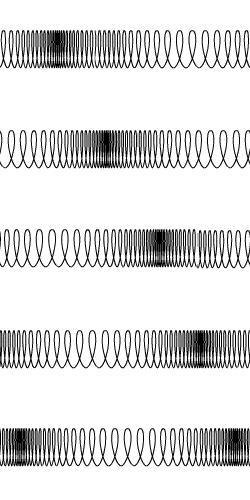
What part of the wave is a compression? 
a)
A
b)
B
14.
What part of the wave is a rarefaction? 
a)
A
b)
B
15.
What do waves carry through objects?
a)
light
b)
sound
c)
water
d)
energy
16.
How do these waves differ?
a)
they travel at different speeds
b)
they have different wavelengths
c)
they carry different amounts of energy
d)
they are a different distance from the source
17.
When molecules in waves are not transferring energy they are in _________.
a)
amplitude
b)
trough
c)
rest position
d)
crest
18.
This is the number of wavelengths that pass a point in 1 sec.  
a)
frequency
b)
pitch
c)
amplitude
d)
rest postion
19.
These type of waves include radio, microwave, infrared, visible light, ultraviolet, x-ray, and gamma rays.
a)
Mechanical
b)
Destructive
c)
Constructive
d)
Electromagnetic
20.

What does a vacuum contain?

a)

Sodium Dioxide

b)

Carbon Dioxide

c)

Ozone

d)

nothing

21.
A wave carries...?
a)
energy only
b)
matter only
c)
energy and matter
d)
neither
22.
What kind of waves can travel through space?
a)
electromagnetic waves
b)
compressional waves
c)
longitudinal waves
d)
sound waves
23.
A compressional wave is another name for a 
a)
longitudinal wave
b)
electromagnetic wave
c)
radio wave
d)
hair wave
24.

Mechanical waves, like sound waves, require a medium through which to travel?

a)

true

b)

false

25.

Electromagnetic radiation (i.e. light) requires a medium through which to travel?

a)

true

b)

false

26.

Which of the following is true for sound waves?

a)

They require a medium.

b)

They are unrelated to vibrations.

c)

They cannot travel through liquids

d)

They can travel in a vacuum

27.

How do electromagnetic and mechanical waves compare?

a)

Mechanical waves can only travel through a vacuum, but electromagnetic waves can travel through a solid, liquid, or gas.

b)

Mechanical waves can travel through a solid, liquid, or gas, but electromagnetic waves can only travel through a gas.

c)

Mechanical waves can only travel through a solid, liquid, or gas, but electromagnetic waves can travel through a vacuum.

d)

Mechanical waves can travel through a solid, liquid, or gas, but electromagnetic waves can only travel through a solid.

28.

A student asks a series of questions about a wave. The answer to which question will allow the student to determine whether the wave is electromagnetic or mechanical?

a)

Does it require a medium in order to travel?

b)

Can it pass through air and water?

c)

Does it have a measurable speed?

d)

Does it have a measurable frequency?

29.

What do radio waves, microwaves, X-rays, and gamma rays all have in common?

a)

They all have the same wavelength.

b)

They are electromagnetic waves.

c)

They are detected in the same way.

d)

They store the same amount of energy.
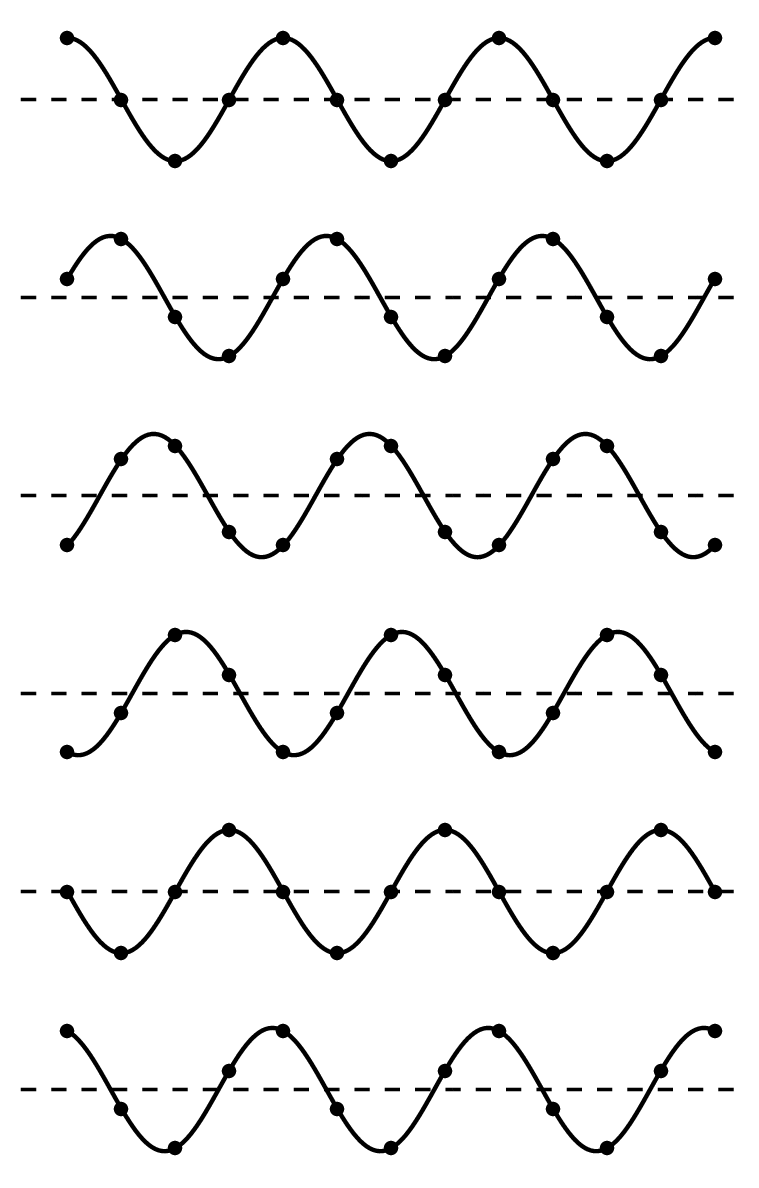
30.
2. How does the Energy from the sun reaches the earth?
a)
a. ultraviolet waves
b)
b. infrared waves
c)
c. mechanical waves
d)
d. electromagnetic waves
31.
What kind of wave is this?
a)
Transverse
b)
Longitudinal
32.
What kind of wave is this?
a)
Transverse Wave
b)
Longitudinal Wave
33.

This is an example of ______________________.

a)

Transverse waves

b)

Longitudinal waves

34.

A high energy wave has a high

a)

amplitude

b)

frequency

c)

wavelength

d)

meduim

35.
What is the material waves travel through?
a)
Period
b)
Frequency
c)
Medium
d)
Hertz