
 Worksheets
Industrial Revolution 7-3.4
Total questions: 30
Worksheet time: 20mins
Name
Class
Date
1.
In which country did the Industrial Revolution begin?
a)
The United States
b)
England
c)
France
d)
Germany
2.
What product was first made using machines in factories?
a)
Steel
b)
textiles
c)
locomotives
d)
flying shuttles
3.
What are identical components that can be used in place of each other?
a)
Interchangeable parts
b)
Factories
c)
Dynamos
d)
Assembly Lines
4.
Which of the following was NOT associated with early factory working conditions?
a)
Low wages
b)
Safe working conditions
c)
Dangerous working conditions
d)
Widespread pollution
5.
A place where people and machines join together to mass produce goods.
a)
Cartel
b)
Corporation
c)
Factory
d)
Urbanization
6.
Interchangeable parts is making different parts of products look ___.
a)
identical
b)
interchange
c)
opposite
d)
cheaper
7.
Mass production led to:
a)
Products being more superior in quality
b)
goods became less expensive
c)
laborers received higher wages
d)
industries moved to rural areas
8.
Before the Industrial Revolution all products were created by
a)
Factories
b)
Hand
c)
Slaves
d)
Royalty
9.
What is the movement from rural to urban areas called?
a)
Moving
b)
colonization
c)
inflation
d)
urbanization
10.
Why did people move to the cities during the Industrial revolution?
a)
Jobs in factories
b)
Jobs on the farm
c)
Family
d)
Friends
11.
This machine allowed factories to be built anywhere, powered by coal.
a)
flying shuttle
b)
steam engine
c)
spinning jenny
d)
cotton gin
12.
Which statement is true?
a)
Children were not allowed to work in the mines during the Industrial Revolution
b)
Work conditions were closely regulated
c)
There were no labor laws that prevented children from working
d)
Children were allowed to work but they were treated fairly.
13.
What had to occur before the Industrial Revolution could take place?
a)
The Economic Revolution
b)
The Glorious Revolution
c)
The Agricultural Revolution
d)
The French Revolution
14.
What impact did the Agricultural Revolution have on the population of England?
a)
The population increased a little.
b)
The population declined steeply.
c)
The population increased dramatically.
d)
The population stayed the same.
15.
How did the Agricultural Revolution impact farmers?
a)
New farming methods required more workers on the farm.
b)
New farming methods produced bigger harvests with less farmers.
16.
Which innovation allowed factories to be built anywhere?
a)
flying shuttle
b)
spinning jenny
c)
cotton gin
d)
steam engine
17.
Why did "cottage industry" come to an end?
a)
Too many people moved to the city.
b)
It was replaced by the factory system.
c)
The need for textiles decreased.
d)
Women who worked in cottage industries went on strike.
18.
Who designed the first efficient steam engine?
a)
James Hargreaves
b)
John Kay
c)
Richard Arkwright
d)
James Watt
19.
The Industrial Revolution happening during the _____ and the ____.
a)
1700s, 1800s
b)
1800s, 1900s
c)
1900s, 2000s
d)
1500s, 1600s
20.
The cottage industry system involved manufacturing...
a)
of steam engines.
b)
of luxury goods.
c)
in the home.
d)
in small factories.
21.
What innovation increased the transportation of goods and people?
a)
Flying Shuttle
b)
Spinning Jenny
c)
Steam Engine
d)
Water Frame
22.
What was the purpose of labor unions?
a)
Negotiate as a group for bigger factories
b)
Negotiate as a group for better working conditions
c)
Negotiate as a group for a political revolution
d)
Negotiate as a group for a social revolution
23.
How did the Industrial Revolution affect the cities?
a)
Made the crime rate decrease
b)
Led to an increase in farm workers
c)
Make the cities cleaner and safer
d)
Led to an increase in population in the cities
24.

Who invented the cotton gin?
a)
Eli Whitney
b)
Jim Morse
c)
James Watt
d)
the guy that delivers your pizza
25.
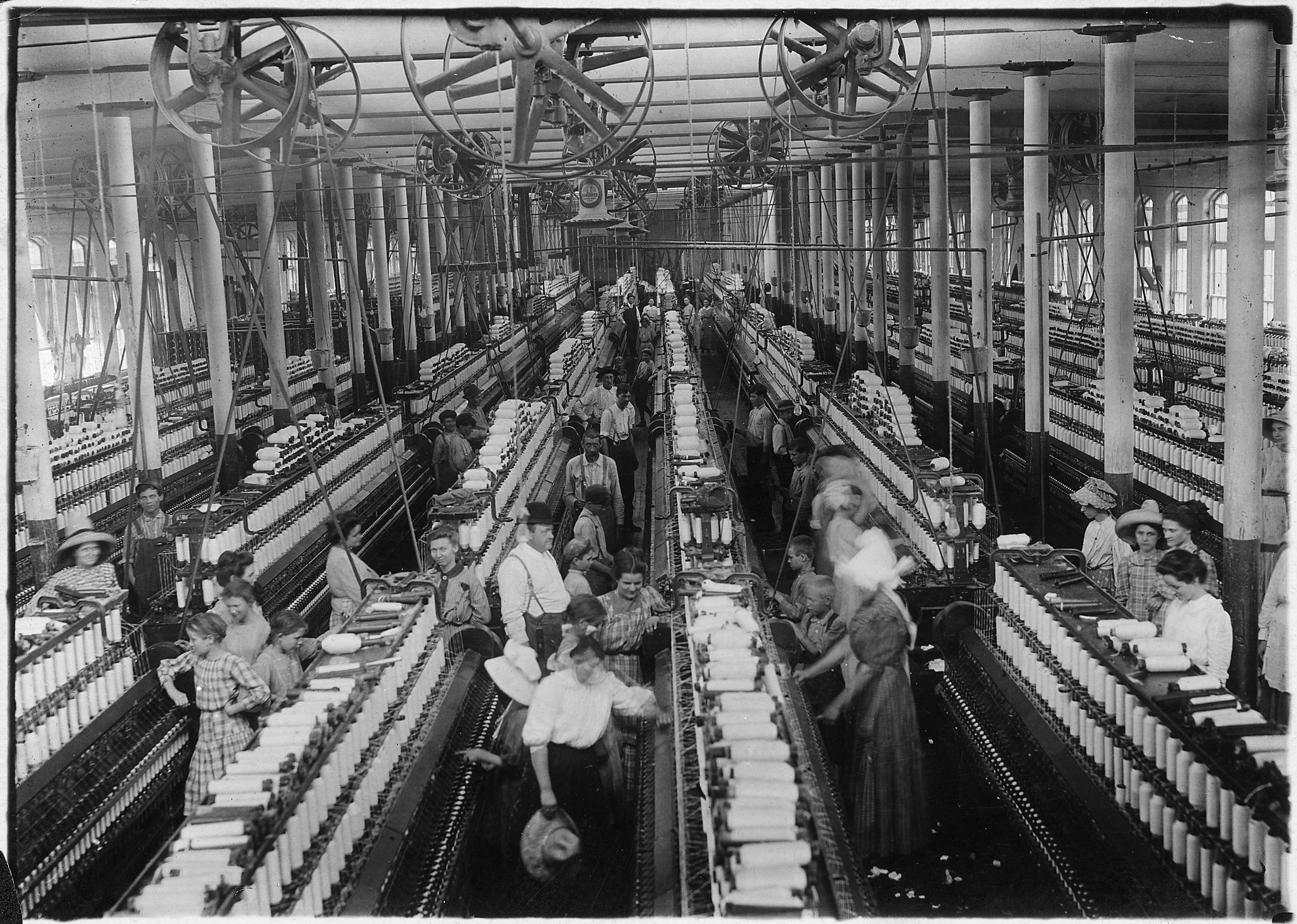
Where were most factories built before the steam engine was invented?
a)
in the mountains
b)
in the desert
c)
along rivers
d)
anywhere
26.

Why were railroads so important during this time?
a)
they moved goods more quickly and less expensively over greater distances
b)
they were fun to ride on to go visit family in other states
c)
people could ride on railroads to get to their jobs in another city
27.

Who invented the steel plow?
a)
Cyrus McCormick
b)
John Deere
c)
Samuel Slater
d)
Robert Fulton
28.
What were living conditions in the city like during the Industrial Revolution?
a)
Very extravagant
b)
Strict housing regulations
c)
Spacious and luxurious
d)
Crowded and unsanitary
29.
Until the 1800s, how did most families get the items they needed for daily life?
a)
They made tools, clothing, materials, and food by hand.
b)
They bought them from factories.
c)
They bought them on the Internet.
d)
They bought them from stores.
30.
Samuel F. B. Morse invented the telegraph. Which area of life was improved by this invention?
a)
communication
b)
farming
c)
industry
d)
transportation
100 %

