
 Worksheets
Are you Ready for the Unit 6 Test?
Total questions: 28
Worksheet time: 16mins

Charles Darwin was a British Naturalist who developed the Theory of...
Acquired Characteristics
Evolution
Evolution by means of Natural Selection
A group of similar organisms that can mate with each other and produce fertile offspring
evolution
species
variation
fossil

What process is being shown in this image?
Variation
Natural Selection
Selective Breeding
Homeostasis
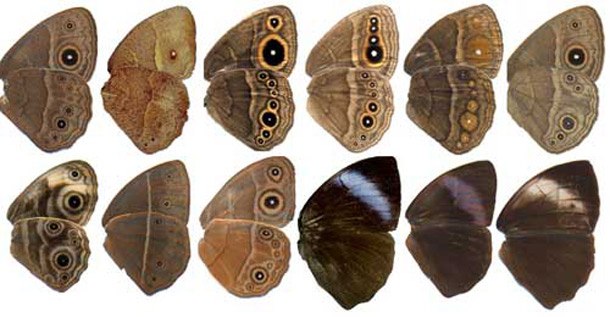
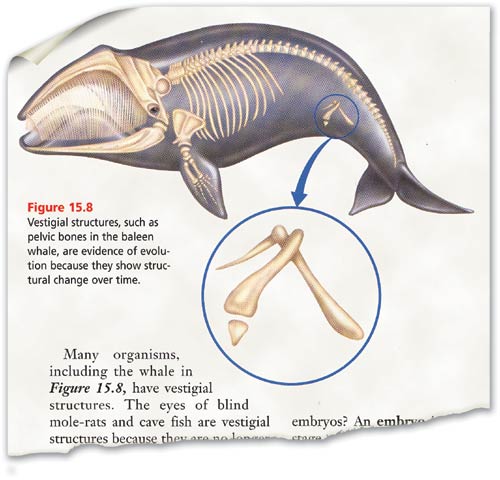
Variations that help an organism survive are...
adaptations
mutations
gradualism
homologous structures

How has this ecosystem changed over time?
It started as a forest and then changed into a swamp and finally it was covered with water.
It started as a water ecosystem, then it changed into a swamp, then it changed into a forest.
It started out as a swamp then changed into a forest and finally it was covered with water.
It started out as a forest, was covered with water and then finally it became a swamp.

If the green layer is 80 million years old and the blue layer is 40 million years old. Use relative dating to tell me how old the pink layer is.
60 million years old
Between 40 and 80 million years old
Between 50 and 70 million years old
55 million years old
If I wanted to more precisely determine the age of a fossil would I use Radiometric Dating OR Relative Dating?
Radiometric Dating
Relative Dating
Whales and Hippos have similar bone structure, look similar as embryos, and have similar DNA. This would suggest that...
Hippos evolved from Whales
Whales evolved from Hippos
Whales and Hippos have a Common Ancestor
It doesn't tell us anything about Whales and Hippos

A meadow area has changed into a wetland area over time because beavers built a dam downstream. What impact would this have on other populations in the area? CHOOSE THREE.
Amphibians and reptile populations would decrease
The number of mosquitos would decrease
Small rodents will have less dry nesting material
large grazing animals would have less available food
The number of ducks will increase

Robins and Starlings nest in trees near open fields and eat mainly insects and worms. The population sizes of these birds from 1996 to 2017 are shown on the graph.
Based on these data, which change most likely occurred in the area between 1996 and 2017?
Residents in the area started using pesticides to kill insects in 2010.
Residents in the area stopped using pesticides to kill insects in 2010.
A hotel was constructed on a large portion of the grasslands in 2008.
A fungus infected the trees with a disease and many of the trees died in 2008.

This diagram shows a portion of the embryonic development of a fish, salamander, tortoise, chick, pig, calf, rabbit and a human. These organisms _____________________.
are require gills to breath
share a common ancestor
will look very similar as adults
have adapted to similar environments
Which population would have the greatest chance of survival if the environment changed very quickly?
A small toad population that lives in an isolated area
A bush mouse population with a lot of genetic diversity
A tiger population with really similar genotypes
A large monkey population with little genetic diversity
Some members of a beetle population have brown shells and some have green shells. The beetles are eaten by frogs. If a drought occurs that kills the plants in their habitat, the number of __________________.
Green beetles will decrease because they will not be able to find a new food source
Brown beetles will decrease because they will not be camouflaged by the dry plants
Green beetles will increase because they are easier for the frogs to see and will survive to reproduce
Brown beetles will increase because they will be better hidden from the frogs and will survive to reproduce
Some trees in the apple orchard are healthy but most of the trees are infested with worms. How could the orchard owner use selective breeding to try to increase his number of healthy plants next year?
Use plants that require less sunlight
Use plants that are distasteful to bugs
Plant only seeds from the healthy trees
Plant only seeds from the infected trees
The company Raid is trying to develop a new cockroach killer. When first sprayed on the colony 99% of the cockroaches died. The surviving roaches were allowed to repopulate the colony. Raid then sprayed the colony again, and this time only 25% of the roaches died. Which statement explains why the spray became less effective?
The trait that supports survival in this environment became less common
A larger portion of the cockroaches in the colony are resistant to the spray
A larger portion of the cockroaches in the colony have been killed by spray
The traits that supports reproductive success in this environment became less common.
Finches have beaks. In areas where there are a lot of large seeds, their beaks may be larger and stronger to crack shells. In areas where the main food source is insects hidden in trees, their beaks may be long and pointy to poke into bark. If these different finches have the same ancestor, then the finches have ___________________.
been adapting over many generations to changes in their environments
different beaks to differentiate between males and females of the species
developed different beaks during their lifetime
a desire to have different beaks, so they change their bodies based on where they live

All of these species share a common ancestor but which one is most closely related to primates?
birds
sharks
rodents and rabbits
amphibians
Which THREE characteristics are found in ALL primates?
Opposable thumbs
Binocular vision
Omnivore
Rotating Shoulders
Bipedal
Which THREE characteristics are found in ALL hominids?
The 3 characteristics of primates
Big Brain
Omnivore
Have a written language
Bipedal

The tail and gills in all developing vertebrates is an example of...
Vestigial Structures
Homologous Structures
Fossils
Embryology

A dinosaur skeleton is an example of...
Vestigial Structures
Homologous Structures
Fossils
Embryology

The bones in a bat wing and a frog forelimb being similar is an example of...
Vestigial Structures
Homologous Structures
Fossils
Embryology

Genetic similarities between Gorillas and Chimpanzees is an example of...
Vestigial Structures
Homologous Structures
DNA Studies
Embryology
The oldest fossils are on the ________________.
Bottom
Middle
Top
The top layer has a fish fossil. From that I could infer that this area was ________________ at that time.
underwater
a swamp
a forest
The bottom layer has a fossil of a leaf from a hardwood tree. From that I could infer that this area was ________________ at that time.
underwater
a swamp
a forest

