
 Worksheets
S8P4 Waves: Sound and Light_Wave Basics
Total questions: 30
Worksheet time: 42mins
What creates waves?
vibrations moving
any kind of disturbance
the vacuum of space
colors
Which of the following waves cannot travel in a vacuum?
light wave
sound wave
electromagnetic wave
seismic (earthquake) wave
Unlike a transverse wave, the disturbance in a longitudinal wave is
in a circular motion.
parallel (front & back) to the wave motion.
perpendicular (up & down) to the wave motion.
in the opposite direction of the wave motion
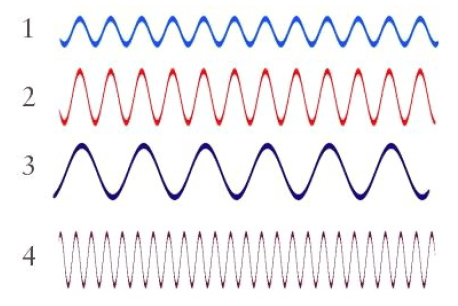
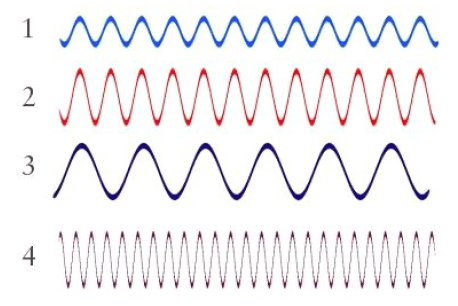
Which of the following can sound travel through?
solid
liquid
gas
plasma
the vacuum of space


Identify the mechanical wave that the particles vibrate with and up-and-down motion.
transverse
longitudinal
What is a rarefaction in a longitudinal wave?
The region in a longitudinal wave where the particles are closest together.
The entire wave.
The region in a longitudinal wave where the particles are furthest apart.
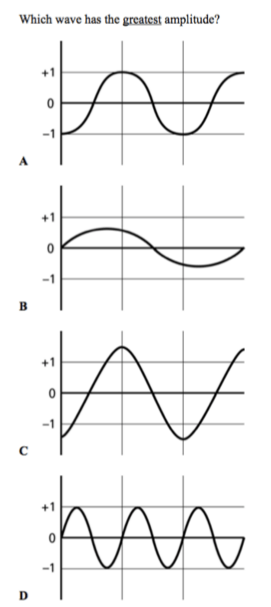
What is amplitude?
The distance from the center line ( or the still position) of a waveto the top of a crest or to the bottom of a trough.
The number of waves passing a point in a certain time.
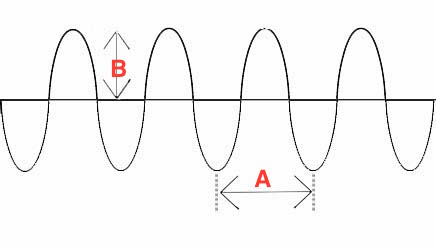
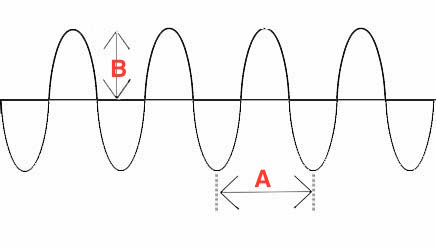
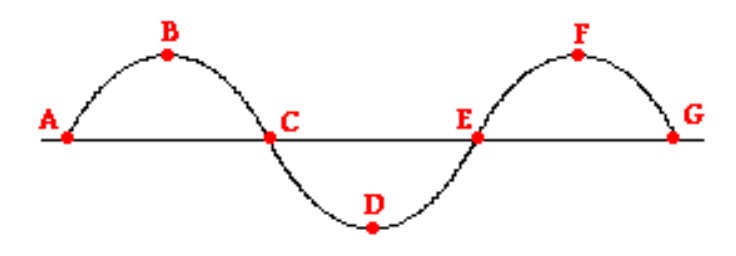
What property of this wave is represented by the letter "A"
amplitude
crest
trough
wavelength




2. How does the Energy from the sun reach the earth?
a. ultraviolet waves
b. infrared waves
c. mechanical waves
d. electromagnetic waves

A light wave is an example of what type of wave?
electromagnetic wave
mechanical wave

A sound wave is an example of what type of wave?
electromagnetic wave
mechanical wave

