
 Worksheets
🌡️🔥Energy Transfer and Temperature🔥🌡️
Total questions: 35
Worksheet time: 14mins
Name
Class
Date
1.
What is the definition of CONDUCTION?
a)
When heat is transferred from objects like rays of light or electromagnetically.
b)
a hot liquid or air that expands, becomes less dense, and rises or becomes more dense, and sinks.
c)
When heat transfers from objects that are touching.
d)
When heat transfers through the heater or AC in your house.
2.
What kind of heat transfer happens when the sun is heating your body?
a)
Conduction
b)
Radiation
c)
Convection
d)
Density
3.
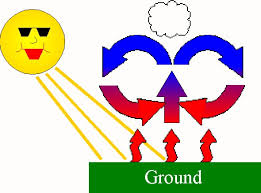
Warm air rises and the cool air sinks demonstrates this type of heat transfer.
a)
conduction
b)
convection
c)
radiation
d)
Insolation
4.
Ironing a shirt is an example of...
a)
condensation
b)
conduction
c)
convection
d)
radiation
5.
Warm air is __________ dense than cold air and rises creating convection currents.
a)
more
b)
less
6.

Johnny accidentally grabbed the handle of the hot pot.
a)
conduction
b)
convection
c)
radiation
7.
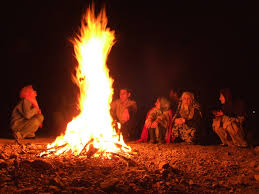
A group of friends gather around a fire to stay warm.
a)
conduction
b)
convection
c)
radiation
8.
Transfer of thermal energy through "space"
a)
conduction
b)
convection
c)
radiation
9.

The way the heat is moving from the hot coffee is called...
a)
convection
b)
radiation
c)
insulation
d)
conduction
10.
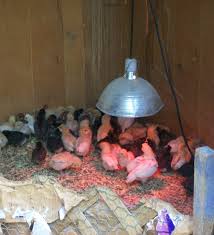
The baby chickens are kept warm from the heat lamps demonstrates this type of heat transfer.
a)
conduction
b)
convection
c)
radiation
11.
Considering that convection is driven by differences in temperature, double-pane windows are most likely used to
a)
create a convection current from the outside air to the inside air.
b)
increase the rate of heat flow to the outside air 2
c)
create a convection current from the inside air to the outside air.
d)
decrease the rate of heat flow to the outside air.
12.
Heat would best be transferred by conduction between
a)
a candle and the air.
b)
an oven and a glass dish.
c)
a stove and a copper pot.
d)
water and a wooden spoon
13.
Why does food wrapped in aluminum foil keep warm for a long time?
a)
Aluminum foil is an insulator and prevents heat loss by conduction.
b)
Aluminum foil forms an air-tight seal and prevents heat loss by convection.
c)
The silver surface of the foil reflects heat in and prevents heat loss by radiation.
d)
The silver surface of the foil absorbs heat from the surroundings and keeps the food warm.
14.

What happens when ice cubes melt in a glass?
a)
Heat travels from the ice to the warmer water.
b)
No energy is transferred.
c)
Heat is transferred from the warmer water to the ice cubes.
d)
The water warms up due to the humidity
15.
What is Thermal expansion?
a)
The transfer of thermal energy between materials by the collisions of particles
b)
Is a decrease in a materials volume when temperature decreases
c)
An increase in a materials volume when temperature increases
d)
Chicken fried rice
16.
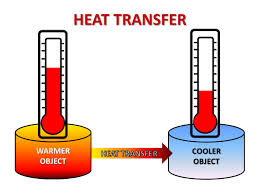
Heat transfers from an area of ____temperature to an area of ___ temperature.
a)
high to low
b)
low to high
c)
high to high
d)
It can travel high to low and low to high.
17.
When the temperature of matter decreases the particles ...
a)
speed up and move farther apart
b)
speed up and move closer together
c)
slow down and move farther apart
d)
slow down and move closer together
18.
The measure of average kinetic energy of all the particles within an object is called ____________.
a)
temperature
b)
conduction
c)
radiation
d)
heat
19.
The transfer of energy between substances that are at different temperatures.
a)
heat
b)
temperature
c)
thermal energy
d)
absolute zero
20.
What happens to particles as they heat up?
a)
They slow down
b)
Nothing
c)
They don't move
d)
They speed up
21.
Which is more dense?
a)
Hot Liquid
b)
Cold Liquid
22.
What type of heat transfer takes place in liquids and gasses?
a)
Conduction
b)
Convection
c)
Radiation
d)
Thermal Equilibrium
23.
What type of material makes the best conductor?
a)
Food
b)
Wood
c)
Styrofoam
d)
Metal
24.
What type of material makes the best insulators?
a)
Aluminum
b)
Copper
c)
Styrofoam
d)
Metal
25.
Which example below is an example of convection?
a)
Standing on a hot metal bridge
b)
The attic is warmer than the basement
c)
The Sun heating the Earth
d)
Touching hot sand with your feet
26.
As you touch a hot stove the heat transfers -
a)
from your hand to the stove
b)
from the stove to your hand
c)
It doesn't transfer
27.
Hot objects begin to cool as-
a)
cooler air is transferred to the hot object.
b)
thermal energy in the object is transferred to the surrounding air.
c)
atoms in the object react with the oxygen in the air.
d)
thermal energy in the object cancels out energy in the air
28.
Which sentence explains why a cold metal spoon placed in a pot of boiling water becomes hot?
a)
Thermal energy is transferred from the spoon to the water.
b)
Thermal energy is transferred from the water to the spoon.
c)
Thermal energy in the water is transformed into kinetic energy in the spoon.
d)
Thermal energy in the spoon is transformed into kinetic energy in the water.
29.
Which is NOT an insulator.
a)
Wool
b)
Plastic
c)
Copper
d)
Glass
30.
What is a example of a insulator?
a)
metal
b)
rubber
c)
water
31.
Students in a science class performed an experiment with hot and cold water. They dyed the hot water red and the cold water blue. When the students layered the water, they noticed that the hot water rose to the top and the cold water sank. What was this demonstrating?
a)
Radiation
b)
Air Pressure
c)
Evaporation
d)
Density
32.
The temperature of a substance increases as___.
a)
the substance expands
b)
the average kinetic energy of its particles increases
c)
the substance's volume increases
d)
the substance's mass increases
33.
If the particles of two substances have the same average kinetic energy, then___.
a)
the specific heats of the substances are identical
b)
the particles will not react chemically
c)
the substances have equal thermal energies
d)
the substances have equal temperatures
34.
What does the average kinetic energy of an object's particles tell you?
a)
how hot the object is
b)
how cold the object is
c)
the temperature of the object
d)
how fast the particles are moving
35.
How does the speed of the particle in a substance relate to the temperature of the substance?
a)
helps to determine the amount of average kinetic energy, which helps to determine temperature.
b)
there is no relationship between the two
c)
helps to determine if a relationship even exists between the two
d)
all of the above
100 %

