
 Worksheets
Weathering
Total questions: 27
Worksheet time: 14mins
This type of weathering occurs when rock is physically broken down into smaller pieces of rock.
physical weathering
chemical weathering
erosion weathering
deposition
This type of weathering occurs when rocks weaken then break down due to chemical changes in the composition of the rock.
physical weathering
chemical weathering
erosion weathering
deposition
How might a weathered mountain appear different to an unweathered mountain?
Weathered mountain would be taller.
Weathered mountain would be rounder and less jagged.
Weathered mountain would be more jagged and less rounded.
Weathered mountain would have no trees.
The formation of stalactites and stalagmites in a cave as water mixed with carbon dioxide creates carbonic acid, which dissolves away the limestone, is an example of:
physical weathering
chemical weathering
Acid rain wearing away the face of a marble gravestone or statue is an example of?
physical weathering
chemical weathering
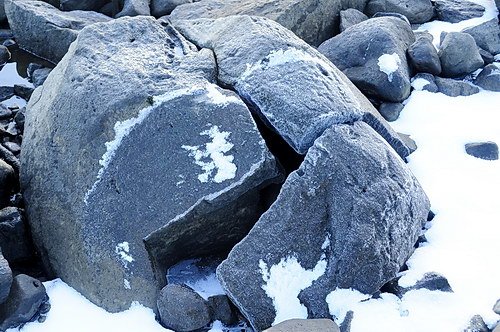
What is physical weathering?
Process through which rocks are physically broken into smaller pieces.
Rocks are broken down through chemical changes.
Rocks are worn away from acid in plant roots.
Rocks broken down by machinery.
Erosion and Deposition
Climate and Human Activity
Rock type and Vegetation
Presence of Water and Temperature
During chemical weathering, what can happen to a rock?
a new rock is produced that is larger than the original rock
a new rock is produced that is the same as the original rock
a rock can break down and what it is made up of can change
no new rock is created - it is just smaller in size
What is the reaction of minerals in a rock with water that results in a change in composition called?
oxidation
hydrolysis
carbonation
hydration
What is the breakdown of rocks into smaller pieces without changing the composition called?
physical weathering
chemical weathering
mass weathering
spring weathering
What is loose weathered rock and organic material in which plants can grow called?
talus
soil
peat
mud
Define the term weathering
The wearing away of the land by the actions of different erosive agents
Natural process of decomposition and disintegration of rocks in situ
The breakdown of rocks through the actions of rivers or the wind
The action of wind and rain to carve away certain types of rock
Which of the following are types of physical weathering?
(choose 2)
Freeze-thaw
Carbonation
Hydrolysis
Thermal Expansion
Which of the following are types of chemical weathering?
Freeze-thaw
Carbonation
Hydrolysis
Thermal Expansion
What is salt crystallisation?
It results from the expansion of salt particles that have entered pore spaces in the rocks.
The freezing and thawing in the rocks.
The heat changes the rock.
When overlying rocks are removed by erosion.
What is hydrolysis?
When a mineral absorbs water, causing it to swell.
When acidic rainwater reacts with calcite in limestone.
When a mineral is broken down by a reaction with water.
Which of the following is not a type of chemical weathering?
Acid rain
Hydration
Carbonation
Freeze-thaw
Hydrolysis affects granite when water reacts with feldspar to form what?
Calcite
Kaolin
Quartz
Mica


By how much does water expand by when it freezes?
0.9%
19%
9%
1.9%

