wayground logo

Free Printable Worksheets

Font size

S
M
L
XL
Worksheets

Atoms and Elements

Total questions: 27

Worksheet time: 18mins

Name
Class
Date
1.
The smallest unit of an element that still has the properties of that element is?
a)
a substance
b)
a mixture
c)
a compound
d)
an atom
2.
The positive particles of an atom are 
a)
electrons 
b)
positrons 
c)
neutrons 
d)
protons 
3.
Particles in an atom that are neutral and have no charge are 
a)
negatrons 
b)
electrons 
c)
neutrons 
d)
protons 
4.
the central region of an atom where its neutrons and protons are is its 
a)
nucleus 
b)
electron cloud
c)
core 
d)
center 
5.
A particle that moves around the nucleus is a(n)...
a)
Proton
b)
Neutron
c)
Electron
d)
Quark
6.
An atoms overall charge is 
a)
positive 
b)
depends on its mood 
c)
neutral 
d)
negative 
7.
What is the atomic number for an element with three protons?
a)
2
b)
1
c)
3
d)
6
8.
What does the 1.00794 stand for?
a)
Hydrogen
b)
atomic number
c)
atomic mass
d)
atomic explosion
9.
a)

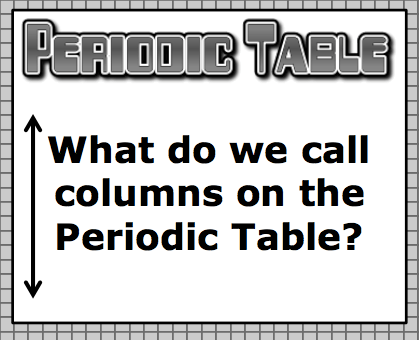
Periods

b)

Groups

10.
a)

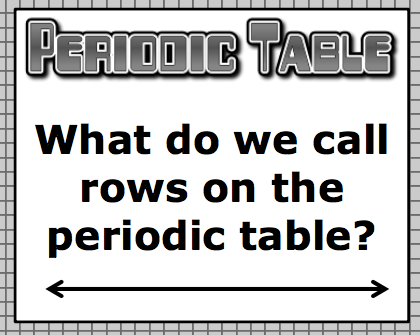
Periods

b)

Groups

11.

Along each period of the periodic table

a)

atomic mass changes in no set pattern.

b)

atomic mass increases from left to right.

c)

atomic mass decreases from left to right

d)

atomic mass is the same for all elements in the row.
12.
a)
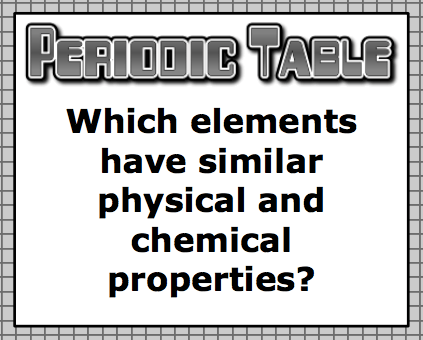
Same group
b)
Same period
13.

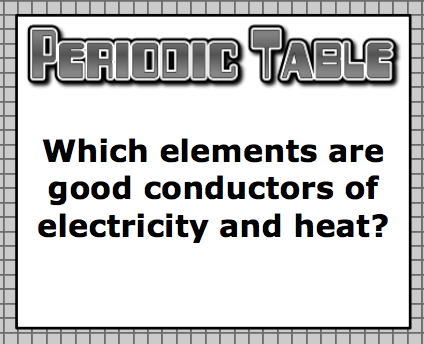
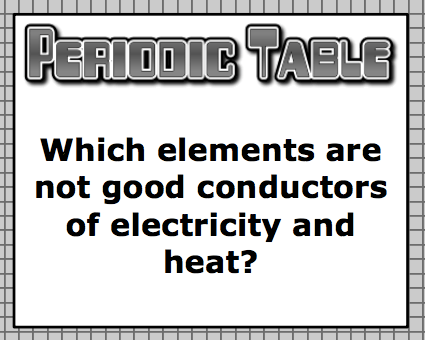
Helium (He), neon (Ne) and argon (Ar) are all colorless, odorless gases with low chemical reactivity. Based on the periodic table, which of the following is correct?

a)

Carbon (C) is a colorless, odorless gas with low chemical reactivity.
b)

Xenon (Xe) is a colorless, odorless gas with low chemical reactivity.
c)

Chlorine (Cl) is a colorless, odorless gas with low chemical reactivity.
d)

Selenium (Se) is a colorless, odorless gas with low chemical reactivity.

14.
a)
Metals
b)
Nonmetals
c)
Metalloids
15.
a)
Metals
b)
Nonmetals
c)
Metalloids
16.

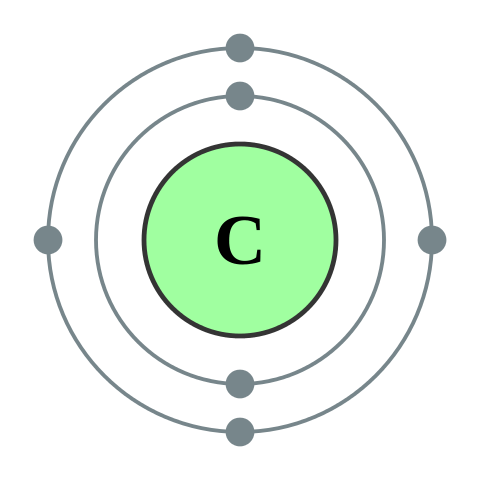
How many valence electrons does carbon have?

a)

4

b)

5

c)

6

d)

7

17.

USE THE PERIODIC TABLE

How many valence electrons does Oxygen have?

a)

8

b)

2

c)

16

d)

6

18.

Which of the following is a Halogen?

a)

Bromine

b)

Rubidium

c)

Beryllium

19.

Which of the following is an Alkali Metal?

a)

Magnesium

b)

Chromium

c)

Sodium

20.
Which of the following is an Alkaline Earth Metal? 
a)
Calcium
b)
Lithium
c)
Phosphorus
d)
Copper 
21.
  1. Ions having positive charges are
a)

Cations

b)

atoms

c)

Anions

d)

molecules

22.
What is an ion?
a)
A Charged Atom
b)
A Large Atom
c)
A Small Atom
d)
A Cute Atom
23.

An atom of Chlorine is written as Cl but an Ion of Chlorine can be written as Cl -. What happen to Chlorine to become Cl -?

a)

Chlorine lost a proton

b)

Chlorine gained a proton

c)

Chlorine lost an electron

d)

Chlorine gained an electron

24.
How many neutrons in C-14?
a)
6
b)
7
c)
14
d)
8
25.
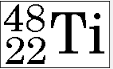
How many protons does this isotope of titanium have?
a)
48
b)
22
c)
26
d)
70
26.
The four fundamental forces of nature are: 
a)
Electromagnetism, Gravity, Strong Nuclear, Weak Nuclear
b)
Gravity, Strong Nuclear, Weak Nuclear, Medium Nuclear
c)
Normal Force, Force due to gravity, Magnetism, Nuclear 
d)
Nuclear, Electricity, Gravity, Atomic 
27.
Rank the four fundamental forces of nature in order from weakest to strongest:  
a)
Electromagnetism, Gravity, Strong Nuclear, Weak Nuclear
b)
Weak Nuclear, Gravity, Electromagnetism, Strong Nuclear
c)
Gravity, Weak Nuclear,  Electromagnetism, Strong Nuclear
d)
Weak Nuclear, Electromagnetism, Gravity, Strong Nuclear