Font size
 Worksheets
Evolution Test Review
Total questions: 20
Worksheet time: 14mins
When organisms are better adapted to their environment they will survive and reproduce more successfully than organisms less adapted. This process is called —
selective breeding
natural selection
evolution of all species
cloning
When a DNA sequence is copied, sometimes mistakes occur in the new strand of DNA. What do we call these mistakes?
transcription
adaptations
mutations
Select ALL correct answers: Which reasons below are likely causes for an animal to go extinct?
A strong hurricane passes directly over the island causing major shoreline erosion and coastal flooding.
The amount of greenhouse gases in the atmosphere increases causing sea levels to rise permanently, flooding the island
The amount of rainfall on the island increases causing a small freshwater lake to form on the interior of the island.
The average high temperature of the island increases causing all predatory birds to migrate away from the island.
To blend in with surroundings, an animal would most likely be what color in the arctic tundra?
black
white
red
brown

Both of these birds were originally the same species. Overtime, however, the two birds began to live in different environments and eat different types of food. What were these changes in beak and feather color caused by?
extinctions
mutations
clones
variations
Select ALL of the correct answers.
Which of the following are a factor of evolution?
overproduction
change in environment
intellegence
natural selection
embryology
Sea turtles lay hundreds of eggs at a time, and only a few survive to adulthood. This is an example of which factor of evolution?
variation
genes
overproduction
environment
The Army Corp of Engineers building a dam across a river to create a reservoir to control flooding is an example of what factor of evolution?
competition
genes/genetics
mutations
environmental changes
Plants that can survive great fluctuations in temperature changes will...
have a lower survival rate than those that cannot.
will have a higher survival rate than those that cannot.
will exist in smaller numbers than plants that cannot
will have lower genetic variety than plants that cannot.
The species Vulpes vulpes, the red fox, will vomit before fleeing from a predator in order to move at a faster pace. This is a —
mutation that is an inheritable change
genetic variation that leads to diversity
reason why species become extinct
behavior that enables a species to survive

Throughout time the horse foreleg went from having —
four toes to one toe
three toes to one toe
one toe to three toes
one toe to four toes
Which of the following sources of data can be used as evidence for evolution? Pick all that apply
anatomical similarities across species
fossil records
predator-prey comparison graphs
species specific list of habitats
genetic information
Fossils are commonly found in
sedimentary rock
igneous rock
granite
loose sand and gravel
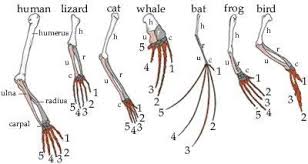
Sometimes bones in the front limbs of animals are very similar in structure. What do we call similar bone structures that indicate a link to a common ancestor?
homologous structures
adaptations
absolute dating
gradualism