
 Worksheets
Authoritarian States: Stalin of the Soviet Union
Total questions: 20
Worksheet time: 7mins
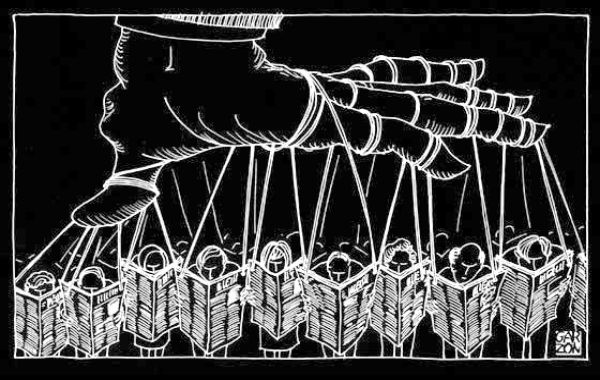
A system of government that exerts complete control over its citizens; individuals have no rights and all opposition to the government is suppressed.
Monarchy
Totalitarianism
Democracy
Communism
Totalitarian countries are characterized by __________________.
free and open discussions of ideas
a multiparty system with several candidates for each office
government control of newspapers, radio and television
government protection of people’s civil liberties

Stalin was manipulative. He pretended to be close to Lenin to show everyone he was a good leader so everyone would like him.
True
False
What is the definition of Police Terror and Fear?
When Dictators kills anyone who opposes them or tries to challenge their authority.
When people are afraid of the police and they cannot act out against their government.
Dictators create a police force that helps them maintain power.
All of the above
How did Stalin stay in power in the Soviet Union?
He used public speaking to win over the people of the Soviet Union.
Stalin executed political opponents.
Stalin maintained power through free elections.
He inherited leadership of the country through his family.
In what year did Stalin die?
1923
1933
1943
1953
Starting in 1932, which area saw a horrendous famine that may have killed as many as 7 million people?
Ukraine
Mongolia
Estonia
Latvia


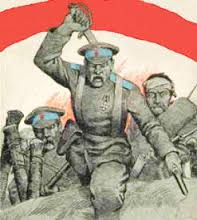
What was the name of Stalin's secret police?
Cheka- NKVD
Cheka- NPCC
Chevka-NTSS
Chevka-NTRC
The famine in Ukraine during the 1930s resulted from the Soviet government’s attempt to _______________________.
End a civil war
implement free-market practices
collectivize agriculture
introduce crop rotation
How will you describe the idea of Revolution supported by Stalin?
Socialism in one country
International socialism
Revolution in Europe
Exportation of Revolution
A major goal of Joseph Stalin’s five-year plans was to _______________________.
encourage communist revolutions in the colonies of the European powers
transform the Soviet Union into an industrial power
expand the Soviet Union’s borders to include warm-water ports
reduce the amount of foreign aid coming from the Western Hemisphere

