
NEW
Font size
 Worksheets
Traits and DNA
Total questions: 15
Worksheet time: 15mins
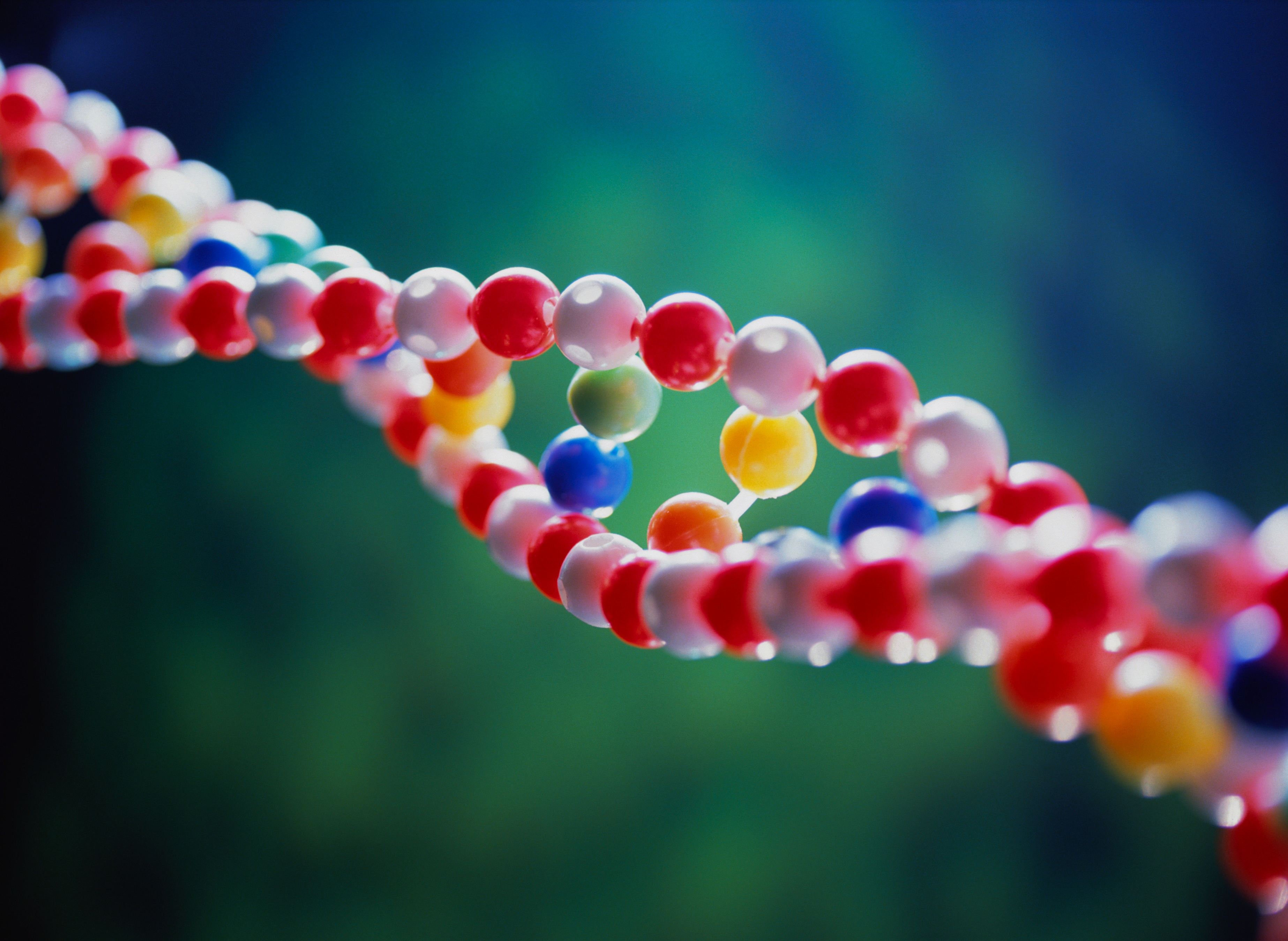
Why is DNA important?
It is very small and very complicated.
It is in everything.
It serves as the blueprint for traits of all living things.
We eat it every day for energy.
Which organelle is DNA usually found in?
mitochondria
vacuole
chloroplast
nucleus
The chances of something happening is called -
dominant
genotype
phenotype
probability
The study of heredity is known as -
gene
genetics
meiosis
hybrid
The passing of traits from parent to offspring is known as -
Heredity
Genetics
Hybrid
Probability
One set of instructions for an inherited trait is known as -
heredity
allele
trait
gene
A single piece of coiled DNA found in the cells that contains genes that encode traits is called a -
gene
chromosome
trait
DNA
A characteristic that an organism can pass on to its offspring through its genes is called a -
protein
trait
DNA
gene
Different forms of the same gene, such as for hair color, are known as -
alleles
genes
traits
DNA
What are the 4 nitrogen bases?
adenine, thymine, cytoplasm, and guanine
adenine, thymine, cytosine, and guanine
adenine, thymine, cytosine, and gylcerol
adenine, thymine, cytosine, and glucose
Which sequence of DNA bases would pair with this partial strand? ATG TGA
ATG TGA
TAC ACT
GTA AGT
CAT TCA
The twisted ladder shape of DNA is called a -
Hydrogen twist
Deoxyribose flip
Double helix
Double membrane

